
Explore Tarique Rahman Biography, history, education, family background, political career, controversies, and role in Bangladesh politics.
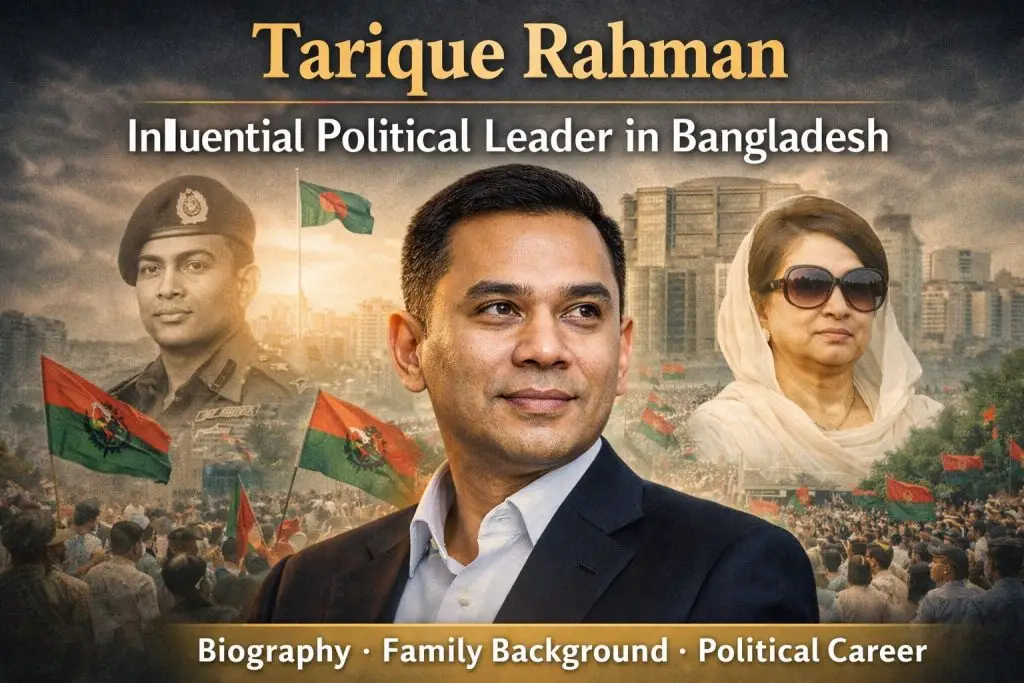
Tarique Rahman is one of the most influential political figures in modern Bangladesh. As the son of former President Ziaur Rahman and former Prime Minister Khaleda Zia, he belongs to one of the most powerful political families in the country. Over the years, Tarique Rahman has played a major role in shaping the direction of the Bangladesh Nationalist Party and the broader political landscape of Bangladesh.
His political journey has been marked by controversy, exile, leadership struggles, and eventually a major comeback that reshaped national politics. In recent years, he emerged as a central figure in Bangladeshi politics after returning from long-term exile and leading his party to major electoral success.
This comprehensive article covers Tarique Rahman’s full biography, early life, education, family background, political career, controversies, exile period, achievements, and influence in Bangladesh politics.
Early Life of Tarique Rahman
Tarique Rahman was born on 20 November 1965 in Dhaka, which at that time was part of East Pakistan and later became the capital of Bangladesh. His childhood unfolded during a critical period in South Asian history, including the dramatic events surrounding the Bangladesh Liberation War that led to the creation of an independent Bangladesh in 1971.
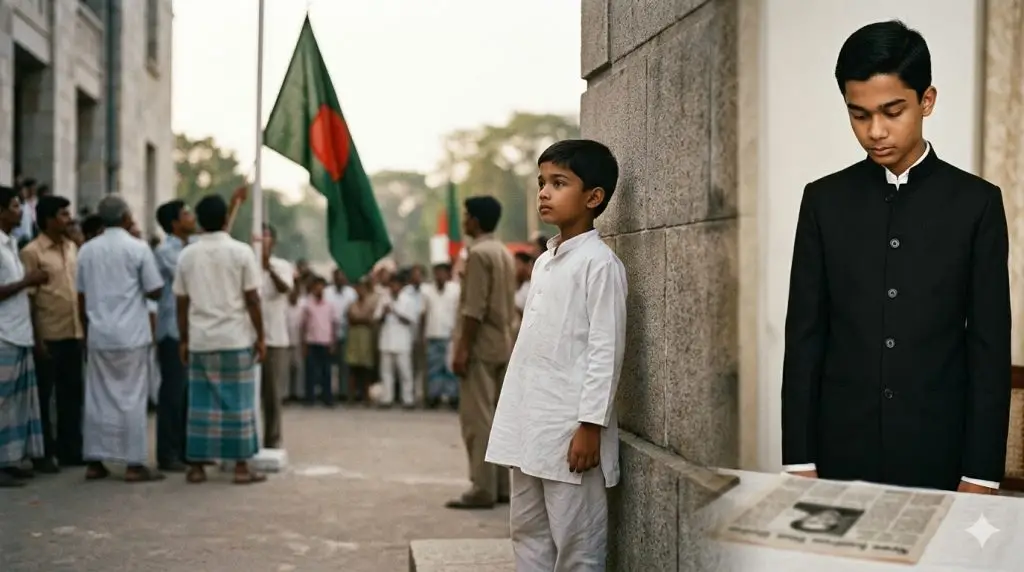
Growing up in a politically active family had a strong influence on his early life. His father, Ziaur Rahman, was a key figure during the independence movement and later served as the President of Bangladesh from 1977 to 1981. Because of his father’s leadership role, Tarique Rahman was exposed to political discussions, national challenges, and government affairs from a young age. Observing these developments closely helped shape his understanding of politics and public service.
The early years of Bangladesh were marked by political uncertainty, including coups, changes in leadership, and struggles to establish stable democratic institutions. A major turning point in Tarique Rahman’s life occurred in 1981, when his father was assassinated during a failed military uprising. This tragic event had a profound emotional impact on him and significantly influenced his perspective on politics, leadership, and the future direction of Bangladesh.
Family Background
Tarique Rahman comes from the influential Zia political family, which has played a significant role in the political history of Bangladesh for several decades. His family members have held some of the highest political positions in the country, shaping national politics and party leadership.
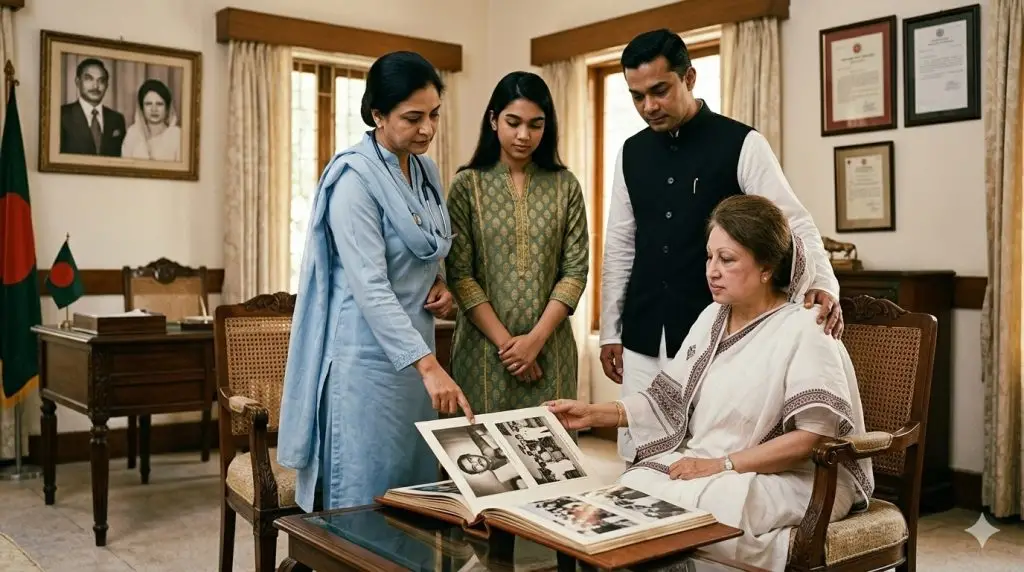
His mother, Khaleda Zia, is one of the most prominent political leaders in Bangladesh. She became the first female Prime Minister of Bangladesh and served three separate terms in office. As the chairperson of the Bangladesh Nationalist Party (BNP), Khaleda Zia led the party through several major political movements and elections, making her one of the most influential figures in the country’s modern political landscape.
Tarique Rahman also had a younger brother, Arafat Rahman Koko, who passed away in 2015. Koko was known for his involvement in sports administration and business activities before his death.
His wife, Zubaida Rahman, is a medical professional by training and has occasionally appeared in public events connected to the family.
The couple has one daughter, Zaima Rahman, who has largely stayed away from active politics.
The Zia family has long been involved in a political rivalry with the family of Sheikh Mujibur Rahman and his daughter Sheikh Hasina, leader of the Awami League. This rivalry has strongly influenced and shaped the dynamics of Bangladeshi politics for decades.
Education of Tarique Rahman
Tarique Rahman received his early education in Dhaka, the capital of Bangladesh. Growing up in the capital gave him access to some of the country’s most respected educational institutions. His academic journey began in well-known schools where he completed his primary and secondary education while developing an early interest in social issues and national affairs.

For his school studies, he attended Dhaka Residential Model College, one of the leading colleges in the country known for its strong academic environment. Later, he continued his studies at Adamjee Cantonment College, another highly regarded institution. In Dhaka, he completed both his Secondary School Certificate (SSC) and Higher Secondary Certificate (HSC) examinations, which are key stages of the Bangladeshi education system.
After finishing his college education, Tarique Rahman enrolled at the University of Dhaka, one of the most prestigious universities in the country. At first, he chose to study Law, but later changed his academic focus to International Relations. Although he began university studies, he eventually decided not to complete his degree and instead moved toward business and other professional activities.
During his time at university, Tarique Rahman showed interest in political philosophy and global political thought. He explored ideas from influential thinkers such as Aristotle, Plato, Jean-Jacques Rousseau, and Karl Marx. These philosophical perspectives helped broaden his understanding of governance, political systems, and democratic principles.
Business Career Before Politics
Before becoming fully active in politics, Tarique Rahman was involved in several business ventures that helped him gain experience in the private sector. During the early stages of his professional life, he explored different sectors of the economy and worked with various business partners. These activities allowed him to understand how businesses operate, how investments are managed, and how economic decisions affect industries and employment.
One of the sectors where he showed interest was the textile industry, which is one of the most important economic sectors in Bangladesh. By investing in textile-related businesses, he became familiar with production systems, supply chains, and export opportunities connected to the global garment market. This experience also helped him understand the challenges faced by manufacturers, workers, and exporters.
In addition to textiles, Tarique Rahman was also associated with export-oriented businesses. These ventures focused on trading goods with international markets, which required knowledge of global demand, trade regulations, and logistics management. Through these activities, he gained exposure to international business practices and the importance of maintaining strong trade networks.
Another area where he reportedly invested was shipping and trade-related businesses. Since Bangladesh relies heavily on maritime trade for exports and imports, involvement in this sector provided insight into transportation, port management, and commercial distribution systems.
Overall, these business experiences helped Tarique Rahman develop an understanding of economic management, entrepreneurship, and private-sector challenges. This background later influenced his perspective when he became more actively involved in political activities and national economic discussions.
Entry into Politics
Tarique Rahman formally began his political journey in 1988 when he joined the Bangladesh Nationalist Party (BNP) as a primary member in Gabtali Upazila. At that time, the political environment in Bangladesh was highly active, and many political parties were strengthening their grassroots organizations. By joining the party at the local level, Tarique Rahman started building his political foundation through direct engagement with local communities and party workers.
In the early stage of his political career, his activities focused mainly on grassroots organization and party development. He worked to strengthen local BNP units, coordinate with activists, and encourage participation among supporters in rural and urban areas. This grassroots involvement helped him develop relationships with party members across different districts and gave him a deeper understanding of the political structure within the party.
His role became more visible during the 1991 Bangladeshi general election. During this important election, Tarique Rahman actively participated in campaigning and organizing political support for the BNP across various regions. The election was historically significant because it marked the return of parliamentary democracy in the country.
At that time, his mother, Khaleda Zia, led the BNP in the national election campaign. The party achieved a major political victory, and Khaleda Zia became the Prime Minister of Bangladesh. This success strengthened the position of the BNP and also increased Tarique Rahman’s visibility within the party as a young and emerging political figure.
Rise Within BNP
Tarique Rahman gradually rose through the leadership structure of the Bangladesh Nationalist Party (BNP) over several decades. After joining the party in 1988 as a primary member, he slowly built influence within the organization by maintaining close connections with grassroots leaders and party activists across the country. His political activities and involvement in party organization helped him gain recognition among BNP supporters and senior leaders.
Over time, Tarique Rahman was appointed to several important positions within the party. He first entered the party as a primary BNP member in 1988, which marked the beginning of his formal political career. As his role within the party expanded, he later became the Senior Joint Secretary General of BNP, a key organizational position responsible for coordinating party activities and strengthening communication between central leadership and local party units.
Later, he was promoted to the position of Senior Vice Chairman of BNP, which made him one of the highest-ranking leaders in the party hierarchy. This role further increased his influence in party decision-making and long-term political strategy.
Following political developments and changes in the party’s leadership structure, Tarique Rahman became the Acting Chairman of BNP in 2018, leading the party’s activities and strategic direction.
During the BNP-led government period from 2001 to 2006, he became widely known as one of the most influential figures within the party. Many BNP supporters and political observers viewed him as a central figure in the party’s future leadership and long-term political direction.
Exile in London
In 2008, Tarique Rahman left Bangladesh and moved to London, where he lived in political exile for many years. During this period, he stayed away from direct political activities inside Bangladesh but continued to remain actively involved in the leadership of the Bangladesh Nationalist Party (BNP). From London, he regularly communicated with senior party leaders and supporters through online meetings, phone calls, and digital platforms.
While living abroad, Tarique Rahman helped guide BNP’s political strategies, organizational decisions, and public messaging. He often addressed party meetings virtually and provided instructions regarding party activities and election strategies. His exile lasted for approximately 17 years, yet he remained one of the most influential figures within the BNP. Despite being outside the country, many party members continued to view him as the central leader of the party’s political movement.
Return to Bangladesh and Political Comeback
After spending many years living abroad, Tarique Rahman eventually returned to Bangladesh in December 2025, marking a significant moment in the country’s political landscape. His return followed a long period of exile during which he remained involved in party strategy and leadership activities from overseas. Many supporters viewed his arrival as an important step toward revitalizing the Bangladesh Nationalist Party and strengthening its position in national politics.
Not long after his return, the BNP performed strongly in the 2026 general election, gaining a substantial number of parliamentary seats and forming a government. This outcome represented a turning point in Bangladesh’s political environment, which had been dominated by intense rivalry between major parties for many years. For many observers, the election result signaled a new phase in the country’s democratic process and highlighted Tarique Rahman’s continued influence in shaping the direction of national politics.
Leadership Vision and Political Ideology
The political outlook of Tarique Rahman is largely shaped by the principles promoted by the Bangladesh Nationalist Party. His leadership approach focuses on strengthening democratic governance, encouraging economic progress, and improving the effectiveness of national institutions in Bangladesh.
Commitment to Democracy:
A central part of Tarique Rahman’s vision is the protection and expansion of democratic values. He has frequently emphasized the importance of fair elections, political participation, and the independence of democratic institutions. Supporters believe that strengthening these systems can help ensure stability and accountability in the country’s political environment.
Economic Development:
Economic advancement is another major pillar of his political thinking. He has supported initiatives aimed at improving national infrastructure, expanding employment opportunities, and encouraging industrial growth. By promoting investment and supporting private enterprise, his policy approach aims to stimulate long-term economic development and improve living standards for citizens.
Institutional Reform:
Tarique Rahman has also spoken about the need for reforms in important state institutions. His political agenda often highlights strengthening the independence of the judiciary, improving transparency, and implementing stronger anti-corruption measures. Administrative reforms are also seen as necessary to make government services more efficient and responsive to public needs.
Overall, these ideas reflect the broader nationalist and conservative philosophy traditionally associated with the Bangladesh Nationalist Party, which emphasizes national sovereignty, democratic governance, and economic progress.
Personal Life
Tarique Rahman, despite being one of the most prominent political figures in Bangladesh, is known for maintaining a relatively private personal life. While he is widely recognized for his political role within the Bangladesh Nationalist Party (BNP), he generally keeps details about his family life away from the public spotlight.
He is married to Zubaida Rahman, a respected physician who comes from a well-known and influential family. Dr. Zubaida Rahman is the daughter of Rear Admiral Mahbub Ali Khan, which makes her part of another prominent family with a history of public service. She is professionally trained in medicine and has built a reputation as a qualified medical professional.
The couple has one daughter, Zaima Rahman, who has largely stayed away from political activities and public life. She has focused primarily on her education and personal career interests.
For many years, the family lived in London while Tarique Rahman remained in political exile. During that period, London served as their main residence, where they lived a relatively quiet family life while he continued to remain involved in BNP political affairs from abroad.
Influence on Bangladesh Politics
The role of Tarique Rahman in the political arena of Bangladesh is widely discussed and often considered highly significant. As a senior leader of the Bangladesh Nationalist Party, he represents the continuation of the political legacy established by his father, Ziaur Rahman. This legacy has been an important part of Bangladesh’s political history for decades.
Bangladesh’s modern political landscape has largely been shaped by two influential political families. One is the Zia family connected to the BNP, and the other is linked to Sheikh Mujibur Rahman and his daughter Sheikh Hasina of the Awami League. The long-standing rivalry between these political groups has played a major role in shaping national elections, policies, and political debates across the country.
Key Facts About Tarique Rahman
Tarique Rahman was born on 20 November 1965 in Dhaka, the capital of Bangladesh. He is a prominent political leader and a senior figure in the Bangladesh Nationalist Party (BNP). Tarique Rahman comes from a well-known political family. His father, Ziaur Rahman, served as the President of Bangladesh and played a major role in the country’s political history. His mother, Khaleda Zia, led the BNP and served multiple terms as Prime Minister.
In his personal life, he is married to Dr. Zubaida Rahman, a physician from a respected family. The couple are blessed with a daughter, Zaima Rahman. By profession, Tarique Rahman is a politician and has been actively involved in Bangladesh’s political affairs for many years.
Legacy and Future: Explore Tarique Rahman Biography
The political legacy of Tarique Rahman continues to shape discussions about the future of politics in Bangladesh. As a senior leader of the Bangladesh Nationalist Party, he represents the continuation of a political tradition that began with his father, Ziaur Rahman, and was later carried forward by his mother, Khaleda Zia. Because of this family legacy, many supporters see Tarique Rahman as an important figure capable of guiding the party and influencing national political debates.
Supporters often describe him as a leader who promotes democratic values, political reform, and economic development. They believe his leadership could help strengthen institutions, encourage political participation, and create new opportunities for national progress. Within the BNP, many party members consider him a key strategist who has helped reorganize the party structure and maintain unity during difficult political periods.
However, critics continue to raise questions about past controversies and legal disputes that have surrounded his political career. These debates remain part of the broader conversation about accountability and transparency in Bangladeshi politics.
Despite these differing perspectives, Tarique Rahman’s influence remains significant. His role in shaping party strategy and national political dialogue suggests that he will likely remain an important actor in Bangladesh’s evolving political landscape for years to come.