
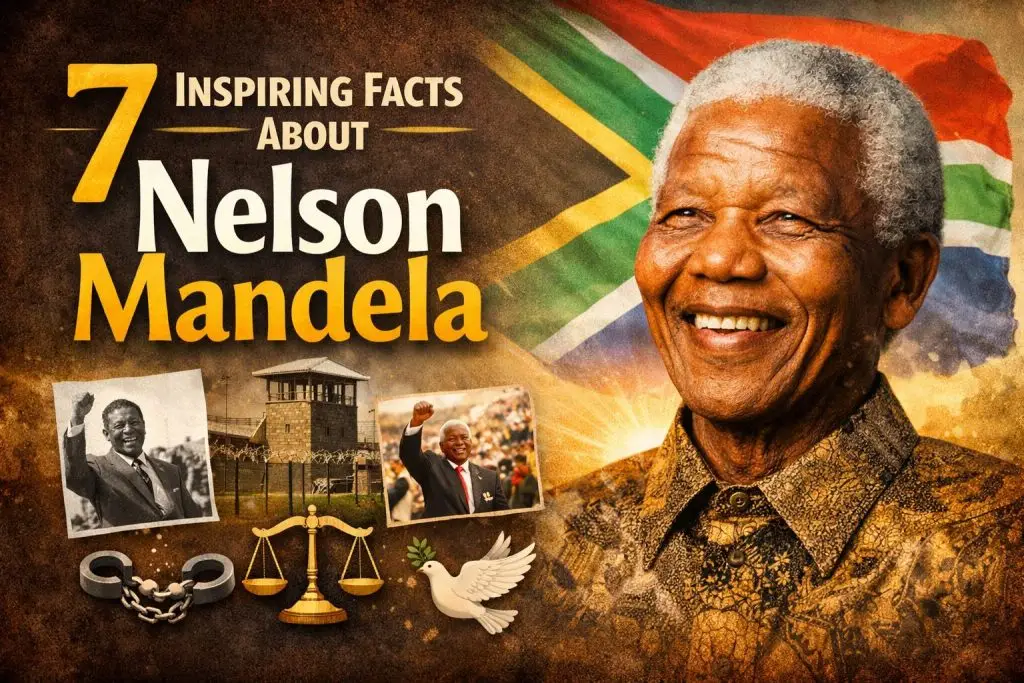
Discover 7 inspiring facts about Nelson Mandela, the iconic leader who fought for equality, justice, and human rights in South Africa.
Nelson Mandela
Nelson Mandela stands as one of the most iconic figures of the 20th century. Known worldwide for his unwavering dedication to justice, equality, and human rights, Mandela devoted his life to fighting racial oppression in South Africa. Born in the village of Mvezo, he overcame humble beginnings to become a lawyer and activist, championing the rights of those denied basic freedoms under the apartheid system.
Mandela’s remarkable resilience in the face of adversity is legendary. He spent 27 years in prison for his anti-apartheid activism, yet never abandoned his vision of a democratic and free South Africa. Even in confinement, he inspired hope, educated fellow inmates, and remained a symbol of courage and determination for millions around the globe.
After his release, Mandela became South Africa’s first Black president and emphasized reconciliation, forgiveness, and unity among a divided nation. This article highlights seven inspiring facts about Nelson Mandela and his enduring fight for justice, equality, and human rights, showing why his legacy continues to inspire generations worldwide.
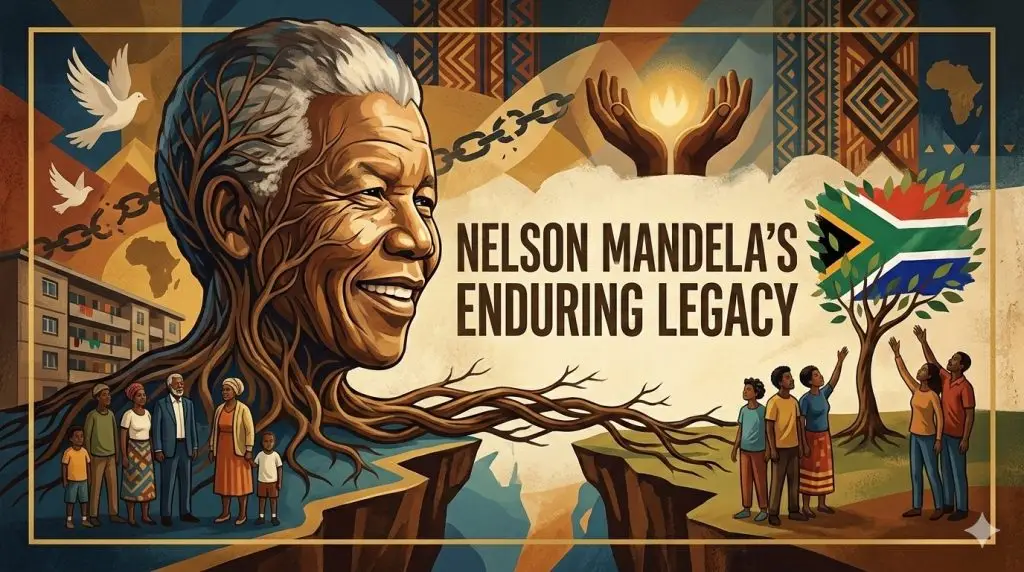
Introduction: Nelson Mandela’s Enduring Legacy
Nelson Mandela was not just a political leader — he was a visionary whose fight for justice and equality transcended borders. Born in a small village in South Africa, Mandela grew up witnessing the inequalities and injustices faced by Black South Africans under the oppressive apartheid system. From an early age, he was determined to challenge these unfair laws and work toward a society where every individual could enjoy equal rights, dignity, and freedom. Mandela pursued education and became a lawyer, using his knowledge to fight discrimination and lead the African National Congress in campaigns for political and social change.
Mandela’s name has become synonymous with courage, perseverance, and the unwavering pursuit of human rights. His remarkable journey — from decades of imprisonment to becoming South Africa’s first Black president — continues to inspire activists, leaders, students, and ordinary people worldwide. Nelson Mandela’s life demonstrates that commitment, resilience, and moral leadership can transform nations and inspire generations.
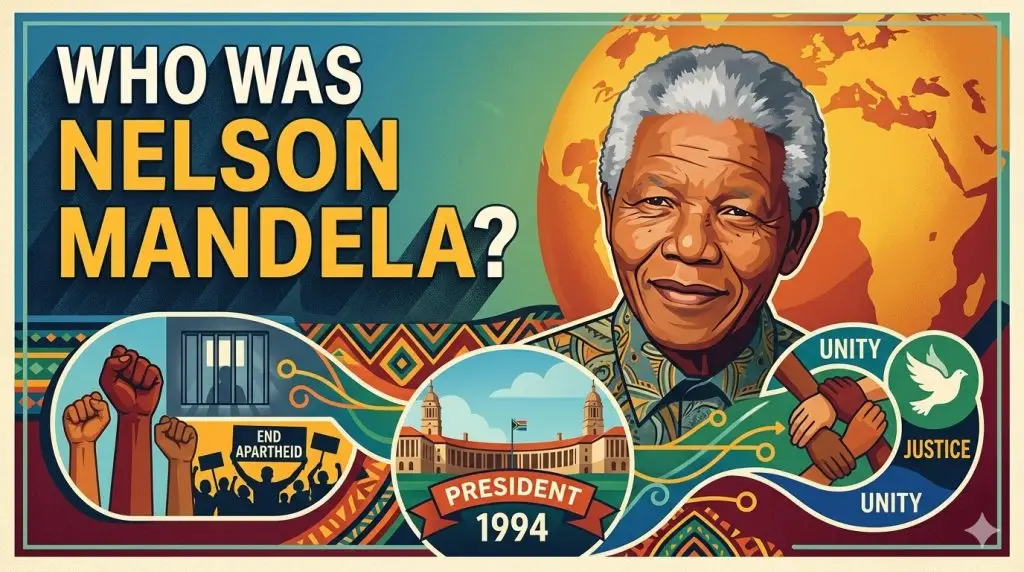
Who Was Nelson Mandela?
Nelson Rolihlahla Mandela was born on July 18, 1918, in the rural village of Mvezo in the Eastern Cape of South Africa. As a member of the Thembu royal family, Mandela was exposed early to leadership and cultural responsibility.
Despite humble beginnings, Mandela pursued education and became one of the first in his community to complete secondary school. He later studied law at the University of Fort Hare and the University of the Witwatersrand, setting the stage for a life dedicated to justice.
In 1944, Mandela joined the African National Congress (ANC) — a political movement fighting against racial inequalities and the oppressive policies of white minority rule. This marked the beginning of his life’s mission: to secure equal rights for all South Africans.
Understanding Apartheid in South Africa
To fully appreciate Mandela’s impact, it’s essential to understand apartheid — the unjust system he fought against.
Apartheid, implemented officially in 1948 by the South African government, enforced strict racial segregation. Its core principles included:
- Legal discrimination against non‑white citizens
- Distinct housing and facilities were assigned to each race.
- Denied political rights and voting power to Black South Africans
- Limited access to education, healthcare, and employment opportunities
Mandela and his fellow activists viewed apartheid as not only a political system but also a direct violation of human dignity and fundamental rights.
1. Mandela Devoted His Life to Ending Apartheid
One of the most inspiring facts about Nelson Mandela is his lifelong dedication to dismantling apartheid.
Mandela’s early activism focused on organizing protests, boycotts, and campaigns aimed at challenging discriminatory laws. In the late 1940s and 1950s, Mandela rose through the ranks of the ANC, advocating for more assertive resistance.
By 1952, Mandela co‑launched the Defiance Campaign, encouraging non‑violent civil disobedience against unjust laws. Although the campaign led to arrests and public backlash, it helped galvanize widespread domestic resistance against apartheid policies.
Mandela’s leadership during this period demonstrated his unwavering belief in equality and justice — even when the risks were enormous.

2. Mandela Endured 27 Years Behind Bars for His Principles
Perhaps the most well‑known chapter of Mandela’s life was his imprisonment.
In 1962, Mandela was arrested and charged with sabotage and attempting to overthrow the government. At the Rivonia Trial in 1964, he delivered one of his most famous statements:
“I have fought against white domination, and I have fought against black domination. I have cherished the ideal of a democratic and free society in which all persons live together with equal opportunities.”
Mandela was sentenced to life in prison and spent the next 27 years incarcerated — primarily on Robben Island.
Conditions were harsh: prisoners endured grueling physical labor, limited contact with family, and minimal access to basic comforts. Yet Mandela’s spirit remained unbroken. Even in confinement, he continued to educate fellow inmates, organize discussions, and maintain his commitment to equality.
His resilience during these decades of hardship became a symbol of resistance not just in South Africa, but across the world.
3. Mandela Became a Global Icon for Human Rights
While Mandela was imprisoned, support for his cause exploded globally.
Individuals, governments, organizations, and activists across continents embraced the movement against apartheid. The “Free Nelson Mandela” campaign became one of the most influential human rights movements of the 20th century.
International sanctions, cultural boycotts, and economic pressure mounted on South Africa, ultimately weakening the apartheid regime.
Mandela’s name became synonymous with dignity, resistance, and moral strength. People from all walks of life rallied for his freedom, transforming local activism into a global crusade for justice.
4. Nelson Mandela Was Released from Prison in 1990
One of the most dramatic turning points in South African history came on February 11, 1990, when Nelson Mandela was released from prison.
Mandela emerged not with anger or calls for vengeance, but with a message of reconciliation and hope.
His release energized negotiations between anti‑apartheid leaders and the South African government. Mandela’s willingness to engage in dialogue with former adversaries played a critical role in easing tensions and paving the way for a new democratic era.
Nelson Mandela’s freedom was not merely the liberation of an individual — it was the liberation of a nation’s conscience.
5. Mandela Became South Africa’s First Black President
In 1994, South Africa held its first fully democratic elections — the first where citizens of all races were allowed to vote.
Nelson Mandela stood at the forefront of this historic moment and was elected as the first Black President of South Africa.
His presidency was guided by principles of unity, equality, and healing. Rather than seeking retribution, Mandela sought to unify a fractured nation. He embraced former opponents, championed inclusive governance, and worked toward policies that benefitted all citizens.
Under his leadership, South Africa began the long process of rebuilding its institutions and striving toward true democracy.
6. Mandela Championed Peace and Reconciliation
Nelson Mandela’s commitment to forgiveness is one of the most inspiring aspects of his life. He understood that lasting peace in South Africa required both truth and reconciliation after decades of apartheid. Mandela supported the establishment of the Truth and Reconciliation Commission (TRC), chaired by Archbishop Desmond Tutu, which aimed to uncover the realities of apartheid-era abuses and help heal the nation’s collective wounds. His approach emphasized honesty, understanding, and moral accountability, rather than vengeance.
Instead of punishing every perpetrator, the TRC focused on restorative justice and dialogue, fostering mutual respect and national healing. Mandela demonstrated that true leadership often requires forgiveness—not for its own sake, but to achieve lasting peace and unity. His example has inspired reconciliation efforts in other nations recovering from conflict, showing the world that courage, empathy, and moral conviction can transform societies and build enduring harmony.
7. Nelson Mandela’s Legacy Continues to Inspire Future Generations
Nelson Mandela’s influence extended far beyond his presidency. After retiring from political life, he remained an active global statesman, dedicating his efforts to advocating for human rights, improving access to education for children, and raising awareness about HIV/AIDS. Mandela used his international stature to promote equality, justice, and social progress, emphasizing that meaningful change requires both leadership and collective action. His life became a beacon of hope, showing that one person’s dedication can inspire worldwide transformation.
In 1993, Mandela was awarded the Nobel Peace Prize, cementing his place in history alongside other champions of peace and justice. Today, his teachings on dignity, equality, and moral courage continue to resonate. Leaders, activists, and ordinary citizens alike draw inspiration from his example, striving to create a fairer, more compassionate, and inclusive world for future generations.
Beyond the Seven Facts: Understanding Mandela’s Broader Impact
Nelson Mandela’s impact goes far beyond the seven inspiring facts of his fight for rights. Mandela transformed South Africa and influenced the world through his commitment to justice, equality, and human dignity. His leadership, rooted in empathy, forgiveness, and inclusivity, set a global standard for ethical governance. Beyond politics, Mandela’s advocacy for education, human rights, and social justice continues to inspire generations, proving that his life and values remain a guiding force for positive change worldwide.
Mandela on Leadership
Nelson Mandela redefined the meaning of leadership. He never relied on domination or power to guide others. Instead, Mandela led with empathy, strong moral conviction, and remarkable strategic patience, showing that true leadership comes from serving others rather than controlling them. His actions emphasized listening, understanding, and inspiring people to work together for a common goal. Nelson Mandela’s leadership legacy demonstrates that influence rooted in integrity, compassion, and commitment to justice creates lasting impact, inspiring generations of leaders worldwide.
Mandela on Equality
Nelson Mandela had a simple yet powerful philosophy: every human being deserves dignity, respect, and fundamental rights, regardless of race, class, or background. Throughout his life, Mandela tirelessly fought for equality, challenging discriminatory laws and societal norms that oppressed millions. By advocating for fairness and equal opportunities, he reinforced a universal truth: no society can truly thrive without justice for all its members. Nelson Mandela’s commitment to equality continues to inspire activists, leaders, and communities worldwide to pursue fairness and human rights.
Mandela and Human Rights Education
Nelson Mandela remains a central figure in human rights education worldwide. Even today, his life, principles, and achievements are studied in schools, universities, and leadership programs across the globe. Mandela’s words, actions, and dedication to justice and equality continue to influence how people understand resilience, moral courage, and the importance of collective progress. By learning from his example, students and leaders alike gain insights into ethical leadership and the enduring impact of standing firmly for human rights and social justice.
What the World Can Learn from Nelson Mandela
1. Courage Matters
Nelson Mandela’s fight against injustice exemplifies the power of courage. Challenging the apartheid system required extraordinary bravery, as he faced constant threats, arrests, and immense personal risk. Even during his 27 years in prison, Mandela never abandoned his principles or vision for a free and equal South Africa. His unwavering determination and moral strength inspired millions worldwide, demonstrating that true courage is not the absence of fear but the willingness to act for justice, equality, and human rights despite overwhelming adversity.
2. Persistence Produces Results
Nelson Mandela’s life demonstrates that persistence produces meaningful results. Change often requires time, patience, and continuous effort, especially when challenging deeply entrenched systems like apartheid. Mandela’s unwavering commitment, even in the face of imprisonment, hardship, and personal sacrifice, illustrates that sustained action can transform society. His dedication to justice and equality proves that perseverance, coupled with moral conviction, can alter the course of history. Nelson Mandela’s legacy continues to inspire generations to remain steadfast in pursuing long-term goals and creating lasting positive change.
3. Forgiveness Strengthens Societies
Nelson Mandela believed that forgiveness strengthens societies and promotes lasting peace. Instead of seeking revenge for the injustices and oppression he endured, Mandela chose reconciliation and dialogue, demonstrating the power of healing after decades of conflict. By prioritizing understanding, unity, and forgiveness, he helped South Africa transition from a divided nation to a more harmonious society. Mandela’s example shows that true leadership involves fostering reconciliation and breaking cycles of resentment, proving that forgiveness is a vital tool for building stronger, more resilient communities.
4. Unity Is Essential
Nelson Mandela strongly believed that unity is essential for a nation’s prosperity. He recognized that South Africa, divided by decades of apartheid and racial discrimination, could only move forward if its people worked together. Mandela consistently promoted collaboration, mutual respect, and understanding among communities of all backgrounds. By emphasizing unity over division, he demonstrated that collective effort and solidarity are the keys to social progress. His message continues to inspire leaders and citizens worldwide to value togetherness and cooperation in building a fairer society.
5. Leadership Should Be Inclusive
Nelson Mandela believed that leadership should be inclusive and representative of all people. He emphasized that true leaders listen to diverse voices and consider the needs and perspectives of every citizen. Mandela’s democratic vision ensured that South Africans of all races could participate in shaping the nation’s future, fostering equality, fairness, and unity. By promoting inclusive governance, he set a powerful example for leaders worldwide, showing that a society thrives when every individual has the opportunity to contribute and be heard.
Nelson Mandela in Today’s World
Nelson Mandela may have passed away on December 5, 2013, but his teachings and vision remain profoundly relevant today. Across the globe, struggles for human rights, equality, and justice continue, and Mandela’s legacy serves as a powerful source of inspiration and guidance. His commitment to fairness, dialogue, and reconciliation provides a blueprint for addressing modern social and political challenges.
From international civil rights movements to grassroots community activism, the principles Mandela championed continue to resonate. Young leaders, activists, and everyday people draw strength from his example, working tirelessly to create a more equitable and compassionate world. In today’s interconnected society, Nelson Mandela’s enduring influence reminds us that courage, perseverance, and moral leadership can drive meaningful change.
Conclusion
Nelson Mandela’s life — from humble beginnings in rural South Africa to becoming a globally recognized leader — stands as one of history’s most inspiring stories of resilience, courage, and unwavering commitment to justice. Mandela devoted his life to ending apartheid, tirelessly working to secure equality and dignity for millions of South Africans, even in the face of great personal sacrifice.
During his 27 years in prison, Mandela remained hopeful and steadfast, turning his imprisonment into a symbol of resistance and moral courage. His eventual release marked a turning point for South Africa and the world, transforming him into a global icon of human rights. Mandela went on to become the nation’s first Black president, promoting reconciliation, unity, and peaceful coexistence in a country long divided by racial segregation.
The seven inspiring facts about Nelson Mandela’s fight for rights demonstrate why his legacy continues to endure. From championing equality and justice to promoting peace and reconciliation, his life teaches that true leadership is rooted in service, courage, and compassion. Mandela’s enduring influence continues to inspire millions, showing that a single life, lived for others, can transform societies and leave a lasting mark on the world.