
Trump urges Iran ceasefire as shocking delays raise war fears. Global tensions surge while talks stall, risking oil crisis and wider conflict. Act now.
Introduction
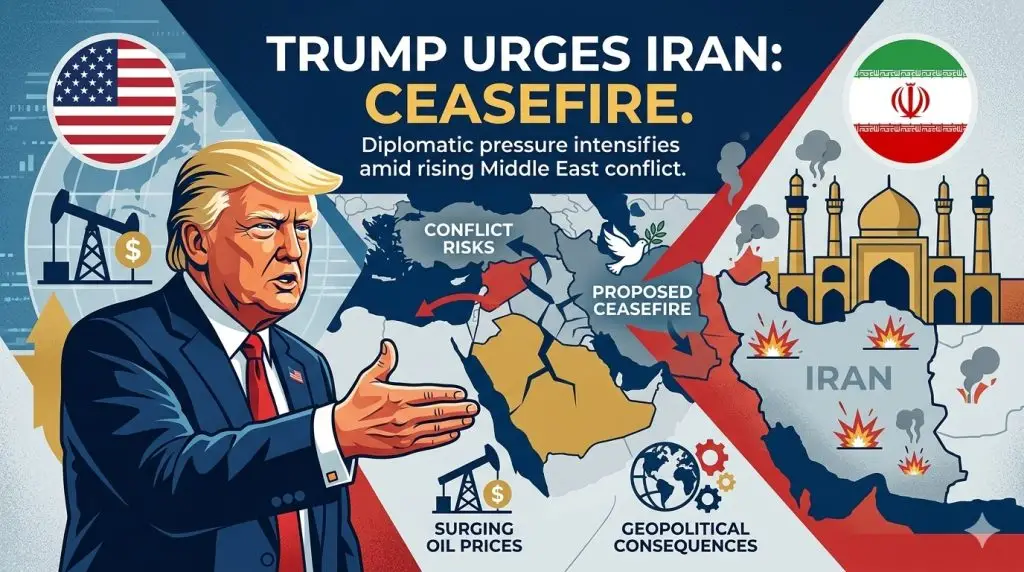
In a dramatic escalation of diplomatic pressure, U.S. President Donald Trump has urged Iran to move swiftly on a proposed ceasefire plan aimed at halting the intensifying conflict in the Middle East. The appeal comes amid rising global concern over prolonged hostilities, surging oil prices, and the growing risk of a broader regional war.
The situation remains fluid and highly volatile. While Washington insists that negotiations are progressing, Tehran has signaled resistance, raising doubts about whether a ceasefire can be achieved in the near term. As both sides exchange warnings and conditions, the international community watches anxiously, aware that delays could have far-reaching geopolitical and economic consequences.
Trump’s Urgent Call for Action
President Trump delivered a stark message to Iranian leadership: act quickly or risk severe consequences. According to recent reports, he warned that the window for diplomacy may be closing rapidly, emphasizing that hesitation could lead to further military escalation.
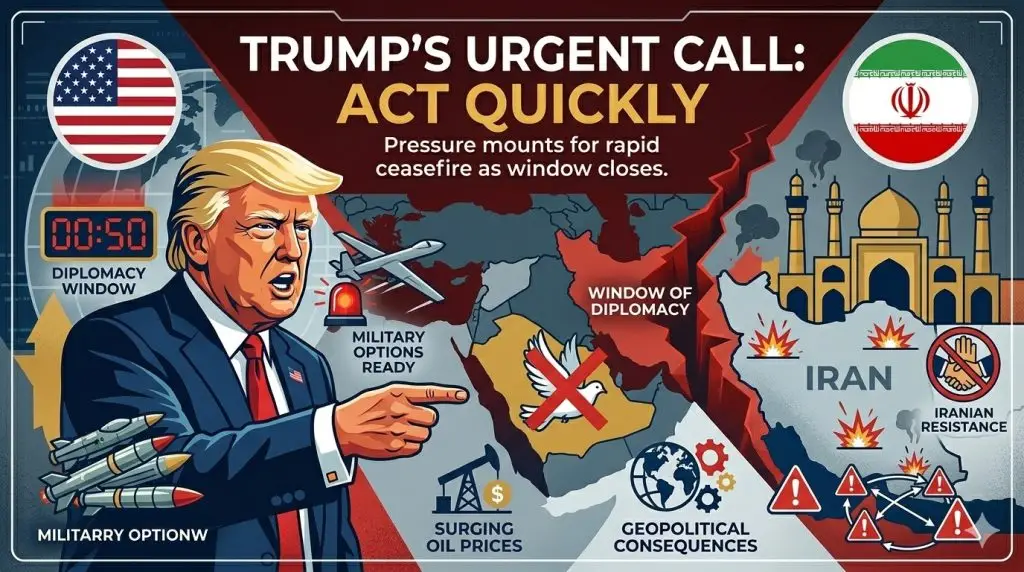
Trump’s tone reflects increasing frustration within the U.S. administration. He has repeatedly claimed that Iran is under mounting pressure and may be seeking a way out of the conflict, though Iranian officials deny such assertions.
The ceasefire proposal—reportedly a detailed multi-point plan—aims to pause hostilities, reopen critical trade routes, and create space for broader negotiations. However, Trump has made it clear that patience is running out, signaling that military options remain firmly on the table.
The Ceasefire Proposal: What’s at Stake
The U.S.-backed ceasefire plan reportedly includes several key components:
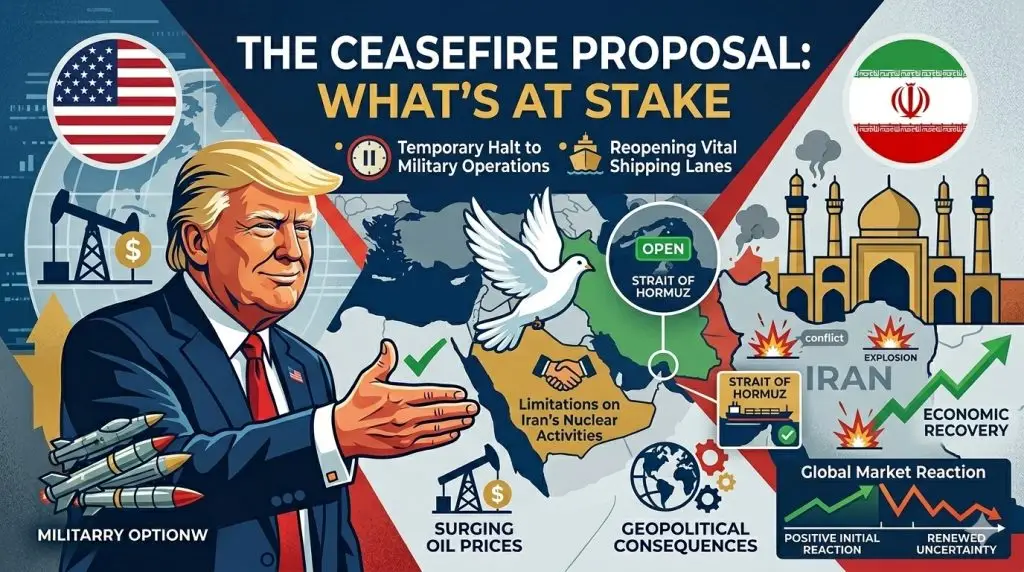
- A temporary halt to military operations
- Reopening of vital shipping lanes, including the Strait of Hormuz
- Limitations on Iran’s nuclear activities
- Framework for longer-term peace negotiations
Markets initially reacted positively to news of the proposal, with stocks rising and oil prices briefly falling. However, optimism faded quickly as uncertainty returned.
The Strait of Hormuz, a critical artery for global oil shipments, remains a central issue. Any disruption there has immediate global repercussions, affecting energy supplies and economic stability worldwide
Iran’s Response: Cautious and Defiant
Iran’s reaction to the ceasefire proposal has been cautious at best—and defiant at worst. Officials in Tehran have indicated that while they are reviewing the proposal, they are not prepared to accept terms they view as unfavorable.
Iran has reportedly put forward its own conditions, which include:
- Greater control over regional waterways
- Security guarantees against future attacks
- Compensation for damages
- Recognition of its strategic interests
In some reports, Iranian authorities have outright rejected elements of the U.S. proposal, describing them as excessive or unrealistic.
This divergence highlights a fundamental challenge: both sides appear to be negotiating from positions of strength, making compromise difficult.
Indirect Talks and Diplomatic Channels
Despite public disagreements, indirect negotiations are ongoing. Several countries—including Pakistan, Egypt, and Turkey—are reportedly acting as intermediaries between Washington and Tehran.
These backchannel discussions are crucial, as direct communication between the U.S. and Iran remains limited. Diplomats hope that quiet negotiations may yield progress even as public rhetoric remains confrontational.
However, the lack of transparency surrounding these talks adds to uncertainty. Conflicting statements from both sides have made it difficult to assess whether meaningful progress is being made.
Military Pressure and Strategic Calculations
Behind the diplomatic efforts lies a backdrop of continued military activity. The U.S. has reportedly increased its military presence in the region, while Iran continues to demonstrate its capabilities through retaliatory actions.
Trump has hinted at the possibility of a “final blow” if Iran fails to engage seriously in negotiations.
This strategy reflects a classic approach: combining diplomatic outreach with military pressure to force concessions. However, such tactics carry significant risks, including unintended escalation and miscalculation.
Global Economic Impact
The ongoing conflict has already had profound effects on the global economy:
- Oil prices have surged amid supply concerns
- Stock markets have experienced heightened volatility
- Trade disruptions have increased costs for businesses
- Energy-importing nations face inflationary pressures
Analysts warn that prolonged instability could trigger a broader economic downturn. The World Food Programme has even cautioned that extended conflict could exacerbate global hunger, particularly in vulnerable regions.
For countries like Bangladesh and others heavily dependent on energy imports, the stakes are especially high.
Political Pressures on Trump
Domestically, Trump faces mounting pressure to resolve the conflict. Rising fuel prices and economic uncertainty have begun to affect public opinion, with critics questioning the administration’s strategy.
At the same time, Trump is attempting to project strength, balancing calls for peace with warnings of military action. This dual approach reflects both political necessity and strategic calculation.
Some analysts suggest that securing a ceasefire could provide a significant political boost, while failure to do so could carry electoral consequences.
International Reactions
The international community has responded with a mix of concern and cautious optimism. Major powers, including China and European nations, have urged both sides to pursue dialogue and avoid further escalation.
Regional actors are particularly concerned about the potential for the conflict to spread. Neighboring countries fear that continued fighting could destabilize the broader Middle East, leading to refugee crises and security challenges.
Diplomatic efforts are intensifying, with multiple countries seeking to mediate and prevent a full-scale war.
Key Obstacles to Peace
Several major obstacles stand in the way of a ceasefire:
1. Mistrust Between the Parties
Decades of hostility have created deep-seated mistrust, making negotiations extremely challenging.
2. Conflicting Demands
Both sides have set conditions that are difficult to reconcile, particularly regarding security and sovereignty.
3. Domestic Political Considerations
Leaders on both sides must consider internal political pressures, which can limit their flexibility.
4. Ongoing Military Actions
Continued fighting undermines diplomatic efforts and increases the risk of escalation.
The Role of the Strait of Hormuz
One of the most critical issues in the conflict is control over the Strait of Hormuz. This narrow waterway is essential for global oil transportation, with a significant portion of the world’s energy supply passing through it.
Iran has used its position to exert pressure, while the U.S. insists on maintaining open navigation. This dispute lies at the heart of the current crisis and complicates ceasefire negotiations.
What Happens Next?
The coming days are likely to be निर्णয়কারী (decisive). Several scenarios are possible:
Scenario 1: Ceasefire Agreement
If both sides make concessions, a temporary ceasefire could be reached, providing relief to global markets and reducing tensions.
Scenario 2: Prolonged Stalemate
Negotiations may continue without resolution, leading to ongoing instability and periodic escalations.
Scenario 3: Escalation
If talks break down completely, the conflict could intensify, potentially drawing in additional countries.
At present, all three scenarios remain plausible.
Conclusion: Trump urges Iran ceasefire
President Donald Trump’s urgent call for Iran to act quickly on a ceasefire plan underscores the high stakes of the current crisis. While diplomatic efforts are ongoing, significant challenges remain, and the risk of escalation continues to loom large.
The world stands at a critical juncture. A successful ceasefire could pave the way for broader peace negotiations, while failure could deepen the conflict with far-reaching consequences.
For now, uncertainty dominates. As negotiations continue behind the scenes and tensions play out on the ground, the international community watches closely—hoping that diplomacy will prevail before it is too late.