
Trump Iran war intensifies as Natanz nuclear facility attack raises global fears. Rising tensions, oil shocks, and conflict escalation threaten stability.
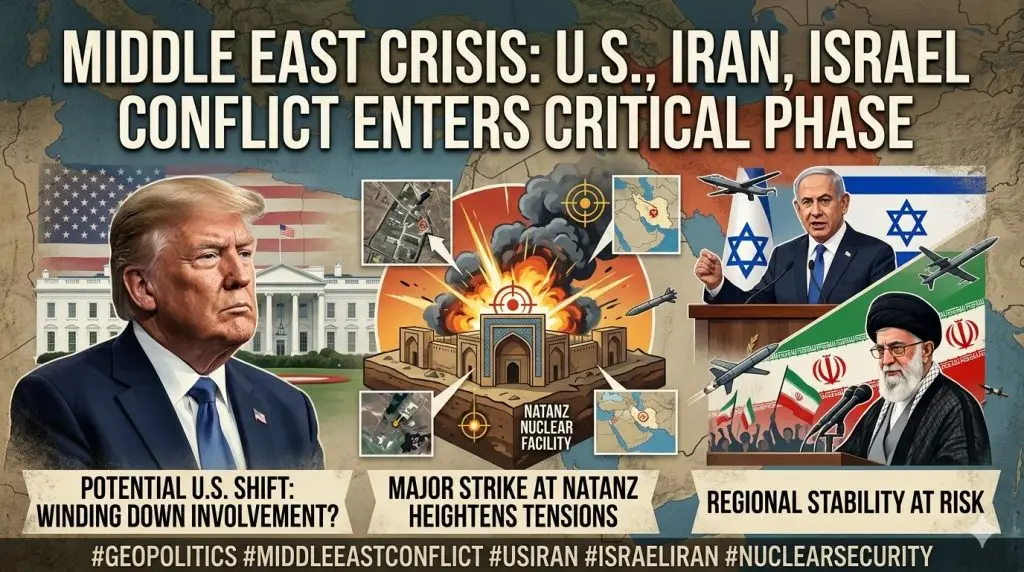
The ongoing conflict involving the United States, Iran, and Israel has entered a critical and uncertain phase, as U.S. President Donald Trump indicates a potential change in approach. After weeks of intense military exchanges, mounting casualties, and global economic disruptions, Trump has indicated that Washington is considering “winding down” its involvement in the war with Iran.
At the same time, reports of a major strike on Iran’s Natanz nuclear facility have heightened tensions, raising concerns about nuclear security, regional stability, and the potential for wider escalation. The situation reflects a complex blend of military strategy, geopolitical maneuvering, and economic pressure, all unfolding against the backdrop of one of the most volatile conflicts in recent Middle Eastern history.
A Turning Point in the Conflict
The war, which began in late February, has rapidly escalated into a multi-front confrontation involving Iran, Israel, and U.S. forces. Over the past several weeks, the conflict has seen missile strikes, drone attacks, and coordinated military operations across multiple countries.
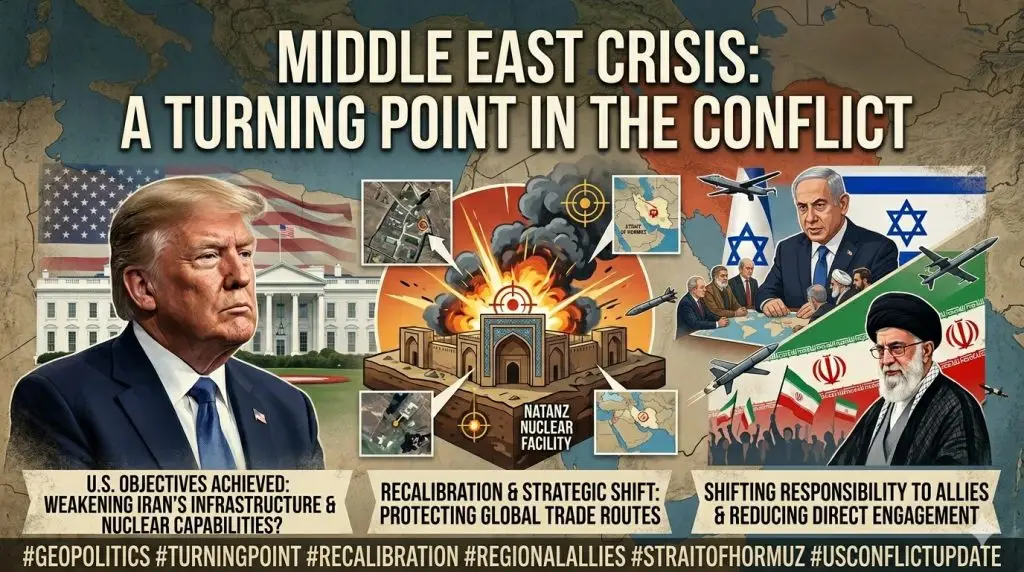
Now, President Trump’s statement about potentially scaling back U.S. involvement marks a possible turning point. According to reports, the U.S. believes it has achieved key objectives, particularly in weakening Iran’s military infrastructure and limiting its nuclear capabilities.
However, the announcement does not necessarily signal an immediate end to hostilities. Instead, it suggests a strategic recalibration—one that may shift responsibility for regional security to allies while reducing direct American engagement.
Trump has also emphasized that other nations should take a more active role in ensuring stability, particularly in protecting vital global trade routes such as the Strait of Hormuz.
The Natanz Nuclear Facility Strike
One of the most significant developments in the conflict is the reported attack on Iran’s Natanz nuclear facility, a key site for uranium enrichment. The facility has long been at the center of international concerns over Iran’s nuclear program.
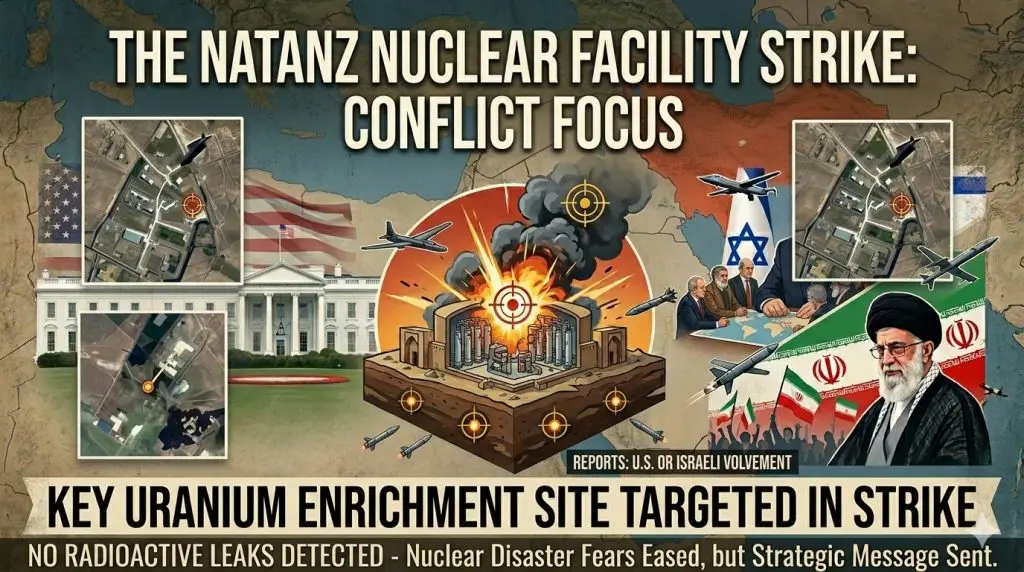
Recent reports indicate that the site was targeted in a strike believed to involve either U.S. or Israeli forces. While details remain limited, both Iran and international monitoring agencies have stated that no radioactive leaks were detected following the attack.
This absence of radiation fallout has somewhat eased fears of an immediate nuclear disaster. However, the strike itself carries major symbolic and strategic implications. Targeting Natanz sends a clear message about the willingness of the U.S. and its allies to directly confront Iran’s nuclear ambitions.
The attack also underscores the continued importance of nuclear facilities as focal points in modern warfare—particularly in conflicts where the threat of nuclear proliferation is a central concern.
Escalation Despite Talk of De-escalation
Interestingly, Trump’s suggestion of “winding down” the war comes at a time when military operations appear to be intensifying rather than slowing.

Israel has announced plans to ramp up its attacks on Iranian targets, signaling that it may continue aggressive operations even if the United States reduces its direct involvement.
Meanwhile, Iran has responded with a series of retaliatory strikes, including missile and drone attacks targeting U.S. and allied positions across the region. One notable incident involved Iranian ballistic missiles aimed at a joint U.S.-British base on Diego Garcia, though the missiles reportedly missed their target.
These developments highlight a key challenge: even if the U.S. chooses to step back, the broader conflict may continue to escalate due to the actions of regional players.
Human Cost of the War
The human toll of the conflict has been devastating. Thousands have lost their lives, while millions have been forced to flee their homes.
Reports indicate that over 2,000 people have died in Iran alone since the conflict began, with additional casualties reported in Lebanon, Israel, and among U.S. forces.
Civilian infrastructure has also been heavily affected. Hospitals, residential areas, and public facilities have been damaged or destroyed, leaving many communities struggling to cope with the aftermath.
The humanitarian situation continues to deteriorate, with limited access to medical care, food, and essential services in some of the hardest-hit areas.
Global Economic Shockwaves
Beyond the immediate human and military impacts, the conflict has triggered significant disruptions in the global economy.
Oil prices have surged by more than 50%, driven largely by instability in the Middle East and the closure of key shipping routes.
The Strait of Hormuz, a critical chokepoint for global energy supplies, remains largely blocked, severely restricting the flow of oil and liquefied natural gas. This has led to sharp increases in energy costs worldwide, contributing to rising inflation and economic uncertainty.
European gas prices have also climbed dramatically, forcing governments to reconsider energy storage strategies and explore alternative supply sources.
U.S. Policy Shift and Oil Sanctions
In an effort to stabilize global energy markets, the Trump administration has taken the unusual step of easing sanctions on Iranian oil.
Specifically, restrictions were lifted on millions of barrels of Iranian crude already in transit, allowing the oil to enter global markets.
The move is intended as a short-term solution to alleviate supply shortages and reduce price pressures. However, it has sparked criticism from lawmakers and analysts, who argue that it could inadvertently provide financial support to Iran during an active conflict.
This policy decision highlights the complex balancing act facing the U.S. government—attempting to weaken Iran militarily while also preventing a global economic crisis.
Strategic Importance of the Strait of Hormuz
A key factor in the conflict is the Strait of Hormuz, one of the world’s most important النفط shipping routes.
Roughly 20% of global oil supplies pass through this narrow waterway, making it a critical artery for the global economy. The ongoing blockade has not only disrupted trade but also increased geopolitical tensions.
Trump has called on other nations to help secure the strait, suggesting that maintaining open shipping lanes should be a shared international responsibility.
Several countries have expressed willingness to assist, but many have also urged a de-escalation of the conflict as a condition for their involvement.
Iran’s Response and Leadership Messaging
Iran’s leadership has adopted a defiant stance in response to the attacks. In a recent message marking the Persian New Year (Nowruz), Iran’s Supreme Leader emphasized resistance and national unity.
The tone of the message reflects a broader strategy of resilience, aimed at maintaining domestic support while signaling determination to continue the fight.
At the same time, Iran has sought to demonstrate its military capabilities through continued missile and drone attacks, reinforcing its position as a formidable regional power.
Political Pressure in the United States
Back in the United States, the war has become a major political issue.
Members of Congress from both parties are demanding greater clarity بشأن the administration’s strategy, including its objectives, costs, and potential exit plan.
There is also growing concern about the financial burden of the conflict, with estimates suggesting that military operations could cost hundreds of billions of dollars.
For Trump, the situation presents both a challenge and an opportunity. On one hand, the war risks becoming a prolonged and unpopular conflict. On the other hand, a successful de-escalation could be framed as a strategic victory.
International Reactions
The global response to the conflict has been mixed.
Some countries have expressed support for U.S. and Israeli actions, particularly in relation to preventing nuclear proliferation. Others have strongly condemned the attacks, arguing that they violate international law and risk further destabilizing the region.
Russia, for example, has criticized the strikes on Iran, بينما several nations have called for an immediate ceasefire and a return to diplomatic negotiations.
Meanwhile, a coalition of more than 20 countries has urged Iran to halt its attacks and reopen the Strait of Hormuz, highlighting the widespread चिंता over the economic and امنیت implications of the conflict.
Nuclear Security Concerns
The attack on Natanz has brought renewed attention to the خطر posed by nuclear facilities in conflict zones.
Even in the absence of radiation leaks, such strikes carry significant risks. Damage to nuclear infrastructure can lead to long-term environmental consequences, as well as increased tensions بين الدول.
International organizations, including the United Nations’ nuclear watchdog, continue to monitor the situation closely, emphasizing the need for restraint and adherence to safety protocols.
What “Winding Down” Really Means
Trump’s statement about “winding down” the war raises important questions about the future direction of U.S. policy.
Does it mean a complete withdrawal of American forces? Or does it simply تشير to a reduction in direct combat operations?
At this stage, the answer remains unclear. However, analysts suggest that the U.S. may shift toward a دعم role, focusing on intelligence, logistics, and الدفاع rather than offensive operations.
Such a strategy would allow the U.S. to maintain influence in the region while reducing the risks associated with direct military engagement.
Risks of Further Escalation
Despite talk of de-escalation, the risk of further escalation remains high.
The involvement of multiple countries, combined with the وجود of advanced military capabilities on all sides, creates a volatile and unpredictable situation.
Any miscalculation—such as a strike causing significant civilian casualties or damage to critical infrastructure—could trigger a wider conflict.
There is also the possibility of cyberattacks, proxy wars, and other غير تقليدية forms of warfare, which could further complicate the situation.
The Road Ahead
As the conflict continues, several key factors will shape its future:
- Diplomatic efforts: Whether international actors can broker a ceasefire
- Military developments: The effectiveness of ongoing operations
- Economic pressures: The impact of rising energy prices
- Domestic politics: Public opinion and political dynamics داخل the U.S. and other countries
The coming weeks will be crucial in determining whether the conflict moves toward resolution or further escalation.
Conclusion: Trump Iran war
The statement by President Trump that the United States is considering “winding down” its war with Iran marks a potentially significant moment in an already complex and dangerous conflict.
However, the simultaneous attack on the Natanz nuclear facility and the استمرار of military العمليات across the region highlight the استمرار of tensions.
While there are signs of a possible shift toward de-escalation, the situation remains highly uncertain. The interplay between military strategy, economic pressures, and political considerations will ultimately determine the outcome.
For now, the world watches closely as events continue to unfold—aware that the stakes could hardly be higher.