
Shocking 2026 war update: Rising death toll after US-Israel strikes on Iran. Civilian casualties surge across the Middle East as the conflict spreads rapidly.
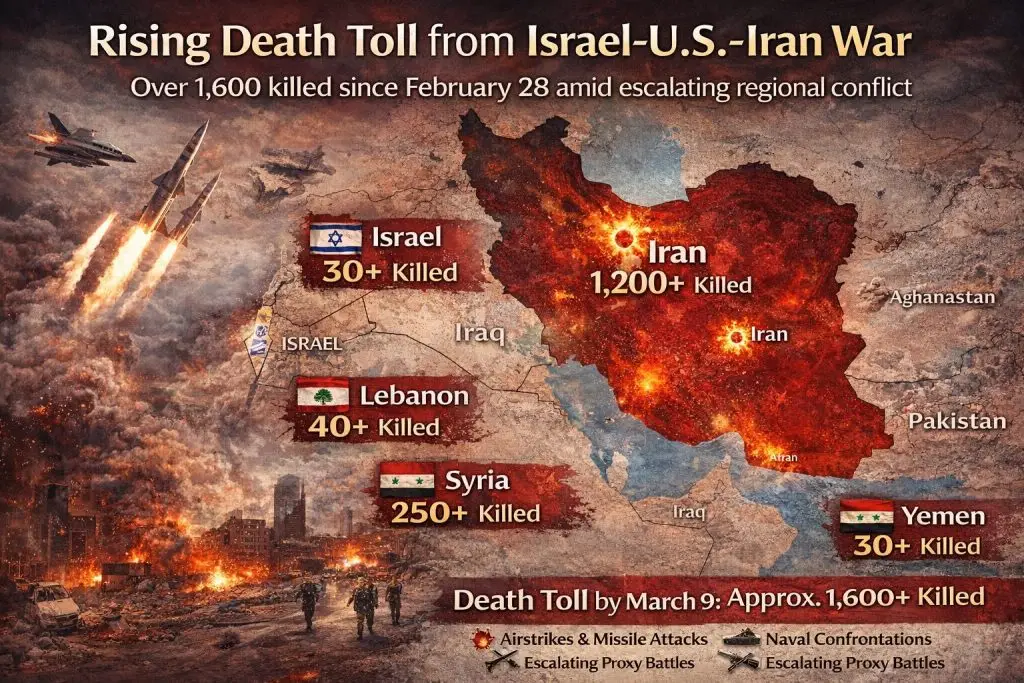
The conflict that erupted after the United States and Israel launched coordinated strikes on Iran on February 28 has rapidly expanded into one of the most dangerous regional crises in recent Middle Eastern history. In only a little more than a week, the war has spread beyond Iran’s borders, drawing in multiple countries across the region and leaving hundreds of civilians and soldiers dead.
Air strikes, missile attacks, naval confrontations, and proxy battles have all contributed to the growing human cost. Cities have faced bombardment, military bases have been targeted, and civilian infrastructure has been damaged or destroyed.
By March 9, reports from governments, health authorities, and humanitarian organizations suggested that well over 1,600 people had died across several countries. However, the true toll may be even higher because many areas remain inaccessible to journalists and independent observers.
Below is a detailed breakdown of the deaths reported so far in each country affected by the conflict.
The War That Sparked the Crisis
The conflict began when the United States and Israel launched what they described as “preventive military operations” against Iranian military infrastructure and strategic facilities.
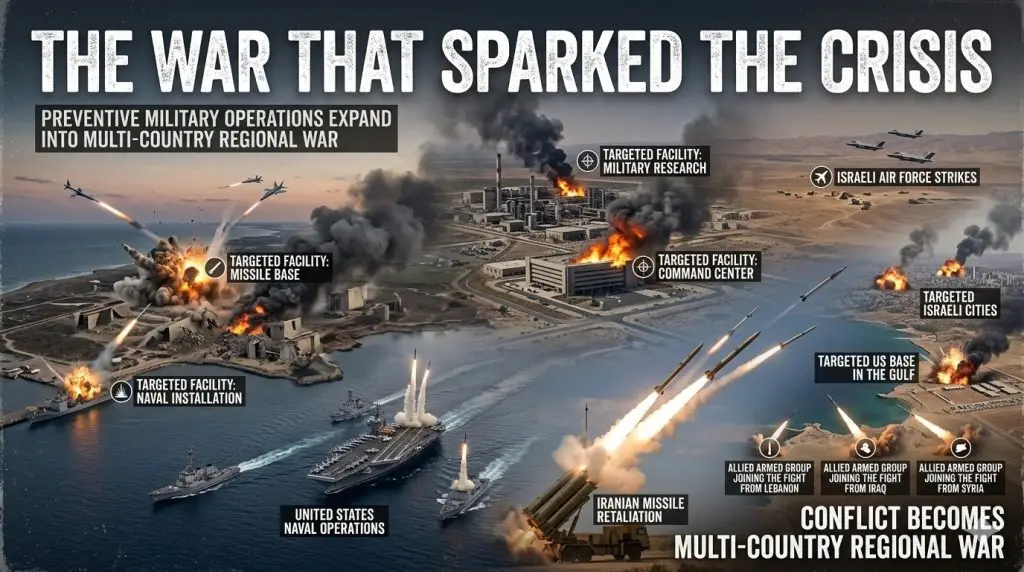
The attacks reportedly targeted:
- Missile bases
- Naval installations
- Military research facilities
- Command centers connected to regional proxy groups
Iran quickly retaliated with missile and drone attacks targeting Israeli cities and American military bases in the Gulf region. Soon afterward, armed groups allied with Iran—including factions in Lebanon, Iraq, and Syria—joined the fighting.
Within hours, the confrontation expanded beyond a single battlefield and became a multi-country regional war.
Iran: The Highest Death Toll
Iran has suffered the most casualties since the beginning of the conflict.
According to the humanitarian organization Iranian Red Crescent Society, at least 1,230 people have been killed since the first wave of strikes.
Many of those killed were civilians caught in missile attacks and air strikes.
School Strike Tragedy
One of the most devastating incidents occurred in the southern Iranian city of Minab.
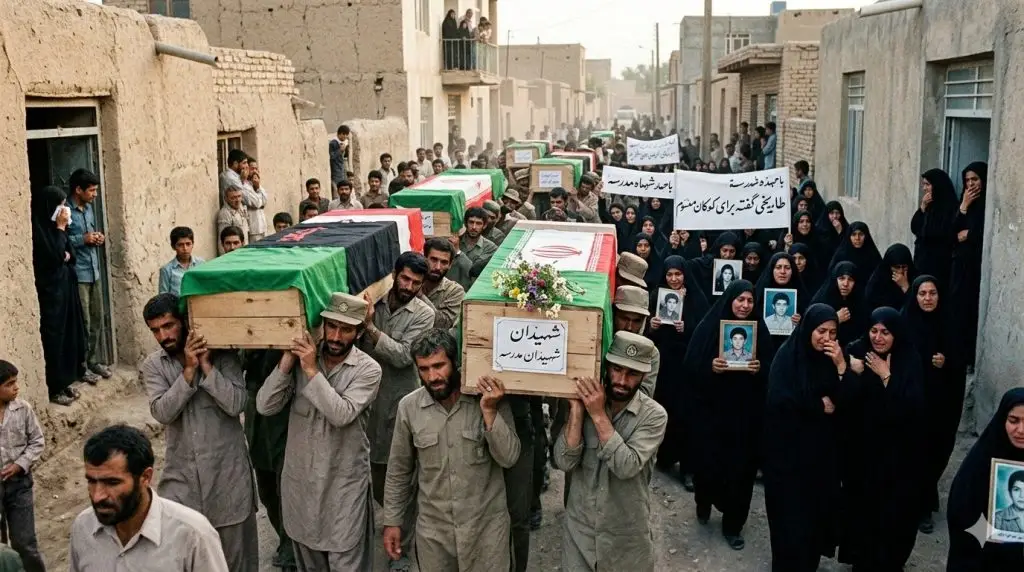
On the first day of the war, a missile struck a primary school, killing 175 people, including:
- Schoolgirls
- Teachers
- Administrative staff
Images from the scene showed grieving families carrying coffins during funeral processions through the town. The strike sparked outrage inside Iran and drew criticism from humanitarian organizations.
Investigations into the attack are still ongoing, and officials have not reached a final conclusion about responsibility.
Naval Battle Near Sri Lanka
Another deadly event happened far from Iranian territory.

Iranian officials reported that a naval confrontation occurred near the coast of Sri Lanka. During the incident, a United States submarine allegedly sank an Iranian warship.
The Iranian army stated that 104 sailors died when the vessel was destroyed.
However, these deaths were not included in the official civilian death toll provided by humanitarian groups.
Military Casualties Unclear
It remains unclear whether the total number of 1,230 deaths includes members of the Islamic Revolutionary Guard Corps.
Iran has not released full details about military losses, which means the actual number of casualties could be significantly higher.
Israel: Civilian and Military Deaths
Israel has also experienced casualties, although the numbers remain far lower than those reported in Iran.
According to Israeli authorities:
- Two Israeli soldiers were killed in southern Lebanon
- Eleven civilians died in Iranian missile strikes
The deaths of the soldiers occurred after fighting resumed with Hezbollah, which launched attacks in support of Iran.
Missile Strike Near Jerusalem
The deadliest attack inside Israel happened on March 1, when an Iranian missile struck a residential area in Beit Shemesh.
The strike killed nine civilians, including families who were inside their homes when the missile exploded.
Emergency responders from Magen David Adom reported that several others were wounded.
The attack marked one of the worst missile incidents inside Israel since the war began.
United States: Military Losses
The United States has confirmed that seven servicemembers have died since the beginning of operations against Iran.
These deaths occurred during:
- Naval engagements
- Air operations
- Missile attacks on US bases
Although US officials have not released detailed information about the incidents, defense sources say the fatalities happened during combat missions across the Gulf region.
American bases in the region have been placed on high alert, with additional missile defense systems deployed.
Lebanon: A Major Battlefield
Lebanon has suffered one of the highest casualty counts outside Iran.
According to the Lebanese health ministry, at least 394 people have been killed in Israeli strikes.
Among the dead were:
- 83 children
- Dozens of women
- Hundreds of civilians
The strikes targeted areas believed to contain Hezbollah infrastructure, but many residential districts were also affected.
Escalation with Hezbollah
Hezbollah entered the war shortly after the first strikes on Iran.
The group fired rockets into northern Israel and attacked Israeli military positions near the border. Israel responded with heavy air strikes across southern Lebanon.
Several towns have been severely damaged, forcing thousands of residents to flee.
Saudi Arabia: Civilian Deaths
Although Saudi Arabia is not directly involved in the fighting, the war has already reached its territory.
Authorities reported that two people were killed when a projectile struck a residential area in Al-Kharj.
The attack occurred southeast of the capital Riyadh.
Investigators believe the projectile may have been a missile or drone linked to regional military activity.
Bahrain: Industrial Fire After Missile Interception
In Bahrain, authorities confirmed one death after a missile interception caused debris to fall in Salman Industrial City.
The falling debris triggered a fire in an industrial facility.
Emergency crews responded quickly, but one worker was killed in the incident.
Bahrain hosts a major US naval base, making it a potential target in the regional conflict.
Kuwait: Child and Security Personnel Killed
In Kuwait, authorities reported multiple deaths linked to Iranian attacks.
According to government statements:
- One child was killed
- Two interior ministry officers died
- Two soldiers were killed while on duty
Officials said the casualties occurred during missile and drone attacks targeting strategic locations.
Kuwait has since increased security around military installations and critical infrastructure.
Oman: Maritime Incident Off Muscat
A maritime tragedy occurred near Muscat.
A projectile struck a product tanker named MKD VYOM, which was sailing under the flag of the Marshall Islands.
The strike killed one person on board.
Shipping companies have since become increasingly concerned about safety in the region’s waters, particularly around the Strait of Hormuz.
United Arab Emirates: Four Dead
In the United Arab Emirates, the defense ministry confirmed that four people were killed during the conflict.
Authorities did not release detailed information about the circumstances but indicated the deaths were connected to military operations and regional missile activity.
Major cities such as Dubai and Abu Dhabi have strengthened air defense systems amid fears of further attacks.
Syria: Missile Strike in Sweida
In southern Syria, four people were killed when an Iranian missile struck a building in Sweida on February 28.
The incident was reported by the Syrian state news agency Syrian Arab News Agency.
Although Syria has been affected by regional conflicts for years, this strike demonstrated how the new war could widen the battlefield.
Iraq: Rising Casualties
In Iraq, police and health officials reported at least 15 deaths linked to the conflict.
One of the most significant incidents occurred on March 5, when an air strike hit a vehicle carrying a commander from the Islamic Resistance in Iraq.
The commander and several others were killed in the strike.
The attack highlighted the involvement of Iran-backed militias operating in Iraq.
The Humanitarian Impact
Beyond the death toll, the conflict has created a growing humanitarian crisis.
Across the region:
- Thousands of people have been injured
- Hospitals are struggling with shortages
- Families are being displaced
Schools, homes, and civilian infrastructure have also been damaged.
In several cities, rescue workers continue searching through debris for survivors.
Humanitarian groups warn that if the war continues, the number of casualties could rise dramatically.
Risk of a Wider Regional War
The involvement of multiple countries raises fears that the conflict could escalate into a full-scale regional war.
Several factors contribute to this risk:
- Iran’s network of regional allies
- US military bases across the Gulf
- Israel’s ongoing confrontation with Hezbollah
- Shipping tensions in the Persian Gulf
If more countries become involved, the conflict could affect global trade routes and energy markets.
The Challenge of Verifying Death Tolls
One major difficulty in reporting the casualties is the lack of independent verification.
Many of the numbers currently available come from:
- Government sources
- Health ministries
- Military statements
- Humanitarian organizations
Journalists and international investigators often cannot access the areas where fighting is taking place.
Because of this, the actual number of deaths may be higher than reported.
Global Reactions
Governments around the world have expressed concern about the growing conflict.
Some countries have called for immediate ceasefire negotiations, while others have urged restraint from all sides.
International organizations warn that continued escalation could destabilize the entire Middle East.
Diplomatic efforts are now underway to prevent the situation from spiraling into a wider war.
Conclusion: US-Israel Strikes on Iran
The war that began with strikes on Iran has quickly spread across the Middle East, affecting numerous countries and killing hundreds of civilians and soldiers.
From the devastating school strike in Minab to missile attacks in Israel and battles in Lebanon, the human toll continues to grow.
While governments debate military strategy and political responses, ordinary people across the region are paying the highest price.
As of early March, the conflict has already claimed more than 1,600 lives, and the number may rise as fighting continues.
Whether diplomatic efforts succeed or the war intensifies further will determine the future of the region—and the fate of thousands more who could be caught in the crossfire.