
Explore why Yemen’s Houthis have not joined the Israel-US conflict with Iran yet. Analysis of strategy, Red Sea tensions, and regional war risks.
Introduction
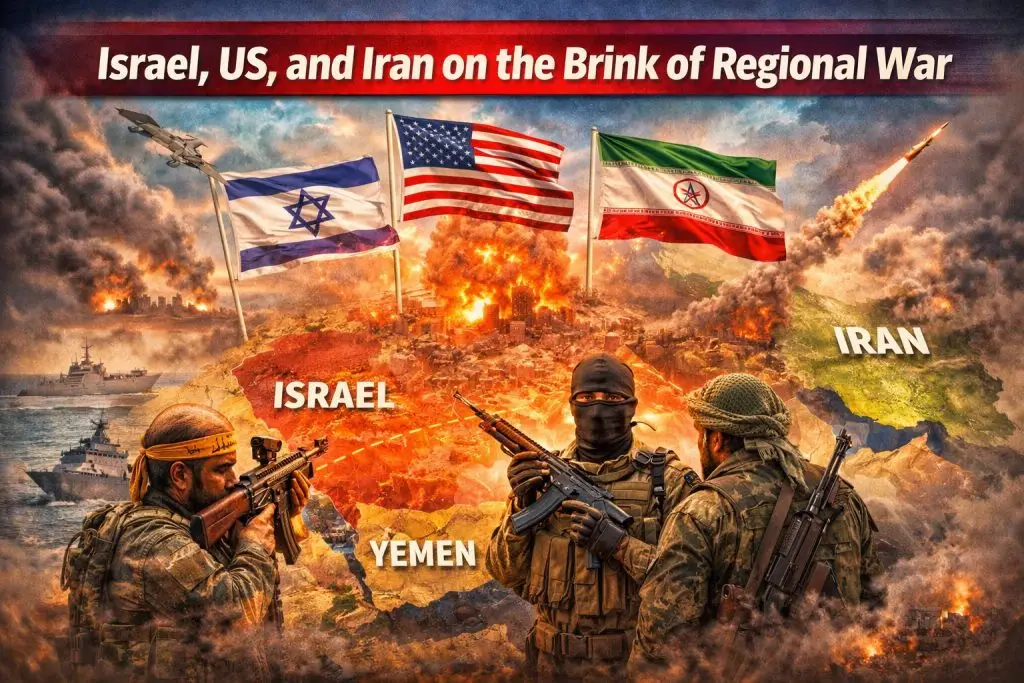
The escalating confrontation between the United States, Israel, and Iran has pushed the Middle East toward the brink of a wider regional war. In recent weeks, military strikes, drone attacks, and missile exchanges have intensified, drawing global attention and concern. Explosions in Iranian cities, retaliatory strikes across the region, and rising geopolitical tensions have signaled that the conflict could spread far beyond the borders of Iran and Israel.
Amid this volatile situation, many observers expected Iran’s regional allies—often referred to as the “axis of resistance”—to immediately enter the conflict. These groups include Hezbollah in Lebanon, several pro-Iran militias in Iraq and Syria, and Yemen’s powerful Houthi movement. Yet, despite their strong rhetoric supporting Iran, the Houthis have not fully joined the fight against Israel and the United States.
This restraint has puzzled analysts and policymakers alike. The Houthis have demonstrated the capability to launch long-range drones and missiles toward Israel and to disrupt global shipping in the Red Sea. In previous conflicts, they have been quick to act against perceived enemies. However, in the current confrontation, they appear to be waiting.
The question, therefore, is not whether the Houthis support Iran—they clearly do—but why they are holding back for now. The answer lies in a combination of military strategy, political calculation, regional alliances, and the fragile situation inside Yemen itself.
The Yemens Houthis : A Powerful Regional Player
The Houthi movement, formally known as Ansar Allah, emerged in northern Yemen during the 1990s as a political and religious movement representing the country’s Zaydi Shia community. Over time, the group evolved into a powerful armed organization.
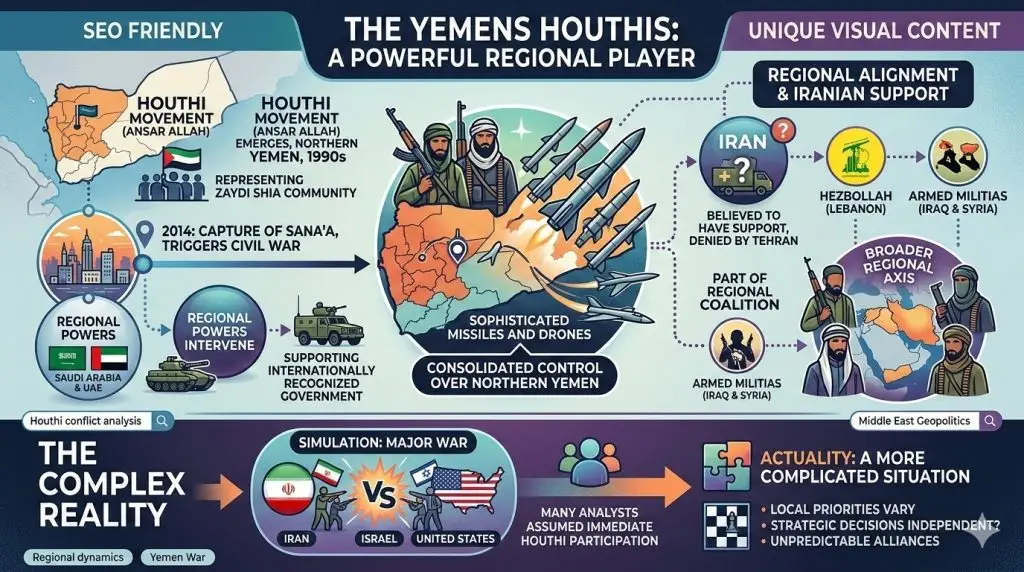
In 2014, the Houthis captured Yemen’s capital, Sana’a, triggering a prolonged civil war that continues today. The conflict drew in regional powers, including Saudi Arabia and the United Arab Emirates, who intervened militarily to support Yemen’s internationally recognized government.
Since then, the Houthis have consolidated control over large parts of northern Yemen and developed a sophisticated arsenal of missiles and drones. Much of this capability is believed to be linked to support from Iran, although Tehran has often denied direct military involvement.
Over the past several years, the Houthis have increasingly positioned themselves as part of a broader regional coalition aligned with Iran. This coalition also includes militant groups such as Hezbollah in Lebanon and various armed militias in Iraq and Syria.
Because of these connections, many analysts assumed the Houthis would immediately join Iran if a major war broke out with Israel and the United States.
But reality has proven more complicated.
The Current Israel-US-Iran Conflict
The latest crisis began when tensions between Israel and Iran escalated into direct military confrontation. Israeli and American forces launched coordinated strikes targeting Iranian military infrastructure and leadership positions.
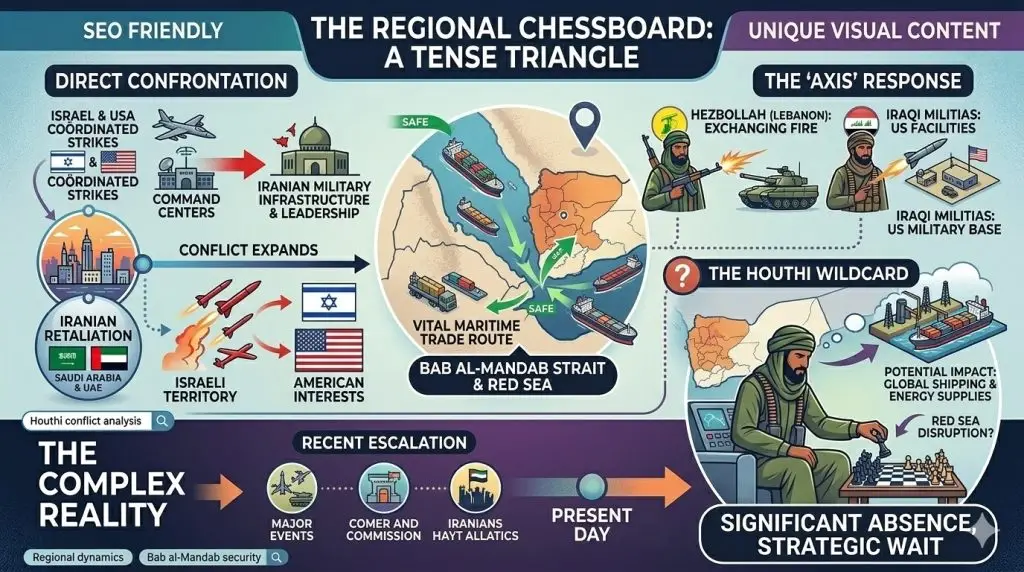
These attacks triggered retaliation from Iran, which launched missiles and drones toward Israeli territory and American interests in the region. The conflict quickly expanded beyond a traditional bilateral confrontation.
Iran-aligned militias in Iraq have carried out attacks on US facilities, while Hezbollah has exchanged fire with Israeli forces along the Lebanese border.
Despite these developments, the Houthis have not yet opened a new front in the conflict.
This absence is significant because Yemen sits in a strategically important location overlooking the Red Sea and the Bab al-Mandab Strait, one of the world’s most vital maritime trade routes. Disruption in this area could severely impact global shipping and energy supplies.
For now, however, the Houthis are staying on the sidelines.
Public Support for Iran — But No Immediate War
Although the Houthis have not joined the fighting directly, their leaders have made it clear that they support Iran politically and ideologically.

Houthi leader Abdul-Malik al-Houthi has declared that Yemen stands with Iran and that the movement is ready to act militarily if necessary. According to his statements, Houthi fighters’ “hands are on the trigger,” indicating they could intervene at any moment if the situation demands it.
This rhetoric serves several purposes:
- It reassures Iran that the Houthis remain loyal allies.
- It signals to Israel and the United States that the conflict could expand at any time.
- It maintains the group’s reputation among supporters across the region.
However, rhetoric alone does not mean immediate military action.
The Houthis appear to be deliberately delaying their involvement.
Strategic Patience: Holding a Card in Reserve
One of the main reasons for Houthi restraint is strategic calculation.
Military analysts believe Iran may be deliberately holding some of its allied groups in reserve instead of deploying all of them simultaneously. This strategy prevents the conflict from escalating too quickly and keeps additional pressure points available if the war intensifies.
Experts suggest that the Houthis represent one of Tehran’s most valuable “cards” in this broader confrontation.
If they entered the war now, it could trigger massive retaliation from Israel and the United States. But if they remain on standby, they can be deployed later if the conflict worsens.
This strategic patience allows Iran to maintain multiple options while avoiding an uncontrolled regional escalation.
Yemen’s Internal Crisis
Another major factor influencing Houthi decision-making is the fragile situation inside Yemen itself.
After years of civil war, Yemen remains one of the poorest and most devastated countries in the world. Millions of people face food shortages, economic collapse, and limited access to basic services.
The Houthis control large territories, but governing these areas is extremely difficult. A new war against Israel or the United States could bring devastating airstrikes and worsen the humanitarian crisis.
Many Yemenis are already concerned about the possibility of their country becoming another battlefield in a regional war.
Reports from Sana’a suggest that residents initially feared immediate escalation when the Israel-Iran conflict began. Some families stocked up on food and fuel, expecting airstrikes to begin quickly. Yet the expected attacks never came.
For the Houthi leadership, entering the war too soon could destabilize their rule and provoke backlash from a population already suffering from years of conflict.
The Risk of Direct US and Israeli Retaliation
Another critical factor is the risk of overwhelming retaliation.
The United States and Israel possess significant military capabilities in the region, including advanced missile defense systems, aircraft carriers, and long-range strike forces.
If the Houthis began launching missiles toward Israel or attacking US assets, they could quickly become a major target for military strikes.
In the past, the United States and its allies have carried out airstrikes against Houthi positions in response to attacks on shipping or regional partners.
Opening a new front against Israel and the United States could trigger a massive military response that the Houthis may not be prepared to handle at this stage.
The Red Sea Factor
The Houthis also control territory along Yemen’s Red Sea coast, giving them influence over one of the world’s busiest shipping lanes.
In recent years, the group has launched drone and missile attacks on commercial vessels passing through the Red Sea. These attacks disrupted global shipping routes and forced many companies to reroute their ships.
Before the crisis, around $1 trillion worth of goods passed through the Red Sea each year, highlighting the importance of this maritime corridor.
Because of this strategic position, the Houthis can exert significant pressure on global trade without necessarily entering a full-scale regional war.
Keeping this capability in reserve gives them leverage that could be used later if the conflict escalates.
Iran’s Military Setbacks
Recent developments inside Iran may also influence the Houthis’ strategy.
The Israeli-US strikes reportedly targeted key Iranian political and military leaders, dealing a serious blow to Tehran’s leadership structure. These losses could temporarily weaken Iran’s ability to coordinate regional operations.
If Iran’s leadership becomes destabilized, it could disrupt the supply of weapons, funding, and strategic guidance to allied groups such as the Houthis.
Experts warn that a collapse or major weakening of Iran’s regime would have severe consequences for its regional allies, including the Houthis. Without Iranian support, the group’s military capabilities could gradually decline.
This uncertainty may be encouraging the Houthis to adopt a cautious approach.
Maintaining the Image of Independence
Another important reason for the Houthis’ restraint is political messaging.
Although the movement is widely seen as aligned with Iran, Houthi leaders often emphasize that they are an independent Yemeni movement rather than a direct proxy.
Entering the war immediately at Iran’s request could reinforce the narrative that they are simply following Tehran’s orders.
By delaying their involvement, the Houthis can maintain the appearance of acting according to their own strategic calculations.
This approach helps them maintain legitimacy among their supporters in Yemen and across the region.
The Possibility of Future Intervention
Despite their current restraint, few analysts believe the Houthis will remain neutral indefinitely.
If the war continues to escalate, the group may eventually enter the conflict.
Potential Houthi targets could include:
- Israeli cities
- US naval vessels in the Red Sea
- Military bases in the Gulf region
- Strategic shipping routes
Their drones and missiles have already demonstrated the ability to travel long distances, meaning they could potentially strike targets far beyond Yemen.
If this happens, it could open a new southern front against Israel and significantly expand the regional war.
What Happens Next?
The coming weeks will likely determine whether the Houthis stay out of the conflict or become active participants.
Several factors could influence their decision:
- The duration of the Israel-Iran war
- Direct requests from Iran
- Attacks on Houthi-controlled territory
- Regional political developments
- Internal pressure within Yemen
If the conflict escalates dramatically, the Houthis may decide that remaining on the sidelines is no longer possible.
However, if diplomatic negotiations or military stalemate reduces tensions, they may continue to avoid direct confrontation.
Conclusion
The decision by Yemen’s Houthis to stay out of the Israel-US fight with Iran—at least for now—is not a sign of neutrality or weakness. Instead, it reflects a complex strategic calculation shaped by military realities, regional politics, and the fragile situation inside Yemen.
By delaying their involvement, the Houthis preserve their military capabilities, avoid immediate retaliation, and maintain strategic flexibility. At the same time, they continue to signal strong support for Iran and leave open the possibility of joining the conflict if circumstances change.
In many ways, the Houthis represent a powerful wildcard in the unfolding Middle East crisis. Their ability to disrupt global shipping, launch long-range attacks, and open a new front in the war means their eventual decision could significantly reshape the region’s security landscape.
For now, they are watching and waiting.
But in a conflict as volatile as the one unfolding between Israel, the United States, and Iran, the situation can change rapidly.
And when it does, Yemen’s Houthis may no longer remain on the sidelines.