

What Is Remote Work? Discover 7 powerful remote work facts for 2026. Learn the benefits, challenges, and tips to succeed in today’s flexible workplace.
Introduction: What Is Remote Work?
The way professionals perform their jobs has evolved rapidly in recent years, driven by advances in technology and changing workplace expectations. Thanks to high-speed internet, cloud technology, and digital collaboration tools, employees no longer need to be in a traditional office to perform their jobs. Today, millions of professionals work from home, coworking spaces, coffee shops, or even while traveling. This flexible approach has transformed the global workforce and continues to grow in popularity.
If you’ve ever wondered, what is remote work, you’re not alone. Many job seekers, freelancers, students, and business owners are exploring remote work opportunities because of the freedom, flexibility, and career growth they offer. Companies are also embracing remote work to attract skilled talent from around the world while reducing operational costs. In 2026, remote work is no longer considered a temporary trend. Instead, it has become a long-term business strategy for organizations of all sizes. Advances in artificial intelligence, cloud computing, cybersecurity, and digital communication have made it easier than ever for teams to collaborate from different locations without sacrificing productivity.
Understanding what is remote work is important whether you’re searching for your first remote job, planning to switch careers, or looking for ways to improve your work-life balance. Learning how remote work functions can help you decide whether this modern work style matches your personal and professional goals. This comprehensive guide explains the meaning of remote work, how it operates, its benefits and challenges, and why it is shaping the future of employment. You’ll also discover seven powerful facts about remote work in 2026 that every professional should know before entering the remote workforce.
What Is Remote Work?
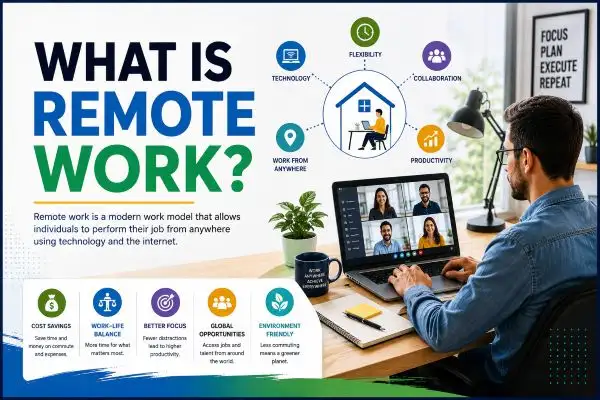
Remote work is a modern employment model that allows people to perform their job duties outside a traditional office. Rather than traveling to a workplace every day, employees can work from home, coworking spaces, libraries, or any location with a secure internet connection. Simply put, remote work is a flexible work arrangement that allows employees to perform their job responsibilities from locations outside a traditional office by using digital communication and collaboration tools. It is a flexible way of working that uses digital technology to help employees stay connected with their teams, managers, and clients regardless of where they are.
Remote work is also known by several names, including:
- Work from Home (WFH)
- Telecommuting
- Virtual Work
- Distributed Work
- Online Work
- Flexible Work
While these terms are similar, company policies may define them differently. Some organizations allow employees to work only from home, while others permit them to work from almost any location.
Remote work is widely used in industries such as:
- Information Technology (IT)
- Digital Marketing
- Graphic Design
- Content Writing
- Customer Support
- Accounting and Finance
- Software Development
- Education
- Human Resources
- Consulting
Although many careers support remote work, jobs that require physical interaction, such as construction, manufacturing, healthcare services, and hospitality, usually require employees to be on-site. As digital technology continues to advance, remote work is becoming a long-term workplace solution, giving businesses greater access to global talent while offering employees more flexibility, convenience, and improved work-life balance.
How Remote Work Works
After learning what is remote work, it’s important to understand how this flexible work model operates. Remote employees use digital technology to complete their daily tasks without being physically present in a traditional office. Internet access, cloud-based applications, and online communication tools allow teams to stay connected and work efficiently from different locations.
1. Work from Flexible Locations
Remote professionals can perform their jobs from various approved places, such as:
- Home offices
- Coworking spaces
- Shared offices
- Libraries or cafés
- Business centers
- Travel destinations (for location-independent roles)
2. Online Communication
Team members stay connected through digital channels, including:
- Video conferencing
- Instant messaging
- Voice calls
- Team collaboration platforms
3. Digital Task Management
Managers assign and monitor work using project management software. Employees receive:
- Daily and weekly tasks
- Project deadlines
- Progress updates
- Team responsibilities
4. Cloud File Sharing
Cloud storage allows employees to:
- Access files securely
- Collaborate in real time
- Share documents quickly
- Keep data backed up automatically
5. Flexible Work Schedules
Many organizations focus on employee performance rather than fixed office hours. Depending on company policies, workers may follow flexible, hybrid, or standard schedules.
6. Performance Evaluation
Remote employees are assessed based on:
- Quality of work
- Productivity
- Meeting deadlines
- Team collaboration
- Overall results
7. Strong Cybersecurity
To protect business information, companies encourage secure work practices such as using strong passwords, multi-factor authentication, encrypted connections, company-approved devices, and regular cybersecurity awareness training.

7 Powerful Remote Work Facts 2026
Remote work has evolved from a convenient option into a standard way of doing business. As organizations continue to adopt flexible work models, understanding what is remote work becomes even more important for employees, freelancers, entrepreneurs, and job seekers. The following seven facts highlight why remote work is shaping the future of employment in 2026.
Fact #1: Remote Work Is Growing Rapidly
One of the biggest facts about remote work is its remarkable growth. Over the past few years, businesses across the world have realized that employees can remain productive without working from a traditional office every day. As a result, more organizations are offering fully remote or hybrid positions.
Several factors have contributed to this rapid growth:
- Faster internet connections
- Cloud-based software
- Video conferencing tools
- Artificial intelligence
- Increased demand for flexible jobs
- Global talent shortages
Many companies now recruit employees from different cities and countries instead of limiting hiring to a single location. This allows businesses to access skilled professionals regardless of where they live. Remote work has also become attractive to employees because it reduces commuting time, offers greater flexibility, and supports a healthier work-life balance. Professionals can often choose where they work while maintaining regular communication with their teams. As digital transformation continues, experts expect remote work opportunities to expand across industries such as technology, finance, marketing, education, customer service, healthcare administration, and consulting.
Fact #2: Higher Productivity
Many people once believed employees would become less productive outside the office. However, experience has shown that remote work can actually improve productivity when managed effectively. After learning what is remote work, many professionals discover they can focus better in a comfortable environment without common office distractions.
Several reasons contribute to increased productivity:
- Fewer Interruptions:Open offices often include constant conversations, meetings, and interruptions. Remote workers can create quieter workspaces that help them concentrate on important tasks.
- Flexible Scheduling: Many remote employees can organize their work around their most productive hours. Some perform best early in the morning, while others work more efficiently later in the day.
- Less Time Spent Commuting: Long daily commutes can reduce energy levels before the workday even begins. Working remotely allows employees to use that saved time for work, exercise, learning, or spending time with family.
- Better Focus: Remote workers often have greater control over their work environment, making it easier to complete projects efficiently and meet deadlines.
Of course, productivity also depends on self-discipline, effective communication, and proper time management. Employees who establish daily routines and maintain organized schedules usually achieve excellent results.
Fact #3: Better Work-Life Balance
One of the greatest advantages of remote work is improved work-life balance. Employees gain more flexibility to manage both professional and personal responsibilities. Instead of spending hours traveling to an office, remote workers can use that time more effectively.
Many people find it easier to:
- Exercise regularly
- Prepare healthier meals
- Spend time with family
- Attend personal appointments
- Reduce daily stress
- Enjoy personal hobbies
A better balance between work and personal life often leads to higher job satisfaction and improved mental well-being. However, maintaining healthy boundaries is equally important. Remote workers should establish dedicated working hours and avoid allowing work to interfere with personal time. Creating a separate workspace and following a consistent schedule can help maintain this balance.
Fact #4: Companies Save Money
One of the biggest advantages of remote work is its ability to reduce business expenses without affecting productivity. By adopting flexible work arrangements, companies can lower several operating costs while continuing to support employee performance.
Businesses can save money in the following ways:
- Reduced Office Costs: Lower spending on office rent, electricity, furniture, maintenance, cleaning, and office supplies.
- Lower Travel Expenses: Virtual meetings decrease the need for business travel, accommodation, and transportation costs.
- Cost-Effective Hiring: Employers can recruit skilled professionals from different locations, reducing relocation and recruitment expenses.
- Better Employee Retention: Improved Employee Retention: Flexible work arrangements encourage greater job satisfaction, helping businesses retain talented employees while reducing recruitment, onboarding, and training costs.
Although businesses invest in digital tools and cybersecurity, the long-term financial savings often make remote work a smart and cost-effective business strategy.
Fact #5: Global Job Opportunities
Remote work has opened the door to international employment opportunities like never before. In the past, workers generally needed to live near their employer’s office. Today, many companies hire professionals from different countries, allowing talented individuals to work for global organizations without relocating.
This creates exciting opportunities for:
- Software developers
- Graphic designers
- Digital marketers
- Content writers
- Virtual assistants
- Customer support specialists
- Accountants
- Data analysts
- Online teachers
- Project managers
Freelancers also benefit from remote work by offering their services to clients worldwide through online platforms. For businesses, hiring globally provides access to specialized skills and diverse perspectives that strengthen innovation and competitiveness. For employees, international remote jobs often offer competitive salaries, valuable experience, and opportunities to build global professional networks.
Fact #6: Technology Powers Remote Work
Modern technology forms the backbone of effective remote work. Without modern digital tools, remote teams would struggle to communicate, collaborate, and manage projects effectively.
Several technologies make remote work possible:
- Video Conferencing: Virtual meetings allow employees to communicate face-to-face regardless of location. Team discussions, interviews, presentations, and training sessions can all be conducted online.
- Cloud Computing: Cloud storage enables employees to securely access documents from multiple devices while collaborating in real time.
- Project Management Software: Digital task management platforms help teams assign responsibilities, monitor progress, and meet deadlines efficiently.
- Instant Messaging: Quick messaging applications make it easy for coworkers to ask questions, share updates, and solve problems throughout the day.
- Artificial Intelligence: AI-powered tools assist with scheduling, writing, customer support, automation, data analysis, and productivity improvement.
- Cybersecurity: Strong security systems protect sensitive company information through encryption, secure authentication, firewalls, and employee security training.
As technology continues advancing, remote work becomes even more efficient, secure, and accessible for businesses of every size.
Fact #7: Future of Remote Work in 2026
The future of remote work looks brighter than ever. Rather than replacing traditional offices completely, many organizations are adopting hybrid work models that combine remote and in-office collaboration.
Several trends are expected to shape remote work in 2026 and beyond:
- Hybrid Work Will Continue Growing: Many businesses now allow employees to split their time between home and the office, providing flexibility while maintaining face-to-face collaboration when needed.
- Artificial Intelligence Will Increase Efficiency: AI tools will continue automating repetitive tasks, improving productivity, and helping employees focus on higher-value work.
- Skills Will Matter More Than Location: Companies are increasingly hiring based on skills and experience rather than geographic location. This creates more opportunities for talented professionals worldwide.
- Employee Well-Being Will Become a Priority: Organizations are investing in mental health resources, flexible schedules, wellness programs, and better support for remote employees.
- Digital Collaboration Will Improve: New communication platforms, virtual workspaces, and collaboration technologies will make distributed teams even more connected and productive.
- More Career Choices: Remote work is expanding beyond technology into industries such as healthcare administration, education, finance, consulting, legal services, marketing, and creative professions.
Benefits of Remote Work
Understanding what is remote work also means recognizing the valuable advantages it offers to both employees and businesses. This flexible work model improves productivity, supports a healthier lifestyle, and creates new career opportunities.
Some of the key benefits of remote work include:
- Flexible Work Hours: Many organizations allow employees to manage their schedules, making it easier to balance work and personal responsibilities.
- Improved Work-Life Balance: Eliminating daily commuting gives employees more time for family, exercise, hobbies, and relaxation.
- Higher Productivity: A comfortable workspace with fewer distractions helps many professionals complete tasks more efficiently.
- Lower Expenses: Employees save money on transportation, meals, and work attire, while businesses reduce office-related costs such as rent, utilities, and maintenance.
- Global Career Opportunities: Remote work enables professionals to apply for jobs worldwide, and employers can recruit skilled talent from different regions.
- Greater Job Satisfaction: Flexible working arrangements often improve employee motivation, loyalty, and long-term retention.
- Positive Environmental Impact: Fewer daily commuters contribute to lower fuel consumption, reduced traffic congestion, and decreased carbon emissions, supporting a cleaner and more sustainable environment.
Challenges of Remote Work
While understanding what is remote work highlights its many advantages, it is equally important to recognize the challenges that come with this work style. Being aware of these issues helps both employees and employers create effective solutions.
- Communication Gaps: Limited face-to-face interaction can sometimes lead to misunderstandings, delayed responses, and reduced team coordination.
- Social Isolation: Working remotely for long periods may make employees feel disconnected from colleagues. Regular virtual meetings and team activities can strengthen relationships.
- Work-Life Balance: Without clear boundaries, some remote workers may work longer hours or find it difficult to switch off after work.
- Technical Issues: Slow internet, power outages, or software and hardware failures can interrupt daily tasks and reduce productivity.
- Cybersecurity Concerns: Protecting company information requires strong passwords, multi-factor authentication, secure networks, and regular security awareness.
- Time Zone Differences: International teams often need careful scheduling to collaborate effectively.
- Self-Management: Staying organized, meeting deadlines, minimizing distractions, and maintaining a consistent routine are essential for long-term remote work success.
Best Remote Work Tools
Digital technology forms the foundation of successful remote work. After learning what is remote work, it is equally important to understand which tools help remote teams communicate and collaborate effectively.
Video Meeting Tools
Video conferencing software allows teams to hold virtual meetings, interviews, and presentations. Popular features include:
- Screen sharing
- Video calls
- Meeting recordings
- Live chat
- Virtual backgrounds
These tools help maintain face-to-face communication regardless of location.
Team Communication Platforms
Instant messaging platforms keep employees connected throughout the workday. They support:
- Quick discussions
- Team announcements
- File sharing
- Group conversations
- Project updates
Fast communication improves collaboration and reduces delays.
Project Management Software
Project management platforms help teams organize work efficiently. Common features include:
- Task assignments
- Progress tracking
- Deadlines
- Shared calendars
- Workflow management
These systems keep projects organized and improve accountability.
Cloud Storage Services
Cloud storage enables employees to securely access files from anywhere. Benefits include:
- Automatic backup
- Real-time collaboration
- Secure document sharing
- Version history
- Cross-device access
Cloud technology is one of the foundations of modern remote work.
Time Management Apps
Productivity applications help remote workers:
- Track working hours
- Set priorities
- Organize schedules
- Reduce distractions
- Improve efficiency
Proper time management increases both productivity and job satisfaction.
Tips to Succeed While Working Remotely
Understanding what is remote work is the first step, but achieving long-term success requires consistent habits and self-discipline. Follow these practical tips to stay productive while working remotely:
- Create a Comfortable Workspace: Set up a quiet, organized, and distraction-free area that helps you stay focused throughout the day.
- Maintain a Daily Schedule: Start and finish work at regular times to build a healthy routine and improve time management.
- Set Clear Priorities: Prepare daily or weekly to-do lists and focus on completing the most important tasks first.
- Stay Connected: Communicate regularly with your manager and teammates through emails, chats, or virtual meetings to ensure smooth collaboration.
- Take Short Breaks: Brief breaks during the day can refresh your mind, reduce stress, and improve productivity.
- Keep Learning: Enhance your skills through online courses, webinars, or professional certifications to stay competitive.
- Protect Your Data: Use strong passwords, multi-factor authentication, updated software, secure internet connections, and company-approved devices to keep your information safe.
Remote Work vs Office Work
Both remote work and traditional office work have unique advantages. The right choice depends on your career goals, personality, and preferred working style.
| Feature | Remote Work | Office Work |
|---|---|---|
| Work Location | Home or any approved location | Company office |
| Schedule | Often flexible | Usually fixed hours |
| Commute | No daily commute | Daily travel required |
| Collaboration | Digital communication | Face-to-face interaction |
| Flexibility | High | Moderate |
| Office Costs | Lower | Higher |
| Global Job Access | Excellent | More location-dependent |
| Networking | Mostly virtual | In-person opportunities |
Neither option is universally better. Some professionals thrive in remote environments because they value flexibility and independence. Others prefer office settings where they can collaborate directly with colleagues. Many organizations now offer hybrid work arrangements, allowing employees to enjoy the benefits of both models. As businesses continue evolving, hybrid work is expected to remain one of the most popular workplace strategies in 2026 and beyond.
Is Remote Work Right for You?
After learning what is remote work, you may be wondering whether it is the right career choice for you. The answer depends on your work style, career goals, and personal preferences. While remote work offers flexibility and independence, it also requires responsibility, discipline, and effective communication.
Remote work may be a great fit if you:
- Enjoy working independently.
- Have strong time management skills.
- Communicate clearly through digital platforms.
- Can stay focused without constant supervision.
- Have a dependable internet connection and a well-organized workspace that supports productivity and efficient communication.
- Want greater flexibility in your daily schedule.
- Value work-life balance and reduced commuting.
However, remote work may be more challenging if you prefer face-to-face collaboration, need a highly structured office environment, or struggle with staying motivated while working alone. Before accepting a remote position, consider the company’s work culture, communication methods, performance expectations, and opportunities for professional growth. Choosing the right employer is just as important as choosing the right work style. For many professionals, a hybrid work model offers the best of both worlds by combining remote flexibility with occasional office collaboration.
Future Trends in Remote Work
The future of remote work looks extremely promising. As businesses continue investing in digital transformation, remote work will remain an important part of the global workforce.
Here are some trends expected to shape remote work in the coming years.
- Artificial Intelligence Will Improve Productivity: AI-powered tools are becoming essential for remote teams. They can automate repetitive tasks, summarize meetings, assist with writing, analyze data, and improve customer support. As a result, employees can dedicate more time to creative problem-solving, innovation, and strategic decision-making, leading to greater productivity and business growth.
- Hybrid Work Will Become More Common:Many organizations are adopting hybrid work models where employees split their time between home and the office. This model offers employees greater flexibility while preserving the benefits of face-to-face collaboration, teamwork, and stronger workplace relationships.
- Skills Will Matter More Than Location: Companies are increasingly hiring based on talent and expertise rather than geographic location. Professionals with strong digital, technical, and communication skills will have access to more global career opportunities.
- Cybersecurity Will Continue to Evolve: As remote work expands, protecting business data will become even more important. Companies will continue investing in secure cloud systems, multi-factor authentication, employee training, and advanced cybersecurity technologies.
- Digital Collaboration Will Improve: Virtual collaboration platforms will become smarter, making teamwork easier regardless of where employees are located. Better project management, real-time communication, and AI-assisted workflows will improve efficiency.
- Employee Well-Being Will Receive Greater Attention: Organizations increasingly recognize the importance of supporting employee mental health and overall well-being. Flexible schedules, wellness programs, and improved work-life balance are expected to remain priorities.
Overall, the future of remote work is likely to be more flexible, technology-driven, and focused on employee success.
Frequently Asked Questions (FAQs)
- 1. What is remote work? Remote work is a flexible employment model that allows people to perform their job duties outside a traditional office using internet-based tools and digital communication.
- 2. Which jobs are suitable for remote work? Many professions support remote work, including software development, digital marketing, graphic design, writing, customer support, accounting, online teaching, project management, and virtual assistance.
- 3. What key skills are essential for success in remote work? Successful remote workers benefit from strong communication, time management, organization, self-discipline, problem-solving, adaptability, and basic technical skills.
- 4. Does remote work improve productivity? Remote work can increase productivity by reducing commuting time and workplace distractions. However, success depends on effective planning, a suitable workspace, and good work habits.
- 5. What equipment is required? A laptop or computer, reliable internet connection, webcam, headset or microphone, collaboration software, and a comfortable workspace are usually essential.
- 6. What are the common challenges? Remote employees may face communication issues, isolation, cybersecurity concerns, internet interruptions, and difficulty separating work from personal life.
- 7. Can beginners get remote jobs? Yes. Entry-level opportunities are available in customer service, virtual assistance, data entry, sales support, content moderation, and administrative roles.
- 8. Is remote work the future?Yes. As technology advances, remote and hybrid work models are expected to remain an important part of the modern workplace.
Conclusion
Understanding what is remote work is essential in today’s rapidly evolving workplace. Remote work has transformed how businesses operate by giving employees greater flexibility while helping organizations access talent from around the world. It offers many benefits, including improved work-life balance, increased productivity, lower operating costs, and expanded career opportunities.
At the same time, remote work requires discipline, effective communication, strong time management, and a commitment to continuous learning. By using the right digital tools, maintaining healthy work habits, and protecting online security, professionals can build successful and rewarding remote careers.
As technology continues to advance and hybrid work models become more common, remote work is expected to remain a key part of the future of employment. Whether you are a job seeker, freelancer, entrepreneur, or business owner, understanding what is remote work will help you adapt to changing workplace trends and take advantage of new opportunities in 2026 and beyond.
Investing in your digital skills today can prepare you for a more flexible, productive, and successful career in the years ahead.