
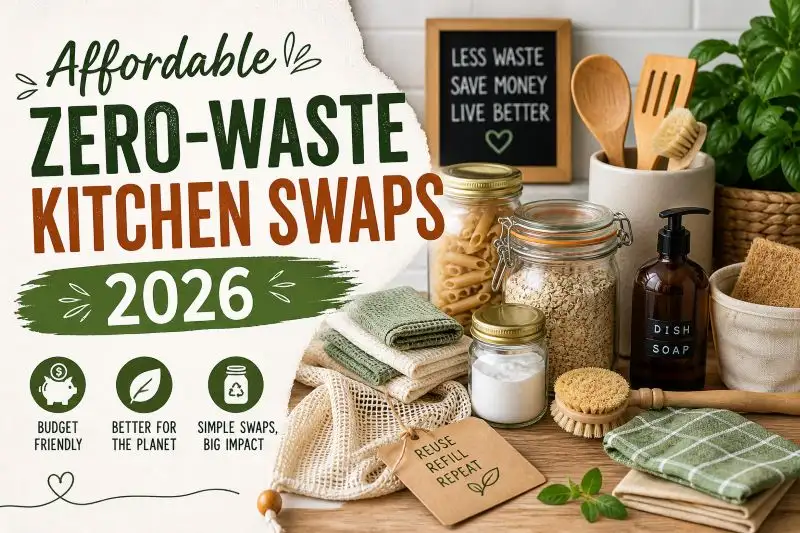
Discover 10 Affordable Zero Waste Kitchen Swaps for 2026. Reduce plastic, save money, and live sustainably with these simple, budget-friendly eco-alternatives.
Introduction: Zero Waste Kitchen Swaps in 2026
The dream of a “zero-waste” lifestyle often comes with a hidden nightmare: the price tag. For years, the sustainable living movement has been marketed as a luxury—full of expensive glass jars, high-end bamboo gadgets, and organic linen everything.
Sustainability is no longer about aesthetic perfection; it’s about resilience and cost-saving. With inflation impacting grocery bills and global waste at an all-time high, your kitchen is the most impactful place to start making a change.
If you are looking to reduce your environmental footprint without draining your bank account, these 10 affordable zero waste kitchen swaps are the most effective transitions you can make this year. First, swap paper towels for reusable rags. Second, replace plastic wrap with beeswax wraps or simple plate covers. Third, ditch liquid soap for solid dish blocks. Fourth, use stainless steel coffee filters. Fifth, switch to compostable loofahs. Sixth, buy bulk produce over pre-cut. Seventh, use newspaper bin liners. Eighth, choose refillable coffee pods. Ninth, clean with vinegar and baking soda. Finally, start a countertop compost bin.
By adopting these changes, the average household can save over $500 annually while significantly reducing landfill contributions. Sustainability is finally becoming accessible to everyone.
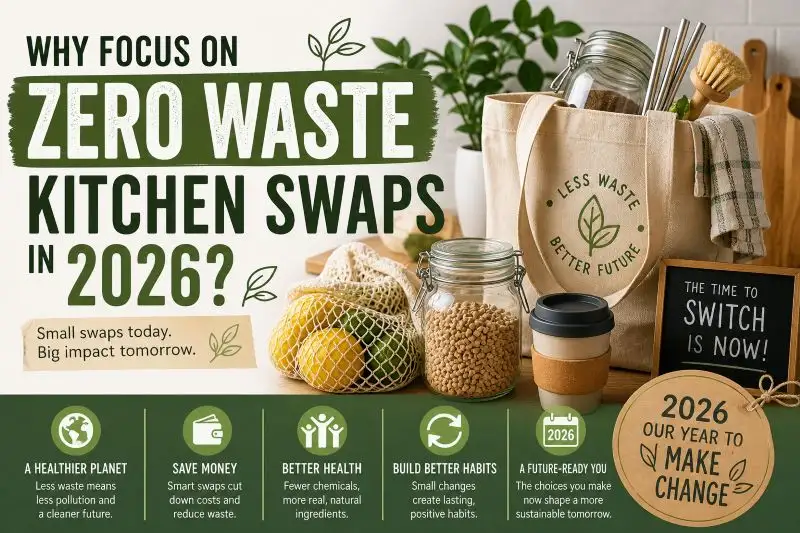
Why Focus on Zero Waste Kitchen Swaps in 2026?
In the modern home, the kitchen often functions as the “waste capital,” serving as the primary source of household trash. From layers of single-use plastic packaging and discarded food scraps to the empty plastic bottles of harsh chemical cleaners, the cumulative environmental toll is immense. However, focusing your sustainability efforts here offers a unique advantage: the kitchen is where you can see the fastest return on investment.
The true beauty of a zero waste kitchen swaps lies in its long-term economic logic. Most eco-friendly alternatives are “buy-once” solutions. Unlike disposable products that require a never-ending cycle of repurchasing, durable goods like stainless steel filters or cloth wraps are designed to last for years. By intentionally moving away from a “throwaway” culture, you aren’t just performing an act of environmental service; you are actively strengthening your financial health. In an era of rising costs, reducing your reliance on disposables ensures that you are keeping more money in your pocket while simultaneously protecting the planet.
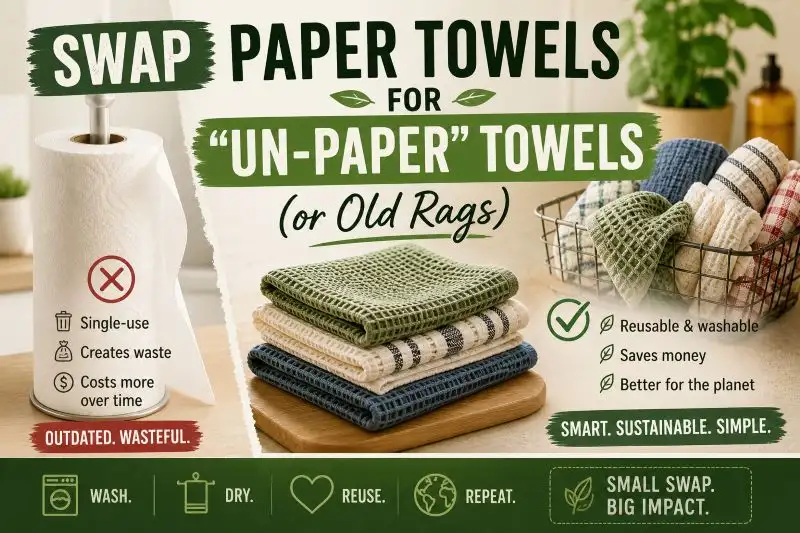
1. Swap Paper Towels for “Un-Paper” Towels (or Old Rags)
One of the most impactful changes you can make involves rethinking your cleaning habits. The typical household pours hundreds of dollars annually into paper towels—a single-use commodity designed for mere seconds of utility before being discarded. In 2026, this cycle of “pay and toss” is both an environmental burden and a financial drain that is entirely avoidable.
- The Practical Swap: Instead of reaching for a paper roll, utilize microfiber cloths, specialized “un-paper” towel rolls, or even old 100% cotton T-shirts cut into squares. These alternatives are absorbent, durable, and can be laundered hundreds of times, handling everything from countertop spills to heavy-duty scrubbing.
- The Financial Impact: By eliminating the recurring cost of disposables, you can keep an extra $150 to $200 per year in your bank account.
- Strategic SEO Tip: To ensure this habit sticks, store your new reusable cloths in a decorative basket exactly where your paper towel holder used to sit. Maintaining this “point of use” accessibility prevents you from reaching for a disposable option out of muscle memory. This small adjustment turns a sustainable choice into an effortless, permanent part of your daily kitchen routine.
2. Ditch Plastic Wrap for Beeswax Wraps or Silicone Lids
Conventional plastic cling wrap is a significant environmental hurdle, often described as a “recycling nightmare.” Composed of low-density polyethylene, this thin film is virtually impossible to process in standard recycling facilities, leading it to persist in landfills for centuries. Beyond the ecological impact, there are growing concerns regarding how these plastics can leach chemical additives into your food during storage.
- The Eco-Friendly Swap: A superior approach involves utilizing beeswax wraps or universal silicone stretch lids. Beeswax wraps, made from cotton infused with food-grade wax, are naturally antibacterial, washable, and fully compostable at the end of their life cycle. Silicone lids offer a durable, airtight seal that fits various container sizes, making them a one-time purchase that lasts for years.
- The “Pro” Frugal Strategy: For the ultimate affordable move, look no further than your own cupboard. Simply placing an inverted plate over a bowl creates a perfectly functional seal for most leftovers. This method is entirely free, requires zero new resources, and is just as effective for short-term refrigeration.
- The Financial Benefit: Making this transition allows you to eliminate a recurring monthly expense of roughly $5 to $8 from your grocery budget. Over time, the cost of those “cheap” boxes of plastic wrap adds up to a significant sum, whereas these sustainable alternatives pay for themselves within just a few months of use. By ditching the disposables, you create a kitchen that is safer for your health and much kinder to your wallet.

3. Replace Liquid Dish Soap with Solid Dish Blocks
Standard liquid dish soap is an inefficient product, consisting mostly of water encased in single-use plastic packaging. As we navigate 2026, the “solid bar” movement has transitioned from a niche trend to a mainstream household staple. This shift represents one of the most effective ways to declutter your sink area while significantly reducing your environmental footprint.
- The Practical Swap: Replace your plastic squeeze bottles with a highly concentrated dish soap bar paired with a natural wooden scrub brush. To use it, you simply rub your damp brush or sponge over the block to create a rich, grease-cutting lather.
- Why It Works: These blocks are incredibly dense and potent. A single solid dish bar typically has the longevity of three standard bottles of liquid soap. Beyond the longevity, it eliminates the need for bulky plastic containers under your sink and prevents the carbon emissions associated with shipping heavy, water-filled bottles.
- The Financial Impact: While the initial investment might seem higher—typically ranging from $12 to $15—a quality block can last anywhere from 4 to 6 months. When compared to the monthly cost of premium liquid soaps, this “buy-less” approach results in substantial long-term savings and a much cleaner kitchen aesthetic.
4. Trade Coffee Filters for Stainless Steel or Cloth
For the daily coffee enthusiast, those small, bleached paper filters represent a significant accumulation of waste and a constant recurring cost. While a single filter seems negligible, the annual volume contributes heavily to landfills. Fortunately, upgrading your morning ritual is one of the most seamless zero waste kitchen swaps for beginners because it requires no change to your brewing habits while providing a superior beverage.
- The Eco-Friendly Swap: Instead of disposables, invest in a permanent stainless steel mesh filter or a GOTS-certified organic cotton cloth filter. Both options are designed to fit standard drippers and coffee makers perfectly, allowing you to brew cup after cup without generating a single scrap of paper waste.
- The Sensory and Practical Impact: Beyond the environmental benefits, many coffee connoisseurs prefer this method because mesh filters allow the bean’s natural oils to pass through, resulting in a richer, more full-bodied flavor profile. Practically, it also means you will never face the frustration of running out of filters on a busy Monday morning.
- Long-Term Value: By making this one-time purchase, you effectively eliminate a lifetime of recurring expenses. This transition simplifies your shopping list, enhances your coffee experience, and ensures your morning routine aligns with a sustainable, waste-free lifestyle.
5. Swap Plastic Sponges for Compostable Loofahs or Brushes
The ubiquitous yellow-and-green sponges found in most kitchens are a hidden environmental hazard. These items are typically manufactured from synthetic polymers that shed microscopic plastic fibers into our water systems with every use. Because they are non-biodegradable and trap bacteria quickly, they are often discarded within weeks, contributing to a constant stream of household waste.
- The Sustainable Swap: A much cleaner alternative involves using natural loofahs—which are actually derived from a dried gourd—or wooden dish brushes featuring replaceable heads made from plant-based bristles. These tools provide excellent scrubbing power without the chemical footprint.
- The Affordability Factor: Choosing a natural loofah is incredibly budget-friendly. You can purchase a single large loofah in bulk and slice it into 10–12 individual sponges, making the cost per unit significantly lower than “brand name” plastic versions.
- The Zero-Waste Win: Unlike plastic sponges that linger in landfills for centuries, natural loofahs and wooden bristles are fully biodegradable. Once they have reached the end of their utility, you can simply toss them into your compost bin. This transition ensures that your cleaning routine is effective, economical, and entirely circular, leaving no trace behind.
6. Move from Pre-Cut Veggies to Bulk Buying + Proper Storage
This particular transition addresses “food waste,” which has become the most significant financial drain for households in 2026. While pre-packaged salads and pre-cut vegetables offer a slight convenience, they are typically sold in non-recyclable plastic films and containers. Furthermore, because these items have more surface area exposed to oxygen, they tend to spoil up to 40% faster than their whole counterparts.
- The Practical Swap: Prioritize purchasing whole, unprocessed produce and implementing “Active Storage” techniques. For example, keeping celery or carrots submerged in a jar of water or storing leafy greens in a damp cloth bag can dramatically extend their shelf life.
- The Financial Saving: On average, whole produce is 30% to 50% cheaper per pound compared to the pre-cut versions found in the deli section. By spending five minutes doing your own chopping, you are essentially paying yourself a high hourly rate in savings.
- The Zero-Waste Win: This method allows you to eliminate problematic plastic film waste entirely. More importantly, by mastering proper storage, you prevent food from rotting in the back of the fridge. It’s a dual-purpose strategy that protects both your grocery budget and the environment by ensuring every leaf and root you buy actually gets eaten.
7. Replace Plastic Trash Bags with Newspaper or “Lineless” Binning
There is a profound irony in the fact that we consistently purchase rolls of plastic bags for the sole purpose of immediate disposal. These liners are typically made from virgin plastics that take centuries to decompose, yet they are used to hold items for only a few days. In a modern, resource-conscious kitchen, this is one of the most unnecessary recurring expenses you can eliminate.
- The Sustainable Swap: The secret to successful “lineless” binning lies in separating your waste. If you are composting food scraps and organic matter, your remaining household trash should be predominantly dry—consisting of paper, certain plastics, or metals. You can easily line your bin with a few sheets of old newspaper to catch any stray debris or simply use a bare bin and give it a quick rinse with soapy water every few weeks.
- The Financial Saving: By opting out of the plastic liner aisle, the average household can save approximately $15 every few months. Over a year, this small adjustment keeps an extra $60 in your wallet.
- The Zero-Waste Win: This practice forces a more mindful approach to waste. When you aren’t hiding your trash behind a thick plastic film, you become more aware of what you are discarding, naturally encouraging better recycling habits and a lower environmental footprint.
8. Ditch “Single-Use” Pods for Refillable Capsules
Whether it’s for coffee or dishwasher detergent, “pods” are a massive source of microplastic pollution and are significantly marked up in price.
- The Swap: Stainless steel refillable espresso pods or buying powdered dishwasher detergent in cardboard boxes.
- The ROI: Refillable pods pay for themselves within the first three weeks of use.
9. Swap Chemical Cleaners for Vinegar and Baking Soda
Most kitchen surfaces don’t need industrial-strength chemicals.
- The Swap: A glass spray bottle filled with 50% water, 50% white vinegar, and a few drops of essential oil.
- Why it’s SEO-friendly: This “DIY” approach is a top-trending search query in 2026 as consumers look for “non-toxic” and “pet-safe” kitchen solutions.
- The Saving: A gallon of vinegar costs $4 and replaces $40 worth of specialized cleaners.
10. The Ultimate Swap: From Trash Can to Compost Bin
Food waste in landfills produces methane, a greenhouse gas far more potent than CO2.
- The Swap: A small countertop compost bin or a “Bokashi” system for apartment dwellers.
- The Affordable Angle: Many cities now offer free composting programs or community garden drop-offs. If you have a garden, this is “black gold” fertilizer for free.
Strategies for a Seamless Transition
Successfully implementing these changes requires a mindset shift: don’t attempt to overhaul your entire lifestyle overnight. In fact, the least sustainable action you can take is discarding perfectly functional plastic items just to replace them with “eco-friendly” alternatives. True sustainability is about maximizing the lifespan of what you already own before bringing something new into your home.
To make your transition effective and affordable, follow this three-step roadmap:
- The “Use It Up” Mandate: Before upgrading to beeswax wraps or silicone lids, ensure you have finished your very last roll of traditional plastic wrap. This prevents unnecessary waste and respects the resources already spent on those products.
- Target the “Big Three”: If you feel overwhelmed, start where you’ll see the quickest results. Focus on paper towels, sponges, and dish soap. Because these are used multiple times a day, switching to reusable rags and solid soap blocks creates an immediate, visible reduction in your weekly trash volume.
- Conduct a Waste Audit: Spend one week observing exactly what fills your kitchen bin. Are you seeing lots of food scraps? Or is it mostly snack packaging? This data provides a personalized roadmap, showing exactly which zero-waste kitchen swaps will be most impactful for your specific household habits.
By moving slowly and intentionally, you ensure that these green habits actually stick for the long term.
Final Thoughts for 2026: The New Standard of Sustainable Living
Living sustainably in 2026 is fundamentally about being intentional with your resources. By choosing affordable zero waste kitchen swaps , you are actively opting out of a consumer system designed for “planned obsolescence”—a cycle that forces you to buy, discard, and rebuy. Instead, your kitchen transforms into a hub of efficiency, health, and significantly lower monthly expenses.
This transition doesn’t require a total lifestyle overhaul or an expensive shopping spree at a boutique eco-store. It starts with the recognition that the most sustainable item is often the one you already own. Reusing a glass pasta jar is more impactful than buying a set of brand-new “eco-friendly” containers. As we face the economic and environmental realities of 2026, these small, frugal adjustments serve as a form of financial resilience.
The journey toward a waste-free home is a marathon, not a sprint. Every time you reach for a cloth rag instead of a paper towel, or use a refillable coffee pod, you are casting a vote for a cleaner planet and a fuller bank account. Start with just one swap today. The cumulative effect over the next year will be profound. Your wallet—and the planet—will thank you for the commitment.