
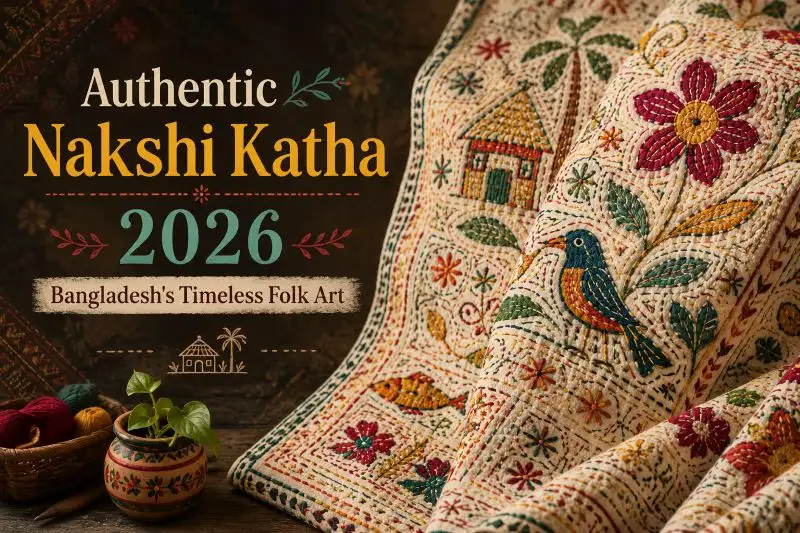
Explore the beauty of Authentic Nakshi Katha, Bangladesh’s timeless folk art. Discover heritage, handmade embroidery, cultural and traditions stories in 2026.
Introduction: Authentic Nakshi Katha 2026
Nakshi Katha is a treasured part of Bangladesh’s cultural heritage and one of the country’s most distinctive forms of traditional folk art. Far more than a simple handmade quilt, it reflects the memories, emotions, creativity, and daily experiences of Bengali communities passed down through generations. Crafted with detailed hand embroidery and vibrant patterns, each Nakshi Katha carries its own artistic identity and often tells a meaningful story through its designs.
Over the years, this traditional craft has evolved from a household necessity into a celebrated symbol of Bangladeshi culture. Rural women originally created Nakshi Katha by stitching together layers of old fabric and decorating them with motifs inspired by nature, village life, folklore, and personal experiences. These embroidered masterpieces became treasured family possessions and cultural keepsakes.
In 2026, Nakshi Katha continues to attract admiration both at home and abroad. The growing demand for sustainable, handmade, and culturally authentic products has helped revive interest in this timeless art form. Today, it is widely featured in fashion, home décor, handicraft exhibitions, and international cultural showcases.
Exploring Nakshi Katha offers valuable insight into Bangladesh’s artistic traditions, craftsmanship, and cultural identity. Its enduring popularity highlights the importance of preserving traditional skills while celebrating the creativity and heritage that make this folk art truly unique.
What Is Nakshi Katha?
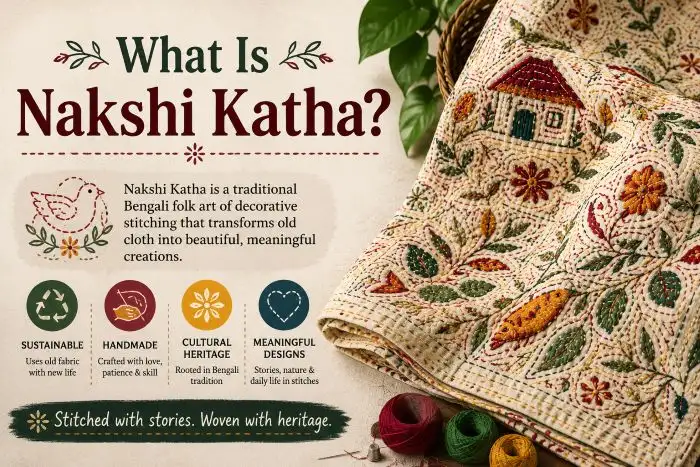
Nakshi Katha is a renowned form of traditional embroidery art that has been an important part of Bangladeshi culture for generations. It is typically created by stitching together multiple layers of old fabric and decorating them with detailed hand embroidery. The name “Nakshi Katha” originates from Bengali words that refer to decorative patterns and quilted cloth, reflecting the artistic nature of this handcrafted textile.
What makes Nakshi Katha unique is its handmade craftsmanship. Unlike machine-produced textiles, each piece is carefully embroidered by skilled artisans using colorful threads and creative designs. The patterns often draw inspiration from nature, village life, cultural traditions, folklore, and personal experiences, making every quilt a distinctive work of art.
Historically, women in rural Bangladesh played a central role in preserving this craft. They repurposed worn-out saris and household fabrics, transforming them into beautiful embroidered quilts that were both practical and decorative. This tradition not only reduced waste but also allowed women to express their creativity through needlework.
Today, Nakshi Katha is widely recognized as a treasured symbol of Bangladesh’s rich cultural heritage and traditional craftsmanship. It represents the country’s rich cultural heritage, exceptional craftsmanship, and timeless artistic expression. Admired by collectors, designers, and cultural enthusiasts worldwide, Nakshi Katha continues to preserve stories, traditions, and the creative spirit of Bengali communities.
The Historical Origins of Nakshi Katha
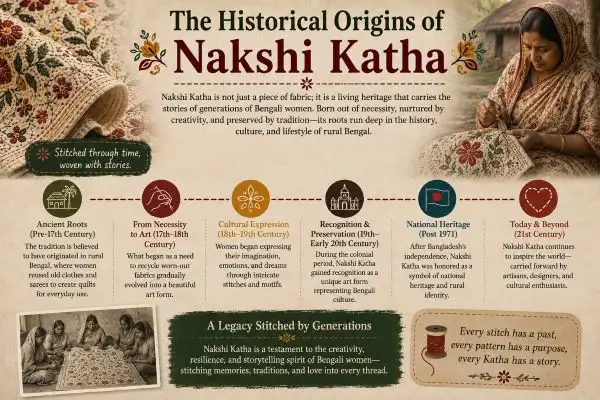
The history of Nakshi Katha dates back several centuries. Historians believe that embroidered quilts have been part of Bengali culture for over a thousand years.
In ancient rural communities, fabric was valuable and rarely wasted. Women preserved old garments by layering them together and reinforcing them with decorative stitching. Over time, practical stitching evolved into artistic embroidery.
The designs often reflected:
- Village life
- Religious beliefs
- Family celebrations
- Agricultural activities
- Natural landscapes
- Folk legends
Many historians consider Nakshi Katha one of the oldest surviving textile traditions in South Asia.
As generations passed, different regions developed their own embroidery styles and motifs, creating a rich diversity within the tradition.
Cultural Importance of Nakshi Katha
- A Reflection of Rural Life: Nakshi Katha serves as a visual record of traditional Bangladeshi village life. Common scenes include farmers working in fields, fishermen rowing boats, birds flying over rivers, and women performing household activities.
- A Medium of Storytelling: Every embroidered pattern carries meaning. Many quilts tell stories of love, happiness, loss, marriage, festivals, and everyday experiences.
- Family Heritage: Traditionally, mothers created Nakshi Katha for their daughters as wedding gifts. These handmade quilts became treasured family heirlooms passed from one generation to another.
- Women’s Creative Expression: For centuries, rural women had limited opportunities to showcase artistic talent publicly. Nakshi Katha became an important platform for creative expression and personal storytelling.
How Nakshi Katha Is Made
Creating a Nakshi Katha requires patience, skill, and dedication.
- Step 1: Selecting Fabrics: Artisans collect old cotton saris, lungis, and other soft fabrics. Several layers are stacked together to form the quilt base.
- Step 2: Preparing the Quilt: The fabric layers are aligned carefully and secured with temporary stitching.
- Step 3: Designing the Pattern: Some artisans draw outlines using chalk or pencil, while experienced craftspeople often work directly from memory.
- Step 4: Embroidery: This is the most time-consuming stage. Using colorful threads, artisans create detailed motifs and decorative patterns.
- Step 5: Finishing:The edges are stitched securely, and final decorative touches are added.
Depending on complexity, completing a single Nakshi Katha can take several weeks or even months.
Traditional Motifs Found in Nakshi Katha
One of the most fascinating aspects of Nakshi Katha is its rich collection of traditional motifs and decorative patterns. These designs are not merely ornamental; they often carry symbolic meanings that reflect the beliefs, lifestyle, and cultural values of Bengali society. Each motif contributes to the storytelling nature of this traditional embroidery art.
- Flowers: Floral designs are among the most common motifs found in Nakshi Katha. They typically symbolize beauty, joy, prosperity, and the close relationship between people and nature.
- Trees:Tree patterns often represent growth, strength, family connections, and the cycle of life. They are frequently used to express stability and continuity.
- Birds:Bird motifs are popular in traditional embroidery and are commonly associated with freedom, hope, peace, and happiness.
- Fish: In Bengali culture, fish are considered symbols of abundance, good fortune, and prosperity. Their presence often reflects the importance of rivers and fishing in daily life.
- Boats: Boat designs highlight Bangladesh’s river-based heritage and traditional means of transportation, trade, and livelihood.
- Geometric Patterns: Geometric shapes add balance and structure to the embroidery while showcasing the artisan’s creativity and technical skill.
- Religious Symbols: Many Nakshi Katha pieces feature spiritual motifs that reflect faith, devotion, and cultural traditions, adding deeper meaning to the artwork.

Different Types of Nakshi Katha
- Sujni Katha: Highly decorative quilts featuring elaborate embroidery and artistic patterns.
- Lep Katha: Thicker quilts designed to provide warmth during winter.
- Durjani Katha: Used for storing personal belongings and valuables.
- Baiton Katha: Traditionally used during family gatherings and social occasions.
- Arshilata Katha: Known for decorative mirror-inspired patterns.
- Oaar Katha: Protective covers for household items such as books and pillows.
Each type serves a specific purpose while maintaining artistic value.
Nakshi Katha in Bengali Literature
Nakshi Katha holds a distinguished place in Bengali literature, where it is celebrated as both a cultural symbol and a powerful storytelling medium. Beyond its identity as a handmade embroidered quilt, it has inspired poets, writers, and artists for generations, reflecting the emotional depth and rural traditions of Bengal.
A major literary milestone in popularizing this folk art is the famous poem “Nakshi Kanthar Math” by the renowned Bengali poet Jasimuddin. This classic work beautifully portrays rural life, love, sorrow, and human emotions through the symbolic use of an embroidered quilt. The poem connects everyday village experiences with artistic expression, making Nakshi Katha a central metaphor for memory and storytelling.
The success of this literary masterpiece helped elevate Nakshi Katha from a household craft to a nationally recognized cultural icon. It highlighted how a simple handmade quilt could represent deep emotional narratives and the lived experiences of rural communities.
Today, Nakshi Katha continues to inspire scholars, researchers, writers, and visual artists. Its presence in literature and cultural studies ensures that this traditional art form remains relevant, appreciated, and preserved for future generations as a meaningful expression of Bangladesh’s rich folk heritage.
Economic Importance of Nakshi Katha
Nakshi Katha is more than an art form; it also supports rural livelihoods.
Thousands of artisans, especially women, earn income through embroidery and handicraft production.
Benefits include:
- Employment opportunities
- Women’s economic empowerment
- Rural development
- Preservation of traditional skills
- Growth of the handicraft sector
- Increased export potential
Many cooperatives and social enterprises work directly with artisans to promote fair trade and sustainable production.
Nakshi Katha and Sustainable Fashion
As sustainability becomes a global priority, Nakshi Katha offers an excellent example of eco-friendly craftsmanship.
Traditional practices include:
- Recycling old fabrics
- Handcrafted production
- Minimal environmental impact
- Long-lasting quality
Modern consumers increasingly prefer products with authentic stories and sustainable origins. As a result, Nakshi Katha has gained popularity among environmentally conscious buyers.
Modern Uses of Nakshi Katha
Although traditionally used as quilts, Nakshi Katha now appears in many contemporary products.
Fashion
Designers incorporate Nakshi Katha embroidery into:
- Sarees
- Salwar kameez
- Kurtis
- Shawls
- Jackets
- Scarves
Home Décor
Popular items include:
- Cushion covers
- Wall hangings
- Table runners
- Bedspreads
- Decorative panels
Accessories
Artisans create:
- Handbags
- Wallets
- Pouches
- Laptop sleeves
These innovations help preserve traditional techniques while appealing to modern consumers.
Why International Buyers Love Nakshi Katha
The international demand for artisanal, handmade goods is surging. Nakshi Katha has captured the hearts of global buyers through several distinct qualities:
- Genuine Authenticity: Every single quilt is a one-of-a-kind, entirely hand-stitched masterpiece, offering a rare exclusivity that mass-produced items cannot replicate.
- Living History: The intricate embroidery serves as a visual canvas, beautifully preserving centuries of traditional heritage and regional folklore.
- Eco-Conscious Appeal: Rooted in upcycling and sustainable practices, this craft aligns perfectly with the modern consumer’s demand for environmentally responsible production.
- Masterful Artistry: The meticulous, detailed stitching stands as a testament to the extraordinary skill and dedication of the artisans.
- Soulful Narrative: Beyond mere decor, each piece fosters a deep emotional bond, carrying the personal journeys, dreams, and cultural spirit of its maker.
These compelling attributes position Nakshi Katha as a highly coveted treasure in the premium global handicraft market.
Challenges Facing Nakshi Katha Artisans
Although Nakshi Katha has gained recognition both locally and internationally, many artisans still face significant challenges that affect the growth and sustainability of this traditional craft.
- Competition from Machine-Made Products:One of the biggest obstacles is the increasing availability of machine-produced textiles. These products are often cheaper and faster to manufacture, making it difficult for handmade Nakshi Katha to compete in price-sensitive markets.
- Limited Access to Markets: Many rural artisans have limited opportunities to promote and sell their work beyond their local communities. As a result, reaching national and international customers can be challenging without proper marketing support.
- Need for Modern Skills and Training: Consumer preferences and design trends continue to evolve. Artisans often require additional training to adapt traditional embroidery techniques to contemporary fashion and home décor markets.
- Unstable Income Opportunities: Demand for handmade products can vary throughout the year, leading to inconsistent earnings for many craftspeople and their families.
- Preservation of Traditional Knowledge: As younger generations pursue alternative careers, there is a risk that valuable embroidery skills and cultural knowledge may gradually decline.
Providing training, market access, and fair economic opportunities is essential to support artisans and ensure the long-term preservation of Nakshi Katha as a treasured part of Bangladesh’s cultural heritage.
Preserving Nakshi Katha for Future Generations
Preservation efforts are becoming increasingly important.
Key initiatives include:
- Artisan training programs
- Cultural exhibitions
- Museum collections
- Government support
- Online marketplaces
- Educational workshops
By investing in these efforts, Bangladesh can ensure that future generations continue to appreciate and practice this traditional art.
Tips for Buying Authentic Nakshi Katha
Purchasing an authentic Nakshi Katha requires careful attention to quality, craftsmanship, and origin. Here are some useful tips to help you choose a genuine handmade piece:
- Examine the Hand Stitching: Authentic Nakshi Katha features detailed hand embroidery with slight variations in stitches. These natural imperfections are signs of genuine craftsmanship and distinguish handmade pieces from machine-made products.
- Look for Original Designs: Traditional Nakshi Katha often showcases unique patterns inspired by nature, village life, and cultural traditions. Avoid products with overly repetitive designs that may indicate mass production.
- Check Fabric and Embroidery Quality: A high-quality Nakshi Katha should have durable fabric, neat stitching, and well-finished edges. Strong embroidery ensures the piece remains beautiful for years.
- Buy from Trusted Sources: Purchase from reputable handicraft stores, artisan cooperatives, or skilled craftspeople who specialize in traditional embroidery work.
- Learn the Story Behind the Piece:Many authentic Nakshi Kathas carry cultural meanings and personal stories. Understanding their background can increase their artistic and cultural value.
- Support Ethical Craftsmanship: Whenever possible, choose products made through fair-trade practices that help support artisans and preserve this important cultural tradition.
Although authentic handmade Nakshi Katha may cost more, its exceptional craftsmanship, cultural significance, and uniqueness make it a worthwhile investment..
The Future of Nakshi Katha in 2026 and Beyond
The future of Nakshi Katha appears brighter than ever as global appreciation for handmade crafts, sustainable products, and cultural heritage continues to grow. In an era where consumers increasingly seek authentic and environmentally responsible items, this traditional Bangladeshi embroidery art is gaining renewed attention from both local and international audiences.
Modern technology has opened new doors for artisans and small businesses involved in Nakshi Katha production. Through online marketplaces, social media platforms, and digital marketing, craftspeople can now showcase their work to customers worldwide. This expanded reach helps preserve traditional craftsmanship while creating new economic opportunities for rural communities.
At the same time, fashion designers and home décor brands are finding creative ways to incorporate Nakshi Katha embroidery into contemporary products. By combining traditional craftsmanship with contemporary design, Nakshi Katha is attracting younger generations and growing its appeal among consumers around the world.
As awareness of Bangladesh’s cultural heritage continues to increase, Nakshi Katha is being recognized not only as a beautiful handcrafted product but also as an important symbol of history, identity, and artistic expression. With ongoing support for artisans, innovation in design, and growing international demand, Nakshi Katha is well-positioned to remain a cherished cultural treasure and a thriving craft for many years to come.
Conclusion
Nakshi Katha continues to hold a special place in Bangladesh’s cultural and artistic landscape. What began as a practical way to reuse old fabrics has evolved into a celebrated form of folk art that represents creativity, tradition, and community values. Its intricate embroidery and meaningful designs tell stories that connect the past with the present, making each piece a unique expression of heritage and craftsmanship.
Over the years, Nakshi Katha has gained recognition beyond Bangladesh, attracting admiration from art lovers, collectors, and cultural enthusiasts around the world. The dedication and skill required to create these handmade works highlight the remarkable talent of rural artisans who have preserved this tradition for generations. Their efforts have helped keep an important part of Bengali culture alive in an increasingly modern world.
In 2026, Nakshi Katha remains a powerful symbol of Bangladesh’s identity, reflecting the nation’s rich history, artistic excellence, and enduring traditions. Its growing presence in fashion, home décor, and international handicraft markets demonstrates its lasting appeal and relevance.
Whether admired as a decorative masterpiece, worn as part of contemporary fashion, or passed down as a cherished family keepsake, Nakshi Katha continues to inspire appreciation for handmade artistry. By preserving and promoting this timeless craft, future generations can continue to celebrate the beauty, stories, and cultural values woven into every stitch.