

Discover Traditionl Nakshi Kantha in 2026 – a beautiful Bangladeshi handcraft. Learn its history, art, designs, cultural value & business opportunities.
Introduction: Amazing Traditionl Nakshi Kantha
Nakshi Kantha is one of the most beautiful and meaningful traditional handicrafts of Bangladesh. In 2026, this handmade embroidery art continues to represent the country’s rich culture, creativity, and heritage. It showcases the artistic talent of rural women who carefully transform simple and unused cloth into stunning designs using colorful threads and detailed stitching patterns. Each piece reflects personal stories, emotions, and traditional values through unique motifs and symbols.
For generations, Nakshi Kantha has been passed down through family traditions, preserving its cultural importance over time. Today, it is not only a symbol of Bangladeshi identity but also a strong source of income for artisans and small entrepreneurs. Its popularity is increasing both locally and internationally because people appreciate its handmade quality, artistic beauty, and sustainable craftsmanship.
What is Traditionl Nakshi Kantha ?
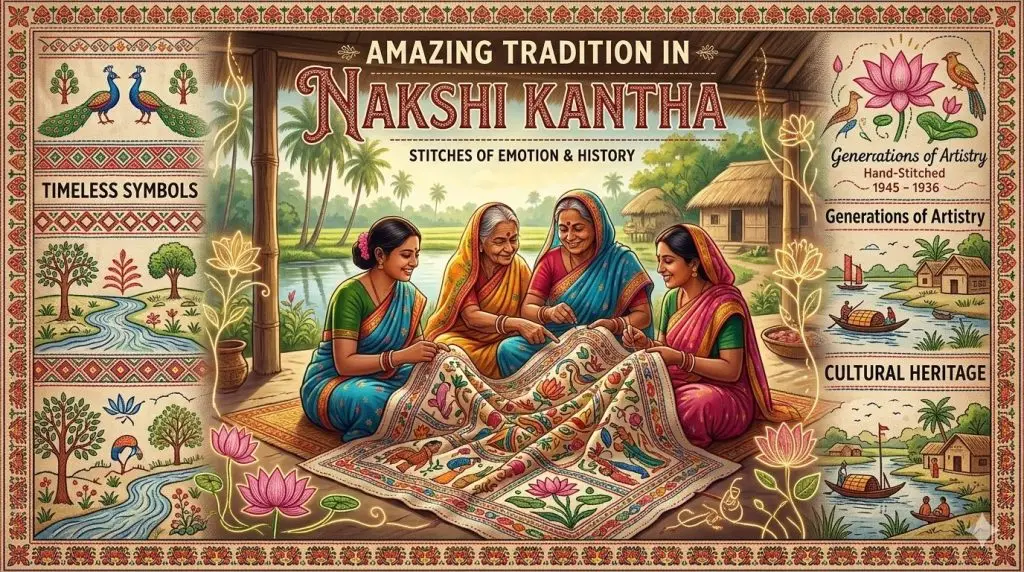
Nakshi Kantha is a traditional embroidered quilt made from old or unused sarees, cloth pieces, and recycled fabrics. It is one of the most iconic handicrafts of Bangladesh and represents creativity, culture, and heritage. The word “Nakshi” means artistic design, and “Kantha” means stitched cloth. Together, the term describes beautifully designed handmade embroidered fabric.
Traditionally, women in rural areas stitch different patterns on layered cloth using colorful threads and simple needles. They create motifs such as flowers, animals, birds, geometric patterns, and scenes from daily life. Some designs even tell personal stories, family events, or cultural traditions. Because each artisan adds her own creativity and emotion, every piece of Nakshi Kantha is unique and different.
Unlike machine-made textiles, Nakshi Kantha is completely handmade, which increases its authenticity, artistic value, and market demand. It takes time, patience, and skill to complete one piece. Today, it is used as quilts, wall hangings, decorative items, and fashion products, making it both a cultural symbol and a growing business opportunity.
History of Traditionl Nakshi Kantha
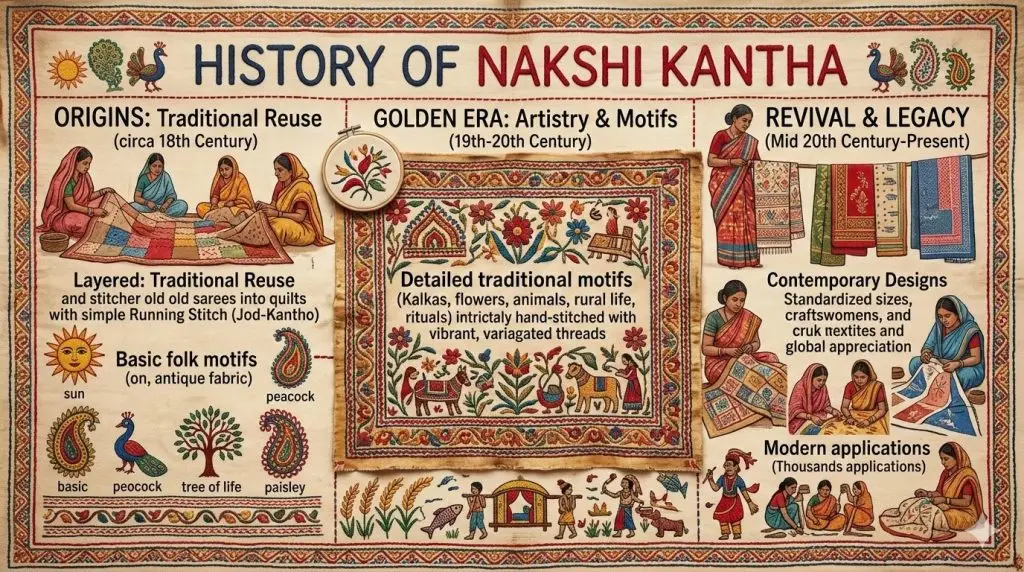
The history of Nakshi Kantha dates back hundreds of years in the rural regions of Bangladesh. It originated in villages where women reused old sarees and cloth pieces to create warm and practical quilts for their families. At that time, it was mainly made to protect people from cold weather and to reuse available materials in a sustainable way.
Originally, Nakshi Kantha served a functional purpose — providing warmth and comfort during winter. Over time, it gradually transformed into a unique art form as women began adding decorative patterns, meaningful symbols, and creative designs to their stitching. These designs often reflected daily life, nature, culture, and personal stories.
Famous Bengali poet Jasim Uddin highlighted its cultural importance in his poem “Nakshi Kanthar Math”, which played a key role in promoting it as a valuable heritage. Today, Nakshi Kantha is recognized as an important part of Bangladesh’s national identity, traditional craftsmanship, and artistic legacy.
Importance of Traditionl Nakshi Kantha in 2026
In 2026, Nakshi Kantha plays an important role in preserving Bangladesh’s cultural heritage while also supporting economic growth. This traditional craft provides income opportunities for many rural women and small artisans. At the same time, its rising popularity in local and international markets helps promote Bangladeshi art, creativity, and sustainable handmade products worldwide.
- Cultural Identity: It represents Bangladesh’s rural lifestyle, traditions, and creativity.
- Economic Support for Women: Many rural women earn income by selling handmade Nakshi Kantha products locally and internationally.
- Global Recognition:International buyers appreciate its handmade quality and cultural story.
- Sustainable Fashion Trend: Because it uses recycled cloth, it supports eco-friendly fashion and sustainability.
Types of Traditionl Nakshi Kantha Designs
Nakshi Kantha embroidery features a variety of design styles, each reflecting regional traditions, cultural stories, and the artisan’s creativity. Common patterns include floral motifs, geometric shapes, animal figures, and scenes inspired by everyday village life.
1. Floral Patterns
Floral patterns are among the most popular and cherished designs in Nakshi Kantha embroidery. Artisans often depict flowers such as roses, lotuses, marigolds, and other garden-inspired motifs, which symbolize beauty, nature, and life. These floral designs are usually stitched in bright, vibrant colors, creating a visually striking contrast against the plain or lightly colored background fabric.
In addition to individual flowers, Nakshi Kantha often features intricate arrangements of vines, leaves, and blooming gardens, reflecting the natural landscapes of rural Bangladesh. Each flower is carefully embroidered with detailed stitches, showcasing the artisan’s skill, patience, and creativity.
Floral motifs are not only decorative but also carry cultural significance. They often represent prosperity, happiness, and the connection between humans and nature. These timeless designs appeal to both local buyers and international customers, making floral-patterned Nakshi Kantha items highly popular in home décor, quilts, cushion covers, and fashion accessories. 🌸🧵
Floral patterns continue to be a symbol of traditional artistry, combining elegance with storytelling in every handcrafted piece.

2. Animal & Bird Motifs
Animal and bird motifs are a distinctive feature of Nakshi Kantha embroidery, adding life and storytelling to each piece. Commonly depicted creatures include peacocks, fish, elephants, and various domestic animals from rural Bangladesh. Peacocks symbolize beauty and grace, while fish often represent prosperity and abundance, reflecting the cultural and spiritual significance of these animals.
Artisans carefully stitch each animal and bird with intricate patterns, capturing movement, texture, and personality. Rural animals such as cows, goats, and chickens are also popular, representing everyday village life and connecting the craft to its cultural roots.
These motifs are often combined with floral or geometric patterns, creating rich, vibrant designs that appeal to both local and international buyers. Animal and bird motifs continue to celebrate nature, folklore, and artistic creativity in Nakshi Kantha.
3. Geometric Patterns
Geometric patterns have become an important and popular style in modern Nakshi Kantha embroidery. These designs feature structured shapes such as squares, triangles, diamonds, and repeating motifs, often arranged symmetrically to create visually striking compositions. Unlike traditional floral or animal motifs, geometric patterns give Nakshi Kantha a contemporary feel while still preserving the handcrafted charm of the textile.
Artisans carefully plan each design, combining lines, angles, and shapes with precise stitching techniques. These patterns often serve as borders, central motifs, or entire designs for quilts, cushion covers, and wall hangings.
The use of geometric designs has made Nakshi Kantha appealing to younger generations and international customers, blending traditional craftsmanship with modern artistic aesthetics. This style highlights the versatility, creativity, and evolving nature of Bangladesh’s heritage craft.
4. Story-Based Designs
Story-based designs are a unique and captivating feature of Nakshi Kantha embroidery, turning each quilt or textile into a narrative canvas. These designs often depict life events, such as weddings, births, or family celebrations, capturing personal and cultural memories in detailed stitch work. Many quilts also illustrate daily rural life, including farming scenes, fishing, cooking, or village markets, giving a glimpse into traditional Bangladeshi lifestyles.
Cultural festivals and religious ceremonies are frequently portrayed, with artisans using symbolic motifs to represent joy, prosperity, and community spirit. Each figure, object, or pattern is carefully stitched to convey meaning and tell a story, making the Nakshi Kantha not just a decorative item but a visual diary of village life and traditions.
Story-based Nakshi Kanthas are highly valued for their emotional and historical significance. They serve as both art and heritage, allowing generations to preserve and celebrate their culture through embroidery.
Each design tells a unique story and reflects personal emotion.
Materials Used in Nakshi Kantha
Traditional Nakshi Kantha is made using simple and sustainable materials:
- Old cotton sarees or cloth: Artisans repurpose worn-out cotton fabrics to create the base for Nakshi Kantha embroidery. 🧵
- Colorful embroidery threads: Bright threads are used to craft intricate patterns and motifs, adding vibrancy to each piece. 🌈
- Needle and basic sewing tools: Simple hand tools like needles and scissors are essential for stitching and shaping designs. ✂️
- Natural dyes (in some traditional forms): Some Nakshi Kantha pieces use plant-based or natural dyes for authentic and eco-friendly coloring. 🍃
Modern versions may also use premium fabric and machine finishing for export quality.
How Nakshi Kantha is Made (Step-by-Step Process)
Step 1: Collect Old Cloth
Women collect unused or old sarees and clean them properly.
Step 2: Layer the Fabric
Multiple layers are stacked to create thickness.
Step 3: Draw the Design
Patterns are drawn lightly using pencil or chalk.
Step 4: Embroidery Stitching
Colorful threads are stitched carefully to create artistic designs.
Step 5: Finishing
Edges are stitched neatly, and quality is checked before sale.
The process requires patience, skill, and creativity.
Popular Products Made from Nakshi Kantha
Today, artisans create many products using Nakshi Kantha embroidery:
- Quilts & Bed Covers
- Cushion Covers
- Wall Hangings
- Handbags
- Saree Embroidery
- Table Covers
- Fashion Dresses
These products are sold in local markets, online stores, and international exhibitions.
Market Demand for Nakshi Kantha in 2026
The demand for Nakshi Kantha is increasing because:
- People prefer handmade and unique products
- Sustainable fashion is trending
- Cultural products attract tourists
- Export opportunities are expanding
Online marketplaces and social media platforms have made it easier for artisans to sell directly to customers.
Export Potential of Nakshi Kantha
Nakshi Kantha has strong export potential as global demand for handmade and traditional textile products continues to grow. The intricate embroidery, cultural significance, and eco-friendly production make it attractive in international markets. Many buyers around the world value handcrafted items that reflect heritage and unique design. As a result, Bangladeshi artisans and exporters are finding new opportunities to sell Nakshi Kantha products abroad. With improved branding, online promotion, and fair trade practices, this traditional craft can expand further in global markets while supporting rural artisans and preserving Bangladesh’s cultural identity.
- India: India imports Nakshi Kantha due to cultural similarities and strong appreciation for traditional embroidery.
- USA: The United States market values handmade, sustainable textiles and unique cultural crafts.
- UK: Bangladeshi diaspora communities and craft lovers in the UK create steady demand.
- Australia: Consumers in Australia increasingly prefer eco-friendly and handcrafted home décor products.
- European countries: Many European buyers support fair-trade crafts and ethically produced handmade textiles.
Foreign buyers value its authenticity and handmade craftsmanship.
With proper branding and quality improvement, export revenue can increase significantly.
Challenges Facing Nakshi Kantha Artisans
Despite its growing popularity, Nakshi Kantha artisans still face several challenges. Many artisans receive low wages compared to the time and effort required to create each piece. Limited access to international markets and modern marketing tools also restricts their income. Additionally, machine-made imitations in the market reduce the value of authentic handmade Nakshi Kantha.
- Low Market Price: Many artisans receive a small share of the final selling price because middlemen take a large portion of the profit. This makes it difficult for craftsmen to earn fair compensation for their time, skill, and detailed embroidery work.
- Lack of Modern Marketing: A large number of Nakshi Kantha artisans are unfamiliar with digital marketing tools and online marketplaces, which limits their ability to promote and sell their products to wider audiences.
- Limited Financial Support: Small craft businesses often struggle to access loans, training, and investment needed to expand production and improve product quality.
- Competition from Machine-Made Products: Cheap machine-produced imitations flood the market, lowering demand and value for authentic handmade Nakshi Kantha pieces.
Government support and digital training can solve these problems.
How to Start a Nakshi Kantha Business
If you want to start a business with Nakshi Kantha, follow these steps:
Step 1: Learn Embroidery Skills
Training is available through NGOs and local institutions.
Step 2: Create Unique Designs
Focus on creativity and quality.
Step 3: Set Competitive Pricing
Calculate material cost and labor cost properly.
Step 4: Sell Online & Offline
Use Facebook, Instagram, Etsy, and local craft fairs.
Step 5: Build a Brand
Create a brand name and promote your handmade products.
Why Nakshi Kantha is a Symbol of Pride
Nakshi Kantha is more than a piece of embroidered fabric; it represents the heart of Bangladesh’s cultural identity and artistic heritage. This traditional craft reflects the creativity, patience, and storytelling ability of rural artisans, especially women who have preserved the technique for generations. Every stitch carries memories, emotions, and symbols inspired by village life, nature, and folklore. Nakshi Kantha also highlights the value of handmade artistry in a world of mass production. As it gains global recognition, it stands proudly as a symbol of Bangladesh’s tradition, resilience, and timeless craftsmanship.
- Cultural heritage: Nakshi Kantha preserves traditional stories, symbols, and artistic practices passed down through generations. 🧵
- Women empowerment: Many rural women earn income through embroidery, helping them gain financial independence. 👩🌾
- Artistic creativity: Each Nakshi Kantha design reflects the unique imagination and craftsmanship of the artisan. 🎨
- Sustainable tradition: The craft often uses recycled fabrics, making it an environmentally friendly and sustainable art form. 🌿
It connects the past with modern fashion trends.
Future of Nakshi Kantha in Bangladesh
Nakshi Kantha has a promising future in Bangladesh as global interest in handmade and sustainable crafts continues to rise. This traditional embroidery is gaining recognition not only for its beauty but also for its cultural and artistic value. With support from government programs, training initiatives, and online marketplaces, more rural artisans are getting opportunities to sell their work. Designers are also introducing modern patterns and products, making Nakshi Kantha appealing to younger generations. As international demand increases, this heritage craft is expected to grow as both a cultural symbol and a valuable economic resource for Bangladesh.
- Sustainable fashion becomes popular: Eco-friendly and handmade clothing trends increase global interest in traditional crafts like Nakshi Kantha. 🌿
- Government promotes traditional crafts: Various initiatives and policies support artisans and help preserve Bangladesh’s cultural heritage. 🇧🇩
- Digital marketing improves artisan visibility: Online platforms allow artisans to showcase and sell their products to wider audiences. 💻
- International demand increases: Global buyers are increasingly attracted to unique, handmade textiles from Bangladesh.
With innovation and support, this art form will continue to flourish.
Frequently Asked Questions (FAQ)
1. What is Nakshi Kantha?
Nakshi Kantha is a traditional embroidered quilt made from old cloth with artistic designs.
2. Why is Nakshi Kantha important?
It preserves cultural heritage and supports women’s income generation.
3. How long does it take to make one piece?
Depending on design complexity, it can take weeks or months.
4. Is Nakshi Kantha exported?
Yes, it is exported to many countries as a premium handmade product.
5. How can I start a Nakshi Kantha business?
Learn stitching, create designs, and sell through online platforms or local markets.
Conclusion
Nakshi Kantha remains one of Bangladesh’s most valuable and meaningful traditional crafts in 2026. This beautiful embroidered quilt represents more than just a handmade product; it reflects the country’s rich cultural heritage, creativity, and rural lifestyle. For generations, women in villages have stitched stories, memories, and emotions into layers of recycled cloth, turning simple fabrics into artistic masterpieces. Each piece carries unique patterns, symbols, and traditional motifs that connect the past with the present.
Today, Nakshi Kantha is not only a symbol of tradition but also a growing source of economic opportunity. Many rural artisans earn income by creating these handcrafted items, helping families become more financially independent. At the same time, the demand for Nakshi Kantha products is increasing in both local and international markets because people appreciate sustainable, handmade, and culturally meaningful goods.
With modern innovation, design development, and the support of digital marketing platforms, this traditional craft is reaching a wider global audience. By supporting Nakshi Kantha, people help preserve Bangladesh’s heritage, empower artisans, and ensure that this timeless art continues to inspire future generations.