
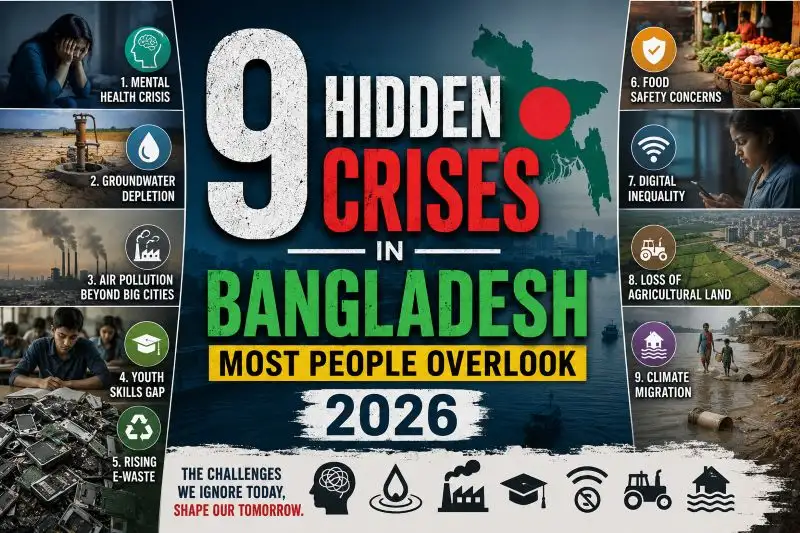
Discover 9 hidden Crises in Bangladesh in 2026. Learn about overlooked social, economic, and environmental challenges shaping the nation.
Introduction: Crises in Bangladesh Most People Overlook 2026
When discussing the major crises in Bangladesh, most people immediately think about well-known challenges such as rising inflation, unemployment, climate-related disasters, and political concerns. While these issues receive significant public attention, there are several other important problems that often remain in the background. Despite receiving less media coverage, these hidden challenges affect the daily lives of millions of Bangladeshis and may have serious long-term consequences.
Many of these overlooked crises in Bangladesh develop gradually over time, making them difficult to notice until their impact becomes more severe. They influence various aspects of society, including public health, education, the environment, economic stability, and overall quality of life. Without proper awareness and timely action, these issues could create additional obstacles for future development.
Over the past few decades, Bangladesh has made impressive progress in areas such as economic growth, poverty reduction, infrastructure expansion, and technological advancement. However, rapid development can also introduce new risks and challenges that are not always immediately visible. Identifying and understanding these emerging concerns is essential for building a stronger and more sustainable future.
This article highlights nine hidden crises in Bangladesh that many people overlook in 2026. By exploring these lesser-known challenges, we can gain a better understanding of their potential impact and why addressing them should be a priority for the country’s long-term progress.
1. Growing Mental Health Challenges
The rising burden of psychological distress is a heavily neglected emergency in Bangladesh. From classrooms to corporate offices, everyday Bangladeshis are grappling with a quiet epidemic of severe stress, anxiety, and emotional exhaustion. This widespread distress is largely fueled by intense academic competition, economic instability, rigid social expectations, and fast-paced modern lifestyles.
Despite its severity, public awareness remains remarkably low. Pervasive social stigma deters many from seeking psychological evaluation, a barrier worsened by a severe shortage of professional mental health services, especially in rural communities.
Failing to address this crisis triggers severe personal and societal consequences:
- Diminished Workforce Productivity: Unmanaged psychological stress erodes daily focus, causing high absenteeism and low economic output.
- Declining Academic Success: Students under heavy emotional strain struggle with concentration, resulting in poor educational outcomes.
- Strained Domestic Relationships: Untreated emotional burdens frequently spark interpersonal conflict and weaken familial bonds.
- Worsening Physical Health: Chronic mental distress weakens immune function, elevating the risk of complex medical complications.
- Depressed Standard of Living: Pervasive, unaddressed trauma ultimately strips individuals of their daily vitality and life satisfaction.
Prioritizing comprehensive mental health education and expanding accessible support networks must become a matter of urgent national development.

2. Groundwater Depletion
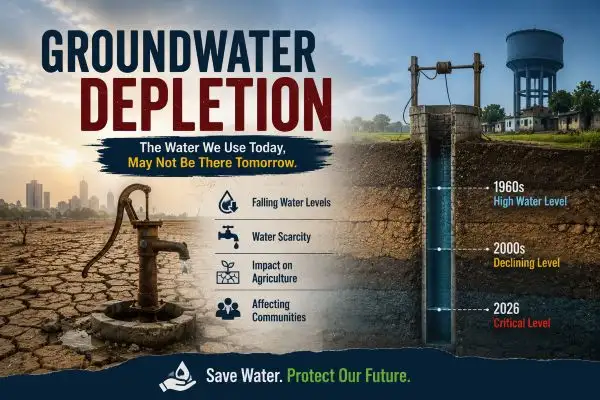
While water scarcity is traditionally linked to arid climates, the rapid drawdown of subsurface aquifers is creating a silent environmental emergency across Bangladesh. Millions of domestic households, commercial agricultural operations, and manufacturing plants depend almost exclusively on underground reservoirs. This relentless, deep-well pumping far outpaces natural monsoon replenishment, causing the water table to drop at an alarming rate.
This stealthy depletion is driven by several compounding societal pressures:
- Unchecked Urban Expansion: Asphalt and concrete cover natural soil, preventing rainwater from soaking back into the ground to recharge aquifers.
- Intensive Agricultural Demands: Year-round farming relies heavily on deep tubewells to irrigate water-heavy crops like Boro rice.
- Unregulated Industrial Pumping: Thriving factories, particularly textile and manufacturing sectors, consume massive volumes of freshwater daily.
- Surging Population Densities: Growing residential communities drastically increase the daily per-capita demand for clean drinking water.
- Flawed Resource Management: A widespread lack of strict extraction regulations and water-saving technologies leads to massive daily waste.
As water levels plummet, communities face skyrocketing extraction costs, dried-up shallow wells, failing crop yields, and severe ecological hazards like land subsidence. Safeguarding future reserves demands a shift toward sustainable stewardship, extensive rainwater harvesting systems, and strict national conservation policies.
3. Urban Air Pollution Beyond Major Cities
While Dhaka dominated historical environmental discussions, air quality degradation is rapidly accelerating across Bangladesh’s secondary cities and expanding industrial corridors. A mix of unmonitored brick kilns, booming construction projects, unregulated vehicle emissions, factory manufacturing, and seasonal road dust is creating toxic environments outside the capital.
Regrettably, public awareness lags behind this reality, leaving millions of citizens unknowingly exposed to dangerous, particulate-heavy air on a daily basis.
Breathing in these regional air pollutants over an extended period dramatically increases your risk of developing life-threatening illnesses:
- Chronic Respiratory Illnesses: Inhaling airborne particulates causes irreversible inflammation, leading to long-term breathing disorders.
- Severe Asthma Flare-ups: Poor air quality acts as an immediate trigger, worsening bronchial hypersensitivity in both children and adults.
- Cardiovascular Strain: Ultra-fine pollutants penetrate the bloodstream, triggering heart conditions, strokes, and vascular damage.
- Acute Pulmonary Infections: Compromised respiratory tracts become highly susceptible to frequent, severe lung infections.
- Diminished Lifespan Metrics: Over time, continuous exposure to toxic air quietly erodes overall life expectancy across affected communities.
Countering this decentralized crisis requires immediate action. Scaling up regional environmental monitoring networks and strictly enforcing existing emission regulations are vital steps to safeguard public health nationwide.

4. Youth Skills Gap
Bangladesh’s youthful population is its greatest asset, offering a tremendous opportunity to accelerate the nation’s economic progress. However, realizing this potential is stalled by a widening mismatch between the modern competencies corporate entities demand and the traditional capabilities job seekers bring to the market.
Rapid technological disruption is fundamentally reshaping local and global industries. To remain competitive, contemporary enterprises are increasingly seeking specialized expertise in:
- Digital Proficiency: Mastery of advanced software, cloud infrastructure, and modern digital productivity tools.
- Data Literacy: The capability to extract, analyze, and translate complex data sets into actionable corporate strategies.
- Artificial Intelligence Integration: Practical knowledge of utilizing AI frameworks and automated systems to optimize workflow efficiency.
- Interpersonal Communication: Strong verbal and written articulation necessary for seamless cross-functional collaboration.
- Adaptive Problem-Solving: Analytical and critical thinking skills required to troubleshoot complex, fluid workplace challenges.
- Specialized Technical Talents: Domain-specific expertise tailored to the evolving needs of engineering, tech, and manufacturing.
Because conventional academic curricula often lag behind fluid market demands, thousands of university graduates struggle to secure meaningful, quality employment. Resolving this critical structural bottleneck demands deep, systematic alignment—specifically through robust, ongoing partnerships between academic institutions, state policymakers, and private industry leaders to design future-ready training programs.
5. Rising Electronic Waste
The exponential rise of smartphones, personal computers, digital appliances, and household electronics has triggered a severe, unheralded environmental crisis in Bangladesh: the massive accumulation of electronic waste (e-waste). Discarded technology contains an array of hazardous heavy metals and chemical compounds that pose extreme ecological and biological threats if left unmanaged.
Because the nation heavily relies on an unregulated, informal disposal sector, the mismanagement of e-waste presents several critical vulnerabilities:
- Hazardous Informal Recycling: Untrained workers, including children, dismantle complex electronics by hand or use primitive burning techniques to extract valuable metals.
- Acute Toxic Exposure: Informal processors directly inhale highly toxic fumes and handle carcinogens like lead, mercury, and cadmium without protective gear.
- Severe Soil Contamination: Irresponsible dumping allows non-biodegradable chemical toxins to seep into nearby land, permanently damaging soil fertility.
- Aquatic System Pollution: Hazardous chemical runoff easily infiltrates local groundwater networks and river systems, poisoning vital aquatic ecosystems.
- Deficient Processing Infrastructure: The absolute lack of standardized, state-sanctioned recycling facilities leaves communities without safe disposal alternatives.
As technological dependency deepens, managing digital trash responsibly is paramount. Reversing this damage requires establishing regulated recycling networks, enforcing corporate disposal accountability, and building widespread public awareness regarding safe electronic disposal.
6. Food Safety Concerns
While discussions surrounding food security typically focus on agricultural yields and market availability, the safety of what citizens consume remains a critical public health crisis. Access to food means very little if that food actively causes harm, and consumers are increasingly anxious about the integrity of their daily diet.
The modern food supply chain faces several severe vulnerabilities that compromise public well-being:
- Widespread Food Adulteration: Unscrupulous vendors intentionally mix toxic chemicals, industrial dyes, or inferior ingredients into food items to artificially boost profits.
- Excessive Pesticide Misuse: Farmers frequently over-apply chemical pesticides and harvest crops prematurely, leaving dangerous, carcinogenic residues on fresh produce.
- Substandard Processing Methods: A lack of hygiene and basic sanitation during mass manufacturing exposes consumer products to harmful bacterial pathogens.
- Improper Storage Conditions: Deficient cold-chain infrastructure and poorly managed warehouses allow perishable items to rot, gather mold, or become contaminated by pests.
- Chemical Preservative Abuse: The illegal application of dangerous preservatives, like formalin, is routinely used to unnaturally extend the shelf-life of fish, fruit, and meat.
Consuming contaminated food drives up chronic illnesses and household healthcare expenditures. Restoring public trust requires robust food inspection systems, strict legal penalties for adulteration, and comprehensive training in safe farming practices.
7. Digital Inequality
While Bangladesh has achieved remarkable milestones in expanding its internet infrastructure, a stark digital divide persists across the country. Technological access remains highly fragmented, splitting communities along geographic and socioeconomic lines. Rural populations and marginalized households frequently face poor connectivity, high data costs, and a lack of digital literacy, while urban centers thrive. Bridging this systemic gap is vital to ensuring that the nation’s rapidly growing digital economy benefits every citizen equally, rather than leaving vulnerable communities behind.
Many people still face barriers such as:
- Limited internet access
- Poor connectivity
- Lack of digital literacy
- High device costs
- Insufficient technological resources
Digital inequality can limit educational opportunities, economic participation, and access to important services.
Bridging this digital divide is essential for ensuring inclusive national development.
8. Loss of Agricultural Land
The agrarian sector is central to national sustenance and economic health, yet the country’s most fertile fields are rapidly disappearing. Rapid urban sprawl, expanding manufacturing hubs, and large-scale infrastructure projects are aggressively encroaching upon vital agrarian zones. This persistent conversion of high-yielding fields into concrete landscapes poses a severe threat to crop production. Balancing necessary modernization with strict zoning laws is now critical to halt this irreversible loss, safeguard rural livelihoods, and protect the nation’s long-term ability to feed its growing population from its own soil.
The reduction of agricultural land can create several challenges:
- Lower food production
- Increased food prices
- Reduced rural employment
- Greater pressure on remaining farmland
Balancing development with agricultural sustainability is necessary to protect long-term food security.
9. Climate Migration
Environmental shifts are actively altering internal migration patterns across Bangladesh. Chronic flooding, aggressive riverbank erosion, agricultural soil salinization, and frequent severe weather events are stripping rural families of their livelihoods, forcing them to abandon vulnerable coastal and riparian regions.
This steady influx of environmental refugees places immense logistical strain on major urban centers. Cities face overwhelming demand for municipal resources that are already vastly overburdened, manifesting in several critical pressure points:
- Housing Insecurity: Influxes of displaced families accelerate the growth of informal settlements, causing severe affordable housing deficits.
- Strained Healthcare Systems: Public medical facilities face unprecedented demand, compromising the quality and availability of regional healthcare.
- Overburdened Transit Infrastructure: Rapid city growth quickly congests existing road networks and public transportation systems.
- Saturated Labor Markets: A surge in job seekers outpaces the generation of formal employment, driving up informal, underpaid labor.
Managing this displaced population requires a shift from reactive relief to forward-thinking national strategy. Mitigating the crisis demands long-term urban planning, the construction of climate-resilient regional infrastructure, and dedicated economic safety nets to help displaced communities rebuild their lives safely.
Why These Hidden Crises Matter
Many of the lesser-known crises in Bangladesh are closely connected, meaning that one problem can often contribute to another. For example, environmental issues can negatively affect public health, while gaps in education and skills development may reduce employment opportunities. Similarly, rapid urban growth can place additional strain on housing, transportation systems, water supplies, and other essential infrastructure.
Although these challenges may not always attract widespread attention, their long-term effects can be significant. If left unresolved, small problems can gradually grow into larger obstacles that impact economic growth, social stability, and overall quality of life. Addressing these concerns only after they become severe can require more resources and create greater difficulties for communities and policymakers.
Understanding and acknowledging these hidden challenges is an important step toward sustainable development. Early awareness allows governments, organizations, and citizens to take preventive measures before the situation worsens. It also encourages better planning, smarter investments, and more effective policies that can reduce future risks.
By paying attention to these often-overlooked issues today, Bangladesh can strengthen its ability to overcome future challenges. Investing in preventative solutions shields communities in need and secures our collective long-term prosperity. Recognizing the importance of these hidden crises is essential for building a healthier, more resilient, and more sustainable future for the country.
Conclusion
Bangladesh has made significant achievements in economic growth, infrastructure development, education, and poverty reduction over the years. These accomplishments highlight the country’s determination and ability to overcome major obstacles. However, ensuring long-term progress requires more than addressing the challenges that receive the most public attention. It is equally important to recognize and respond to the hidden issues that quietly affect communities, industries, and future development.
The overlooked crises in Bangladesh discussed in this article, including mental health concerns, groundwater depletion, digital inequality, environmental pressures, and climate-related migration, may not always appear in daily headlines. Nevertheless, their impact on society can be far-reaching if left unaddressed. These challenges influence public health, economic opportunities, environmental sustainability, and the overall well-being of millions of people.
Creating effective solutions will require cooperation between government institutions, private organizations, community leaders, and citizens. Investments in education, healthcare, environmental conservation, technology access, and sustainable planning can help reduce these risks and strengthen national resilience.
By increasing awareness and taking proactive steps today, Bangladesh can better manage these emerging concerns and continue its journey toward inclusive and sustainable development. Addressing both visible and hidden challenges will be essential for building a stronger, healthier, and more prosperous future for generations to come.
FAQ – Crises in Bangladesh Most People Overlook 2026
1. What are the hidden crises in Bangladesh?
Hidden crises in Bangladesh are important social, economic, environmental, and public health challenges that often receive less attention than major national issues. Despite limited coverage, they can significantly affect the country’s future development.
2. Why are these crises often overlooked?
Many of these problems develop gradually and may not create immediate headlines. As a result, public attention is usually focused on more visible concerns such as inflation, unemployment, or natural disasters.
3. How does mental health contribute to the crises in Bangladesh?
Mental health challenges can reduce productivity, affect education, and lower overall quality of life. Limited awareness and access to support services make this issue more difficult to address.
4. Why is groundwater depletion a growing concern?
Excessive use of underground water for agriculture, households, and industries can lower water levels, creating future risks for water availability and environmental sustainability.
5. How does digital inequality affect Bangladesh?
Unequal access to technology and internet services can limit educational opportunities, job prospects, and participation in the digital economy.
6. What can be done to address these hidden crises?
Improving public awareness, investing in education and healthcare, strengthening environmental protection, and promoting sustainable development can help reduce the impact of these overlooked challenges and support long-term national progress.