
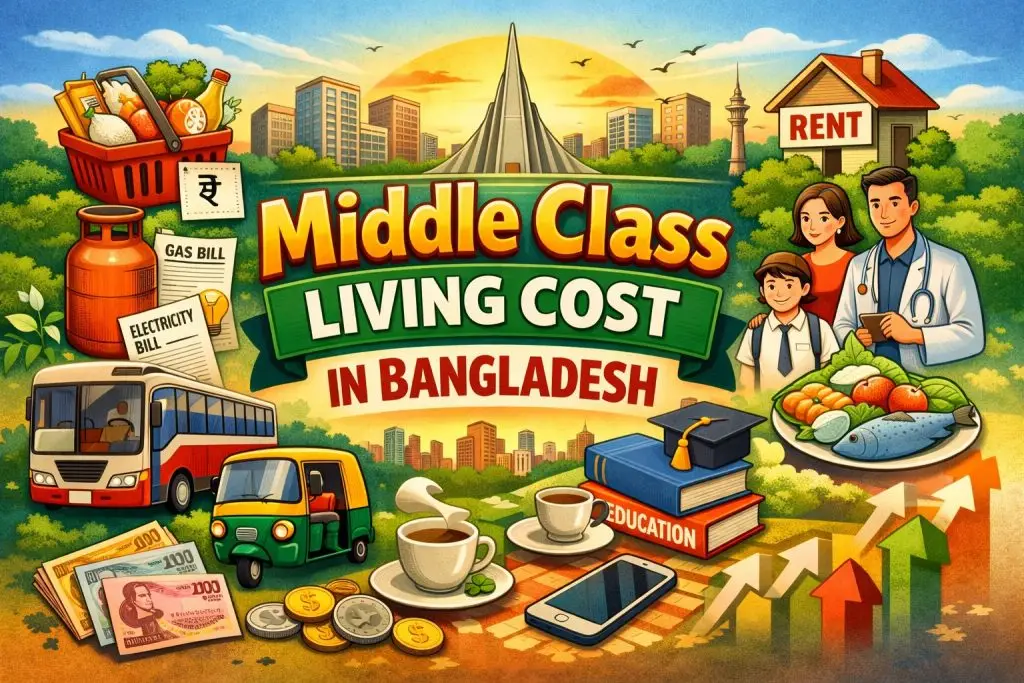
Discover the alarming middle class living cost in Bangladesh 2026. Learn how rising prices impact middle-class families, budgets, and daily life.
Introduction: Middle Class Living Cost in Bangladesh 2026
The Middle Class Living Cost in Bangladesh has become one of the most discussed economic concerns in 2026. Once considered a financially stable group, middle-class families are now facing increasing pressure from rising prices, stagnant income growth, and shrinking savings. In both urban and semi-urban areas of Bangladesh, daily expenses have climbed sharply, affecting housing, food, education, healthcare, and transportation.
Middle-class households are struggling to maintain a balanced lifestyle while coping with inflation, utility hikes, and higher service charges. The gap between income and expenses continues to widen, forcing families to compromise on quality of life, future planning, and financial security. This harsh reality is reshaping spending habits and long-term goals for millions.
This article explores the Middle Class Living Cost in Bangladesh in 2026, breaking down major expense categories, identifying key challenges, and explaining how middle-income families are adapting to survive in an increasingly expensive economy.
Who Belongs to the Middle Class in Bangladesh?
In Bangladesh, the middle class traditionally includes families earning a moderate monthly income that allows them to meet basic needs such as housing, food, education, healthcare, and limited leisure activities. These households are neither poor nor wealthy; instead, they rely on financial stability, careful planning, and consistent income to maintain their lifestyle. However, by 2026, this definition is rapidly changing.
Rising inflation, increasing living costs, and slow income growth have reshaped what it means to be middle class. Many families that once lived comfortably are now under financial pressure, struggling to balance expenses with earnings. Monthly budgeting has become essential, and even small price hikes can disrupt household finances.
Key characteristics of the middle class include:
- Fixed or salaried income with limited flexibility
- Strong dependence on monthly budgeting
- Minimal luxury or discretionary spending
- High priority on children’s education and future savings
- High vulnerability to inflation and sudden price increases
As daily expenses continue to rise, a growing number of middle-class households now live paycheck to paycheck, highlighting the shrinking financial cushion and increasing economic uncertainty in 2026.

Housing Costs: The Biggest Financial Burden
Housing is the largest contributor to the Middle Class Living Cost in Bangladesh, especially in urban and semi-urban areas. In 2026, rising apartment rents, higher security deposits, and increasing maintenance charges have placed heavy pressure on middle-class households. A significant portion of monthly income is now spent on rent alone, leaving limited funds for savings or emergencies. Many families are forced to choose smaller apartments, move to city outskirts, or share housing to manage escalating costs.
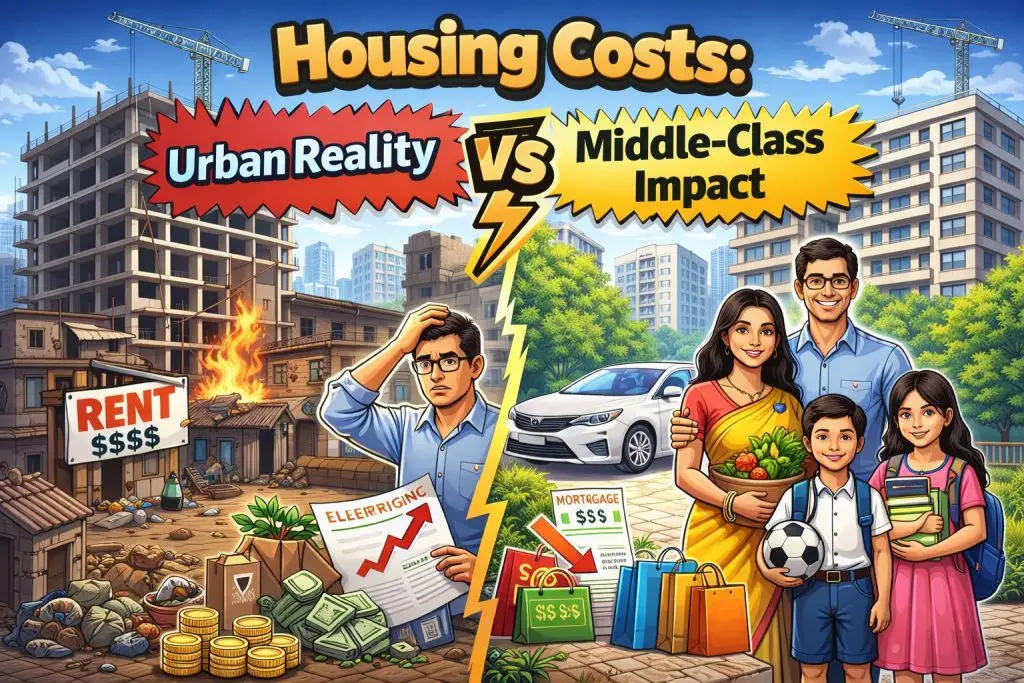
Urban Reality
- Apartment rents have increased significantly:
In major cities, rental prices have risen sharply due to high demand, limited housing supply, and rapid urbanization. Middle-class families now pay much more for the same living space compared to previous years. - Security deposits and maintenance fees are higher:
Landlords are demanding larger advance deposits, while monthly maintenance charges for lifts, security, and common services continue to rise, increasing upfront and ongoing costs. - Utility bills add extra pressure:
Electricity, gas, water, and internet bills have increased, making even basic living in rented apartments more expensive for middle-class households.
Middle-Class Impact
- 30–45% of monthly income goes to rent:
A large share of household earnings is now consumed by rent alone, leaving less money for food, education, healthcare, and savings. - Smaller living spaces are becoming common:
To manage costs, families are downsizing to smaller flats or moving to less central areas with fewer facilities. - Home ownership is increasingly out of reach:
High property prices and expensive loans make owning a home unrealistic for many middle-class families, forcing long-term dependence on rental housing.
Many families are relocating to city outskirts or sharing apartments to reduce costs.
Food Expenses: Daily Essentials, Rising Prices
Food inflation has heavily impacted middle-class households in 2026, making it one of the most significant contributors to monthly expenses. The cost of staples like rice, vegetables, fish, and cooking oil has surged, forcing families to carefully plan meals and adjust their grocery budgets. Rising prices of packaged foods, snacks, and dining out add further pressure, while many households are cutting back on protein-rich items and favoring local markets to manage costs. Overall, food expenses now consume a larger share of income, affecting lifestyle choices and long-term savings.
Key Challenges
- Rising prices of rice, vegetables, fish, meat, and cooking oil:
Basic staples have seen significant price hikes in 2026, forcing middle-class families to spend more on everyday meals and adjust their grocery budgets. - Increased cost of packaged and processed foods:
Convenience foods, snacks, and ready-to-eat items have become noticeably more expensive, making regular consumption harder for households on a tight budget. - Higher dining and takeaway expenses:
Eating out or ordering food has become a luxury, as restaurant prices and delivery charges continue to climb, adding to the overall cost of living.
Lifestyle Changes
- Reduced protein intake:
Many families are cutting back on fish, meat, and eggs, substituting with cheaper alternatives like lentils or vegetables to manage food expenses. - Fewer restaurant visits:
Dining out is now occasional, with families prioritizing home-cooked meals to save money. - Preference for local markets over supermarkets:
Shoppers increasingly buy fresh produce from local markets, which is more affordable than supermarket prices, while also supporting small vendors.
Food now consumes a larger portion of household budgets than ever before.

Education Costs: Quality Comes at a Price
Education remains a top priority for middle-class families in Bangladesh, but in 2026, it has become one of the most significant contributors to household expenses. Rising tuition fees, growing demand for private coaching, and the cost of books, uniforms, and digital devices are putting enormous pressure on family budgets.
Expenses Include:
- School tuition fees: Fees for private and reputed schools continue to rise, often outpacing income growth.
- Private coaching and tutoring: Extra classes for exams and competitive subjects add a substantial financial burden.
- Books, uniforms, and digital devices: Modern education often requires laptops, tablets, and stationery, further increasing costs.
Harsh Reality
- Private education is no longer affordable for many:
Rising tuition fees in reputed schools have pushed many middle-class families beyond their budget, making quality private education increasingly out of reach. - Parents compromise on quality to manage costs:
Some families opt for less expensive schools or skip additional coaching and extracurricular programs to save money, even if it means lower academic exposure. - Education loans and installment payments are increasing:
To cope with the high cost of schooling, families are relying on loans or spreading payments in installments, adding financial pressure over the long term.
Despite the financial strain, families continue to invest in education, viewing it as a long-term necessity.
Healthcare Costs: A Growing Concern
Healthcare expenses have risen sharply, becoming a major factor in the Middle Class Living Cost in Bangladesh. In 2026, medical consultations, diagnostic tests, and prescription medicines have grown significantly more expensive. Families are increasingly relying on private clinics due to limited public healthcare, while rising hospital fees and emergency costs add financial pressure. As a result, middle-class households are spending a larger portion of their income on healthcare, often cutting back on other essentials to manage these unavoidable expenses.
Current Situation
- High consultation fees:
Visiting specialists and private doctors has become costly, forcing families to budget carefully for routine and emergency check-ups. - Expensive diagnostic tests:
Blood tests, scans, and other diagnostic procedures have seen sharp price increases, adding significantly to overall medical expenses. - Rising medicine prices:
The cost of prescription drugs continues to climb, making regular treatment for chronic illnesses more burdensome for middle-class households.
Impact on Families
- Delayed medical care:
Many families postpone non-urgent treatments or check-ups to save money, which can worsen health outcomes over time. - Increased reliance on government hospitals:
Public hospitals are becoming the preferred option due to affordability, despite long waiting times and limited facilities. - Growing interest in health insurance (still limited):
Some middle-class families are exploring insurance coverage to manage medical costs, but widespread adoption remains low due to limited awareness and availability.
Unexpected medical emergencies often disrupt entire family budgets.
Transportation and Commuting Expenses
Transportation costs have increased due to fuel price hikes and rising service charges for buses, ride-sharing, and trains. Middle-class families are spending more on daily commutes, long-distance travel, and occasional trips, which adds a significant burden to monthly budgets.
Middle-Class Commuting:
- Daily travel to work and school
- Dependence on public transport or ride-sharing
- Rising maintenance costs for personal vehicles
Result:
- Monthly commuting expenses consume a noticeable share of income
- Longer travel times to reduce housing costs
Transportation stress affects both finances and quality of life.
Utility Bills and Digital Expenses
Modern living comes with unavoidable utility and technology costs, including electricity, gas, water, and internet services. Additionally, smartphones, streaming subscriptions, and digital devices add to monthly expenses, further increasing the Middle Class Living Cost in Bangladesh.
Common Expenses:
- Electricity, gas, and water bills
- Internet and mobile data
- Streaming and digital services
Reality in 2026:
- Utility tariffs have increased
- Internet access is essential for work and education
- Cutting digital costs is difficult
Middle-class families now consider internet access a basic necessity, not a luxury.
Lifestyle, Social, and Hidden Costs
Beyond essentials, lifestyle expenses such as clothing, personal care, dining out, and occasional entertainment significantly affect the Middle Class Living Cost in Bangladesh. Hidden costs like gifts, social obligations, and minor emergencies also add up, putting extra pressure on household budgets.
Examples:
- Social events and family obligations
- Religious festivals and celebrations
- Gifts, travel, and emergencies
Changes Observed:
- Smaller celebrations
- Reduced travel and recreation
- Increased financial stress during festivals
Social expectations continue, even when budgets are tight.
Savings, Debt, and Financial Stress
Savings are shrinking for middle-class households.
Financial Trends:
- Reduced monthly savings
- Increased use of credit cards and loans
- Difficulty planning for retirement
Emotional Impact:
- Constant financial anxiety
- Delayed life goals
- Pressure on family relationships
Many families now focus on short-term survival rather than long-term security.
Urban vs Semi-Urban Middle-Class Costs
Urban middle-class families face higher expenses for housing, education, healthcare, and daily living due to city demand and limited space. Semi-urban households enjoy lower rents, cheaper food, and reduced utility bills but may compromise on access to quality schools, healthcare, and entertainment. The cost gap highlights the economic pressures of city living compared to suburban areas.
Urban Areas:
- Higher rent and transport costs
- Better access to services
- Greater income opportunities
Semi-Urban Areas:
- Lower living costs
- Limited job options
- Reduced education and healthcare access
Families are weighing cost savings against opportunity limitations.
How Middle-Class Families Are Coping in 2026
Despite the rising Middle Class Living Cost in Bangladesh, many families are finding ways to adapt and maintain stability. The economic pressures of 2026, including high housing costs, food inflation, and rising education and healthcare expenses, have forced households to rethink their spending habits and financial strategies.
Common Strategies
- Strict budgeting: Families now carefully track income and expenses, prioritizing essential needs and cutting unnecessary costs to stretch their monthly budgets.
- Reducing non-essential spending: Luxuries, entertainment, and frequent dining out have been minimized, with many families choosing home-cooked meals and low-cost leisure options.
- Side income or freelancing: Additional income sources, such as part-time work, freelancing, or online ventures, help offset rising living costs.
- Shared housing or relocation: Some households move to smaller apartments, city outskirts, or share housing with relatives to reduce rent and utility bills.
Financial awareness and planning have increased among middle-class families, helping them navigate economic pressures while striving to maintain a reasonable standard of living. These adaptive measures are crucial for long-term stability in 2026 and beyond.
Future Outlook: What Lies Ahead?
The Middle Class Living Cost in Bangladesh is expected to remain high in the coming years unless household incomes increase in line with inflation. Without sufficient wage growth, middle-class families will continue to struggle with rising expenses in housing, food, education, healthcare, transportation, and utilities. The financial pressure may force households to cut discretionary spending, delay long-term goals, or compromise on quality of life.
Key Needs for Stability
- Better wage adjustments: Regular salary increases aligned with inflation are essential to maintain purchasing power.
- Affordable housing policies: Government support and incentives can help reduce rent burdens and make home ownership achievable.
- Improved public healthcare: Expanding access to quality medical services will reduce out-of-pocket expenses for families.
- Education cost regulation: Controlling tuition fees and promoting affordable education will protect family budgets.
Ensuring middle-class stability is critical for Bangladesh’s economic growth and social balance. Supporting this group secures consumer spending, nurtures human capital, and sustains a resilient economy for the future.
Frequently Asked Questions (FAQs)
1. What is the middle class living cost in Bangladesh in 2026?
The middle class living cost in Bangladesh in 2026 varies by location, but an average family needs a significant monthly budget to cover rent, food, education, healthcare, transport, and utilities. Urban families face much higher expenses than semi-urban or rural households.
2. Why is the middle class struggling in Bangladesh in 2026?
Middle-class families are struggling due to rising inflation, higher housing rents, increased food prices, expensive education, and growing healthcare costs, while salary growth remains slow.
3. Which expenses affect the middle class the most in Bangladesh?
Housing rent, food items, school fees, medical costs, transportation, and utility bills are the biggest contributors to the rising middle class living cost in Bangladesh.
4. Is living in Dhaka more expensive for the middle class?
Yes, living in Dhaka is significantly more expensive due to high rent, traffic-related transport costs, private education fees, and higher daily expenses compared to other cities.
5. How are middle-class families coping with rising living costs?
Families are coping by strict budgeting, reducing non-essential spending, choosing smaller homes, using public transport, and seeking additional income through freelancing or side jobs.
6. Has food cost increased for middle-class families in 2026?
Yes, food prices have increased sharply, forcing many families to reduce protein intake, avoid dining out, and rely more on local markets.
7. Can middle-class families still save money in Bangladesh?
Saving has become difficult. Many families struggle to save due to high monthly expenses, emergencies, and rising living costs.
8. Will the middle class living cost increase further after 2026?
If inflation continues and income growth remains slow, the middle class living cost in Bangladesh is expected to rise further in the coming years.
Conclusion
The Middle Class Living Cost in Bangladesh in 2026 reveals a harsh and evolving reality. Rising prices across housing, food, education, healthcare, and utilities have placed immense pressure on middle-income families. While incomes struggle to keep pace, expenses continue to rise, forcing lifestyle changes and financial sacrifices.
Despite these challenges, the middle class remains resilient—adapting through smarter budgeting, alternative income sources, and lifestyle adjustments. However, long-term sustainability requires policy support, economic reforms, and improved access to affordable services.
Understanding this reality is essential for policymakers, researchers, and families alike. The future of Bangladesh’s economy depends heavily on protecting and strengthening its middle class, ensuring they can live with dignity, security, and hope beyond 2026.