
Downed planes Iran US pilot crisis shocks the world—what happened to the missing pilot? Discover hidden facts, risks, and global impact now.
Introduction: A Crisis Intensifies
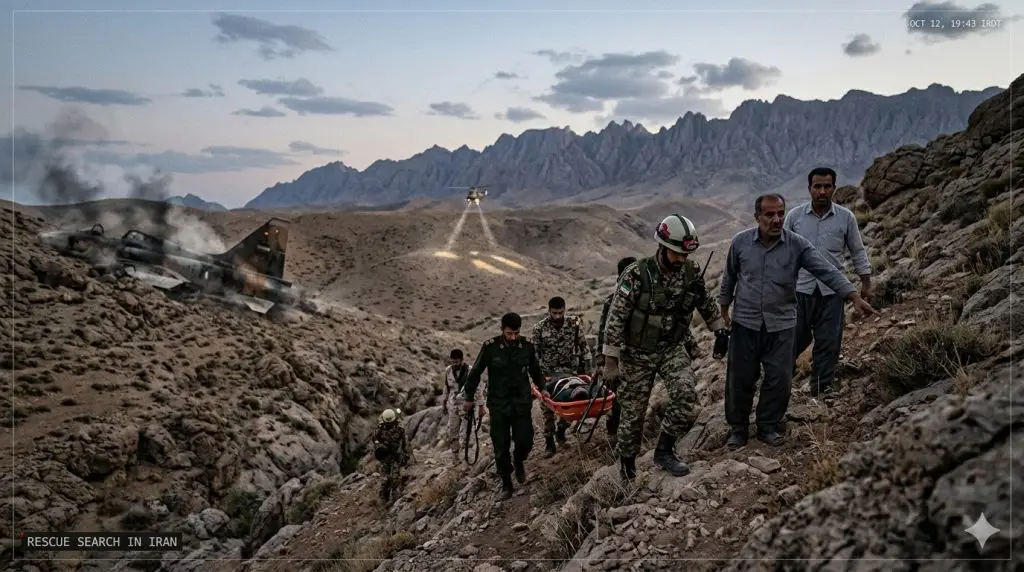
The ongoing conflict between the United States and Iran has entered a dangerous new phase following the dramatic downing of two American warplanes. What initially appeared to be another chapter in a high-tech aerial campaign has now evolved into a tense and unpredictable situation, with a missing U.S. pilot at the center of international concern.
As the war stretches into its sixth week, the stakes have risen sharply—not only militarily but also politically. For President Donald Trump, the incident represents a significant challenge to both his leadership and his administration’s narrative of dominance in the skies over Iran.
At the heart of the crisis lies a simple yet alarming fact: a U.S. service member is missing somewhere inside Iran, while Iranian forces—and possibly civilians—are actively searching for him.
The Incident: Two Aircraft Downed
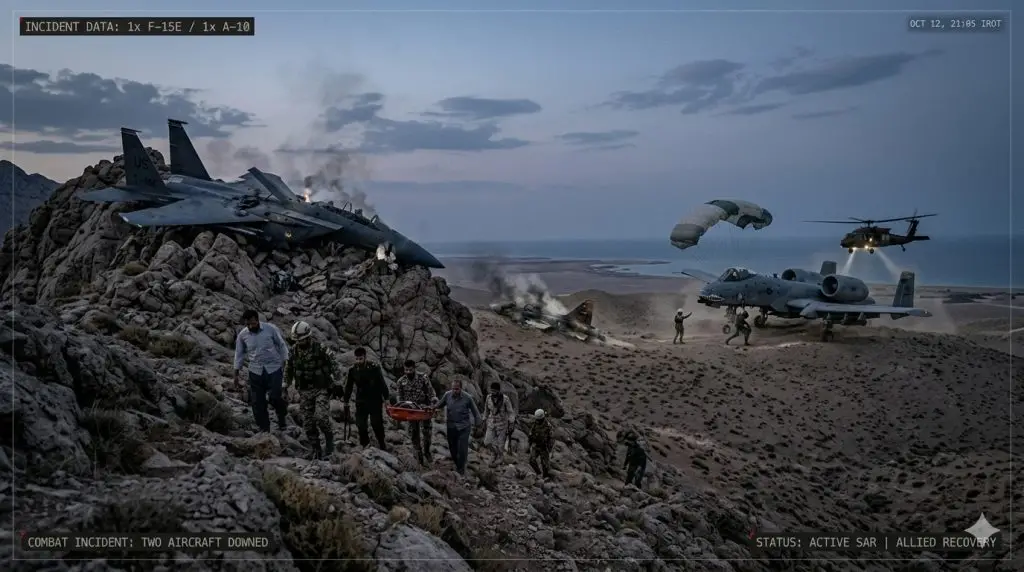
The unfolding crisis began when two U.S. military aircraft were struck by Iranian fire during combat operations. According to officials, the first aircraft was an advanced F-15E Strike Eagle—a powerful twin-seat fighter jet widely used for precision strikes. The second was an A-10 Thunderbolt II, commonly known as the “Warthog,” designed for close air support.
The F-15E was shot down over Iranian territory, forcing its crew to eject. While one crew member was successfully rescued in a high-risk operation, the second remains missing.
The A-10, meanwhile, was hit while operating near the Gulf region. Despite sustaining damage, the pilot managed to steer the aircraft toward Kuwaiti airspace before ejecting safely and being recovered by allied forces.
These incidents mark a rare and significant loss for U.S. forces, especially given the advanced technology and defensive capabilities of modern American aircraft.
A Dangerous Search-and-Rescue Operation
Following the downing of the F-15E, the U.S. military launched an immediate search-and-rescue mission. Such missions are among the most dangerous operations in modern warfare, particularly when conducted inside hostile territory.
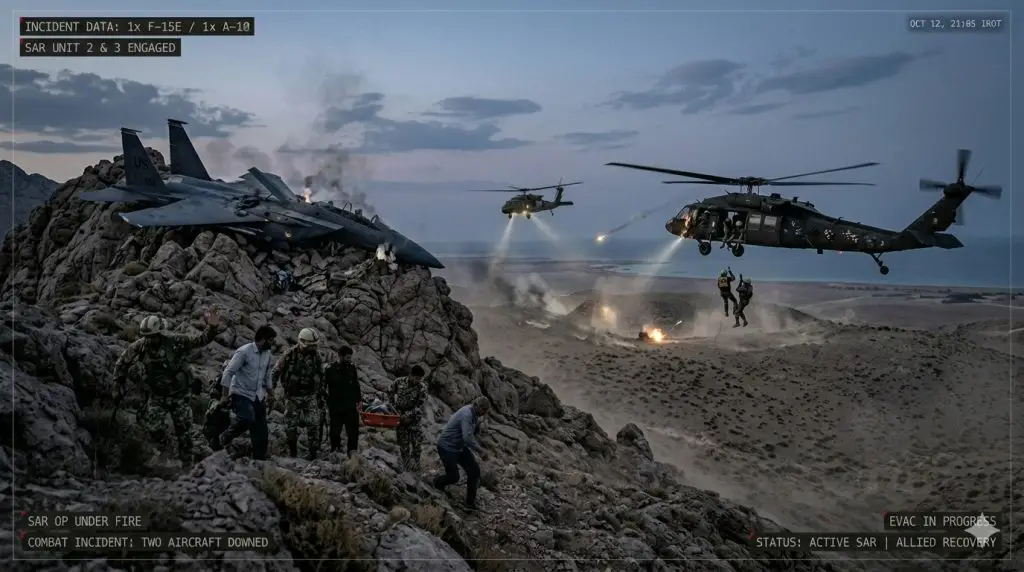
The rescue effort itself quickly came under fire. Two U.S. Black Hawk helicopters involved in the operation were reportedly hit by Iranian fire, though they managed to escape Iranian airspace with injured personnel onboard.
The risks associated with these operations highlight the vulnerability of even the most advanced military forces when operating in contested airspace. Despite claims of air superiority, the reality on the ground—or in this case, in the skies—remains far more complex.
Tehran’s Response: Hunt for the Missing Pilot
Iran’s response has added a deeply troubling dimension to the situation. Iranian authorities, including the powerful Revolutionary Guard Corps, have launched an active search for the missing U.S. pilot.
Local officials have gone even further, reportedly encouraging civilians to assist in locating the pilot, with promises of rewards or recognition.
This development raises serious concerns under international law, particularly regarding the treatment of captured military personnel. The possibility that a downed pilot could be captured by irregular forces or civilians introduces an unpredictable and potentially volatile element to the crisis.
In addition, Iranian media and officials have used the incident as a propaganda opportunity, portraying it as a symbolic victory against a technologically superior adversary.
A Blow to U.S. Air Superiority Claims
One of the most significant consequences of the incident is its impact on the U.S. administration’s claims of air dominance.
President Donald Trump and his defense officials had repeatedly asserted that American forces had effectively neutralized Iran’s air defenses and achieved near-total control of the skies.
However, the successful downing of two U.S. aircraft suggests otherwise.
Military experts have pointed out that even weakened air defense systems can remain dangerous, particularly when using mobile surface-to-air missiles or shoulder-fired weapons that are difficult to detect and eliminate.
The incident serves as a stark reminder that modern warfare is rarely as one-sided as official statements might suggest.
Political Fallout in Washington
The crisis is not just a military issue—it is also a political one.
Back in Washington, the news of the downed planes and missing pilot has intensified scrutiny of the administration’s handling of the war. Public support for the conflict has already been described as limited, and incidents like this can further erode confidence.
The image of an American pilot potentially stranded behind enemy lines is particularly powerful, evoking memories of past conflicts and raising difficult questions about strategy and leadership.
Critics argue that the administration may have underestimated the resilience of Iranian defenses or overestimated the effectiveness of its own operations.
Human Stakes: The Missing Pilot
At the center of the crisis is the missing pilot—a human story that transcends politics and strategy.
Military personnel are trained for such scenarios, including survival, evasion, resistance, and escape. However, the challenges of surviving in hostile territory—especially one where local populations may be encouraged to assist in capture—are immense.
The uncertainty surrounding the pilot’s fate adds urgency to the situation. Is he hiding? Injured? Already captured? These questions remain unanswered.
For the pilot’s family and fellow service members, the situation is undoubtedly agonizing.
Escalating Conflict in the Region
The downing of the aircraft comes amid a broader escalation in the U.S.-Iran conflict.
Since the beginning of the war, thousands of strikes have been carried out by U.S. and allied forces. Iran has responded with missile and drone attacks targeting regional adversaries, including Israel and Gulf states.
The conflict has expanded beyond a simple bilateral confrontation, drawing in multiple actors and increasing the risk of a wider regional war.
Oil markets have already reacted, with prices rising sharply amid fears of disruption in key shipping routes such as the Strait of Hormuz.
Military Losses and Strategic Reality
According to reports, at least 13 U.S. service members have been killed and hundreds injured since the conflict began.
The loss of aircraft, while not unprecedented, is symbolically significant. Modern U.S. jets are not only expensive but also represent technological superiority.
When such aircraft are brought down, it sends a message—not just to adversaries but also to allies and domestic audiences.
It suggests that the conflict is far from under control and that risks remain high.
Iran’s Messaging and Psychological Warfare
Iran has used the incident to its advantage in the information war.
Officials and state media have highlighted the downing of the planes as evidence that U.S. forces are vulnerable. Some statements have even mocked the original objectives of the war, suggesting that it has shifted from broader strategic goals to a desperate effort to recover a single pilot.
Such messaging is designed not only to boost domestic morale but also to influence international perceptions.
Diplomatic Efforts Stall
Despite the escalating tensions, diplomatic efforts to resolve the conflict appear to have stalled.
Attempts at mediation, including efforts by regional players, have not yet produced meaningful progress. Iran has reportedly refused to engage directly with U.S. officials, further complicating the situation.
The longer the conflict continues, the more difficult it may become to find a negotiated solution.
The Risks Ahead
The current situation presents several immediate risks:
- Capture of the pilot: If the missing pilot is captured, it could trigger a major escalation.
- Expanded military operations: The U.S. may intensify strikes in response to the incident.
- Regional spillover: Other countries could become more deeply involved.
- Economic impact: Rising oil prices and market instability could affect the global economy.
Each of these risks underscores the fragile and volatile nature of the situation.
A Turning Point in the War?
The downed planes Iran US pilot crisis may prove to be a decisive moment in the ongoing conflict, even though its long-term impact is still uncertain. The loss of advanced aircraft and the disappearance of a U.S. pilot have raised serious questions about battlefield realities and strategic assumptions. What was once presented as a controlled operation now appears far more complex and unpredictable.
For Donald Trump, this situation represents a crucial test of leadership. The way his administration handles the crisis—through military decisions, diplomatic efforts, and political messaging—could significantly influence both domestic opinion and international relations. Any misstep may escalate tensions further, while a calculated response could help stabilize the situation.
Moreover, this crisis is reshaping global perceptions of the conflict. It highlights vulnerabilities, challenges previous claims of air superiority, and introduces new risks that cannot be ignored. As events continue to unfold, the coming weeks will be critical in determining whether this incident becomes a temporary setback or a true turning point in the war.
Conclusion: Downed planes Iran US pilot crisis
The story of the downed planes and the missing pilot is still unfolding.
What began as a military operation has become a complex crisis involving human lives, political pressures, and global implications.
As Tehran continues its search and the United States presses its rescue efforts, the world watches closely.
At its core, this is not just a story about warplanes or strategy—it is a story about risk, uncertainty, and the unpredictable nature of conflict.
And until the fate of the missing pilot is known, the tension surrounding this crisis is unlikely to ease.