
Middle East war impact on Bangladesh is rising fast—discover hidden economic risks, fuel price shocks, and remittance changes that could affect your future.
Introduction
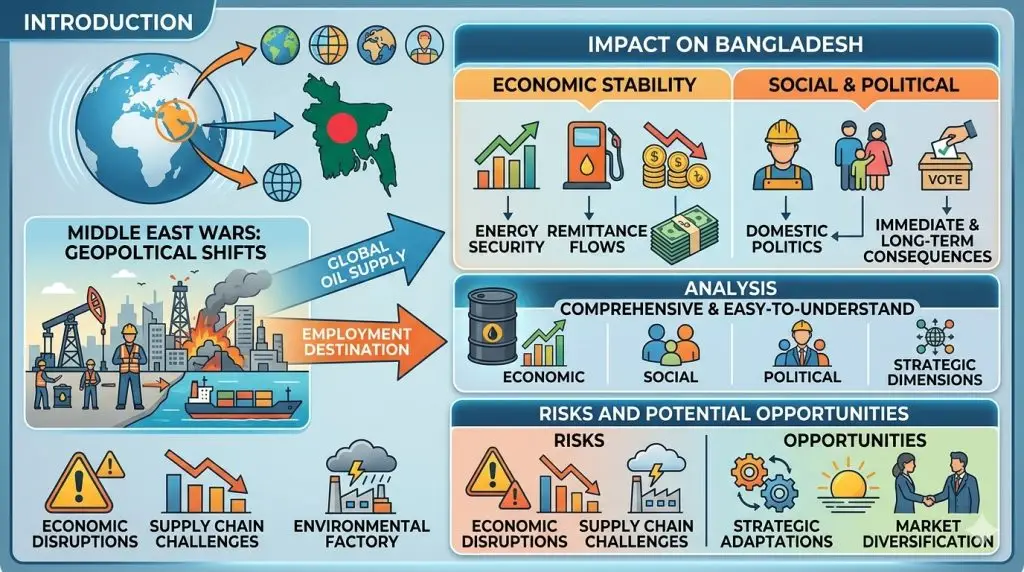
The ongoing tensions and conflicts in the Middle East have always had ripple effects across the globe. For a developing country like Bangladesh, these geopolitical shifts are not distant events—they directly influence economic stability, energy security, remittance flows, and even domestic politics. As the Middle East remains a crucial region for global oil supply and a major employment destination for Bangladeshi workers, any instability there creates immediate and long-term consequences.
This article provides a comprehensive and easy-to-understand analysis of how Middle East wars impactBangladesh, covering economic, social, political, and strategic dimensions. It also highlights both risks and potential opportunities that may arise from such global disruptions.
Why the Middle East Matters to Bangladesh
Before diving into the impacts, it is important to understand why the Middle East holds such significance for Bangladesh.
Energy Dependency
Bangladesh relies heavily on imported fuel, especially crude oil and refined petroleum products. A large portion of this energy supply originates from Middle Eastern countries such as Saudi Arabia, United Arab Emirates, and Kuwait.
Remittance Economy
Millions of Bangladeshi migrant workers are employed in Gulf countries. Nations like Qatar, Oman, and Saudi Arabia send billions of dollars annually to Bangladesh in the form of remittances.
Trade and Shipping Routes
Critical shipping lanes like the Strait of Hormuz are essential for global trade. Any disruption here directly affects Bangladesh’s import and export costs.
Economic Impact of Middle East War on Bangladesh
Rising Fuel Prices
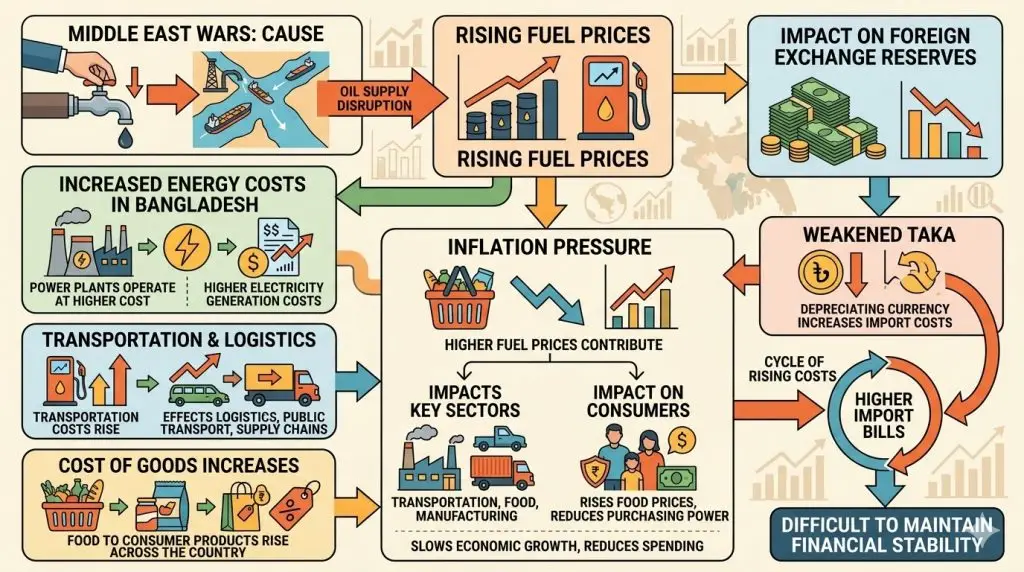
One of the fastest economic shocks from conflict in the Middle East is the surge in global oil prices. Wars often disrupt production and key transit routes like the Strait of Hormuz, causing supply shortages in international markets.
For Bangladesh, which relies heavily on imported fuel, this leads to increased import bills and higher electricity generation costs. Power plants dependent on oil and LNG become more expensive to operate, forcing adjustments in energy pricing. Transportation costs also rise as fuel prices increase, affecting logistics, public transport, and supply chains. As a result, the cost of essential goods—from food to consumer products—rises across the country, creating widespread economic pressure.
Inflation Pressure
Higher fuel prices directly contribute to inflation, a challenge Bangladesh has already been managing in recent years. When energy costs increase, businesses pass those expenses on to consumers. This impacts key sectors such as food, transportation, and manufacturing.
Rising food prices hit households the hardest, especially low- and middle-income families, reducing their purchasing power. Increased transportation costs raise market prices, while higher production expenses affect local industries. Persistent inflation can slow economic growth and reduce overall consumer spending.
Impact on Foreign Exchange Reserves
Bangladesh spends a significant portion of its foreign currency on energy imports. When global oil prices rise, import bills increase sharply, putting pressure on foreign exchange reserves. This can weaken the Bangladeshi Taka (BDT), making imports even more expensive.
A depreciating currency creates a cycle where rising costs lead to further economic strain, making it harder for Bangladesh to maintain financial stability during prolonged global conflicts.
Remittance Risks and Opportunities
Remittances play a crucial role in sustaining Bangladesh’s economy, especially as a large number of workers are employed across the Middle East. However, regional conflicts can create significant uncertainty for migrant workers and financial inflows.
Threat to Migrant Workers
Geopolitical tensions and war in the Middle East can directly affect the employment stability of Bangladeshi migrants. In severe cases, workers may lose their jobs due to halted construction and infrastructure projects—key sectors that employ thousands of Bangladeshis. Additionally, governments may initiate emergency evacuations, forcing workers to return home unexpectedly. Such instability can also reduce new overseas job opportunities, limiting future migration and income prospects.
Remittance Flow Disruption
Remittances are considered a backbone of Bangladesh’s foreign exchange earnings. Any disruption in migrant employment can lead to a decline in remittance inflows, putting pressure on the country’s balance of payments. Rural communities, which heavily depend on these funds for daily expenses, education, and healthcare, are particularly vulnerable. A prolonged drop in remittances can increase poverty levels and slow down local economic activities.
3. Possible Positive Scenario
In some situations, uncertainty may encourage workers to send more money home as a precautionary measure. While this can temporarily boost remittance inflows, such increases are usually short-lived and do not offset long-term economic risks.
Trade and Supply Chain Disruptions
Global trade networks are highly sensitive to geopolitical tensions, and any instability around the Strait of Hormuz can create serious ripple effects for countries like Bangladesh. As one of the world’s most vital oil transit routes, disruptions in this region can significantly impact shipping operations.
Military conflict or heightened tensions often lead to delayed cargo movements, increased freight charges, and sharply rising marine insurance premiums. For Bangladesh, which relies heavily on imported fuel and industrial raw materials, these challenges translate into higher import costs and pressure on the national economy.
In addition, Bangladesh’s export-oriented industries—especially the ready-made garment (RMG) sector—face growing risks when global supply chains are disrupted. The garment industry depends largely on imported fabrics, dyes, and accessories. Any interruption in supply can lead to increased production expenses, delayed manufacturing cycles, and missed delivery deadlines.
This not only affects profit margins but also weakens Bangladesh’s competitiveness in the global market. Over time, persistent disruptions may force international buyers to shift orders to more stable sourcing destinations, posing a long-term threat to export growth and economic stability.
Impact on the Garment Industry in Bangladesh
The Ready-Made Garments (RMG) sector is the backbone of Bangladesh’s economy, driving export growth and providing employment to millions of workers. However, global instability and geopolitical tensions can significantly disrupt this crucial industry. One of the primary challenges is increased transportation costs, as shipping rates often rise during global crises, directly impacting profit margins for exporters.
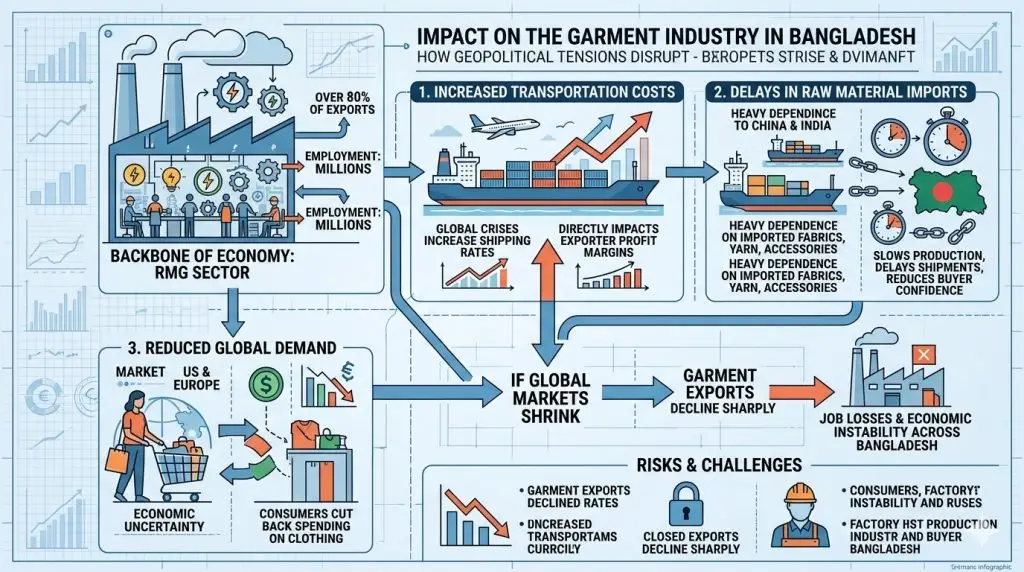
Another major risk is delays in raw material imports. Bangladesh heavily depends on imported fabrics, yarn, and accessories from countries like China and India. Any disruption in global supply chains can slow production, delay shipments, and reduce buyer confidence.
Additionally, reduced global demand due to economic uncertainty poses a serious threat. During times of war or financial instability, consumers in key markets such as the US and Europe tend to cut back on spending, especially on non-essential items like clothing.
If global markets shrink, Bangladesh’s garment exports could decline sharply. This would not only affect factory owners but also put millions of workers at risk, potentially leading to job losses and economic instability across the country.
Energy Crisis and Power Shortages in Bangladesh
Bangladesh is highly vulnerable to global energy market fluctuations due to its dependence on imported LNG and oil-based fuels. During times of war or geopolitical tension, fuel prices often surge, creating significant pressure on the country’s energy sector. As a result, increased energy costs can lead to frequent power shortages, widespread load shedding, and rising electricity tariffs for both households and businesses.
These challenges directly impact the overall economy. Higher electricity prices increase the cost of living and reduce consumer purchasing power. At the same time, unreliable power supply disrupts daily life and business operations.
Industrial Impact
Industries in Bangladesh, especially manufacturing and export-oriented sectors, rely heavily on a stable and continuous energy supply. Energy shortages can reduce production capacity, delay order fulfillment, and damage relationships with international buyers.
Moreover, increased operational costs—due to expensive fuel and backup power solutions like generators—can lower profit margins for businesses. In the long run, these issues slow economic growth, weaken industrial competitiveness, and discourage foreign investment. Addressing energy security is therefore critical for sustaining Bangladesh’s economic stability and growth.
Geopolitical and Diplomatic Challenges for Bangladesh
Bangladesh faces complex geopolitical and diplomatic challenges during global conflicts, especially in balancing international relationships. The country maintains strong ties with both Western nations and Middle Eastern countries, making neutrality essential. Bangladesh must carefully support peace efforts, avoid risky political alignments, and ensure the safety of its migrant workers abroad, particularly in conflict-prone regions.
Role in Global Forums
Bangladesh активно participates in global platforms like the United Nations, promoting peace, dialogue, and stability. Through diplomatic engagement, the country can strengthen its international position while protecting economic and strategic interests.
Food Security Concerns in Bangladesh
Global conflicts in the Middle East can significantly disrupt food supply chains, creating serious challenges for Bangladesh. As a food-importing nation, Bangladesh is highly sensitive to changes in global markets, especially during times of geopolitical instability.
Several key factors contribute to this risk. Increased transportation costs make it more expensive to import essential food items such as wheat, edible oil, and other staples. At the same time, higher fertilizer prices—often linked to global energy costs—can raise agricultural production expenses, affecting both local farmers and food supply.
Additionally, disruptions in global grain markets can reduce availability and increase competition among importing countries. This can lead to supply shortages and price volatility in domestic markets.
As a result, Bangladesh may face rising food prices, making it difficult for low- and middle-income households to afford basic necessities. Increased food insecurity could become a major concern, particularly in vulnerable communities. Furthermore, the government may experience additional pressure to expand subsidies and support programs to stabilize prices and ensure food access for all citizens.
Impact on Investment and Financial Markets in Bangladesh
Global conflicts and economic uncertainty can have a significant impact on investment and financial markets in Bangladesh. As an emerging economy, Bangladesh relies heavily on foreign direct investment (FDI) to support infrastructure development, industrial expansion, and job creation.

However, during times of war or global instability, investors tend to become more cautious and shift their funds to safer markets. This leads to reduced foreign investment, slowing down economic growth and delaying major development projects.
Stock Market Volatility
War-related uncertainty also affects the stock market by weakening investor confidence. When global risks increase, both local and international investors may hesitate to invest or may withdraw their existing investments. This can cause sudden fluctuations in stock prices and increase overall market volatility.
Additionally, declining investor confidence can negatively impact listed companies, reducing their ability to raise capital for expansion. As businesses struggle to secure funding, growth slows, and economic momentum weakens.
In the long term, persistent financial instability can discourage new investments, limit job opportunities, and create uncertainty in Bangladesh’s economic outlook. Strengthening financial resilience and investor confidence is crucial to maintaining stable market growth.
Social Impact in Bangladesh
Global conflicts, especially in the Middle East, can create serious social challenges in Bangladesh, affecting daily life, employment, and mental well-being.
Increased Cost of Living
Rising global fuel and food prices have a direct impact on everyday expenses. As import costs increase, transportation, electricity, and essential commodities become more expensive. This leads to higher living costs for households, particularly affecting middle- and low-income families who struggle to manage basic needs like food, housing, and healthcare.
Employment Challenges
Economic slowdown caused by global instability can significantly impact the job market. Reduced industrial production and lower export demand may decrease job opportunities, especially in sectors like garments and manufacturing. Small businesses are also highly vulnerable, as rising costs and declining consumer spending reduce profits. This situation can lead to increased unemployment and financial insecurity for many families.
Psychological Impact
Beyond economic effects, global conflict can also create emotional stress and anxiety. Many families in Bangladesh have relatives working in Middle Eastern countries, and uncertainty about their safety and income can cause fear and mental pressure. Continuous exposure to negative news further increases public concern, highlighting the need for social support and awareness.
Opportunities for Bangladesh Amid Global Challenges
Despite the risks of global conflicts, Bangladesh can unlock several strategic opportunities to strengthen its economy and reduce long-term vulnerabilities. With the right policies, these challenges can drive positive transformation.
Diversification of Energy Sources
Rising global fuel uncertainty can push Bangladesh to accelerate renewable energy adoption, including solar and wind power. The country may also increase efforts in local energy exploration, such as natural gas reserves. Additionally, promoting energy efficiency initiatives in industries and households can reduce dependency on costly imports and improve sustainability.
Expanding Labor Markets
If hiring slows in traditional Middle Eastern destinations, Bangladesh can explore new overseas employment opportunities in regions like Southeast Asia, Europe, and East Asia. Diversifying labor markets will reduce reliance on a single region and ensure steady remittance inflows, which are crucial for the national economy.
Strengthening Domestic Industries
Global supply chain disruptions can encourage Bangladesh to focus on local production and import substitution. Investing in industrial innovation and technology can enhance productivity and competitiveness. In the long run, stronger domestic industries will create jobs, boost exports, and build a more resilient and self-sufficient economy.
Government Response Strategies to Manage Middle East Conflict Impact
To reduce the economic risks of Middle East conflicts, the Bangladesh government must adopt effective and forward-looking strategies. These policies can help stabilize the economy, protect citizens, and ensure long-term growth despite global uncertainty.
Energy Strategy
Energy security should be a top priority. Bangladesh can diversify fuel sources by importing from multiple regions to reduce dependency on any single supplier. Investing in renewable energy such as solar and wind power will also lower reliance on imported fuels. Additionally, improving energy efficiency in industries and households can help minimize waste and reduce overall consumption.
Economic Policy
Strong economic policies are essential to maintain stability. The government should focus on controlling inflation through monetary measures and market regulation. Strengthening foreign exchange reserves will help manage import costs and currency fluctuations. At the same time, providing financial support and subsidies to vulnerable populations can protect low-income groups from rising living costs.
Diplomatic Efforts
Maintaining a neutral and balanced foreign policy is crucial during global conflicts. Bangladesh should ensure the safety of its migrant workers in Middle Eastern countries and continue engaging in international peace initiatives. Active diplomacy can help secure economic interests while promoting regional stability.
Long-Term Implications for Bangladesh’s Economy
Global conflicts and repeated economic shocks can drive significant long-term changes in Bangladesh’s economic structure. To reduce vulnerability, the country may focus on lowering import dependency by promoting local industries and increasing self-sufficiency. Strengthening domestic production—especially in energy, agriculture, and manufacturing—can help Bangladesh become more resilient to external disruptions and stabilize economic growth.
Structural Economic Changes
Over time, policymakers may prioritize diversifying export sectors beyond garments and investing in renewable energy sources. These strategic shifts can improve economic sustainability and reduce exposure to global market volatility.
Shift in Global Power Dynamics
Changes in the Middle East and other geopolitical regions can reshape global alliances and trade relationships. As a result, Bangladesh may need to adjust its foreign policy and economic partnerships to maintain stability and secure energy supplies. Adapting to these evolving global dynamics will be essential for long-term economic security and growth.
Conclusion: Middle East war impact on Bangladesh
The impact of Middle East wars on Bangladesh is deep, complex, and multi-dimensional. From rising fuel prices and inflation to risks in remittance flows and trade disruptions, the consequences touch nearly every sector of the economy.
However, with proper planning, strategic policy decisions, and economic diversification, Bangladesh can not only manage these challenges but also turn some of them into opportunities. The key lies in resilience, adaptability, and forward-thinking governance.
In an interconnected world, distant conflicts are never truly distant. For Bangladesh, understanding and preparing for the impacts of Middle East instability is not optional—it is essential for sustainable growth and stability.