
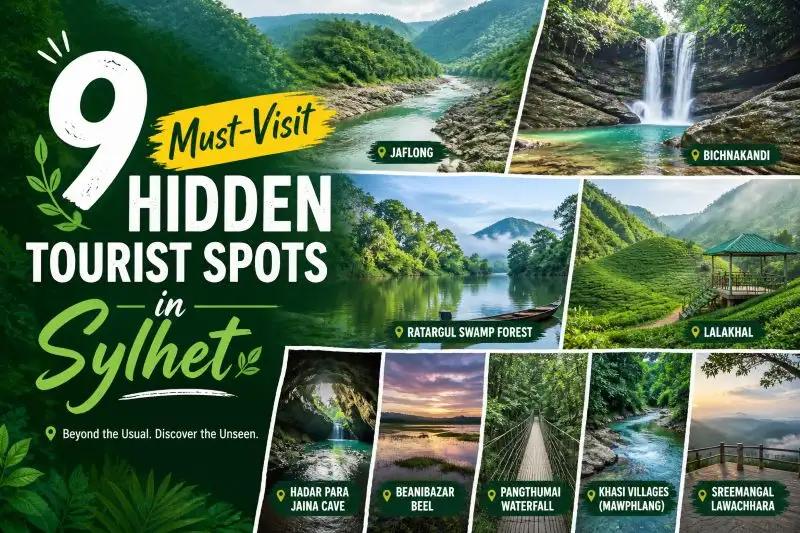
Discover the 9 best hidden tourist spots in Sylhet! Explore offbeat, secret gems and serene nature away from the crowds with our 2026 travel guide.
Introduction: 9 Must-Visit Hidden Tourist Spots in Sylhet
Sylhet is one of the most naturally beautiful regions in Bangladesh, famous for its endless tea gardens, rolling green hills, and deep-rooted cultural and spiritual heritage. Every year, thousands of travelers visit its popular attractions, but many overlook the true charm that lies beyond the usual tourist routes. Hidden across this scenic region are several breathtaking locations that remain quiet, less crowded, and largely untouched by mass tourism. These Hidden Tourist Spots in Sylhet offer a refreshing escape where nature feels more pure, calm, and authentic.
Unlike busy tourist hubs, these offbeat destinations allow you to connect more deeply with the environment. You can enjoy peaceful landscapes, capture stunning photographs, and experience local life in a more genuine way. Whether it’s a secret waterfall, a tranquil riverbank, or a secluded forest, each hidden spot tells its own unique story and beauty.
For travelers who seek something different—away from noise and crowds—these lesser-known places are perfect. They are especially ideal for nature lovers, photographers, and adventure seekers who want to explore Sylhet from a new perspective. In this guide, you’ll discover five of the most beautiful hidden gems that truly deserve a place on your travel list.
Why Explore Hidden Tourist Spots in Sylhet?
Before diving into the list, let’s understand why hidden places are worth exploring:
- Less crowded and peaceful environment
- Untouched natural beauty
- Unique photography opportunities
- Authentic local experiences
- Budget-friendly travel options
Sylhet’s geography—filled with rivers, hills, forests, and tea estates—creates countless hidden gems that many travelers still don’t know about.
1. Ratargul Swamp Forest – The Secret Amazon of Bangladesh
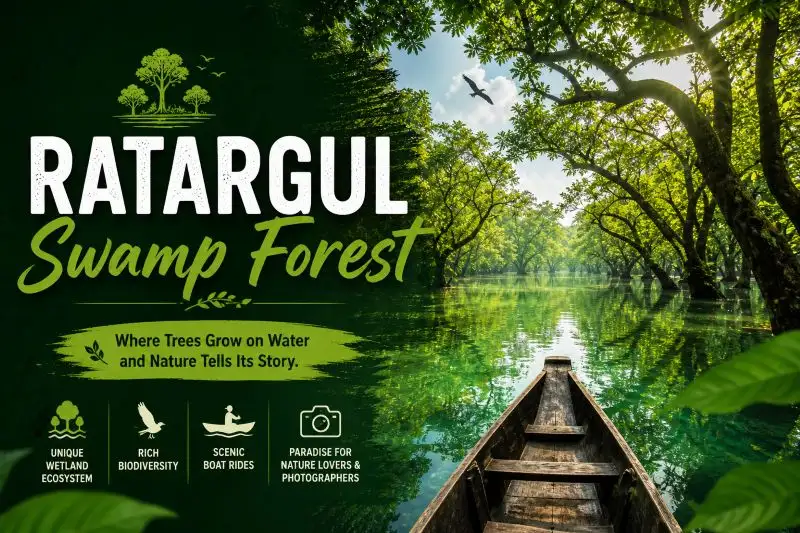
One of the most magical Hidden Tourist Spots in Sylhet, Ratargul Swamp Forest is often called the “Amazon of Bangladesh.” It is the country’s only freshwater swamp forest and offers a completely unique ecosystem.
Why It’s Special
Ratargul transforms into a submerged forest during the monsoon, where trees stand tall in water, creating a surreal environment. Visitors explore the forest by wooden boats, gliding through narrow water channels.
Things to Do
- Boat ride through flooded forest
- Wildlife spotting (birds, monkeys, reptiles)
- Nature photography
- Relax in peaceful surroundings
Best Time to Visit
- June to September (monsoon season) for the full swamp experience
Travel Tips
- Hire a local boat guide
- Wear comfortable clothes
- Avoid plastic pollution
2. Bichanakandi – A Hidden River Paradise
If you’re searching for a peaceful yet stunning destination, Bichanakandi is one of the most beautiful Hidden Tourist Spots in Sylhet. This place is known for its crystal-clear streams flowing over large stones from the Khasi hills.
Why It’s Special
Unlike crowded places like Jaflong, Bichanakandi remains relatively quiet and untouched. The natural combination of hills, river, and rocks creates a breathtaking landscape.
Things to Do
- Walk across stone beds
- Enjoy fresh mountain water
- Picnic with friends and family
- Capture scenic photos
Best Time to Visit
- Rainy season for strong water flow
- Winter for safer travel
Travel Tips
- Wear sandals or water-friendly shoes
- Avoid visiting during heavy rainfall
- Carry snacks and water

3. Lalakhal – The Color-Changing River
Lalakhal is one of the most underrated and Hidden Tourist Spots in Sylhet, famous for its stunning river that changes color throughout the year.
Why It’s Special
The Sari River at Lalakhal can appear blue, green, or even golden depending on sunlight and season. The surrounding tea gardens and hills enhance its beauty.
Things to Do
- Boat ride on the river
- Visit tea gardens nearby
- Enjoy peaceful riverside views
- Relax with local food
Best Time to Visit
- October to March for clear water views
Travel Tips
- Visit early morning for best lighting
- Hire a local boat for exploration
- Stay overnight for full experience
4. Bholaganj White Stone (Sada Pathor) – The Marble Wonderland
Bholaganj White Stone, also known as Sada Pathor, is one of the most visually stunning Hidden Tourist Spots in Sylhet.
Why It’s Special
This place looks like a natural marble field with white stones spread across the riverbed. Surrounded by hills, it offers a peaceful and unique environment.
Things to Do
- Walk on white stone beds
- Swim in clear water
- Take drone or landscape photos
- Explore nearby hills
Best Time to Visit
- Winter and early summer
Travel Tips
- Carry sunglasses (sun reflection is strong)
- Avoid slippery areas
- Travel with friends for safety
5. Pangthumai Waterfall – A Hidden Border Beauty
Pangthumai Waterfall is one of the most breathtaking yet less-explored Hidden Tourist Spots in Sylhet. Located near the Bangladesh-India border, it offers a unique natural view.
Why It’s Special
This waterfall flows from India but can be viewed from Bangladesh, making it a rare cross-border natural attraction.
Things to Do
- Enjoy waterfall views
- Explore nearby village
- Photography and relaxation
- Experience local culture
Best Time to Visit
- Monsoon season for full waterfall flow
Travel Tips
- Respect border rules
- Avoid restricted areas
- Visit with a guide
6. Niladri Lake (Shaheed Siraj Lake)
Often called the “Kashmir of Bengal,” Niladri Lake is one of the most breathtaking hidden gems in the Sylhet region. Situated in Tekerhat, Sunamganj, this mesmerizing lake was once a limestone quarry, but over time it has transformed into a stunning natural attraction with crystal-clear, turquoise water. Its unique beauty and peaceful atmosphere make it a must-visit destination for travelers seeking something beyond the usual tourist spots.
- Why it’s unique: What truly sets Niladri Lake apart is its dramatic landscape. The lake is surrounded by lush green limestone hills that are part of the Meghalaya range in India, creating a scenic backdrop that feels almost unreal. The contrast between the deep blue water and the vibrant green hills offers a picture-perfect view that attracts photographers and nature lovers alike.
- Best time to visit: The best time to visit Niladri Lake is during the monsoon season, from June to September. During this period, the water becomes even more vibrant, and the surrounding hills turn a rich shade of green, enhancing the overall beauty of the area.
- What to do: Visitors can enjoy a peaceful boat ride across the calm waters or explore the nearby ridges for panoramic views. The serene environment and stunning scenery make Niladri Lake an unforgettable travel experience.
7. Shimul Bagan (The Silk Cotton Forest)
While the vast, shimmering haors of Sunamganj often steal the limelight, fewer travelers realize that just a stone’s throw away lies one of the most breathtaking botanical spectacles in Bangladesh: Shimul Bagan. This massive Silk Cotton forest is a testament to nature’s artistry, offering a completely different aesthetic compared to the surrounding wetlands. Spanning an impressive area of over 100 bighas, the garden was envisioned and planted by a local visionary, resulting in a perfectly aligned grid of thousands of trees that create an almost architectural natural beauty.
- The Seasonal Vibe: The personality of Shimul Bagan shifts dramatically with the seasons. In the spring (February to March), the forest erupts into a sea of fiery crimson as the trees lose their leaves and are covered entirely in bright red silk cotton flowers. However, visiting during the 2026 monsoon season offers a starkly different, “moody” charm. The forest transforms into a dense, vibrant green canopy. The interlocking branches provide a cool, rhythmic shade, creating a tranquil sanctuary where the only sound is the rustle of leaves and the distant flow of water.
- Prime Location: Strategically situated on the banks of the majestic Jadukata River in Tahirpur, Shimul Bagan is perfectly positioned for explorers. Its proximity to the river and the nearby Barikka Til (Barikka Hill) makes it incredibly easy to combine these three iconic spots into a single, high-value day trip. Whether you are walking through the rhythmic rows of trees or looking out toward the turquoise river from the garden’s edge, it remains an essential stop for any Sylhet travel itinerary.
8. Dibir Haor (The Red Lily Lake)
Nestled within the Jaintiapur Upazila of Sylhet, Dibir Haor stands as one of the most mesmerizing yet under-explored natural wonders of Bangladesh. While Sylhet is famed for its rugged hills and emerald rivers, this expansive wetland offers a softer, more ethereal beauty. It is an ephemeral masterpiece that undergoes a dramatic seasonal transformation, turning the vast water surface into a dense, floating carpet of vibrant red Shapla (water lilies).
- Capturing the Golden Hour: Timing is everything when visiting this hidden sanctuary. To witness the haor in its full glory, travelers must arrive at the water’s edge just before dawn. As the first rays of the sun hit the horizon, the lilies open their petals simultaneously in a coordinated bloom. By midday, these delicate flowers begin to close to protect themselves from the heat, meaning late sleepers will miss the most spectacular display.
- A Surreal Atmosphere: The visual experience at Dibir Haor is nothing short of cinematic. Imagine thousands of deep crimson flowers stretching as far as the eye can see, partially veiled by the rising morning mist. This “secret performance” of nature creates a sense of profound peace, making it a paradise for photographers and those seeking a meditative escape from the bustle of urban life.
- A Glimpse of Local Culture: Adding a rich, living dimension to the landscape is the presence of local fishermen. Seeing them glide silently through the lilies in small, traditional wooden boats provides a unique cultural context. The harmony between the local community and this fragile ecosystem is a testament to the enduring beauty of rural Sylhet, making Dibir Haor a must-visit for any 2026 adventure.
9. Jaintia Kingdom Ruins and Khasi Villages: A Journey Through Time
For travelers who find beauty at the intersection of wild nature and deep-rooted history, the Jaintia-Khasi heritage sites are true overlooked treasures. Located in the Jaintiapur Upazila, these sites offer a profound narrative that shifts the focus from Sylhet’s landscapes to its rich, complex human past.
- Ancient Echoes of a Lost Dynasty:In the heart of Jaintiapur, the crumbling walls and weathered ancient stones of the Jaintia Kingdom’s capital stand as silent witnesses to a once-powerful dynasty. These ruins, including megalithic monuments and the remnants of the royal palace, whisper stories of a sovereign kingdom that once ruled the plains and hills. Exploring these ruins allows history enthusiasts to touch the tangible remnants of an era where kings and queens governed the lush territories bordering the Meghalaya plateau.
- Tribal Heritage and Hill Architecture: A short distance from the ruins, the landscape transforms as you enter the nearby Khasi villages. Often perched precariously yet beautifully in the surrounding hills, these villages showcase a unique architectural style designed to harmonize with the sloping terrain. The Khasi people are masters of the land, and visitors can witness their traditional betel leaf farming, an industry that has sustained their community for generations and shaped the very look of the local forests.
- Authentic Cultural Immersion: Walking through these villages is more than just a sightseeing tour; it is an immersive experience in a living culture. Here, traditions and livelihoods remain seamlessly intertwined with the earth. From observing the matrilineal social structure to seeing how daily life revolves around the rhythms of nature, a visit to these sites in 2026 provides a rare, respectful glimpse into a way of life that remains resiliently authentic.
Travel Guide for Hidden Tourist Spots in Sylhet
How to Reach Sylhet
- By Air: Direct flights from Dhaka (approx. 45 minutes)
- By Train/Bus: 6–8 hours journey from Dhaka
Local Transport
- CNG auto-rickshaws
- Reserved cars
- Local buses
- Boats for river destinations
Budget Estimate
- Transport: ৳1500–3000
- Food: ৳300–800/day
- Hotel: ৳1000–5000/night
Best Time to Visit Hidden Tourist Spots in Sylhet
| Season | Experience |
|---|---|
| Monsoon | Best for waterfalls & swamp forest |
| Winter | Safe travel & clear views |
| Summer | Less crowd but hot weather |
Essential Travel Tips for 2026
- Start your journey early
- Carry cash (limited ATM in remote areas)
- Respect local culture
- Avoid littering
- Travel in groups for safety
To make the most of your journey to these hidden tourist spots in Sylhet, keep the following logistics in mind:
Estimated Transportation Costs
| Route/Service | Estimated Cost (2026) |
| Dhaka to Sunamganj (Non-AC Bus) | 800 – 1,000 BDT |
| Dhaka to Sunamganj (AC Bus) | 1,500 – 2,000 BDT |
| Local Motorbike/CNG (per person) | 200 – 500 BDT |
| Private Car Rental (Full Day) | 3,000 – 5,000 BDT |
Packing Essentials
The monsoon is the best time for scenery but requires preparation:
- Waterproof Gear: Mandatory dry bags for electronics and high-quality raincoats.
- Power Solutions: Power banks are essential as electricity on boats and in remote villages can be limited.
- Safety: Ensure your boat provider supplies life jackets before heading onto deep waters.
Sustainable Travel
These areas are ecologically sensitive. Always avoid throwing plastic or waste into the water to preserve the natural beauty of these hidden gems for future generations.
Sustainable Travel Tips
- Zero Waste: These areas are ecologically sensitive; always carry out your trash and avoid throwing plastic into the rivers.
- Support Local: Engage with local guides and eat at community restaurants to support the regional economy.
- Respect Privacy: When visiting tribal villages like the Khasi communities, always ask for permission before taking photographs of residents.
By venturing beyond the standard itineraries, travelers in 2026 can discover the purest version of Sylhet—a land of secret waterfalls, hidden lakes, and timeless cultural heritage.
Why These Hidden Tourist Spots Are Perfect for Travelers
These places are ideal because they offer:
- Natural beauty without crowd
- Unique landscapes not found elsewhere
- Budget-friendly travel options
- Peaceful and relaxing environment
Sylhet is not just about famous spots—it’s about discovering hidden gems that give you a deeper connection with nature.
Conclusion
Exploring Hidden Tourist Spots in Sylhet is a rewarding way to discover the true essence of Bangladesh’s natural beauty. While popular destinations often attract large crowds, these lesser-known places offer a more peaceful and meaningful travel experience. From the enchanting swamp forest of Ratargul to the serene rocky landscape of Bichanakandi and the ever-changing colors of Lalakhal, each location has its own charm that leaves a lasting impression on visitors.
Choosing to visit these hidden gems allows you to escape the noise of busy tourist areas and enjoy nature in its purest form. The calm surroundings, fresh air, and scenic views create the perfect environment for relaxation, photography, and quiet exploration. These destinations are ideal for travelers who prefer authenticity over popularity and want to experience something truly different.
To make the most of your journey, plan ahead and travel responsibly. Respect the environment, support local communities, and avoid littering so these beautiful places remain preserved for future visitors. Sylhet has much more to offer than its well-known attractions, and these hidden spots prove that the real beauty often lies off the beaten path.
FAQ – Hidden Tourist Spots in Sylhet
1. What are the best hidden tourist spots in Sylhet?
Some of the best hidden tourist spots in Sylhet include Ratargul Swamp Forest, Bichanakandi, Lalakhal, Bholaganj White Stone (Sada Pathor), Pangthumai Waterfall, Niladri Lake, and Shimul Bagan. These places are less crowded but offer stunning natural beauty.
2. Why should I visit hidden tourist spots in Sylhet?
Hidden tourist spots in Sylhet provide a peaceful travel experience away from crowds. They offer untouched natural beauty, better photography opportunities, and a chance to explore authentic local landscapes.
3. What is the best time to visit hidden tourist spots in Sylhet?
- Monsoon (June–September): Best for waterfalls, Ratargul, and lakes
- Winter (October–March): Best for safe travel and clear views
4. Are hidden tourist spots in Sylhet safe for tourists?
Yes, most places are safe for tourists. However, it is recommended to travel with a guide or local driver, especially for remote areas like forests, rivers, or border regions.
5. How can I travel to hidden tourist spots in Sylhet?
You can reach Sylhet by bus, train, or flight from Dhaka. From Sylhet city, local transport such as CNG auto-rickshaws, reserved cars, or boats are used to visit different spots.
6. Is budget travel possible in Sylhet?
Yes, Sylhet is very budget-friendly. You can explore many hidden tourist spots with a low-cost travel plan including affordable transport, food, and accommodation options.
7. Do I need a guide to visit these places?
A guide is not mandatory, but it is highly recommended for remote areas like Ratargul, Pangthumai, or Niladri Lake to ensure safety and better navigation.
8. What should I carry when visiting hidden tourist spots in Sylhet?
Carry essentials like water, snacks, comfortable shoes, sunscreen, insect repellent, and cash. Avoid carrying unnecessary plastic items to protect nature.