
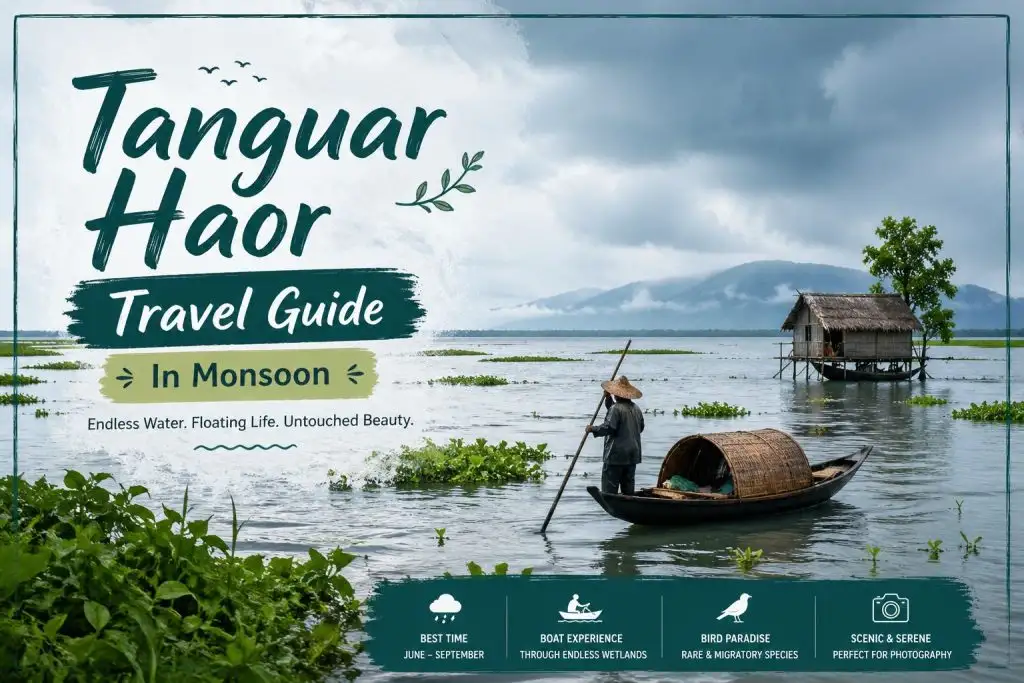
Explore Tanguar Haor Travel Guide in Monsoon 2026. Get expert tips on the best time to visit, updated trip cost, and must-see spots in this watery paradise.
Introduction: Tanguar Haor Travel Guide, Best Time & Trip Cost
Tanguar Haor, a magnificent RAMSAR site nestled in the Sunamganj district of Bangladesh, stands as one of the most significant wetland ecosystems in South Asia. As the monsoon rains arrive, this ecological wonder undergoes a dramatic metamorphosis, expanding into a limitless inland sea that merges with the horizon. For adventurers and nature enthusiasts seeking an authentic “watery paradise,” the 2026 monsoon presents an unparalleled window to witness the haor in its full, vibrant glory.
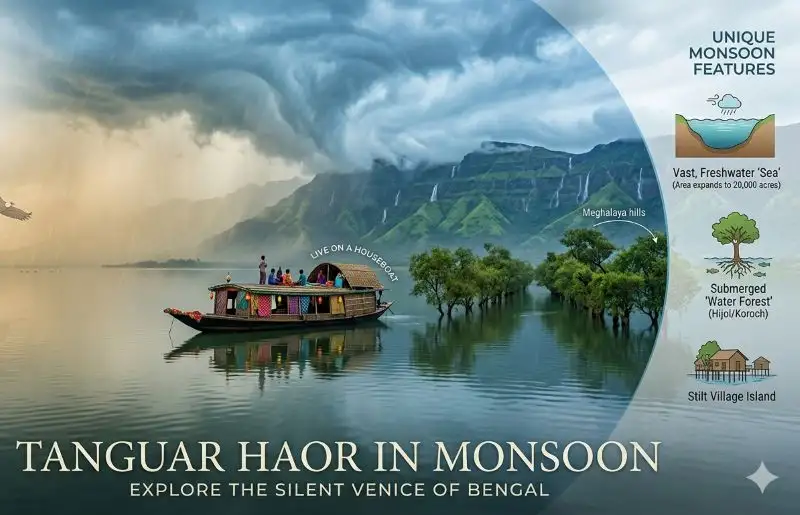
During this season, the emerald waters reflect the towering peaks of the Meghalaya hills, creating a landscape of ethereal beauty that draws travelers from across the globe. Whether you are navigating the tranquil waters on a traditional wooden houseboat or exploring the hidden limestone lakes nearby, the experience is nothing short of transformative.
However, planning a trip to this remote destination requires careful preparation regarding seasonal shifts and budgeting. This comprehensive Tanguar Haor Travel Guide is designed to provide you with expert insights on the most favorable months to visit, a detailed breakdown of anticipated trip costs for the upcoming year, and a curated list of must-see landmarks. From navigating local transportation to finding the best regional delicacies like fresh haor fish, we ensure your 2026 journey is both seamless and unforgettable.
Why Visit Tanguar Haor in Monsoon?
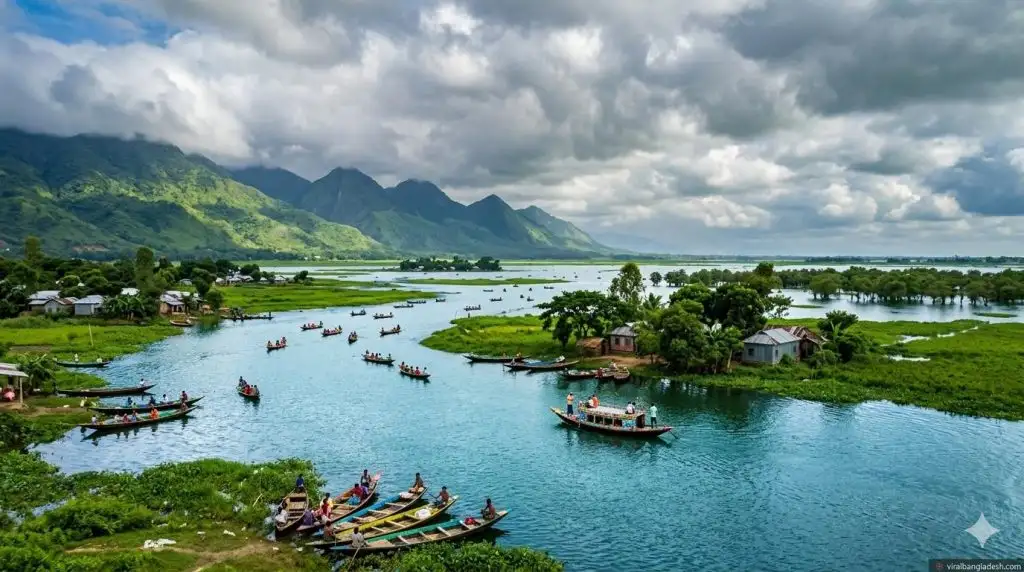
The monsoon season, spanning from (June to September), is widely considered the most spectacular time to witness the true grandeur of Tanguar Haor. During these months, the wetland undergoes a magical transformation that attracts nature lovers and photographers from across the country. Here are the primary reasons why a monsoon visit is essential for any Tanguar Haor Travel Guide:
- Mesmerizing and Vast Watery Landscapes: As the heavy rains arrive, the water levels rise significantly, merging numerous smaller haors and canals into one colossal, unified body of water. This creates an endless horizon where the water acts as a giant natural mirror, reflecting the dramatic clouds and the shifting colors of the sky in breathtaking detail.
- The Vibrant Greenery of Meghalaya: The haor is situated near the border, and during the rains, the distant mountains of Meghalaya, India, come alive. The peaks turn a deep, lush green, providing a sharp and stunning contrast to the sapphire blue waters of the haor. The sight of mist crawling over these emerald hills is a visual treat that is unique to the rainy season.
- An Authentic Houseboat Experience: One of the most sought-after “bucket-list” activities in Bangladesh is living on a houseboat in Tanguar Haor. These vessels combine traditional wooden craftsmanship with modern amenities, allowing you to eat, sleep, and relax while floating over the vast wetlands. Waking up to the sound of rain hitting the water while surrounded by nothing but nature is an experience that defines the charm of this region.
Choosing the Best Time to Visit Tanguar Haor in 2026
While the rainy season in Bangladesh generally spans several months, carefully timing your journey is essential to capturing the haor’s most iconic landscapes. The experience shifts significantly as the season progresses, making it important to align your trip with your personal travel style.
1. Peak Monsoon (July – August): The Season of Grandeur
For travelers seeking the most dramatic and awe-inspiring views, July and August are the premier months to visit. During this peak period, the water levels reach their maximum height, completely submerging the surrounding plains and transforming the region into a boundless inland sea. This is the ideal time for those who want to witness the “mirror effect,” where the vast water surface perfectly reflects the stormy monsoon sky. It is also the best window for experiencing the full force of the haor’s natural power and the vibrant, rain-washed greenery of the neighboring hills.
2. Late Monsoon (September): The Calm After the Storm
If you prefer a slightly more relaxed pace, September offers a unique transitional beauty. As the season moves toward autumn, the intense and frequent heavy downpours begin to subside, though the water levels remain high enough for full boat navigation. The weather begins to cool down, offering a more comfortable climate for exploring land-based attractions like Niladri Lake or the Jadukata River. This period is perfect for photographers who want softer lighting and travelers who wish to explore the wetland without the constant challenge of torrential rains.
By selecting the right window in 2026, you can ensure your Tanguar Haor Travel Guide leads you to an experience that is both visually stunning and perfectly suited to your adventure goals.
Estimated Trip Cost for Tanguar Haor 2026
When planning your excursion to Tanguar Haor in 2026, understanding the financial breakdown is essential. Costs fluctuate based on your travel preferences, group size, and the level of comfort you desire. Below is a detailed estimation to help you budget for this unforgettable monsoon adventure.
1. Transportation Expenses
Getting to the gateway of the haor involves multiple stages of travel:
- Dhaka to Sunamganj: For the long-haul journey, non-AC bus fares typically range from 800 to 1,000 BDT. If you prefer more comfort, AC bus tickets generally cost between 1,500 and 2,000 BDT.
- Sunamganj to Tahirpur: Once you reach Sunamganj, you must travel to the Tahirpur ghat. A local motorbike or a shared CNG ride usually costs between 200 and 500 BDT per person, depending on your bargaining skills and the time of day.
2. Houseboat Accommodation and Rentals
The highlight of any Tanguar trip is the houseboat experience. Prices are often quoted for a 2-day, 1-night stay:
- Standard Houseboats: These are ideal for budget-conscious travelers or small groups. A basic boat, which usually includes standard meals, can range from 15,000 to 25,000 BDT.
- Luxury Houseboats: For those seeking premium amenities, high-end vessels with attached bathrooms and gourmet menus are available. These can cost between 35,000 and 60,000 BDT per group. Alternatively, shared luxury packages are often available for 6,000 to 10,000 BDT per person.
3. Food and Additional Costs
If your boat package does not include catering, or if you wish to explore local eateries:
- Local Dining: Expect to spend approximately 1,000 to 1,500 BDT per day on authentic haor cuisine and snacks.
- Miscellaneous: It is wise to keep an extra 1,000 to 2,000 BDT for tipping boat staff, entry fees to specific spots, or emergency supplies.
By preparing for these expenses in advance, you can ensure a smooth and stress-free journey through the majestic wetlands of Sunamganj.

Must-Visit Spots Near Tanguar Haor
A comprehensive Tanguar Haor Travel Guide is incomplete without exploring the iconic landmarks that define this region’s natural splendor. These nearby attractions offer a diverse range of experiences, from panoramic vistas to serene lakeside retreats.
A complete Tanguar Haor Travel Guide must include these nearby attractions:
- The Watch Tower: Centrally located within the wetland, the Watch Tower is an essential stop for any nature enthusiast. It provides an unparalleled 360-degree vantage point, allowing visitors to witness the vastness of the haor’s shimmering waters, sprawling rice fields, and lush greenery. During the monsoon, the entire landscape is submerged, creating a seamless mirror of the sky that is best appreciated from this elevated height.
- Niladri Lake (Shaheed Siraj Lake): Often hailed as the “Kashmir of Bengal,” Niladri Lake is a mesmerizing turquoise paradise. Originally a limestone quarry, it has naturally transformed into a deep blue lake cradled by the verdant rolling hills of the Meghalaya range. Its crystal-clear waters and tranquil atmosphere make it a perfect spot for photography or a quiet boat ride.
- Jadukata River: Frequently described as the most beautiful river in Bangladesh, the Jadukata is a symphony of blue and green. Originating from the Khasi Hills, its waters are so transparent that the riverbed is often visible in shallower areas. The river widens dramatically during the monsoon, showcasing its powerful current against a backdrop of majestic mountains and forests.
- Shimul Bagan: Shimul Bagan is a massive silk cotton tree garden spanning over 100 bighas of land near the banks of the Jadukata River. While it is famous for its vibrant red blooms in spring, the garden takes on a lush, moody character during the monsoon, offering a serene green canopy that provides a unique contrast to the surrounding water-filled landscapes.
Essential Packing List for a Tanguar Haor Monsoon Adventure
To ensure your journey through the “watery paradise” of Tanguar Haor remains safe and enjoyable during the 2026 monsoon, packing the right equipment is vital. The rainy season brings unpredictable weather, so preparation is the key to a stress-free experience.
1. Comprehensive Waterproof Gear
Monsoon travel demands absolute protection against heavy downpours.
- Dry Bags and Pouches: Use high-quality dry bags or ziplock pouches to safeguard electronics, cameras, and important documents from moisture.
- Rainwear: A lightweight, breathable raincoat or a sturdy, wind-resistant umbrella is mandatory for navigating boat decks and local spots like Niladri Lake.
- Quick-Dry Clothing: Opt for synthetic or polyester fabrics that dry rapidly, as humidity can make heavy cotton clothes uncomfortable.
2. Reliable Power Solutions
Electricity on traditional houseboats and smaller trollers can be extremely limited or reliant on solar panels.
- High-Capacity Power Banks: Ensure your mobile devices and cameras stay charged during long days on the water, especially when power outages occur in remote areas.
- Spare Batteries: If you are a photography enthusiast, carry extra batteries stored with silica gel packs to prevent moisture damage.
3. Safety and Health Essentials
- Life Jackets: Safety is paramount; never swim or stay on open decks during storms without a life vest. Verify that your boat provider supplies functional life jackets for every passenger before departure.
- Insect Repellent: The monsoon often brings an increase in mosquitoes and other insects; creams or sprays are essential for overnight stays.
- First Aid Kit: Carry basic medications for fever, pain, and antiseptic creams for minor cuts.
By prioritizing these essentials, you can focus on the breathtaking greenery and serene atmosphere that only Tanguar Haor can offer in the rains.
Detailed Itinerary for a 2-Day Trip
To make the most of your Tanguar Haor Travel Guide, follow this optimized schedule:
Day 1: Arrival and Haor Immersion
- Morning: Reach Tahirpur ghat early. Board your pre-booked houseboat.
- Noon: Sail toward the Watch Tower. Enjoy a fresh lunch of local fish, like the famous Hilsa or Chitol, cooked on the boat.
- Afternoon: Swim in the clear waters of the haor (always wear a life jacket).
- Evening: Watch the sunset over the Meghalaya hills while the boat anchors in a safe zone.
Day 2: Hills, Rivers, and Borders
- Early Morning: Head toward Niladri Lake. The calm morning water is perfect for photography.
- Late Morning: Visit the Jadukata River and the nearby Barek Tilla for a panoramic view of the border area.
- Afternoon: Walk through the Shimul Bagan before heading back to Tahirpur to catch your return bus.
Cultural and Culinary Heritage
The cultural and culinary heritage of Tanguar Haor is deeply intertwined with its unique wetland ecosystem. During a monsoon visit, travelers can fully immerse themselves in the local lifestyle by enjoying traditional dishes and engaging with the communities that depend on these waters. +1
A Taste of the Haor
Dining on a moving boat while rain falls over the vast expanse of water is a quintessential Tanguar experience. The region is celebrated for:
- Fresh Haor Fish: The wetland is home to over 140 fish species, providing a constant source of fresh local delicacies like Climbing Perch, Pabda catfish, and various carps.
- Traditional Meals: Visitors often enjoy hearty meals such as white rice served with dal bharta (mashed lentils) and egg curry.
- Bhuna Khichuri: A favorite during the rainy season, this savory yellow rice dish, often paired with chicken or egg, is frequently served on houseboats as part of the authentic tour experience.
Cultural Connection and Folklore
Exploring the haor offers a rare chance to witness the traditional livelihoods of local fishing communities.
- Local Wisdom: Interacting with boatmen provides visitors with fascinating stories and folklore about the complex river systems that feed the haor.
- Community Life: Inhabitants of island villages like Jahangirnagar live in harmony with the shifting seasons, relying on fishing and agriculture as their primary means of subsistence.
- Eco-Cultural Heritage: As a designated Ramsar site, the haor is not just a biodiversity hotspot but a repository of local traditions that have evolved over generations in this “Silent Venice of Bengal”.
Final Tips for Your 2026 Adventure
To ensure your expedition to the “Silent Venice of Bengal” is as smooth as possible, keep these expert recommendations in mind. Planning ahead and traveling with a sense of responsibility will significantly enhance your experience in this delicate ecosystem.
1. Secure Your Booking in Advance
As Tanguar Haor continues to grow in popularity, the 2026 monsoon season is expected to see a record number of visitors. High-quality houseboats, especially those offering luxury amenities, are often reserved months ahead. To secure your preferred dates and avoid the disappointment of limited availability, it is highly recommended to book your boat and local transport at least one month before your intended departure.
2. Commit to Sustainable and Ethical Travel
Tanguar Haor is an ecologically sensitive RAMSAR site and a vital sanctuary for biodiversity. It is the duty of every traveler to preserve its pristine beauty.
- Zero Waste Policy: Strictly avoid throwing plastic bottles, food wrappers, or any form of waste into the water.
- Respect Wildlife: Maintain a quiet presence to avoid disturbing the local bird populations and aquatic life.
- Support Local: Engage with local communities respectfully and consider purchasing local crafts to support the regional economy.
3. Prepare for an Unforgettable Journey
By following this comprehensive Tanguar Haor Travel Guide, you are now fully equipped to navigate the logistical and environmental nuances of this majestic wetland. Whether you are floating through the vast inland sea or marvelling at the emerald hills of the border, you are set for a transformative journey through one of Bangladesh’s most iconic natural wonders in the monsoon of 2026. Pack your spirit of adventure and get ready to be mesmerized by the magic of the haor.
Final Thoughts: Embrace the Beauty of Tanguar Haor
In conclusion, planning your trip with this Tanguar Haor Travel Guide ensures that you witness one of Bangladesh’s most breathtaking natural transformations at its peak. The monsoon season in 2026 offers a rare chance to see the haor as a vast, shimmering inland sea reflecting the lush Meghalaya hills. While the high water levels from June to September provide the most iconic experience, navigating the trip effectively requires a clear understanding of the best time and cost to avoid overspending during peak periods.
By budgeting for transportation and choosing the right houseboat package, you can enjoy this RAMSAR site without compromise. Whether you are swimming in the crystal-clear waters near Niladri Lake or watching a magical sunset from your boat, Tanguar Haor promises a soul-refreshing escape from the bustle of city life.
Are you ready to embark on your 2026 adventure to this watery paradise? Pack your waterproof gear, respect the local ecosystem, and prepare for a journey that will linger in your memories long after you return home.
Visit viralbangladesh.com for more updated travel tips and guides to help you explore the hidden gems of Bangladesh.