
Iran shuts the Strait of Hormuz, warns ships of attack, triggering oil market panic, global energy crisis fears, and rising Middle East war tensions.
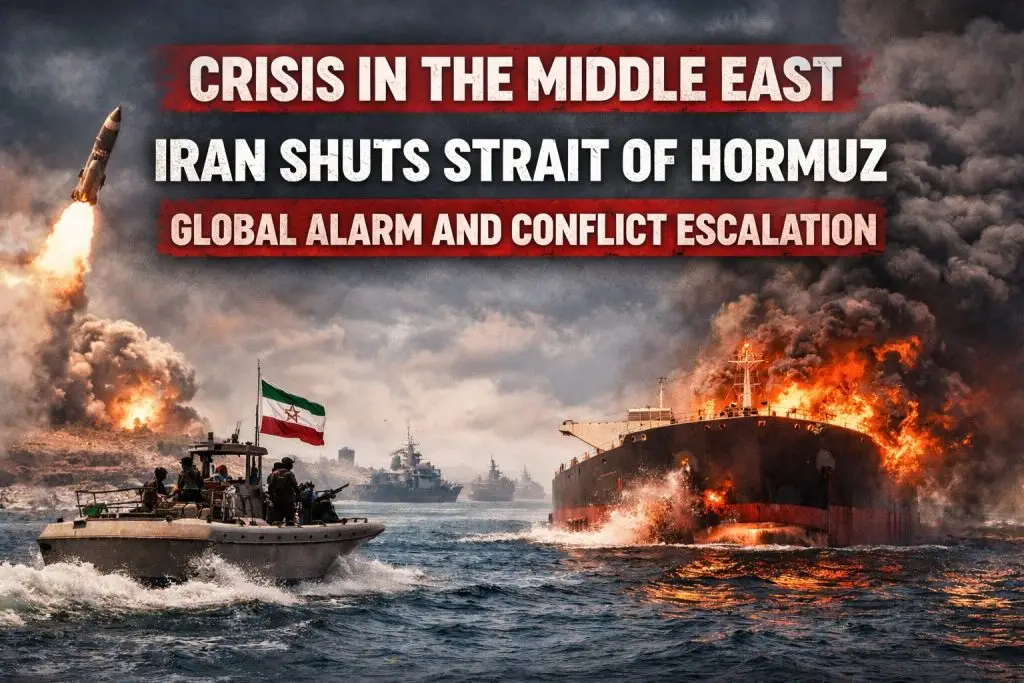
The geopolitical landscape of the Middle East has shifted dramatically in recent days as Iran has effectively closed the Strait of Hormuz and issued stern warnings that it would attack vessels attempting to transit the critical waterway. This unprecedented development has triggered global alarm—on energy markets, maritime shipping, regional stability, and international relations.
Below is a thorough, contextualized breakdown of the events, the importance of the Strait of Hormuz, what has happened so far, the risk to international shipping, potential global impacts, and how major powers are responding.
What Unfolded: Iran’s Warning and the Strait of Hormuz Blockade
Tensions in the Middle East escalated sharply after Iran signaled a dramatic move in one of the world’s most sensitive waterways. Late last week, the Islamic Revolutionary Guard Corps (IRGC) began broadcasting urgent navigational warnings over maritime VHF radio channels, declaring that “no ship is allowed to pass through the Strait of Hormuz.”
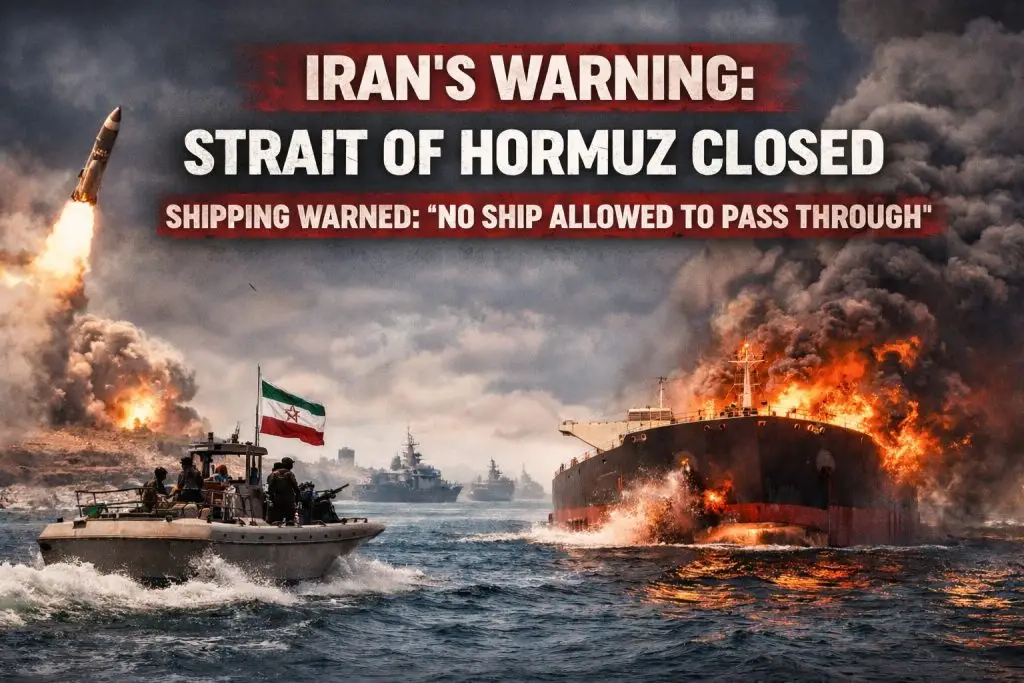
These repeated warnings were picked up by multiple commercial vessels operating in the region. Officials from the European Union Naval Force confirmed that the messages were consistently transmitted to ships entering the area, heightening alarm across the global shipping industry.
Although Iran has not issued a formal legal decree declaring a blockade under international maritime law, shipping companies and maritime monitoring agencies report what amounts to a de-facto closure. Vessel tracking data shows a noticeable reduction in tanker movements, as many captains choose to delay transit due to safety concerns and rising war-risk insurance costs.
The warnings come amid intensified conflict involving the United States, Israel, and Iran, including reported air and missile strikes and retaliatory actions across the Gulf region, pushing tensions to a dangerous new level.
The Strategic Importance of the Strait of Hormuz
The Strait of Hormuz is one of the most critical maritime chokepoints in the world. Its strategic importance lies not only in geography but also in its central role in global energy security and international trade. Any disruption here immediately sends shockwaves across global markets, especially oil and gas sectors.
• A Key Chokepoint
Positioned between Iran and Oman, the strait connects the Persian Gulf to the Gulf of Oman and onward to the Arabian Sea. This narrow sea corridor serves as the primary export route for Gulf nations. Because there are limited alternative shipping paths, the strait functions as a vital gateway for international maritime trade, particularly for energy shipments bound for Asia, Europe, and North America.
• Global Energy Flow
Nearly one-fifth of the world’s oil supply passes through this narrow passage daily, along with significant volumes of liquefied natural gas (LNG). Major energy exporters such as Saudi Arabia, Iraq, Kuwait, the United Arab Emirates, and Iran depend heavily on this route. A closure or threat can instantly raise oil prices and disrupt global supply chains.
• Structural Limits
At just about 21 miles wide at its narrowest point, shipping lanes run dangerously close to territorial waters. This physical limitation increases vulnerability during military tensions, making the strait a high-risk zone in times of conflict.
In short, any disruption to the Strait of Hormuz carries profound economic and geopolitical consequences worldwide.
Recent Military Escalation Leading to Closure
The de-facto closure of Hormuz is not occurring in isolation. It is part of a rapidly escalating military confrontation in the Middle East.
• U.S. and Israeli Strikes
Recent coordinated strikes by the United States and Israel targeted Iranian military infrastructure and leadership. According to multiple reports, Iranian Supreme Leader Ayatollah Ali Khamenei was killed in one attack, along with senior military officials, significantly intensifying tensions.
• Iran’s Response
In reaction, Iran has stepped up retaliatory actions that include missile and drone strikes, naval warnings, and, crucially, moves to disrupt maritime transit through Hormuz.
• Attacks on Vessels
Multiple merchant ships transiting near the strait have been struck or reported hits in recent days. For example, maritime security agencies reported that three vessels were hit by unknown projectiles, with some fires aboard being extinguished but underscoring the perilous situation in the area.
Another report highlighted that a fuel tanker named Athe Nova was struck by drones and caught fire in the strait, with allegations—though not independently confirmed—linking Iran to the attack.
• Shipping Lines Suspend Transit
Global carriers like Maersk and others have announced suspension of voyages through Hormuz, citing safety concerns due to the heightened conflict environment.
Is the Strait Really Closed? Legal and Practical Aspects
The situation surrounding the Strait of Hormuz is complex. While headlines describe it as “closed,” the legal and operational realities are more nuanced. The distinction between a formal blockade and an effective disruption is critical in understanding what is actually happening.
• No Formal Blockade
Under international maritime law, a blockade requires an official declaration and enforcement consistent with the laws of armed conflict. So far, Iran has not issued a formal legal proclamation declaring the strait closed. Technically, this means the waterway remains open to international navigation. However, statements and warnings from the Islamic Revolutionary Guard Corps (IRGC) telling vessels that passage is “not allowed” create significant uncertainty. Even without a formal decree, such warnings influence ship captains, insurers, and shipping companies.
• Effective Closure
In practical terms, the strait is experiencing what many experts call an “effective closure.” Numerous commercial vessels have rerouted, paused operations, or anchored outside the area due to security risks. War-risk insurance premiums have surged, and some insurers are unwilling to cover voyages through the zone. As a result, tanker traffic has fallen sharply, disrupting normal maritime flow despite the absence of a formal blockade.
• Broadcasts Don’t Equate to Law
VHF radio warnings do not carry the same legal weight as official state declarations. However, in high-risk environments, safety concerns often override legal technicalities. For many shipping firms, the operational danger is enough to treat the strait as effectively closed.
Ramifications for Global Energy Markets
The near-shutdown of the Strait of Hormuz has triggered immediate and potentially long-lasting effects on global energy markets.
• Oil Price Surge
Oil prices spiked as markets reacted to disruptions in transit. Reports suggest the benchmark Brent crude could approach or exceed $100 per barrel if the strait remains compromised, with some analysts even projecting higher levels should tensions persist.
• Supply Chain Disruptions
With roughly 12 million barrels per day ordinarily flowing through Hormuz, alternatives like pipelines in Saudi Arabia and the UAE cannot fully compensate for such volumes, threatening supply shortages particularly in Asia.
• Insurance and Shipping Costs
Major war-risk insurers have canceled or hiked coverage for vessels in the region, raising premiums and discouraging transit even if ships technically could pass.
• Broader Commodity Effects
Rising energy costs ripple into transport, manufacturing, and consumer prices worldwide, potentially adding inflationary pressure to global economies.
Regional and Global Responses
Many countries and international stakeholders have reacted to the crisis:
• Western Powers
The United States and several European nations have condemned the threats and reiterated that freedom of navigation is paramount under international law. Reports also indicate U.S. naval forces have engaged Iranian naval assets to try to ensure open sea lanes.
• Middle Eastern States
Oil-exporting neighbors like Saudi Arabia, the UAE, and Qatar are deeply concerned. Disruption of Hormuz directly affects their exports, and they have signaled a desire for de-escalation or alternative arrangements.
• China and Asia
As one of the largest importers of Gulf energy, China has been closely monitoring the situation and reportedly begun evacuation operations for nationals in the conflict zone. Other Asian economies are weighing contingency plans that may include strategic petroleum reserve releases.
• United Nations
The U.N. Security Council held emergency discussions, with the Secretary-General calling for restraint and warning of the catastrophic economic fallout if the conflict escalates further.
Potential Scenarios: What Could Happen Next
Experts see several possible paths forward:
• Rapid De-escalation
If diplomatic channels succeed and hostilities ease, shipping could resume relatively quickly, stabilizing markets.
• Prolonged Disruption
Should Iran maintain its stance and limited attacks continue, the closure could become semi-permanent, prompting long-term shifts in trade patterns and supply chains.
• Wider War
If major powers increase direct involvement, particularly in naval engagements, the conflict could escalate into broader regional war.
• Alternative Energy Routes
Countries may accelerate efforts to bypass Hormuz with pipelines to South Asia or Europe, though building such infrastructure takes years and enormous capital.
Conclusion: A Geopolitical Earthquake
The closure of the Strait of Hormuz and Iran’s threats to attack passing ships represent one of the most serious disruptions to global trade in decades. The waterway’s centrality to energy flows means that even temporary disruption can send shockwaves through global markets, international diplomacy, and economic stability.
This unfolding crisis is a reminder of how intertwined geopolitics and global commerce are, and how fragile maritime trade can be when strategic choke points become flashpoints for conflict. As governments, navies, and businesses around the world try to navigate this perilous moment, the stakes could not be higher—for energy security, international peace, and economic resilience.