
Explore the shocking aftermath of Khamenei killing, Iran’s leadership crisis, Middle East conflict risks, and global political impact in detail.
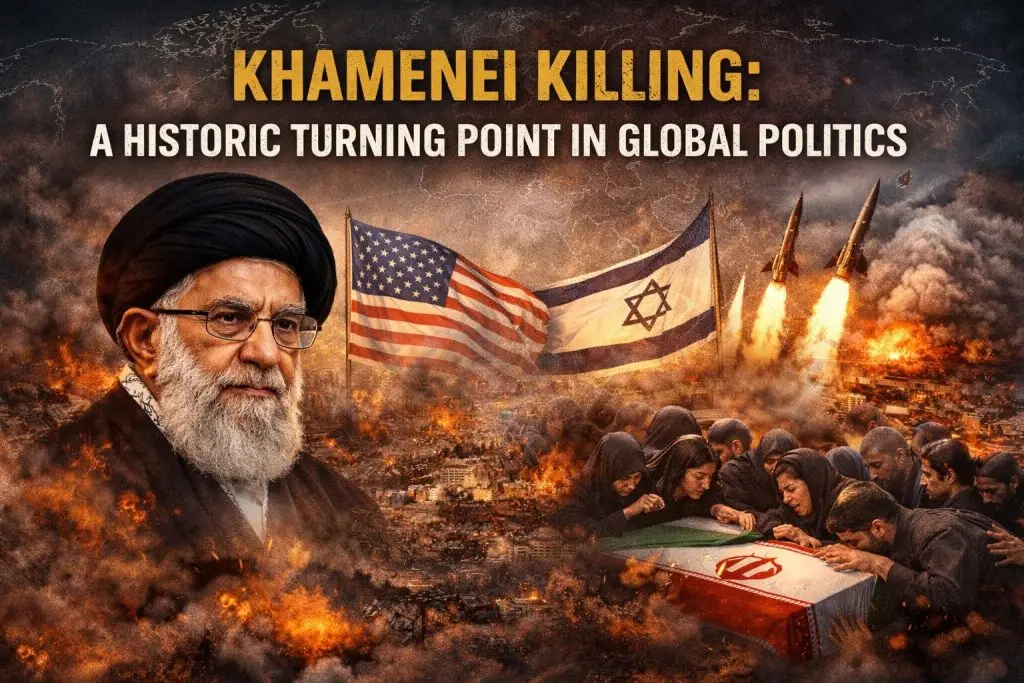
Introduction: khamenei killing A Historic Turning Point in Global Politics
The reported killing of Ayatollah Ali Khamenei, the Supreme Leader of the Islamic Republic of Iran, marks one of the most consequential geopolitical events of the early 21st century. On February 28, 2026, a joint military assault by the United States and Israel struck deep within Tehran, reportedly killing the 86-year-old cleric who had been in power since 1989. This act has not only shaken the foundations of Iran’s political structure but has instantly intensified an already volatile situation in the Middle East, with ramifications that extend far beyond regional borders.
Days after his death was confirmed by Iranian state media, a cloud of uncertainty, conflict, and political upheaval has spread across nations, economies, societies, and global security frameworks. This article attempts to unpack the multiple dimensions of “After Khamenei’s killing” — from internal Iranian politics and leadership succession to broader global repercussions.
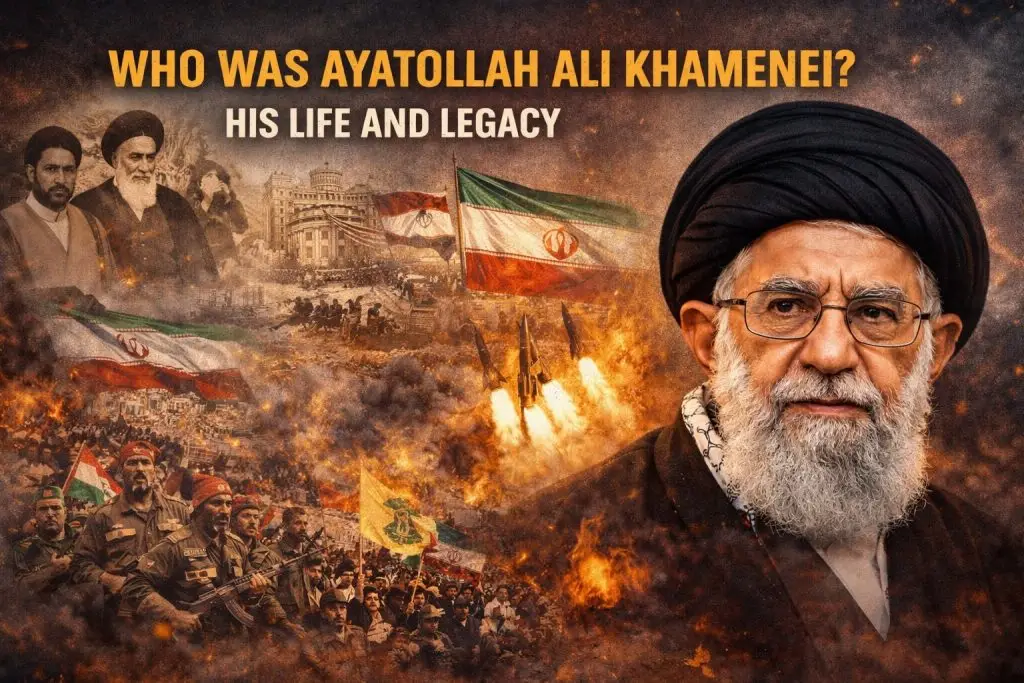
Who Was Ayatollah Ali Khamenei? His Life and Legacy
Ayatollah Ali Khamenei was not just a political leader; he was the ideological architect of modern Iran’s theocratic system. After the death of Ayatollah Ruhollah Khomeini in 1989, Khamenei rose to become Supreme Leader — a position combining ultimate religious and political authority under Iran’s constitution.
Early Life and Rise to Power
Born in 1939, Khamenei entered religious study early and quickly rose through clerical ranks. He was part of the revolutionary movement that toppled the Shah’s monarchy in 1979, establishing an Islamic Republic. His ascension to the highest political office in 1989 was initially viewed as surprising — many analysts called him a relatively weak choice compared with more charismatic clerical figures. Yet over decades, he consolidated personal dominance over Iran’s political, military, and security apparatus.
Domestic and International Policies
Under his rule, Iran became a center of resistance against Western influence, especially the United States and Israel. Khamenei’s era was marked by:
- Aggressive foreign policy, including support for proxy groups like Hezbollah, Hamas, and various militias across Iraq and Syria.
- Expansion of the Islamic Revolutionary Guard Corps (IRGC) as a major power center within Iran.
- Suppression of internal dissent, notably during several major uprisings across the 1990s, 2009, 2017–2019, and particularly the 2026 protests preceding his demise, where economic grievances ballooned into nationwide unrest.
In short, Khamenei shaped Iran into a powerful yet isolated state that posed long-standing strategic challenges to the West and its allies.
The Attack: How Was Khamenei killing
The reported killing occurred during a coordinated military operation involving US and Israeli forces — in some media reports called Operation Epic Fury — that targeted multiple Iranian military and nuclear infrastructure facilities, as well as the Supreme Leader’s compound in Tehran.
The strike reportedly involved:
- Precision air and missile strikes deep inside Tehran.
- Targeting of command and control centers connected with Iran’s nuclear and missile programs.
- The death of many top Iranian officials, including Khamenei’s close aides and members of his family.
US President Donald Trump publicly confirmed Khamenei’s death via social media, describing the operation as a strategic action against what he called “a wicked, radical dictatorship.” Israeli leaders also affirmed the effectiveness of the strikes, claiming key Iranian military infrastructure had been neutralized.
Simultaneously, Iranian state media announced a 40-day national mourning period and confirmed that Khamenei had been killed in the attacks, solidifying the reality of his death.
Immediate Aftermath in Tehran and Inside Iran
Political Vacuum and Succession Crisis
The death of a supreme leader is constitutionally unprecedented in modern Iran, creating an immediate leadership vacuum. Under Iran’s constitution, if the Supreme Leader dies, the Assembly of Experts is responsible for selecting a successor. However, in the immediate aftermath, Iran established a three-member interim leadership council — consisting of the President, the Head of the Judiciary, and a senior cleric from the powerful Guardian Council — to temporarily assume governing responsibilities.
This council represents a stopgap arrangement and intensifies speculation about how and when a permanent successor will be chosen. Complicating matters, some of the clerical body responsible for selecting the next supreme leader may have been affected by the strikes.
Internal Turmoil and Public Reaction After Khamenei’s Killing
Across Iranian cities, mourning and public reactions have ranged from solemn condolence ceremonies to rising anger and uncertainty. Reports indicate that Iranians are joining public mourning rituals while simultaneously confronting heightened military conflict on their soil.
Iran’s Response: Retaliation and Escalation
Iranian leaders have responded to the killing with a mix of anger, defiance, and declarations of retaliation. President Masoud Pezeshkian described the attack as a “declaration of war against Muslims” — signaling that Iran views this not merely as a conflict with another state but as an assault on a religious community.
The Islamic Revolutionary Guard Corps (IRGC) has pledged what it calls the “most ferocious operation” against the US and Israeli forces, indicating planned military counter-action in multiple theaters.
Iran’s broader retaliation strategy includes:
- Missile and drone strikes against US military positions in the Gulf.
- Targeted operations against Israeli territory and allied interests.
- Support for proxy groups in Lebanon, Yemen, Iraq, and Syria.
- Heightened cyber and covert operations.
This escalation could trigger a prolonged regional conflict unlike anything seen in decades.
Regional and Global Security Implications
Middle East Destabilization
The Middle East is immediately destabilized by the aftermath of Khamenei’s death. With Iran signaling full-scale retaliation and US-Israeli forces preparing extended operations, neighboring countries face increased risk of cross-border conflict. Countries like Saudi Arabia, the United Arab Emirates, and Qatar have closed airspace and tightened security amid fears of direct confrontation.
Impact on Proxy Conflicts
Iran’s influence in Iraq, Syria, Lebanon, and Yemen has been pivotal for many years:
- Hezbollah is already vocal about confronting US and Israel due to the killing of its backer.
- Increased militia activity is likely in Iraq and Syria as retaliation.
- Yemen’s Houthis may renew hostilities against Red Sea international shipping.
These outcomes threaten to reopen several frozen conflicts across the region.
Global Economic Ramifications
Khamenei’s death and the ensuing military operations are sending shockwaves through global markets:
Oil and Energy Markets
Iran sits near the Strait of Hormuz, one of the world’s most critical energy transit points. Any disruption — perceived or real — can cause:
- Oil price spikes
- Increased cost of shipping
- Instability in global energy supply chains
Energy markets are already reacting with volatility, with traders adjusting prices in anticipation of prolonged conflict.
Financial and Stock Market Impact
Global stock markets are experiencing increased risk aversion:
- Defense sector stocks gain from heightened security demand.
- Safe havens such as gold and the US dollar rise in value.
- Emerging markets are under pressure due to geopolitical risk premiums.
International Diplomatic Reactions
From global capitals to international organizations, the reaction has been mixed:
- United Nations officials have urged restraint and called for de-escalation to prevent a wider war.
- Muslim-majority nations and political leaders have condemned the assassination as destabilizing and against international law.
- Western allies of the United States emphasize that the action was to counter security threats, though several European countries call for diplomatic focus.
The diplomatic landscape is fractured, with major powers navigating a complex web of regional interests and alliances.
Societal and Cultural Impact
Rise in Anti-Western Sentiment
The killing of a religious head of state — especially one with deep significance for millions of Shiite Muslims worldwide — has ignited protests and anti-Western sentiment across Asia and the Middle East. In Pakistan, for example, protests targeting the US Consulate in Karachi resulted in violence and deaths as demonstrators reacted to Khamenei’s death.
Radicalization and Solidarity Movements
Within Iran and abroad:
- Some factions view Khamenei as a martyr whose death justifies continued resistance.
- Hardline groups may find increased recruitment from those outraged by the attack.
- Moderate voices calling for peace find themselves politically weakened in the short term.
What Comes Next: Possible Future Scenarios
1. Escalation into Full-Scale War
If Iran continues its threats of extensive retaliation and strikes are met with counterattacks from US and Israel, a full regional war involving multiple states and proxy forces becomes a distinct possibility. This could draw in:
- Gulf states
- Iraq and Syria organized militias
- Hezbollah and other non-state actors
2. Prolonged Cold Conflict with Limited Engagements
A scenario where direct confrontations are limited to missile strikes, naval incidents, and cyber warfare — maintaining heightened tension without open conflict.
3. Diplomatic Resolution and Power Transition
While less likely, intense international diplomatic pressure could force a negotiated ceasefire and structured transition within Iran’s political system. This would involve:
- A new supreme leader selected by Iran’s clerical bodies.
- De-escalation pledges from both sides.
- Possible negotiated limits on military posturing.
Conclusion: Shifting World Order
The killing of Ayatollah Ali Khameneihas created a rupture point in not just Iran’s political system but in global geopolitics. Far from being an isolated military event, it represents a deep shift toward confronting issues that have simmered for decades — from regional security imbalances to global energy stability and U.S. foreign policy in the Middle East.
This moment — in the days, weeks, and months ahead — will define not only Iran’s future but the broader structure of international relations. Whether it leads to a devastating regional war, a new diplomatic order, or an unforeseen realignment of global powers, its effects are bound to shape the world for years to come.