

Discover authentic and beloved Ramadan Iftar Foods in Bangladesh 2026. Explore traditional snacks, sweets, and drinks to make your Iftar special.
Introduction: Ramadan Iftar Foods in Bangladesh
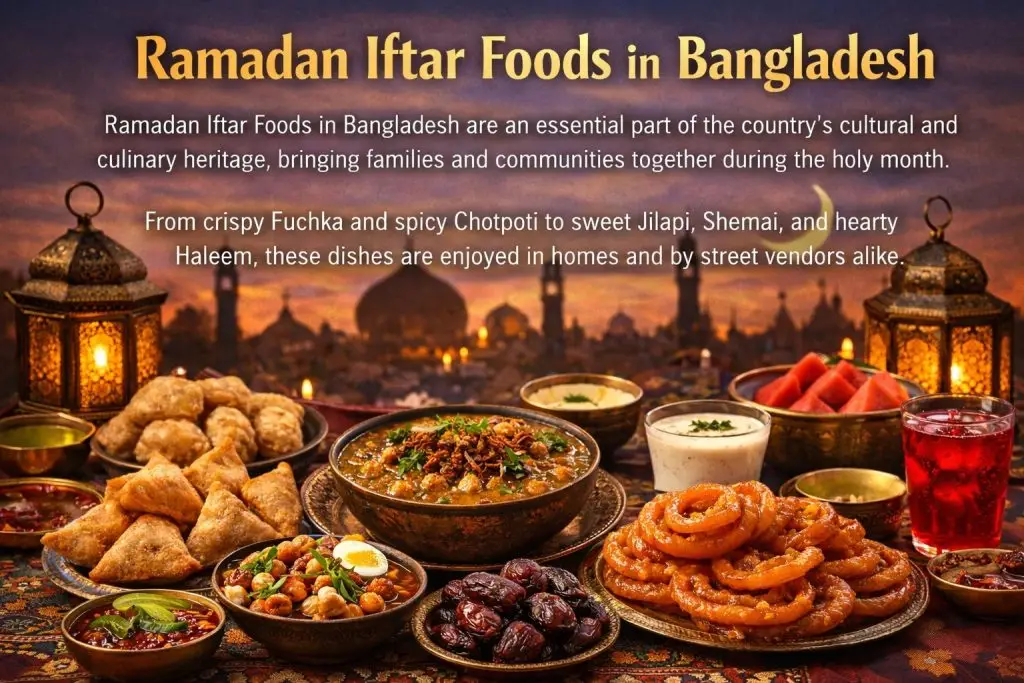
Ramadan Iftar Foods in Bangladesh are an essential part of the country’s cultural and culinary heritage, bringing families and communities together during the holy month. Ramadan, observed by Muslims around the world, is a time of fasting, reflection, and devotion. In Bangladesh, Iftar—the meal to break the fast at sunset—is not just about nourishment; it is a celebration of tradition, flavor, and togetherness. Every evening, as the call to Maghrib prayer resonates across neighborhoods, streets and marketplaces come alive with a variety of delicious snacks and beverages, offering a true taste of Bangladeshi culture.
From crispy Fuchka and spicy Chotpoti to sweet Jilapi, Shemai, and hearty Haleem, these dishes are enjoyed in homes and by street vendors alike. Vendors prepare a wide range of Iftar treats for families and passersby, while home-cooked delicacies preserve age-old recipes passed down through generations. The combination of savory and sweet dishes ensures both energy and delight after a day of fasting. This guide highlights the most authentic and beloved Ramadan Iftar Foods in Bangladesh, their flavors, regional variations, and cultural significance, helping you experience the true essence of Ramadan in this vibrant country.
The Significance of Iftar in Bangladesh
Iftar is the meal eaten to break the daily fast during Ramadan. In Bangladesh, Iftar is more than a simple meal; it is a cultural event. Families prepare a wide variety of dishes, and vendors set up stalls in streets and marketplaces offering freshly made delicacies. The tradition of sharing Iftar with neighbors and the less fortunate reflects the spirit of Ramadan: compassion, gratitude, and community.
During this time, streets are filled with the aroma of fried snacks, sweet desserts, and refreshing drinks, creating a lively and festive atmosphere. Community mosques and local organizations often organize Iftar events, allowing people to come together regardless of social or economic background. The variety of foods served also showcases the rich culinary diversity of Bangladesh, making Iftar not only a meal but a celebration of culture, heritage, and togetherness.
Why Food is Central to Ramadan in Bangladesh
The Bangladeshi Iftar menu is known for its diversity. From sweet treats to savory snacks, every dish serves a purpose: nourishing the body after fasting, delighting the taste buds, and fostering togetherness. Whether you are in Dhaka, Chittagong, Sylhet, or a smaller district, you will find local variations that make each Iftar unique.
Food during Ramadan is also a symbol of hospitality and generosity, with families preparing extra portions to share with neighbors, friends, and those in need. Street vendors and markets become bustling hubs of activity, offering fresh and flavorful delicacies that reflect the regional tastes and traditions. The combination of flavors, colors, and aromas makes Iftar a truly memorable and culturally significant experience across Bangladesh.
Top Authentic Iftar Foods in Bangladesh
Here’s a detailed list of the most beloved Ramadan Iftar foods in Bangladesh, which are widely consumed in 2026:
1. Dates (Khajur)
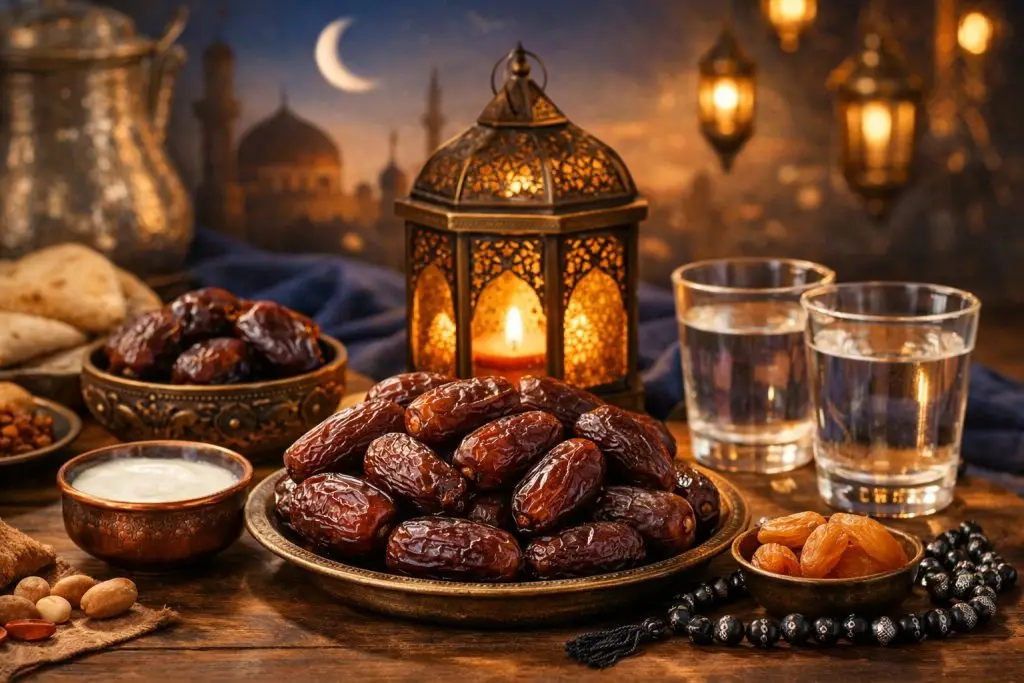
Dates are the traditional starter for Iftar. Rich in natural sugars and nutrients, they provide an instant energy boost after long hours of fasting. It is common for Bangladeshi families to start Iftar by eating 2–3 dates along with water or laban (yogurt drink).
Besides their nutritional benefits, dates hold cultural and religious significance, as the Prophet Muhammad (PBUH) recommended breaking the fast with them. In Bangladesh, markets and street vendors often sell a wide variety of fresh and dried dates during Ramadan, making them a must-have on every Iftar table. Incorporating dates into your Iftar meal is a simple yet authentic way to experience the rich tradition of Ramadan Iftar Foods in Bangladesh.
2. Fuchka (Pani Puri)
Fuchka is one of the most iconic and beloved street foods featured in Ramadan Iftar Foods in Bangladesh. These crispy, hollow puris are filled with a spicy mixture of mashed potatoes, chickpeas, and tangy tamarind water, creating a burst of flavors with every bite. During Ramadan, Fuchka stalls line the streets of cities and towns across Bangladesh, from Dhaka and Chittagong to Sylhet and smaller districts, drawing crowds eager to enjoy this classic snack. Families often gather around these stalls in the evening, sharing laughter and stories while savoring the freshly prepared Fuchka.
The combination of crunchiness, spice, and tang makes Fuchka a perfect choice to break the fast after a long day. Vendors prepare them in bulk during Ramadan, ensuring that every evening is filled with excitement and anticipation. Beyond its taste, Fuchka reflects the vibrant street food culture of Bangladesh and is a key part of the social and festive atmosphere during Ramadan. Including Fuchka on your Iftar table or enjoying it from a local vendor is a must for anyone wishing to experience authentic Ramadan Iftar Foods in Bangladesh, blending tradition, flavor, and community spirit in every bite.

3. Pakora (Vegetable or Chicken Fritters)
Pakora are one of the most popular and beloved items among Ramadan Iftar Foods in Bangladesh. These deep-fried fritters, made from gram flour and a variety of ingredients such as potatoes, eggplant, spinach, or spiced chicken, are a staple snack during the holy month. Their crispy exterior and soft, flavorful interior make them an irresistible choice for breaking the fast after long hours of abstinence. Served hot with tangy chutney or spicy sauces, pakora provides both comfort and energy, making it a perfect addition to any Iftar table.
During Ramadan, street vendors and local food stalls prepare pakora in large quantities, filling the air with the tempting aroma of freshly fried snacks. Families also cook them at home, often pairing them with other traditional Iftar dishes like samosas, chotpoti, and dates. The variety of pakora reflects the diversity of Bangladeshi cuisine, offering options for vegetarians and meat lovers alike. Including pakora in your Iftar not only satisfies hunger but also preserves the culinary traditions passed down through generations. Experiencing these crunchy, flavorful fritters is an essential part of enjoying authentic Ramadan Iftar Foods in Bangladesh, celebrating both taste and cultural heritage during this sacred month.
4. Iftar Special Beverages
Beverages are an essential part of Ramadan Iftar Foods in Bangladesh, providing hydration and energy after a long day of fasting. Popular drinks include Rooh Afza, a sweet rose-flavored syrup mixed with water or milk; Laban, a soothing yogurt-based drink; and Borhani, a spicy yogurt beverage especially loved in Dhaka and Chittagong. These drinks not only refresh the body but also complement the diverse flavors of Iftar snacks.
During Ramadan, families prepare these beverages at home, while street vendors serve them in bustling markets, adding a festive atmosphere. Other notable points include:
- They help restore electrolytes and prevent fatigue after fasting.
- Each drink reflects regional tastes and culinary traditions.
- They are often served alongside both savory and sweet Iftar foods.
- Sharing these drinks is a symbol of hospitality and community spirit.
Including these beverages is key to enjoying authentic Ramadan Iftar Foods in Bangladesh.
5. Chotpoti
Chotpoti is one of the most beloved and flavorful items in Ramadan Iftar Foods in Bangladesh. This spicy and tangy snack is made from a mix of chickpeas, boiled potatoes, onions, green chilies, and tamarind sauce, creating a perfect balance of flavors that excites the taste buds. Often served alongside Fuchka, Chotpoti is a staple in street stalls, homes, and Iftar markets across Bangladesh during Ramadan.
The dish is not only delicious but also provides a quick source of energy after a day of fasting. Street vendors prepare Chotpoti in large quantities, garnished with fresh coriander and a squeeze of lemon to enhance its aroma and taste. Families also enjoy making it at home, adapting the spice levels and ingredients to their preferences.
Key points:
- Tangy and spicy flavors make it a favorite Iftar snack.
- Often paired with Fuchka for the perfect combination.
- Easy to prepare and served fresh every evening.
- Represents the vibrant street food culture of Bangladesh.
Chotpoti is truly an essential part of Ramadan Iftar Foods in Bangladesh, celebrating both flavor and tradition.
6. Haleem
Haleem is a slow-cooked meat and lentil stew, rich in protein and flavor. While more popular in cities, it’s a highly cherished dish that is often served at special Iftar gatherings during Ramadan.
Prepared with a mix of meat, lentils, spices, and ghee, Haleem offers a hearty and nourishing meal after a day of fasting. Street vendors, restaurants, and homes alike take pride in their unique recipes, often cooking it for several hours to achieve the perfect consistency and taste. It is commonly garnished with fried onions, coriander, and lemon for added flavor. Haleem is considered a premium item among Ramadan Iftar Foods in Bangladesh, symbolizing both celebration and tradition, making it a must-have dish during festive evenings across the country.
7. Sweet Treats
During Ramadan, families and street vendors prepare these sweets in abundance, adding color and aroma to Iftar tables. Jilapi is often served piping hot, Shemai is a creamy favorite for dessert lovers, and Pitha showcases the traditional culinary heritage of Bangladesh. Including these sweet treats ensures a balanced Iftar, complementing savory snacks and beverages while preserving the essence of Ramadan Iftar Foods in Bangladesh. These sweets not only satisfy the palate but also bring people together, creating a festive and joyful atmosphere during the holy month.
- Jilapi (Jalebi): Deep-fried spirals soaked in sugar syrup, crispy and sweet.
- Shemai (Vermicelli Dessert): Cooked with milk, sugar, and cardamom, sometimes garnished with nuts.
- Pitha: Traditional rice cakes, especially popular in rural areas.
Sweet dishes play a crucial role in Bangladeshi Iftar, as they provide quick energy and symbolize festive joy.
8. Samosa: A Beloved Ramadan Iftar Snack in Bangladesh
Samosa is one of the most popular and widely enjoyed snacks among Ramadan Iftar Foods in Bangladesh. This triangular pastry is typically filled with spiced potatoes, peas, or meat, creating a perfect blend of flavor and texture. Crispy on the outside and soft on the inside, samosas provide a quick source of energy, making them ideal for breaking the fast after long hours of abstinence.
During Ramadan, street vendors prepare and sell fresh samosas in bustling markets, while families also cook them at home, often serving them with tangy chutneys or sauces. Samosas are a favorite among children and adults alike and are commonly enjoyed alongside other Iftar delicacies such as pakora, Chotpoti, and dates.
The popularity of samosa during Ramadan reflects not only its delicious taste but also its cultural significance. As a staple of Ramadan Iftar Foods in Bangladesh, samosas bring families and communities together, adding flavor and joy to the festive evenings of the holy month.
9. Fruits: A Refreshing Part of Ramadan Iftar in Bangladesh
Fruits are an essential and healthy component of Ramadan Iftar Foods in Bangladesh, providing natural sugars, vitamins, and hydration after a long day of fasting. Popular choices include bananas, watermelon, mangoes, papaya, and dates, each offering a refreshing and energizing boost. Including fruits in Iftar helps maintain energy levels and supports digestion, making them a vital part of a balanced meal.
In Bangladesh, families often serve fresh, seasonal fruits on Iftar tables, while street vendors and local markets sell cut fruits and fruit salads during the evening hours. Fruits are commonly paired with other Iftar dishes such as samosas, pakoras, and Chotpoti to create a well-rounded meal.
Beyond their nutritional benefits, fruits add color, freshness, and variety to Iftar, enhancing the festive atmosphere. They are a symbol of simplicity and health, making them a beloved part of Ramadan Iftar Foods in Bangladesh.
10. Pulao and Curries: Hearty Delights for Ramadan Iftar in Bangladesh
Pulao and curries are an essential part of Ramadan Iftar Foods in Bangladesh, especially for special family gatherings during the holy month. Pulao, a fragrant rice dish cooked with spices and sometimes meat or vegetables, is often served alongside rich chicken, beef, or fish curries, creating a hearty and satisfying meal after a day of fasting. These dishes provide the energy and nutrition needed to replenish the body while offering a delicious balance of flavors.
In Bangladesh, families often prepare Pulao and curries at home for Iftar, while restaurants and community Iftar events feature them as centerpiece dishes. The combination of soft, flavorful rice and spicy, aromatic curries reflects the rich culinary heritage of the country.
Including Pulao and curries in your Iftar menu ensures a fulfilling and festive experience. They are not only tasty but also a symbol of togetherness, tradition, and the authentic spirit of Ramadan Iftar Foods in Bangladesh.
Regional Variations of Iftar Foods
Bangladesh’s rich culinary culture ensures that Iftar menus vary by region:
- Dhaka: Fuchka, Chotpoti, Jilapi, Haleem
- Chittagong: Beef Korma, Borhani, Pakora varieties
- Sylhet: Sweet Pitha and special fish curries
- Rural Areas: Simple home-cooked rice, vegetables, and Pitha
Highlighting these regional differences makes your article informative and helps target local SEO traffic.
Tips for Enjoying Authentic Iftar in Bangladesh
- Start with dates and water to break the fast.
- Include both savory and sweet items for balanced energy.
- Try local street foods for a real cultural experience.
- Share Iftar with family, friends, and neighbors to embrace tradition.
- If cooking at home, focus on easy, nutritious recipes for busy Ramadan days.
Additional Tips:
- Plan your Iftar menu ahead to include both traditional and modern dishes.
- Use seasonal fruits and fresh ingredients to enhance flavor and nutrition.
- Visit local Iftar markets to experience the festive atmosphere and regional delicacies.
- Take time to enjoy the meal slowly, appreciating the aroma, taste, and cultural significance of each dish.
Following these tips ensures you experience authentic Ramadan Iftar Foods in Bangladesh while embracing the spirit of community, tradition, and culinary richness.
Why These Iftar Foods Are Beloved During Ramadan in Bangladesh
The beloved dishes of Ramadan Iftar Foods in Bangladesh are cherished not just for their flavors but for the memories and traditions they carry. Each bite brings nostalgia, reminding people of childhood Ramadan evenings, family gatherings, and the joy of sharing meals with loved ones. These foods are designed to provide energy and nourishment after a long day of fasting, making them both practical and delightful.
Beyond taste, Iftar foods foster a sense of community. Families, friends, and neighbors come together to enjoy snacks, sweets, and hearty dishes, reflecting the spirit of generosity and togetherness central to Ramadan. Regional variations, unique recipes, and the vibrant aroma of freshly prepared items add to their charm.
From street vendors’ Fuchka and Chotpoti to home-cooked Haleem, Jilapi, and Pulao, these foods celebrate Bangladesh’s rich culinary heritage. Their cultural significance, comforting flavors, and social connections make them truly beloved during Ramadan.
Conclusion
Ramadan Iftar foods in Bangladesh are more than just meals—they are an expression of culture, family bonding, and tradition. From crispy Fuchka and spicy Chotpoti to sweet Jilapi and comforting Haleem, every dish tells a story of culinary heritage. Whether you enjoy Iftar at home, on the streets, or at community gatherings, these foods make Ramadan evenings truly special.
For 2026, exploring these authentic and beloved Iftar foods is a way to celebrate Bangladeshi culture and savor the flavors of one of the most important months in the Islamic calendar.
Start your Ramadan journey by experiencing these traditional delicacies and enjoy the rich taste of Bangladesh!