
Discover Kusumba Masjid travel guide, best time to visit, history, photography tips & nearby attractions. Explore this stunning yet hidden gem of Bangladesh.
📍 Introduction to Kusumba Masjid
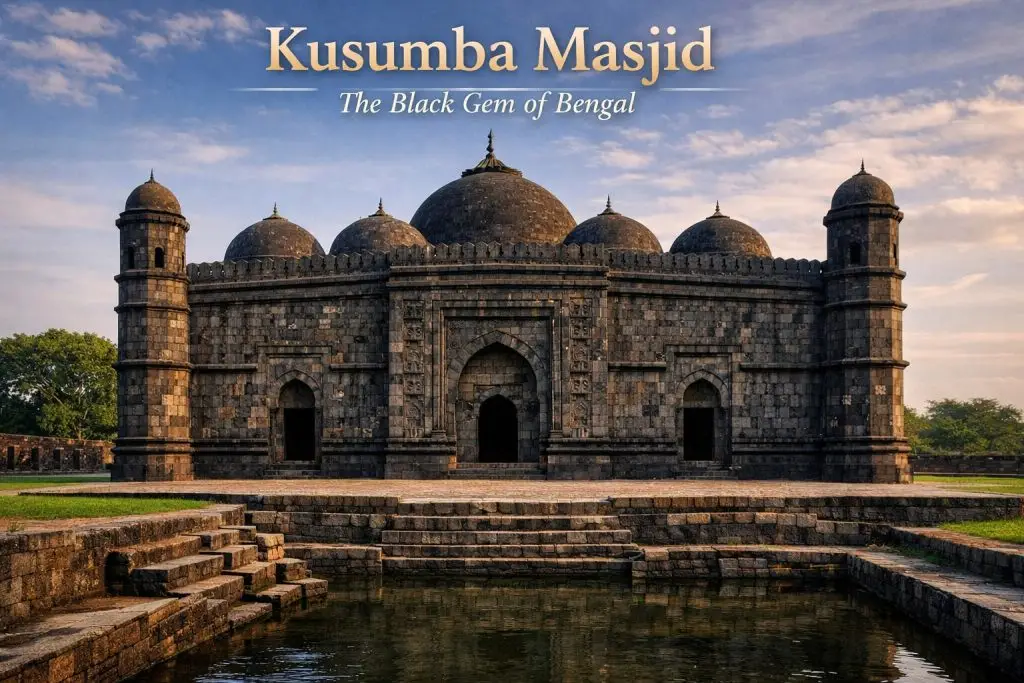
Kusumba Masjid (also known as Kusumba Mosque) is one of the finest surviving examples of pre-Mughal Islamic architecture in Bangladesh. Located in Kusumba village of Manda Upazila, under Naogaon District, this 16th-century stone mosque stands as a timeless symbol of Bengal’s rich architectural heritage.
Often referred to as the “Black Gem of Bengal” because of its dark stone construction, Kusumba Masjid attracts history lovers, photographers, architects, and travelers searching for hidden heritage sites in northern Bangladesh. Unlike many brick-built mosques of Bengal, this mosque was constructed primarily with black basalt stone, making it architecturally unique and historically significant.
🏛 Historical Background of Kusumba Masjid
📅 When Was Kusumba Masjid Built?
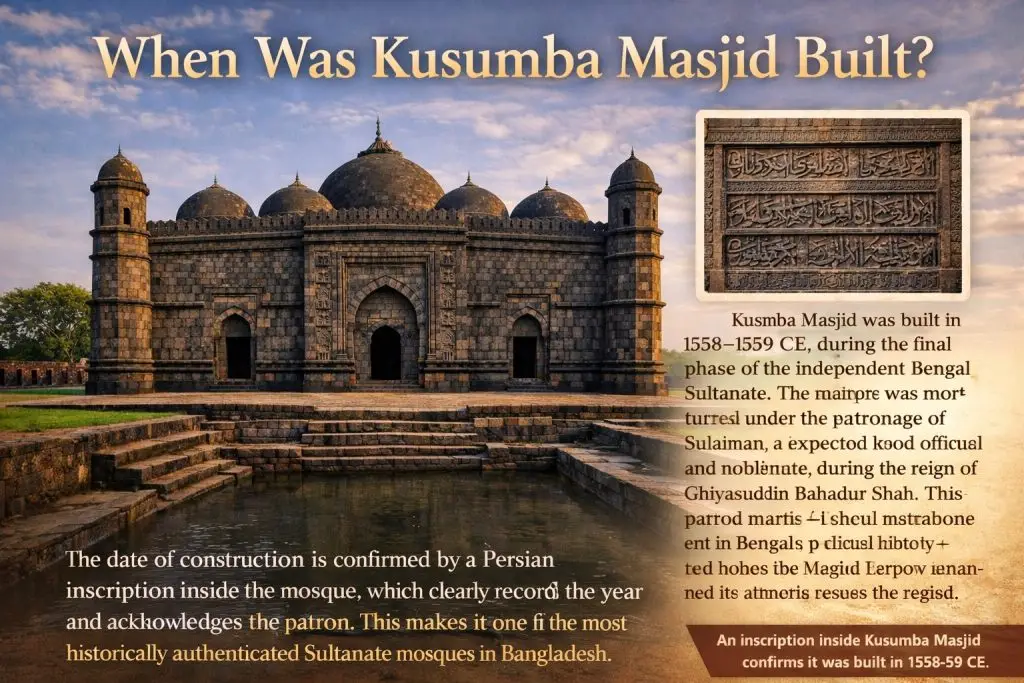
Kusumba Masjid was built in 1558–1559 CE, during the final phase of the independent Bengal Sultanate. The mosque was constructed under the patronage of Sulaiman, a respected local official and nobleman, during the reign of Ghiyasuddin Bahadur Shah. This period marks a crucial transitional era in Bengal’s political history — just before the Mughal Empire expanded its authority across the region.
The date of construction is confirmed by a Persian inscription embedded inside the mosque, which clearly records the year and acknowledges the patron. Because of this inscription, Kusumba Masjid is considered one of the most historically authenticated Sultanate mosques in Bangladesh.
By the mid-16th century, the Bengal Sultanate had developed its own architectural language. Even though Mughal influence was approaching from the west, the mosque reflects a strong continuation of traditional Bengal Sultanate design rather than early Mughal style. This makes Kusumba Masjid an important architectural bridge between two great Islamic dynasties in South Asia.
🏰 Bengal Sultanate Era Context
To understand the true significance of Kusumba Masjid history, it is essential to explore the wider context of the Bengal Sultanate (14th–16th centuries).
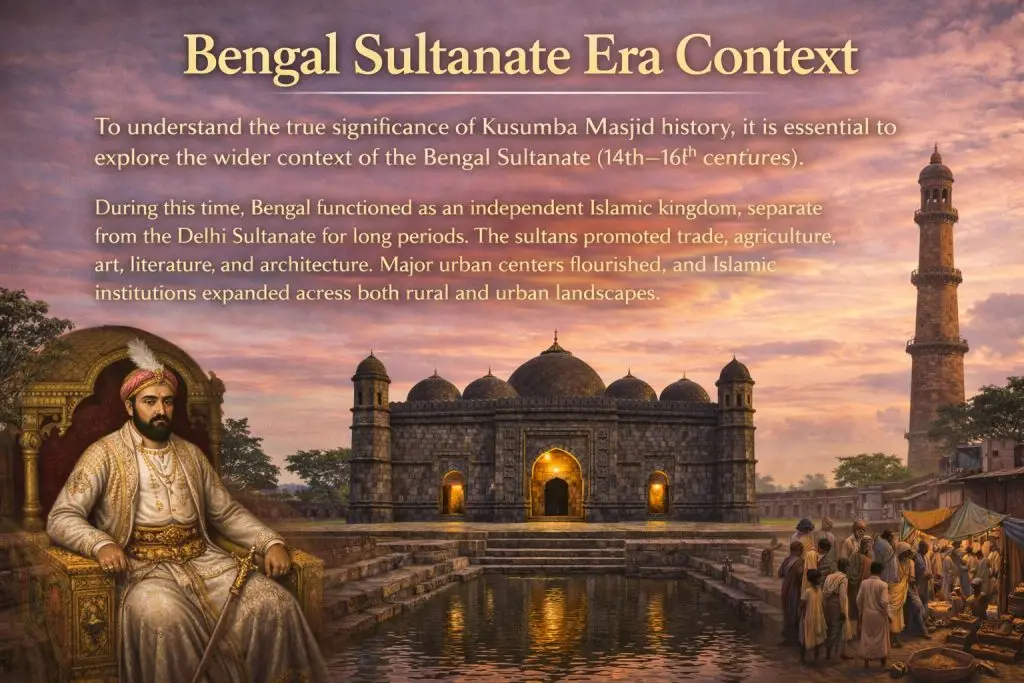
During this time, Bengal functioned as an independent Islamic kingdom, separate from the Delhi Sultanate for long periods. The sultans promoted trade, agriculture, art, literature, and architecture. Major urban centers flourished, and Islamic institutions expanded across both rural and urban landscapes.
🌍 Cultural Fusion in Architecture

The Bengal Sultanate era is famous for blending:
- Persian-Islamic architectural concepts
- Indigenous Bengali craftsmanship
- Terracotta decorative traditions
- Selective use of stone carving
Unlike North Indian Mughal monuments that often used white marble and grand symmetrical gardens, Bengal mosques were adapted to the region’s:
- Heavy rainfall
- Humid climate
- Limited natural stone supply
As a result, most mosques in Bengal were built using baked brick. However, Kusumba Masjid stands out because it uses black basalt stone, which was rare and expensive. This unique material choice shows both prestige and technical expertise.
🏛 Architectural Characteristics of Sultanate Mosques
Typical Sultanate mosques were:
- Smaller and compact
- Structurally solid with thick walls
- Richly decorated
- Built using local materials
- Designed with multiple domes
Kusumba Masjid is one of the best-preserved examples of late Sultanate architecture in Bangladesh, making it a key heritage monument for historians and architecture enthusiasts.
🧱 Architectural Features of Kusumba Masjid
Kusumba Masjid architecture is one of the finest examples of stone mosque construction in Bengal. Its structural integrity, intricate carvings, and balanced proportions make it an architectural masterpiece.
🪨 Unique Stone Construction
One of the most remarkable features of Kusumba Masjid is its extensive use of stone, especially black basalt. In a region where brick dominated construction, using stone required significant effort, cost, and craftsmanship.
The mosque was constructed using:
- Carefully cut black basalt stone blocks
- Stone slabs for roofing sections
- Six internal stone pillars
- Carved stone panels
- Massive foundation stones
The black basalt gives the mosque its distinctive dark appearance, which is why it is sometimes referred to as the “Black Gem of Bengal.” The stone also contributes to the building’s durability, allowing it to survive for more than 450 years despite environmental challenges.
The use of stone instead of brick signals the importance of the mosque at the time of construction. It suggests patronage by a powerful official and access to skilled artisans capable of precise stone carving.
🕌 Layout and Design
Kusumba Masjid follows the traditional rectangular floor plan common in Bengal Sultanate mosques.
Key Structural Features:
- Three domes on the roof
- Three arched entrances on the eastern façade
- Thick stone walls for stability
- Six stone pillars dividing the interior
- Multiple mihrabs on the western wall
The mosque interior is divided into two aisles and three bays, creating a balanced prayer space. The central bay is slightly emphasized, reflecting traditional Islamic architectural hierarchy.
The three entrance arches are beautifully decorated with carved patterns. These arches not only provide structural support but also enhance aesthetic appeal.
The western wall contains multiple mihrabs (prayer niches), indicating the direction of Mecca (Qibla). The central mihrab is more elaborately decorated than the others, signifying its importance.
🌙 Domes and Roof Structure
Originally, Kusumba Masjid had six domes, arranged in two rows of three. Over time, some domes have been damaged or lost, but the structural system remains visible.
The domes are supported by:
- Strong stone pillars
- Arched vault systems
- Thick exterior walls
- Solid foundational platforms
The dome style reflects early Islamic influence but incorporates local building techniques to withstand Bengal’s climate. The slightly curved roof profile is adapted to manage heavy monsoon rainfall.
The combination of domes and thick walls gives the mosque a compact yet powerful appearance. Unlike Mughal mosques with grand courtyards and towering minarets, Kusumba Masjid focuses on solidity and ornamentation.
🪵 Decorative Elements
Kusumba Masjid is renowned for its intricate decorative carvings, making it one of the most artistically refined mosques in northern Bangladesh.
Notable Decorative Features:
- Floral motifs carved in stone
- Geometric patterns symbolizing infinity
- Carved rosettes
- Quranic calligraphy panels
- Terracotta ornamentation elements
The floral designs show strong Persian influence, while the geometric patterns reflect Islamic artistic principles that avoid figurative imagery.
The carvings demonstrate exceptional craftsmanship and artistic mastery. Each stone panel appears carefully measured and symmetrically placed, showcasing the skills of 16th-century artisans.
🧭 Cultural and Religious Importance
Kusumba Masjid is not merely an archaeological monument; it remains an active place of worship. For over four centuries, the mosque has served the local Muslim community.
Religious Significance:
- Friday (Jumu’ah) prayers are held regularly
- Ramadan activities take place annually
- Local Islamic gatherings are organized
- Community events are conducted within its premises
The mosque represents more than architecture — it symbolizes continuity of Islamic faith in rural Bengal. Its survival reflects the deep-rooted spiritual heritage of the region.
For locals, it is not just a tourist attraction but a sacred space tied to generations of prayer and tradition.
📜 Inscription and Historical Evidence
A significant feature of Kusumba Masjid is its Persian inscription panel, which provides direct historical documentation.
The inscription confirms:
- The year of construction (1558–1559 CE)
- The name of the patron (Sulaiman)
- The reigning Sultan’s identity
- Religious dedication
Because of this inscription, historians can confidently date the structure. Many ancient buildings lack such clear documentation, but Kusumba Masjid stands out due to its preserved epigraphic evidence.
This makes it an important site for researchers studying Bengal Sultanate architecture and Islamic inscriptions in South Asia.
🗺 Location & How to Reach Kusumba Masjid
📍 Exact Location
- Village: Kusumba
- Upazila: Manda
- District: Naogaon
- Division: Rajshahi
- Country: Bangladesh
The mosque is located in a peaceful rural setting surrounded by greenery and agricultural fields. Its calm environment enhances its spiritual and historical atmosphere.
🚗 How to Go from Dhaka
If you are planning a Kusumba Masjid travel guide trip, here are the main transport options:
🚌 Option 1: By Bus
- Route: Dhaka → Naogaon
- Travel time: 7–8 hours
- Affordable overnight buses available
- From Naogaon town, local transport (CNG/auto-rickshaw) to Kusumba village
🚆 Option 2: By Train
- Dhaka → Rajshahi by train
- Then Rajshahi → Naogaon by bus or microbus
- Comfortable and scenic journey
🚗 Option 3: By Private Car
- Distance: Approx. 250 km from Dhaka
- Ideal for family tours
- Flexible travel schedule
- Can combine with nearby heritage sites
🌤 Winter (November – February) – BEST TIME ✅
Winter is widely considered the best season to visit Kusumba Masjid.
Why Winter Is Ideal:
- Comfortable temperatures (12°C–25°C)
- Clear blue skies
- Soft sunlight for photography
- Pleasant rural landscapes
- Easy road access
During winter mornings, light fog sometimes surrounds the mosque, creating a magical and timeless atmosphere. The dark basalt stone glows gently under soft sunlight, highlighting its carvings and architectural details.
The cool weather makes it easier to walk around the mosque, explore its surroundings, and spend more time appreciating the historical structure. Winter is also the most popular season for educational tours, travel bloggers, and architecture enthusiasts.
If you’re searching for the best time to visit Kusumba Masjid, winter is the perfect choice.
🌧 Monsoon (June – September)
Monsoon rains refresh the surroundings, creating a rich and scenic green landscape.
Advantages:
- Vibrant green fields
- Dramatic cloudy skies
- Fresh rural atmosphere
- Unique photography opportunities
The mosque stands beautifully against the rich greenery and dark monsoon clouds. For photographers who love moody compositions, this season offers incredible contrast.
Challenges:
- Muddy rural roads
- Sudden rainfall
- Increased humidity
Travel during monsoon requires planning. Waterproof footwear and umbrellas are recommended. Although access may be slightly inconvenient, the visual beauty of Kusumba Masjid in monsoon is unforgettable.
☀ Summer (March – May)
Summer in northern Bangladesh can be extremely hot.
Conditions:
- Temperatures often exceed 35°C
- Strong direct sunlight
- Dry and dusty atmosphere
The black stone structure absorbs heat, making the environment warmer during midday. Long exploration can become uncomfortable.
If visiting during summer:
- Arrive early in the morning
- Avoid afternoon heat
- Carry sufficient water
- Wear light clothing
Summer is not ideal for long heritage tours, but short early-morning visits are manageable.
The mosque’s symmetrical layout allows for strong compositions. Close-up shots of floral carvings and geometric patterns highlight the artistic mastery of the Sultanate period.
🌅 Best Photography Time
🌄 Early Morning
- Soft natural light
- Peaceful environment
- Balanced shadows
- Fewer visitors
Morning photography enhances stone textures without harsh contrast.
🌇 Golden Hour (Before Sunset)
- Warm golden tones
- Long dramatic shadows
- Enhanced architectural depth
- Beautiful sky background
Golden hour makes the dark basalt appear warmer and more majestic, creating breathtaking photographs.
🏞 Nearby Tourist Attractions
If you’re visiting Kusumba Masjid, consider combining your trip with nearby heritage sites for a complete historical journey.
🏰 Paharpur Buddhist Monastery
Located about 30–40 km from Kusumba Masjid, Somapura Mahavihara (Paharpur Buddhist Monastery) is a UNESCO World Heritage Site.
Highlights:
- 8th-century Buddhist monastery
- One of South Asia’s largest ancient monastic complexes
- Important archaeological landmark
- Excellent photography destination
Visiting both Kusumba Masjid and Somapura Mahavihara in one trip allows travelers to experience Bengal’s Islamic and Buddhist heritage side by side.
🏯 Mahasthangarh
Another important archaeological destination is Mahasthangarh, one of the oldest known urban settlements in Bangladesh.
Why Visit:
- Ancient fortified city
- Archaeological museum
- Pre-Islamic historical remains
- Expansive ruins
Together, these sites create a powerful heritage circuit in northern Bangladesh.
🧱 Architectural Comparison: Kusumba vs Other Sultanate Mosques
| Feature | Kusumba Masjid | Typical Bengal Mosque |
|---|---|---|
| Material | Stone | Brick |
| Construction Year | 1558–59 CE | 14th–16th century |
| Ornamentation | Stone carving | Terracotta |
| Preservation | Excellent | Moderate |
Kusumba Masjid stands apart due to its rare stone material and exceptional preservation compared to typical brick-built Sultanate mosques.
🛕 Why Kusumba Masjid Is Called the “Black Gem of Bengal”
The nickname “Black Gem of Bengal” reflects its striking appearance.
It stands out because of:
- Rare black basalt stone
- Deep dark exterior color
- Massive and solid structure
- Timeless architectural elegance
Unlike the red-brick mosques common in Bengal, this stone-built monument creates a dramatic visual impact that leaves a lasting impression.
🛠 Preservation & Restoration
The mosque is maintained by the Department of Archaeology.
Restoration Efforts Include:
- Structural reinforcement
- Preservation of stone carvings
- Protection against erosion
- Tourism management and monitoring
These initiatives ensure that the mosque remains protected for future generations.
💡 Travel Tips for Visitors
✔ Wear modest clothing
✔ Remove shoes before entering
✔ Respect prayer times
✔ Carry drinking water
✔ Visit during daylight
✔ Avoid touching delicate carvings
✔ Keep the area clean
Respecting local customs enhances your experience and protects the heritage site.
🏡 Local Experience
Visiting Kusumba Masjid also offers a glimpse into rural Bangladesh.
You can experience:
- Traditional agricultural life
- Peaceful countryside
- Friendly village hospitality
- Scenic landscapes
It is an ideal destination for:
- Cultural tourism
- Heritage tourism
- Educational tours
- Islamic architecture studies
✨ Why You Should Visit Kusumba Masjid in 2026
In an era dominated by modern construction and fast-paced travel, Kusumba Masjid offers:
- Peaceful surroundings
- Rich historical depth
- Unique stone architecture
- Cultural authenticity
- Exceptional photography opportunities
It remains one of the most underrated historical places in Bangladesh and truly deserves global recognition.
✅ Final Thoughts
Kusumba Masjid is more than just an old mosque — it is a living monument of Bengal’s Sultanate glory and a masterpiece of stone architecture in northern Bangladesh.
Whether you are a historian, traveler, blogger, photographer, or architecture enthusiast, this 16th-century marvel will leave you inspired.
If you plan a heritage tour in Rajshahi Division, make sure Kusumba Masjid is at the top of your travel list 🕌✨