

Explore Paharpur Heritage Guide in 2026—uncover the lost Buddhist civilization, ancient ruins, rich history, architecture, and travel tips for visitors.
Introduction: Paharpur Heritage Guide in 2026
Paharpur Buddha Vihar, officially called Somapura Mahavihara, is one of the most remarkable archaeological sites in Bangladesh and a shining symbol of the nation’s ancient Buddhist heritage. Situated in Naogaon District, this world-famous monument is recognized as a UNESCO World Heritage Site and ranks among the largest Buddhist monasteries south of the Himalayas. Built during the powerful Pala period, the site reflects the brilliance of early medieval South Asian architecture, religious harmony, and advanced monastic education. Its vast courtyard, central temple structure, and detailed terracotta art make it a top attraction for travelers interested in heritage tourism in Bangladesh.
For visitors who love history, archaeology, ancient architecture, and cultural travel, Paharpur is truly a must-visit destination. This complete, travel-friendly guide explores the full history of Somapura Mahavihara, its architectural and cultural significance, helpful visitor information, the best hotels and resorts near Paharpur, and the top historical places to visit nearby for a rich and memorable heritage tour.
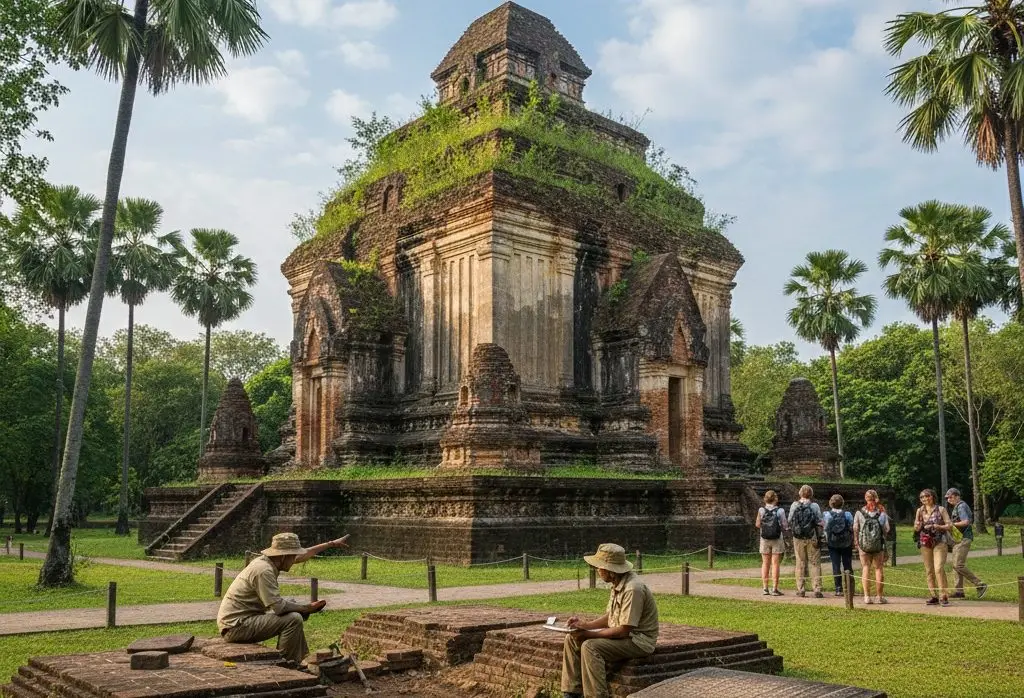
Full History of Paharpur Buddha Vihar
Origins of Somapura Mahavihara
Somapura Mahavihara, popularly known as Paharpur Buddha Vihar, was founded in the late 8th century during the reign of King Dharmapala of the powerful Pala Empire.
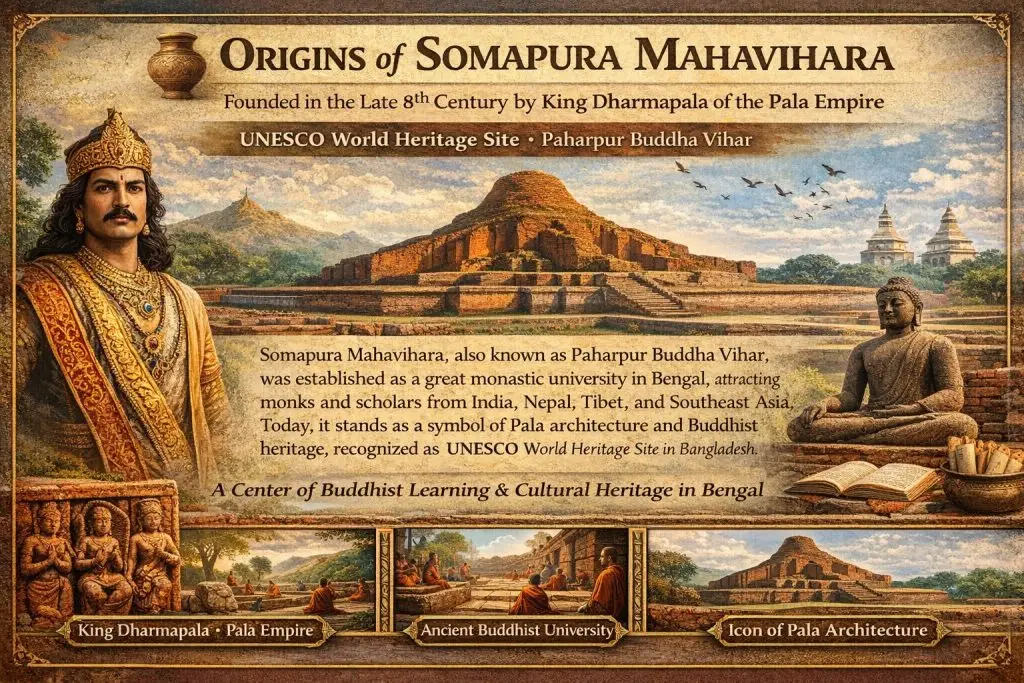
This era marked a golden age of Buddhist civilization in Bengal, when the region became a leading center of religion, art, and higher learning in South Asia. Today, the site stands in Naogaon District as a celebrated UNESCO World Heritage Site in Bangladesh and one of the country’s most significant archaeological sites.
King Dharmapala, a devoted patron of Mahayana and Vajrayana Buddhism, established Somapura as part of a vast network of monastic institutions that promoted spiritual practice and advanced education. With strong royal support, the monastery grew into a renowned Buddhist learning center in Asia, attracting monks and scholars from India, Nepal, Tibet, and Southeast Asia.
More than a religious complex, Somapura functioned like an ancient Buddhist university, similar to Nalanda Mahavihara and Vikramashila University. Its organized monastic cells, meditation spaces, and teaching areas fostered study, debate, and translation of sacred texts. Today, Paharpur remains a symbol of Pala architecture, Buddhist heritage, and the rich intellectual history of Bangladesh, drawing visitors interested in heritage tourism and ancient history.

A Great Buddhist University of the Ancient World
Between the 8th and 12th centuries, Paharpur Buddha Vihar (Somapura Mahavihara) was far more than a monastery — it was a thriving international Buddhist university and one of the leading centers of ancient education in South Asia. During the powerful Pala Empire, Bengal became a global hub for Buddhist learning, philosophy, and cultural exchange, and Paharpur stood at the heart of this intellectual movement.
Historical evidence and architectural scale suggest that Somapura Mahavihara functioned similarly to famous institutions like Nalanda University and Vikramashila Mahavihara. Monks and scholars traveled long distances to study here, making it an important destination for Buddhist pilgrimage and higher education. Visitors came from regions such as Tibet, Nepal, Sri Lanka, and Southeast Asia, turning Paharpur into a crossroads of ideas, traditions, and spiritual practices.
Students at this great monastic university studied a wide range of subjects, not limited to religion alone. The curriculum likely included Buddhist philosophy, meditation techniques, sacred scriptures, logic, grammar, medicine, and ethics. This broad educational system helped train monks who later became teachers, translators, and spiritual leaders across Asia. Because of this, Paharpur played a key role in the spread of Buddhism beyond the Indian subcontinent.
The environment of Somapura encouraged both scholarly debate and spiritual discipline. Monks lived in organized residential cells around the central shrine, creating a structured academic community. The large courtyards and temple spaces were likely used for lectures, rituals, and meditation gatherings. This combination of education and monastic life made Paharpur one of the most advanced examples of a Buddhist monastic university in the medieval world.
Many renowned Buddhist scholars are believed to have studied in great monasteries like Somapura before traveling to other countries to share their knowledge. Through these scholars, teachings developed in Bengal influenced Tibetan Buddhism, Southeast Asian traditions, and Himalayan monastic culture.
Today, the ruins of Paharpur Buddha Vihar remain a powerful symbol of Bangladesh’s ancient connection to global education, religious harmony, and intellectual heritage, attracting researchers, history lovers, and heritage tourism visitors from around the world.have visited or studied in monasteries like Somapura. The site played a crucial role in spreading Buddhism across Asia.
Architectural Brilliance of the Pala Period at Paharpur Heritage
The architecture of Paharpur Buddha Vihar, historically known as Somapura Mahavihara, is one of the most outstanding examples of Pala period architecture in South Asia. Recognized as a UNESCO World Heritage Site in Bangladesh, this ancient complex attracts historians, architects, and travelers searching for remarkable Buddhist heritage sites and iconic archaeological landmarks in Bangladesh. Its design reflects deep spiritual meaning combined with impressive engineering knowledge from over a thousand years ago.
Covering nearly 27 acres, the monastery is considered one of the largest ancient Buddhist monasteries in the world. At its center stands a massive pyramid-shaped temple with a cross-shaped base and rising terraces, symbolizing the spiritual journey toward enlightenment. Surrounding this sacred core are 177 monks’ cells, carefully arranged to support study, meditation, and communal monastic life—an early example of planned institutional architecture in ancient Bengal.
Built mainly with durable burnt bricks and strengthened by thick structural walls, the complex showcases advanced construction techniques of the Pala Empire. Intricate terracotta plaques decorate the outer walls, blending artistic beauty with architectural function. The unique style of Somapura later influenced temple architecture in Myanmar, Indonesia, and Cambodia, securing Paharpur’s place in the history of Buddhist architecture in Asia and making it a top destination for heritage tourism in Bangladesh.
Terracotta Art and Sculptures of Paharpur Buddha Vihar
The terracotta art of Paharpur Buddha Vihar, also known as Somapura Mahavihara, is one of the most remarkable highlights of this UNESCO World Heritage Site in Bangladesh. These finely crafted plaques once covered the outer walls of the central temple and monastery cells, turning the vast complex into a visual archive of ancient Bengal’s art and culture. Today, they make Paharpur a must-visit destination for travelers interested in archaeological sites in Bangladesh, Buddhist heritage, and historical architecture.
The plaques feature rich Buddhist art, including Bodhisattvas, devotees, lotus motifs, and symbolic patterns linked to meditation and spiritual teachings. Alongside these are images of Hindu deities like Vishnu and Shiva, reflecting the religious harmony of the Pala period. This blend of traditions makes Paharpur a key site for studying ancient religious coexistence in South Asia.
Daily life scenes—musicians, dancers, farmers, and royal guards—offer rare insight into medieval Bengali culture. Animals, birds, floral designs, and mythical creatures further enrich the storytelling. Together, these artworks establish Paharpur as a leading example of terracotta temple art in Asia and a top attraction for heritage tourism in Bangladesh.
Decline of Somapura Mahavihara
After the 12th century, Buddhism in Bengal began to decline due to major political shifts, regional conflicts, and the weakening of royal support once provided by the Pala Empire. As new powers rose in eastern India, many great Buddhist monasteries in South Asia, including Somapura Mahavihara, gradually lost patronage and protection. Without maintenance and monastic communities to sustain them, these once-thriving centers of learning slowly fell into ruin.
Somapura Mahavihara, once a leading ancient Buddhist university and a renowned hub of Buddhist education in Asia, was eventually abandoned. Natural decay, earthquakes, weathering, and human activity caused the massive brick structures to collapse over centuries. Layers of soil and vegetation covered the remains, turning the grand monastery into a large mound. This transformation led local people to call the place “Paharpur,” meaning “hill village.”
For hundreds of years, the site remained hidden beneath the earth, its history forgotten. Today, the rediscovered ruins stand as one of the most important archaeological sites in Bangladesh and a key attraction for heritage tourism, reminding visitors of the rise and fall of Buddhist civilization in Bengal.
Rediscovery and UNESCO Recognition
In the 19th and 20th centuries, archaeologists began excavating the site. They uncovered:
- Monastery cells
- Central temple structure
- Sculptures
- Coins
- Pottery
- Inscriptions
Due to its global importance, Paharpur Buddha Vihar was declared a UNESCO World Heritage Site in 1985.
Today, it stands as one of the most important archaeological sites in Bangladesh.
Why Paharpur Buddha Vihar is Famous
Paharpur is famous for:
⭐ Being one of the largest Buddhist monasteries in the world
⭐ A UNESCO World Heritage archaeological site
⭐ Unique Pala-period architecture
⭐ Beautiful terracotta artwork
⭐ Major center of ancient Buddhist education
It is a top destination for heritage tourism in Bangladesh.
Location & How to Go
Location: Paharpur, Badalgachhi Upazila, Naogaon District, Bangladesh
How to Reach Paharpur
From Dhaka:
- By bus to Naogaon or Bogura
- Then local transport (CNG/auto/rickshaw) to Paharpur
From Rajshahi:
- Around 3–4 hours by road
- Private car or local bus available
The roads are now much better, making the journey more comfortable.
Entry Information
- Open: Usually 9 AM – 5 PM
- Closed: Sunday half-day (may vary)
- Separate ticket prices for locals and foreign tourists
There is also a site museum near the entrance where you can see original sculptures and artifacts.
Best Time to Visit
The best time to visit Paharpur Buddha Vihar is:
🍃 November to February – Cool and pleasant weather, ideal for exploring the vast ruins comfortably.
☀️ Avoid peak summer afternoons as the open site can get extremely hot and tiring.
During the winter months, the landscape is lush, and photography conditions are perfect. Early mornings and late afternoons also provide softer light for capturing the intricate terracotta art. Visiting during festivals or local cultural events can give travelers a unique glimpse into regional traditions while exploring this UNESCO World Heritage Site.
Best 10 Hotels & Resorts Near Paharpur
While Paharpur is in a rural area, you can stay in nearby towns like Naogaon, Joypurhat, Bogura, and Rajshahi.
Here are some good accommodation options:
1️⃣ Hotel Naz Garden – Bogura
📍 Address: Bogra City Bypass, Bogura 5800, Bangladesh
📞 Mobile: +8801755661199
📧 Email: info@hotelnazgarden.com
🌐 Website: http://www.hotelnazgarden.com/
2️⃣ Hotel Siesta – Bogura
📍 Address: Bogra City Bypass, Bogura 5800, Bangladesh
📞 Phone: +8801707079144
(Note: official email/website not publicly listed; check booking platforms such as BDBooking or local directories)
3️⃣ Momo Inn Park & Resort – Bogura
📍 Address: Nawadapara, Bogura 5800, Bangladesh
📞 Mobile: +8801755669900
🌐 Website: https://www.momoinn.com/
4️⃣ Hotel Purbani International Limited – Bogura (also listed in Dhaka directory)
📍 Address: 1 Dilkusha, Dhaka 1000, Bangladesh (main address listed)
📞 Phone: +8802223382229
🌐 Website: http://www.hotelpurbaniltd.com/
5️⃣ Hotel Rajshahi International – Rajshahi
📍 Address: Rajshahi, Bangladesh
📞 Phone: +8801975571515 (from booking listing)
📧 Email: sales@bdbooking.com (booking partner email)
(Official hotel website could not be verified; use local booking platforms for reservations)
6️⃣ Warisan Residential Hotel – Rajshahi
📍 Address: 88, Zodiac Palace (8th Floor), Zero Point, Shaheb Bazar Rd, Rajshahi 6100, Bangladesh
📞 Mobile: +8801793040269
🌐 Booking info available through regional travel agents and booking sites
7️⃣ Hotel Nice International – Rajshahi
📍 Address: Saheb Bazar Ganakpara Road, Rajshahi 6000, Bangladesh
📞 Mobile: +8801740133933
🌐 Website: http://www.hotelnicebd.com/
8️⃣ Hotel Akota – Naogaon
📍 Address: Naogaon District, Bangladesh (local listing)
📞 (No public contact found; book via local hotel directories)
(Check Google Maps or Naogaon travel pages for exact address and phone)
9️⃣ Hotel X – Rajshahi – Rajshahi
📍 Address: 60 Chondipur, Rajshahi 6000, Bangladesh
📞 Mobile: +8801844004200
🌐 Website: http://www.index-companies.com/
🔟 Parjatan Motel, Rajshahi – Rajshahi (Bangladesh Parjatan Corporation)
📍 Address: Abdul Mojid Road, Rajshahi 6000, Bangladesh
📞 Mobile: +8801778403225
🌐 Booking & Info: https://parjatan.gov.bd/ (general Parjatan site with hotel listings)
These hotels offer options from budget stays to comfortable family lodging.
Top 10 Historical Places Near Paharpur
If you are visiting Paharpur, you can also explore nearby historical attractions.
1️⃣ Mahasthangarh (Bogura)
One of the oldest cities in Bangladesh, dating back over 2,500 years.
2️⃣ Vasu Vihara (Bogura)
Ancient Buddhist monastery ruins near Mahasthangarh.
3️⃣ Behula Lakshindar Basor Ghor (Bogura)
A legendary archaeological site linked with Bengali folklore.
4️⃣ Kusumba Mosque (Naogaon)
A beautiful 16th-century stone mosque from the Sultanate period.
5️⃣ Jagaddal Mahavihara (Naogaon region)
Another important Buddhist monastery from the Pala era.
6️⃣ Kantanagar Temple (Dinajpur)
Famous for its detailed terracotta Hindu temple art.
7️⃣ Ramsagar National Park (Dinajpur)
Historic large man-made lake with natural beauty.
8️⃣ Chhoto Sona Mosque (Chapainawabganj)
A stunning example of Sultanate architecture.
9️⃣ Barendra Research Museum (Rajshahi)
One of the richest museums of Bengal archaeology.
🔟 Bagha Mosque (Rajshahi)
A magnificent 16th-century mosque with terracotta decoration.
Travel Tips for Visitors
✔️ Wear comfortable walking shoes – the archaeological site is vast and requires a lot of walking
✔️ Bring water, sunglasses, and a hat – especially during warmer months
✔️ Respect the ancient structures — avoid climbing or damaging the ruins
✔️ Visit the on-site museum to gain deeper insight into the history and artifacts
✔️ Hire a local guide for accurate historical context and engaging storytelling
Additionally, it’s best to visit early in the morning or late afternoon to avoid heat and crowds. Photography is allowed, so carry a camera or smartphone to capture the intricate terracotta designs and scenic surroundings. Planning ahead will help ensure a comfortable, respectful, and enriching visit to Paharpur Heritage.
Cultural & Educational Importance
Paharpur is not just a tourist destination—it represents Bangladesh’s deep historical ties to the global Buddhist civilization. The site proves that ancient Bengal was once a leading hub of:
- International education
- Religious philosophy and learning
- Advanced art and architectural innovation
Scholars from across South and Southeast Asia are believed to have studied here, exchanging knowledge and ideas that influenced the wider Buddhist world. For students, researchers, and history enthusiasts, Paharpur serves as an open-air classroom, offering firsthand insight into ancient education systems, monastic life, and cultural exchange that shaped the region’s intellectual heritage.
Final Thoughts
Paharpur Buddha Vihar (Somapura Mahavihara) is more than just an archaeological site—it is a powerful symbol of Bangladesh’s rich Buddhist heritage and ancient civilization. As one of the largest monasteries in South Asia, its impressive ruins, detailed terracotta artwork, and tranquil rural setting offer visitors a rare journey into over 1,000 years of history.
Recognized as a UNESCO World Heritage Site, Paharpur continues to attract historians, travelers, and cultural enthusiasts from around the world. The site provides a unique opportunity to explore early Buddhist education, architecture, and spiritual life, all within a peaceful countryside environment.
For travelers seeking heritage tourism in Bangladesh, Paharpur Heritage is an unmissable destination. Whether you are passionate about ancient history, Buddhist civilization, or cultural exploration, a visit to Paharpur promises an enriching and unforgettable experience that connects the past with the present.