
Pakistan conveys US proposal to Iran as tensions rise. Turkey or Pakistan may host urgent talks, raising concerns over regional instability.
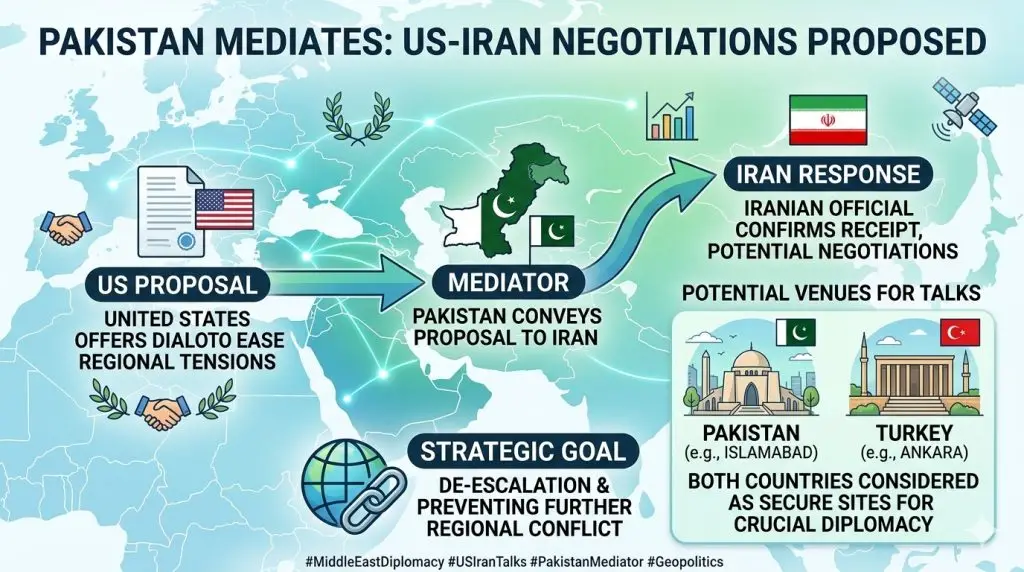
In a significant diplomatic development amid rising regional tensions, Pakistan has reportedly conveyed a proposal from the United States to Iran, opening the door for potential negotiations aimed at easing ongoing geopolitical strains. According to a senior Iranian official, both Pakistan and Turkey have emerged as possible venues for these crucial talks, signaling a renewed effort to revive dialogue and prevent further escalation.
This development comes at a time when the Middle East and surrounding regions are experiencing heightened uncertainty, with global powers closely monitoring every diplomatic move. The involvement of Pakistan as an intermediary highlights its growing role in regional diplomacy, while Turkey’s inclusion underscores its longstanding position as a bridge between East and West.
A New Diplomatic Opening
The proposal, reportedly initiated by the United States, reflects a strategic attempt to re-engage Iran through indirect diplomatic channels. Direct communication between Washington and Tehran has been limited for years due to deep-rooted political disagreements, sanctions, and mutual distrust. As a result, third-party mediation has become an essential tool in keeping dialogue alive.
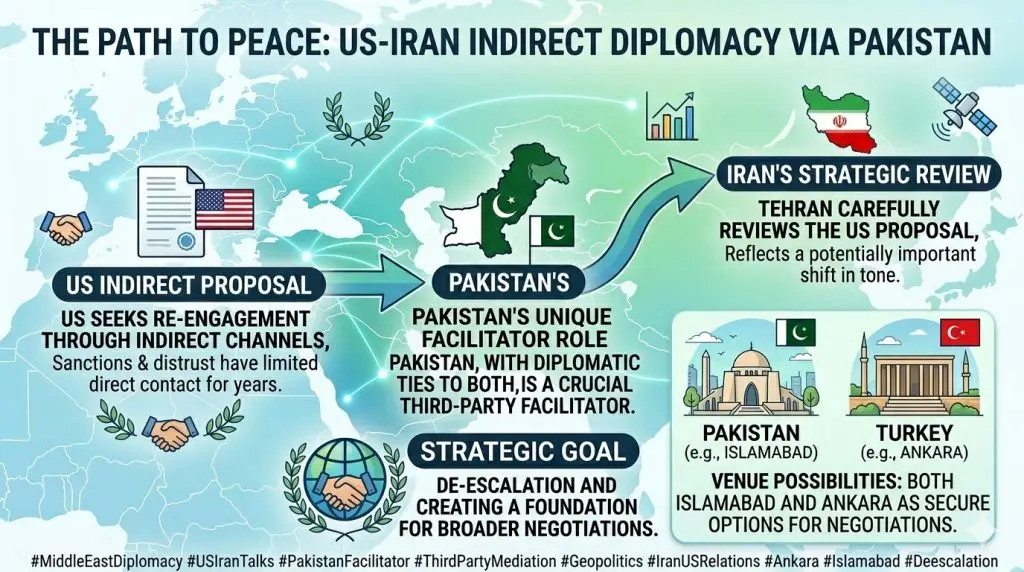
Pakistan’s role in conveying this proposal is particularly noteworthy. As a country that maintains diplomatic relations with both the United States and Iran, Pakistan is uniquely positioned to act as a facilitator. The move suggests that Washington is seeking a more flexible and less confrontational approach, possibly to create a foundation for broader negotiations in the future.
The senior Iranian official who disclosed the information indicated that Tehran is carefully reviewing the proposal. While no formal acceptance has been announced, the willingness to consider talks reflects a potentially important shift in tone.
Why Pakistan and Turkey?
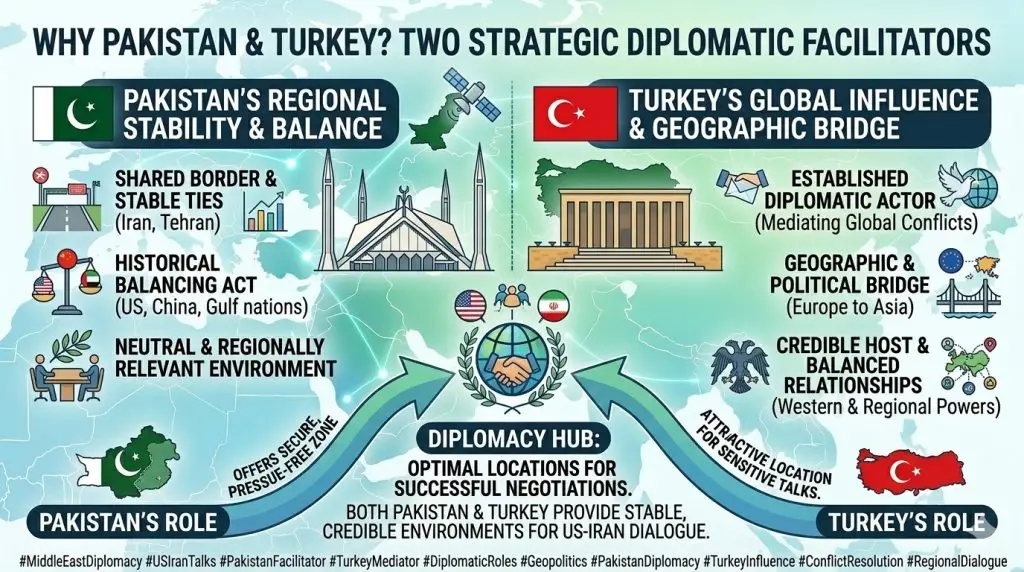
The suggestion that either Pakistan or Turkey could host the talks is not accidental. Both countries bring distinct advantages to the table.
Pakistan’s Strategic Position
Pakistan shares a border with Iran and has historically maintained relatively stable relations with Tehran despite regional complexities. Over the years, Islamabad has often attempted to balance its ties between competing global and regional powers, including the United States, China, and Gulf nations.
Hosting talks in Pakistan could provide a neutral yet regionally relevant environment, making it easier for all parties to engage without the pressure often associated with Western venues. Additionally, Pakistan’s recent diplomatic initiatives indicate its desire to play a more active role in conflict resolution.
Turkey’s Diplomatic Influence
Turkey, on the other hand, has established itself as a key diplomatic actor in multiple international conflicts. From mediating discussions in Eastern Europe to engaging in Middle Eastern affairs, Ankara has consistently positioned itself as a facilitator of dialogue.
Its geographic and political position—straddling Europe and Asia—makes Turkey an attractive location for sensitive negotiations. Moreover, Turkey maintains working relationships with both Western allies and regional powers, allowing it to act as a credible host.
The Broader Context
This proposal does not exist in isolation. It comes against a backdrop of longstanding tensions between the United States and Iran, primarily centered around nuclear activities, regional influence, and economic sanctions.
The Nuclear Issue
One of the most contentious issues has been Iran’s nuclear program. The collapse of earlier agreements and subsequent disagreements have led to increased mistrust. Efforts to revive negotiations have repeatedly stalled, with both sides accusing each other of failing to meet commitments.
Regional Conflicts
Beyond the nuclear question, Iran’s involvement in various regional conflicts has been a major point of concern for the United States and its allies. These include situations in countries such as Syria, Iraq, and Yemen, where Iran’s influence is seen as both strategic and controversial.
Economic Pressure
Sanctions imposed by the United States have significantly impacted Iran’s economy, affecting everything from oil exports to currency stability. These economic pressures have been a driving force behind Iran’s willingness to at least consider diplomatic engagement.
Signals from Tehran
The senior Iranian official’s statement suggests that Tehran is not dismissing the proposal outright. Instead, it appears to be evaluating the potential benefits and risks of entering talks under the proposed framework.
Iran has historically insisted on certain conditions for negotiations, including respect for its sovereignty and the lifting of sanctions. Whether the current proposal addresses these concerns remains unclear, but the mere fact that discussions are being considered is seen by analysts as a positive, albeit cautious, step forward.
The Role of Backchannel Diplomacy
Backchannel diplomacy—where messages are conveyed indirectly through intermediaries—has long been a feature of international relations, particularly in situations where direct communication is politically sensitive or impossible.
In this case, Pakistan’s involvement serves as a classic example of how informal channels can help initiate formal negotiations. Such approaches allow parties to test the waters without committing publicly, reducing the risk of political backlash.
Turkey’s potential role as a host further complements this approach, offering a setting where talks can take place discreetly yet effectively.
Global Reactions
The international community has responded with cautious optimism to the news. Many countries see renewed dialogue as essential to maintaining regional stability and preventing further escalation.
Diplomatic observers note that even preliminary talks could help reduce tensions, especially if they lead to confidence-building measures. However, skepticism remains, given the history of failed negotiations and shifting political dynamics.
Challenges Ahead
Despite the encouraging signs, significant challenges remain.
Deep-Seated Distrust
Years of political tension have created a deep sense of distrust between the United States and Iran. Overcoming this will require more than just a single round of talks.
Conflicting Expectations
Both sides have different expectations regarding what negotiations should achieve. Aligning these expectations will be a critical step in ensuring meaningful progress.
Regional Pressures
Other regional actors may also influence the outcome. Allies and rivals alike have stakes in how the situation unfolds, adding another layer of complexity.
What Comes Next?
At this stage, the process appears to be in its early phases. The next steps will likely involve:
- Iran’s internal evaluation of the proposal
- Further communication through diplomatic channels
- Agreement on a venue and agenda for talks
If all parties move forward, the talks could mark the beginning of a broader diplomatic effort aimed at addressing multiple issues simultaneously.
A Turning Point or Another False Start?
The question on many observers’ minds is whether this development represents a genuine turning point or just another attempt that may ultimately falter.
History offers reasons for both optimism and caution. On one hand, the involvement of neutral intermediaries like Pakistan and Turkey increases the chances of constructive dialogue. On the other hand, previous efforts have often collapsed due to disagreements and changing political priorities.
Conclusion: Pakistan conveys US proposal
The news that Pakistan has conveyed a U.S. proposal to Iran—and that talks could potentially be hosted in Pakistan or Turkey—represents a notable diplomatic moment. While still tentative, it signals a willingness among key players to explore dialogue rather than confrontation.
Whether this initiative leads to meaningful progress will depend on the actions and commitments of all involved parties. For now, it stands as a reminder that even in times of tension, diplomacy continues to offer a path—however uncertain—toward resolution.