
Israel targets Tehran infrastructure as Middle East tensions surge. India resumes Russian oil purchases amid energy fears and global market instability.
Introduction: A Crisis Reshaping the Middle East and Global Energy
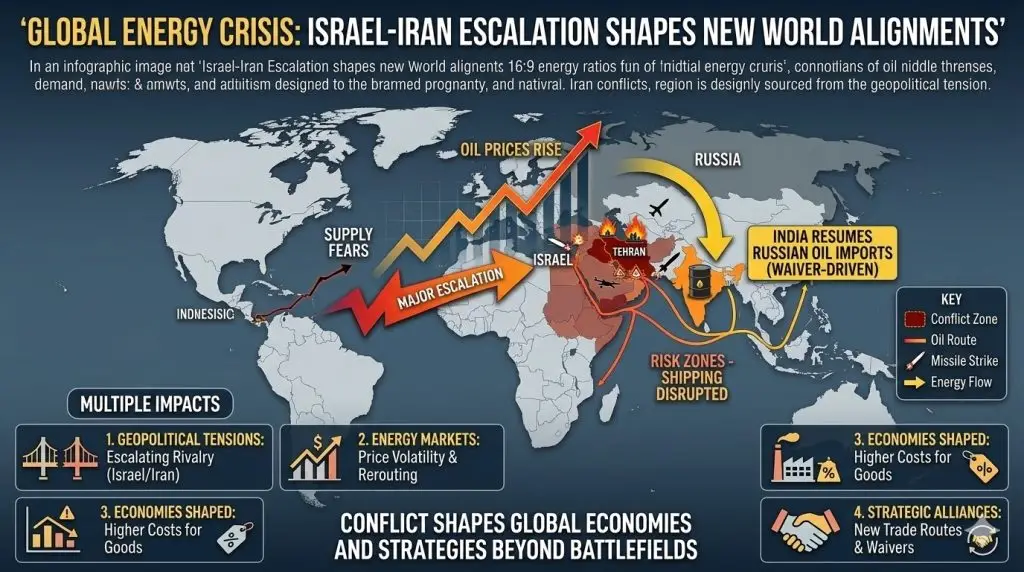
The escalating confrontation between Israel and Iran has entered a dangerous new phase. In recent days, Israeli forces launched a series of strikes targeting infrastructure in Tehran, Iran’s capital, marking a major escalation in an already tense regional conflict. At the same time, the war has triggered ripple effects across global energy markets and geopolitical alliances.
One of the most notable developments has been India’s decision to resume purchasing Russian oil, a move enabled by a temporary waiver and driven by fears of supply disruptions in the Middle East. The conflict threatens critical energy routes and has already begun affecting oil prices, shipping routes, and international diplomacy.
The intersection of these events—military strikes in Iran and shifts in global oil trade—illustrates how modern conflicts extend far beyond battlefields. They shape economies, alliances, and political strategies worldwide.
This article explores the background of the conflict, the details of Israel’s strikes on Tehran infrastructure, Iran’s response, the strategic importance of oil and energy routes, and why India has turned again to Russian crude during this crisis.
1. Escalation of the Israel–Iran Conflict
The long-standing rivalry between Israel and Iran has intensified dramatically in recent months. The two countries have been engaged in a shadow war for years, involving cyber operations, proxy conflicts, and targeted attacks. However, recent developments suggest the confrontation is becoming more direct.
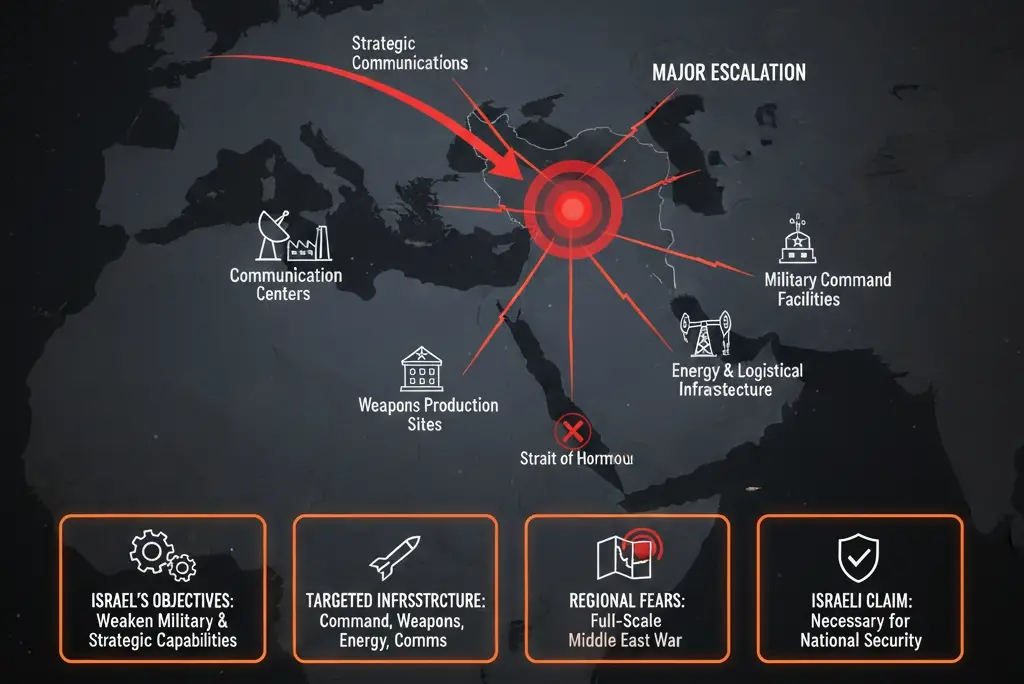
According to recent reports, Israeli forces launched heavy strikes targeting infrastructure inside Tehran, signaling a shift from covert operations to more overt military action. The attacks are part of a broader campaign aimed at weakening Iran’s military and strategic capabilities.
These operations reportedly targeted several types of infrastructure:
- Military command facilities
- Weapons production sites
- Energy and logistical infrastructure
- Strategic communication centers
The Israeli government has framed the strikes as necessary measures to prevent Iran from strengthening its military capabilities and threatening Israeli security.
The attacks have triggered alarms across the Middle East, raising fears that the conflict could expand into a full regional war.
2. Why Israel Is Targeting Tehran
Strategic Importance of Tehran
Tehran is not only Iran’s political capital but also the center of its military and intelligence infrastructure. A number of important government and military bodies operate from this capital, including:
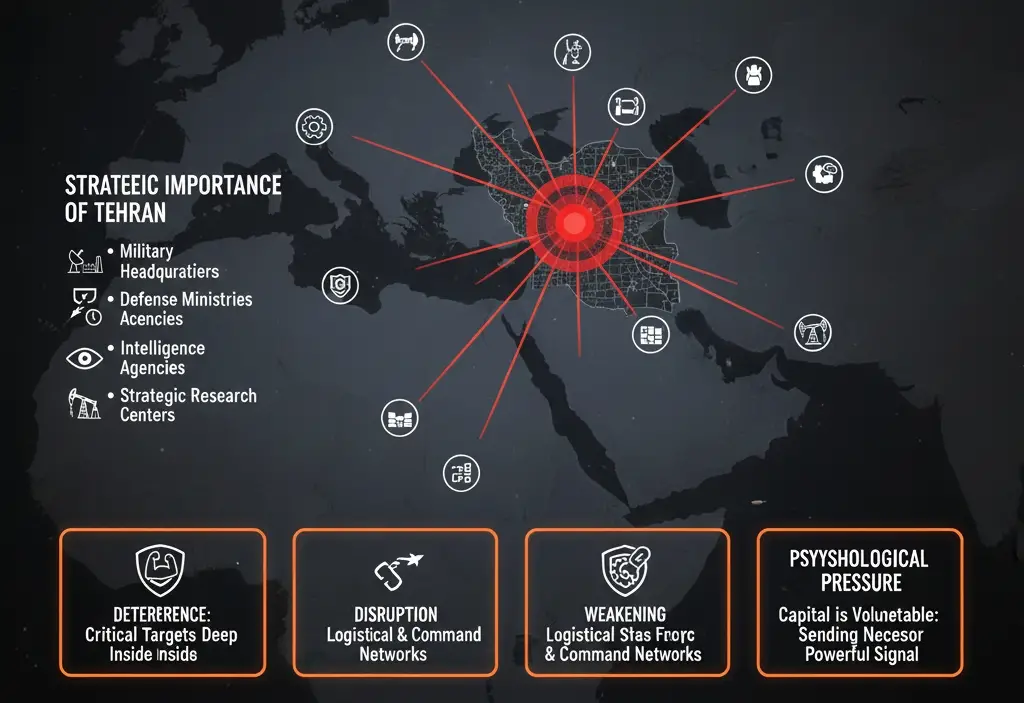
- Military headquarters
- Defense ministries
- Intelligence agencies
- Strategic research centers
By striking infrastructure in Tehran, Israel aims to send a powerful signal that it can reach deep inside Iran’s territory.
This strategy serves several objectives:
- Deterrence: Demonstrating Israel’s ability to strike critical targets.
- Disruption: Weakening Iran’s logistical and command networks.
- Psychological pressure: Showing that even the capital is vulnerable.
Previous operations have targeted Iranian military facilities and nuclear-related infrastructure across the country. For example, earlier Israeli strikes hit energy depots, factories, and military installations linked to Iran’s defense industry.
These operations have gradually increased in scale and intensity, suggesting that Israel is pursuing a long-term strategy to curb Iran’s strategic capabilities.
3. Iran’s Response and Rising Regional Tensions
Iran has strongly condemned the strikes and warned that retaliation is inevitable. Iranian leaders have accused Israel of aggression and have promised to respond through both direct and indirect means.

Possible Iranian responses include:
- Missile attacks against Israeli targets
- Cyber warfare
- Military actions carried out by supportive proxy forces
- Disruption of international shipping routes
One of the most alarming developments has been threats related to the Strait of Hormuz, a narrow but extremely important waterway connecting the Persian Gulf to the global ocean.
Iran has warned that it could restrict shipping through the strait if attacks continue.
This threat has massive implications because the Strait of Hormuz is one of the world’s most critical energy chokepoints.
4. The Strait of Hormuz: A Global Energy Lifeline
Nearly one-fifth of the world’s oil trade passes through the Strait of Hormuz, making it one of the most strategic maritime routes on Earth.
The waterway is used by oil tankers transporting crude from Gulf producers such as:
- Saudi Arabia
- Iraq
- Kuwait
- United Arab Emirates
- Qatar
If the strait becomes unsafe or blocked due to conflict, the global oil supply could be severely disrupted.
Recent tensions have already slowed maritime traffic in the region. Insurance companies have raised shipping costs, and some tanker operators are avoiding the area altogether.
These disruptions are one of the main reasons energy-importing countries are scrambling to secure alternative supplies.
5. Why India Turned Again to Russian Oil
Amid these disruptions, India has moved to secure its energy supply by purchasing oil from Russia.
India is the world’s third-largest oil consumer, and its economy relies heavily on imported energy.
Over 80 percent of India’s crude oil demand is met through imports. When supply routes in the Middle East become uncertain, the country must quickly find alternatives.
The ongoing conflict has made Middle Eastern shipments more risky, particularly because many of them pass through the Strait of Hormuz.
To address the situation, the United States granted a temporary 30-day waiver allowing Indian refiners to purchase certain shipments of Russian crude that were already at sea.
The decision was intended to stabilize global oil markets and prevent price spikes.
6. Russia’s Opportunity in the Energy Crisis
The conflict has unexpectedly benefited Russia’s energy sector.
As Middle Eastern supplies become uncertain, many countries are turning to alternative sources of oil and gas. Russia, despite facing Western sanctions, still has large volumes of crude available.
Demand for Russian oil has surged, especially from Asian buyers. Some analysts say Russian crude prices have risen significantly as global markets scramble for supply.
This shift is particularly significant because Western governments had previously attempted to reduce Russia’s energy revenue following the war in Ukraine.
However, geopolitical crises often reshape energy trade patterns quickly, and the Iran–Israel conflict appears to be doing exactly that.
7. The Impact on Global Oil Prices
Oil markets react immediately to geopolitical tensions, and the current crisis is no exception.
Several factors are pushing prices upward:
- Risk of disruptions in the Strait of Hormuz
- Damage to energy infrastructure
- Shipping delays and higher insurance costs
- Increased military presence in the region
Analysts warn that if the conflict escalates further, oil prices could exceed $100 per barrel, which would have serious consequences for the global economy.
Energy-importing countries would face rising fuel costs, while industries dependent on oil—such as transportation, manufacturing, and agriculture—could see higher expenses.
8. Global Political Reactions
Countries around the world are carefully observing the unfolding situation.
Major international players have issued different responses:
United States
The United States has called for stability in energy markets while supporting Israel’s right to defend itself.
Washington’s decision to allow India to purchase Russian oil reflects concerns about rising fuel prices and supply disruptions.
European Union
European countries are worried about another energy crisis, especially after the disruptions caused by the Russia-Ukraine war.
Some governments are exploring emergency measures to protect industries from rising energy costs.
China
China, one of the world’s largest energy consumers, is also closely watching the conflict because of its heavy reliance on Middle Eastern oil imports.
9. The Risk of a Wider Regional War
The biggest fear among analysts is that the conflict could expand beyond Israel and Iran.
Several factors increase this risk:
- Iranian allied groups across the Middle East
- Military involvement from global powers
- Attacks on shipping routes
- Retaliatory strikes across borders
If the conflict spreads, it could involve multiple countries in the region, including Gulf states and possibly major global powers.
Such a scenario would dramatically increase instability in the Middle East.
10. Economic Consequences Beyond Oil
The effects of the conflict extend far beyond energy markets.
Shipping and Trade
Maritime trade routes in the Gulf region are among the busiest in the world. Any disruption could affect global shipping.
Inflation
Higher oil prices can lead to rising transportation and manufacturing costs, contributing to inflation worldwide.
Financial Markets
Investors often react to geopolitical crises by shifting funds toward safe assets like gold or government bonds.
These economic impacts show how regional conflicts can quickly become global financial issues.
11. What Happens Next?
The direction this crisis takes will be influenced by several key factors:
- Whether Israel continues strikes inside Iran
- How Iran chooses to retaliate
- Whether diplomatic efforts succeed in reducing tensions
- The stability of oil shipping routes
If diplomatic channels fail and military actions continue, the conflict could escalate further.
On the other hand, international pressure may push both sides toward limited confrontation rather than full-scale war.
Conclusion: A Conflict with Global Consequences
The recent Israeli strikes targeting infrastructure in Tehran represent a significant escalation in the long-running confrontation between Israel and Iran. What began as a shadow war has now moved into a more direct and dangerous phase.
At the same time, the conflict is reshaping global energy politics. India’s decision to resume buying Russian oil reflects how quickly geopolitical tensions can alter international trade patterns.
With vital shipping routes threatened and oil markets already reacting, the crisis demonstrates how interconnected modern geopolitics has become.
Events in the Middle East are no longer confined to the region. They influence global economies, energy supplies, diplomatic alliances, and security strategies.
As the world watches the unfolding situation, one thing is clear: the consequences of this conflict will extend far beyond Tehran and Tel Aviv, affecting countries and markets across the globe.