

Explore UNESCO World Heritage Sites, uncover fascinating history, hidden gems, and expert travel tips for an unforgettable 2026 adventure.
Introduction
Every journey tells a story, but some destinations preserve the stories of entire civilizations. UNESCO World Heritage Sites represent the world’s most treasured cultural and natural landmarks, recognized for their exceptional value to humanity. From magnificent ancient cities and architectural masterpieces to breathtaking national parks and natural wonders, these remarkable places connect us with history, culture, and nature in ways few other destinations can.
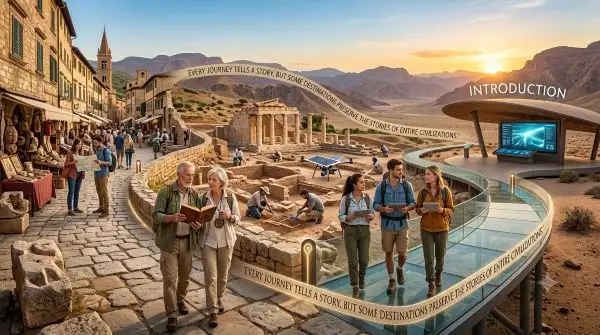
Established to protect sites of outstanding universal importance, the UNESCO World Heritage program has become one of the world’s most respected conservation initiatives. Today, more than 1,200 UNESCO World Heritage Sites are spread across over 160 countries, attracting millions of travelers, historians, photographers, and nature lovers every year. Whether you’re fascinated by ancient civilizations, iconic monuments, or spectacular landscapes, these destinations deserve a place on every travel bucket list.
In this guide, you’ll discover the 10 Amazing UNESCO World Heritage Sites to Visit in 2026, learn about their fascinating history, and find out why they continue to inspire visitors from around the globe.
The History of UNESCO World Heritage Sites
The story of UNESCO World Heritage Sites began after World War II, when many historic monuments and cultural treasures faced destruction due to war, urban development, and environmental challenges. Recognizing the need for global cooperation, the United Nations Educational, Scientific and Cultural Organization (UNESCO) was established in 1945 to promote peace through education, science, and culture.
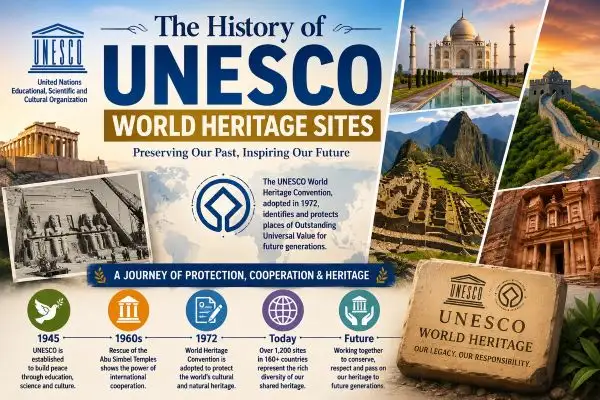
A turning point came during the 1960s with the rescue of the ancient temples of Abu Simbel in Egypt. Rising waters from the construction of the Aswan High Dam threatened to submerge these priceless monuments forever. UNESCO launched an unprecedented international campaign, bringing together experts and funding from countries around the world to carefully dismantle and relocate the temples to higher ground. The success of this project demonstrated that global cooperation could protect humanity’s shared heritage.
Inspired by this achievement, the World Heritage Convention was adopted in 1972. The convention created an international framework to identify, preserve, and protect places considered to have “Outstanding Universal Value.” Countries that join the convention agree to safeguard these sites not only for their own citizens but also for future generations worldwide.
Today, UNESCO World Heritage Sites include three main categories:
- Cultural Heritage Sites, such as ancient cities, temples, castles, and historic monuments.
- Natural Heritage Sites, including national parks, forests, coral reefs, and unique ecosystems.
- Mixed Heritage Sites, recognized for both their cultural significance and natural beauty.
These protected places are far more than tourist attractions. They preserve centuries of history, celebrate diverse cultures, safeguard endangered ecosystems, and promote sustainable tourism. Visiting these extraordinary destinations allows travelers to appreciate the remarkable achievements of humanity while supporting conservation efforts that ensure these treasures remain for future generations.
1. Great Wall of China, China
The Great Wall of China stands as one of the world’s greatest engineering achievements and one of the most recognizable UNESCO World Heritage Sites. Stretching more than 21,000 kilometers across northern China, the wall was constructed over several dynasties to defend the empire from invasions and protect important trade routes.

Construction began as early as the 7th century BC, but much of the structure visible today was built during the Ming Dynasty between the 14th and 17th centuries. Millions of workers, including soldiers, craftsmen, and local villagers, contributed to its construction under incredibly challenging conditions.
Beyond its military purpose, the Great Wall became a symbol of China’s determination, unity, and architectural excellence. Watchtowers, fortresses, and signal stations along the wall allowed soldiers to communicate rapidly across vast distances.
Today, popular sections like Badaling, Mutianyu, and Jinshanling welcome millions of visitors every year. Walking along the ancient stone pathways offers breathtaking mountain views while providing a unique opportunity to experience one of history’s most extraordinary engineering accomplishments.
Highlights
- World’s longest defensive structure
- Over 2,000 years of history
- Spectacular mountain scenery
- Symbol of Chinese civilization
2. Machu Picchu, Peru
Hidden high in the Andes Mountains, Machu Picchu is one of South America’s most breathtaking archaeological treasures. Built during the 15th century by the Inca Emperor Pachacuti, this remarkable city remained largely unknown to the outside world until American explorer Hiram Bingham introduced it internationally in 1911.
The site features precisely carved stone temples, royal residences, agricultural terraces, ceremonial plazas, and sophisticated water channels that demonstrate the remarkable engineering skills of the Inca civilization. Even after centuries, many structures remain perfectly aligned without the use of mortar.
Historians continue to debate Machu Picchu’s original purpose. Some believe it served as a royal estate, while others consider it an important religious and astronomical center.
Surrounded by lush cloud forests and towering peaks, Machu Picchu combines natural beauty with extraordinary historical significance. Sunrise over the ancient ruins remains one of the most unforgettable experiences for travelers visiting Peru.
Highlights
- Masterpiece of Inca architecture
- Stunning Andean mountain landscape
- Rich archaeological importance
- Incredible hiking opportunities
3. Pyramids of Giza, Egypt
The Pyramids of Giza are among the oldest and most famous UNESCO World Heritage Sites, standing proudly on the edge of the Sahara Desert near Cairo. Built more than 4,500 years ago, these monumental structures continue to amaze archaeologists and visitors alike.
The complex includes the Great Pyramid of Khufu, the Pyramid of Khafre, the Pyramid of Menkaure, and the legendary Great Sphinx. The Great Pyramid originally reached nearly 147 meters in height and remained the tallest man-made structure in the world for almost four millennia.
Constructed as royal tombs for ancient Egyptian pharaohs, the pyramids reflect extraordinary mathematical precision, advanced engineering techniques, and deep spiritual beliefs surrounding the afterlife.
Even after generations of archaeological study, experts continue to explore unanswered questions about how these extraordinary monuments were designed and constructed. Millions of visitors travel to Egypt every year to witness these iconic monuments and experience one of the greatest wonders of the ancient world.
Highlights
- Last surviving Ancient Wonder
- Over 4,500 years old
- Home to the Great Sphinx
- Outstanding ancient engineering
4. Taj Mahal, India
The Taj Mahal is widely regarded as one of the world’s most beautiful architectural masterpieces. Commissioned by Mughal Emperor Shah Jahan in memory of his beloved wife Mumtaz Mahal, construction began in 1632 and continued for more than twenty years.
Built entirely from shimmering white marble, the monument showcases a perfect blend of Persian, Islamic, and Indian architectural styles. Intricate floral carvings, elegant calligraphy, symmetrical gardens, and reflecting pools create an atmosphere of timeless beauty.
More than simply a mausoleum, the Taj Mahal represents eternal love and artistic perfection. As sunlight changes throughout the day, the marble appears to shift colors from soft pink at sunrise to brilliant white during the day and golden hues at sunset.
Today, millions of visitors from around the world travel to Agra to admire this extraordinary symbol of love and craftsmanship.
Highlights
- Icon of eternal love
- Spectacular Mughal architecture
- UNESCO masterpiece of cultural heritage
- Famous white marble monument
5. Historic Centre of Rome, Italy
Few destinations capture thousands of years of human civilization like the Historic Centre of Rome. Often called the “Eternal City,” Rome has served as the heart of one of history’s greatest empires while remaining a global center of culture, religion, and art.
Walking through Rome feels like traveling across different eras. Ancient landmarks such as the Colosseum, Roman Forum, Pantheon, and numerous historic churches stand alongside Renaissance palaces and vibrant public squares.
The city’s influence extends far beyond architecture. Roman law, engineering, politics, literature, and art shaped much of Western civilization, making Rome one of the world’s most historically significant destinations.
Visitors can spend days exploring ancient ruins, world-famous museums, charming streets, authentic Italian cuisine, and magnificent fountains, each revealing another chapter in Rome’s extraordinary story.
Highlights
- Home to iconic Roman landmarks
- Rich history spanning nearly 3,000 years
- Exceptional art and architecture
- One of Europe’s top cultural destinations
6. Petra, Jordan – The Rose-Red City of the Desert
Hidden among the rugged sandstone cliffs of southern Jordan, Petra is one of the most extraordinary UNESCO World Heritage Sites in the world. Founded by the Nabataean civilization more than 2,000 years ago, Petra became a thriving center for trade, connecting Arabia, Egypt, and the Mediterranean. Its strategic location allowed merchants to exchange valuable goods such as spices, silk, incense, and precious stones.
The journey into Petra begins through the narrow canyon known as the Siq, where towering rock walls lead visitors to the breathtaking Treasury (Al-Khazneh). Carved directly into rose-colored sandstone, the Treasury is one of the world’s most photographed monuments. Beyond it lie royal tombs, temples, amphitheaters, and ancient streets that reveal the city’s remarkable engineering and architectural achievements.
The Nabataeans also developed an advanced water management system using dams, reservoirs, and channels, allowing Petra to flourish in the desert. Although earthquakes and changing trade routes eventually led to its decline, Petra remains a timeless symbol of human creativity and resilience.
Highlights
- Stunning rock-cut architecture
- Ancient Nabataean civilization
- Famous Treasury monument
- Rich desert history and culture
7. Angkor Archaeological Park, Cambodia
The Angkor Archaeological Park is the heart of the ancient Khmer Empire and one of Southeast Asia’s greatest historical treasures. Covering hundreds of square kilometers, this magnificent archaeological complex contains hundreds of temples, reservoirs, bridges, and ancient cities that date from the 9th to the 15th centuries.
Its most famous landmark, Angkor Wat, is the world’s largest religious monument and a masterpiece of Khmer architecture. Originally dedicated to the Hindu god Vishnu, it later became an important Buddhist temple and remains Cambodia’s national symbol.
The temples feature intricate stone carvings, graceful towers, and impressive galleries depicting scenes from mythology, history, and daily life. Nearby temples such as Bayon, with its giant smiling stone faces, and Ta Prohm, where massive tree roots intertwine with ancient ruins, offer unforgettable experiences for visitors.
Angkor continues to amaze historians and travelers alike, showcasing the artistic brilliance and engineering excellence of one of Asia’s most powerful civilizations.
Highlights
- Home to Angkor Wat
- Largest religious monument on Earth
- Incredible Khmer architecture
- Beautiful jungle-covered temples
8. Serengeti National Park, Tanzania
While many UNESCO World Heritage Sites celebrate human history, the Serengeti National Park protects one of the world’s most spectacular natural ecosystems. Covering nearly 15,000 square kilometers across northern Tanzania, the Serengeti is internationally famous for its breathtaking wildlife and annual Great Migration.
Every year, more than two million wildebeest, zebras, and gazelles travel across the plains in search of fresh grazing lands. This incredible migration attracts predators such as lions, leopards, cheetahs, crocodiles, and hyenas, creating one of nature’s greatest wildlife spectacles.
Beyond its famous migration, the Serengeti supports hundreds of bird species, elephants, giraffes, buffalo, and endangered black rhinos. Conservation efforts have helped preserve this remarkable ecosystem while promoting sustainable tourism that benefits local communities.
Visitors can experience unforgettable game drives, hot-air balloon safaris, and stunning African sunsets across endless golden grasslands.
Highlights
- Great Migration wildlife spectacle
- Big Five safari destination
- Rich biodiversity
- Exceptional conservation success
9. Galápagos Islands, Ecuador
The Galápagos Islands are among the most unique natural UNESCO World Heritage Sites, famous for inspiring Charles Darwin’s theory of evolution. Located nearly 1,000 kilometers off Ecuador’s Pacific coast, this volcanic archipelago is home to wildlife found nowhere else on Earth.
Travelers have the rare opportunity to observe giant Galápagos tortoises, marine iguanas, blue-footed boobies, playful sea lions, Galápagos penguins, and vibrant tropical fish thriving freely in their protected island habitats. Because many animals evolved without fear of humans, wildlife viewing is remarkably close and unforgettable.
Strict conservation regulations protect the islands’ fragile ecosystems, limiting visitor numbers and promoting responsible tourism. Guided excursions allow travelers to explore volcanic landscapes, pristine beaches, crystal-clear waters, and extraordinary marine life while helping preserve this natural wonder for future generations.
The Galápagos remain one of the world’s greatest destinations for nature lovers, photographers, scientists, and adventure travelers.
Highlights
- Inspired Darwin’s theory of evolution
- Rare endemic wildlife
- Spectacular marine biodiversity
- Protected volcanic islands
10. Yellowstone National Park, United States
Established in 1872 as the world’s first national park, Yellowstone National Park is one of the most iconic natural UNESCO World Heritage Sites. Spanning Wyoming, Montana, and Idaho, Yellowstone is celebrated for its geothermal wonders, dramatic landscapes, and abundant wildlife.
The park contains more than half of the world’s active geysers, including the famous Old Faithful, which erupts regularly and attracts millions of visitors each year. Colorful hot springs such as the Grand Prismatic Spring display vibrant shades created by heat-loving microorganisms.
Yellowstone is also home to bison, wolves, elk, grizzly bears, moose, and bald eagles. Towering waterfalls, deep canyons, alpine lakes, and dense forests make it one of North America’s most spectacular outdoor destinations.
The park continues to play a vital role in wildlife conservation and scientific research while offering visitors unforgettable opportunities to experience the beauty of nature.
Highlights
- World’s first national park
- Famous geothermal features
- Incredible wildlife viewing
- Stunning landscapes year-round
Why UNESCO World Heritage Sites Matter
UNESCO World Heritage Sites preserve the world’s shared history, culture, and natural beauty for future generations. They protect ancient civilizations, architectural masterpieces, biodiversity, and fragile ecosystems that might otherwise disappear due to urbanization, climate change, pollution, or conflict.
These sites also encourage sustainable tourism by creating jobs, supporting local businesses, and raising awareness about conservation. Visiting responsibly helps fund preservation projects while allowing travelers to appreciate the remarkable diversity of our planet.
Essential Travel Tips for Visiting UNESCO World Heritage Sites
Planning ahead can make your journey more enjoyable and help protect these remarkable places.
- Plan your trip during the quieter shoulder months to enjoy comfortable weather, shorter lines, and a more relaxed sightseeing experience.
- Book tickets early for popular attractions such as the Taj Mahal, Machu Picchu, and Angkor Wat.
- Respect local customs, cultural traditions, and dress codes where applicable.
- Stay on designated paths to help preserve fragile archaeological sites and natural habitats.
- Bring a reusable water bottle and choose eco-friendly habits to help minimize plastic pollution during your trip.
- Hire licensed local guides to gain deeper historical insights and support local communities.
- Wear comfortable walking shoes, sunscreen, and weather-appropriate clothing.
- Follow photography rules, especially in religious or protected areas.
Responsible travel helps ensure these priceless destinations remain protected for future generations.
Frequently Asked Questions (FAQs)
What are UNESCO World Heritage Sites?
UNESCO World Heritage Sites are cultural, natural, or mixed locations recognized for their outstanding universal value. They are protected under the 1972 World Heritage Convention to preserve their importance for all humanity.
How many places are currently listed as UNESCO World Heritage Sites?
There are more than 1,200 UNESCO World Heritage Sites located across more than 160 countries, with new sites added as they meet UNESCO’s selection criteria.
Which country has the most UNESCO World Heritage Sites?
Italy has consistently ranked among the countries with the highest number of UNESCO World Heritage Sites, followed closely by countries such as China, Germany, France, and Spain.
Can anyone visit UNESCO World Heritage Sites?
Yes. Most UNESCO World Heritage Sites are open to visitors, although some have entry limits, seasonal restrictions, or conservation rules to protect their cultural or natural significance.
Why are UNESCO World Heritage Sites important?
They preserve humanity’s cultural achievements, protect extraordinary natural landscapes, support scientific research, promote sustainable tourism, and educate future generations about the world’s shared heritage.
Conclusion
The world’s UNESCO World Heritage Sites are far more than famous tourist attractions—they are living reminders of humanity’s greatest achievements and nature’s most extraordinary creations. From the towering Great Wall of China and the timeless beauty of the Taj Mahal to the wildlife-rich Serengeti National Park and the volcanic landscapes of the Galápagos Islands, each destination tells a unique story that has shaped our global heritage.
Exploring these remarkable places offers more than unforgettable travel experiences. It deepens our understanding of history, celebrates cultural diversity, and highlights the importance of protecting our planet for future generations. As you plan your 2026 adventures, consider adding these iconic landmarks to your itinerary and travel responsibly to help preserve their legacy.
Whether you’re a history enthusiast, a nature lover, or an avid explorer, these 10 Amazing UNESCO World Heritage Sites to Visit in 2026 promise memories that will last a lifetime.