
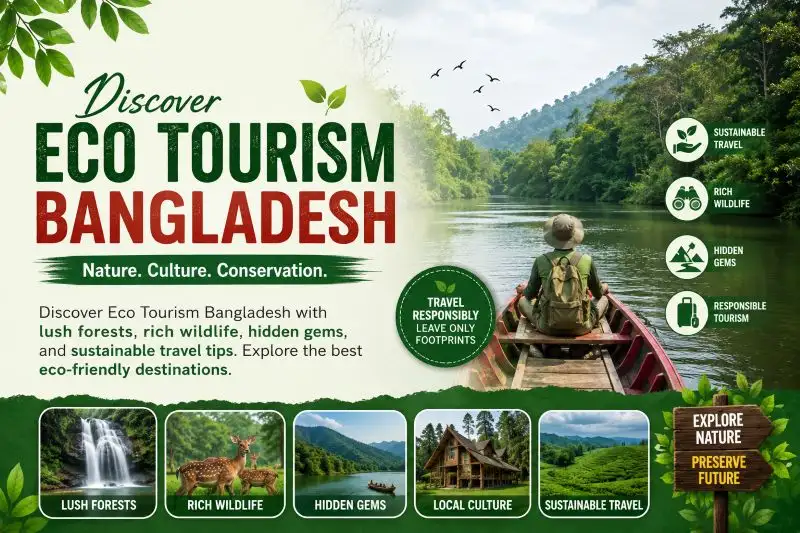
Discover Eco Tourism Bangladesh with lush forests, rich wildlife, hidden gems, and sustainable travel tips. Explore the best eco-friendly destinations .
Eco Tourism Bangladesh: Discover Nature’s Hidden Treasures
Bangladesh is a country blessed with extraordinary natural beauty, from the world’s largest mangrove forest to rolling green hills, peaceful wetlands, and diverse wildlife habitats. While many travelers know Bangladesh for its rich culture and historical landmarks, its growing eco-tourism sector offers a unique opportunity to experience nature while supporting environmental conservation and local communities.
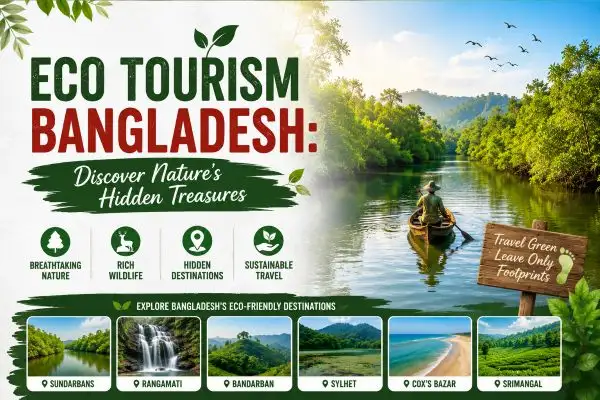
Today, Eco Tourism Bangladesh has become an attractive choice for travelers seeking meaningful, sustainable, and unforgettable adventures.
Unlike traditional tourism, eco-tourism focuses on protecting natural environments, respecting local traditions, and minimizing environmental impact. Visitors not only enjoy breathtaking landscapes but also contribute to preserving forests, wildlife, and rural livelihoods. Whether you’re a wildlife enthusiast, birdwatcher, photographer, or someone looking for a peaceful escape, Bangladesh offers countless eco-friendly destinations worth exploring.
In this guide, you’ll discover the history of eco-tourism in Bangladesh, understand why sustainable travel is becoming increasingly important, and explore some of the country’s most spectacular nature destinations that deserve a place on your travel list in 2026.
What Is Eco Tourism Bangladesh?
Eco Tourism Bangladesh is a form of responsible and sustainable travel that allows visitors to explore the country’s breathtaking natural landscapes while helping protect the environment and improve the well-being of local communities.
Rather than focusing solely on popular tourist attractions, eco-tourism encourages meaningful experiences in forests, wetlands, rivers, hills, mangrove ecosystems, and wildlife habitats. Travelers are inspired to respect local traditions, conserve biodiversity, reduce environmental impact, and support community-based tourism initiatives.
From the lush greenery of the Sundarbans and Lawachara National Park to the peaceful beauty of Ratargul Swamp Forest, eco-tourism highlights Bangladesh’s rich natural heritage.
By choosing eco-friendly accommodations, local guides, and sustainable travel practices, visitors contribute to wildlife conservation, cultural preservation, and long-term environmental protection, making Eco Tourism Bangladesh an ideal choice for nature lovers, adventure seekers, and responsible travelers alike.
This type of tourism promotes activities such as:
- Wildlife observation
- Bird watching
- Forest trekking
- Boat excursions
- Nature photography
- Village tourism
- Cultural experiences
- Environmental education
Eco-tourism also creates employment opportunities for local guides, small businesses, and rural families, ensuring that tourism benefits both nature and people.
A Brief History of Eco Tourism in Bangladesh
The roots of eco-tourism in Bangladesh can be traced back to the country’s growing awareness of environmental conservation during the late twentieth century. For many years, forests, wetlands, and wildlife reserves were valued primarily for their natural resources. However, increasing concerns about biodiversity loss and climate change encouraged a new approach that balanced tourism with conservation.
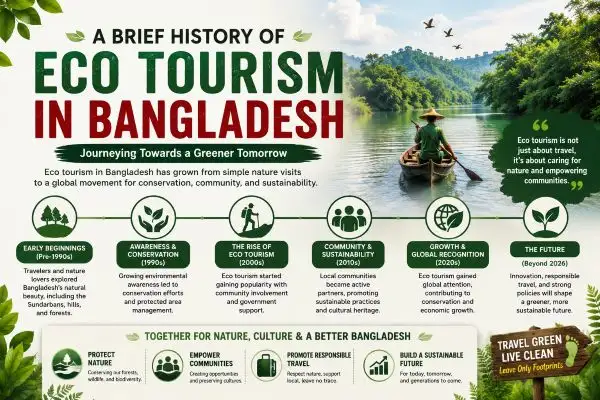
The declaration of protected forests, wildlife sanctuaries, and national parks laid the foundation for sustainable tourism development. Government agencies, conservation organizations, and local communities gradually began working together to protect valuable ecosystems while welcoming responsible visitors.
The recognition of the Sundarbans as a globally significant natural heritage site further increased international interest in Bangladesh’s ecological treasures. Over time, eco-tourism expanded beyond the Sundarbans to include hill forests, wetlands, tea gardens, and coastal islands.
Today, Bangladesh continues investing in sustainable tourism initiatives that encourage responsible travel, wildlife protection, and community participation. Eco-tourism has become an important part of the country’s tourism strategy, helping preserve natural landscapes while creating new economic opportunities for rural communities.
Why Eco Tourism Is Important
Eco-tourism is much more than visiting beautiful landscapes—it is a sustainable way of traveling that benefits nature, local communities, and future generations. Eco Tourism Bangladesh encourages travelers to explore forests, wetlands, rivers, and wildlife while helping protect fragile ecosystems and preserve biodiversity.

It also creates employment opportunities for local guides, artisans, and small businesses, improving rural livelihoods through responsible tourism. By promoting environmental awareness and respecting local traditions, eco-tourism helps conserve Bangladesh’s rich natural and cultural heritage.
Choosing eco-friendly travel supports sustainable development, reduces environmental impact, and ensures that the country’s remarkable destinations remain healthy, vibrant, and accessible for future visitors to enjoy.
Some of its most important benefits include:
Protecting Wildlife
Responsible tourism generates awareness about endangered animals and encourages the conservation of forests, wetlands, and marine ecosystems.
Supporting Local Communities
Many eco-tourism projects create jobs for local guides, boat operators, artisans, and family-owned guesthouses, helping rural communities improve their livelihoods.
Conserving Natural Resources
Eco-friendly travel encourages visitors to reduce waste, avoid pollution, and protect fragile ecosystems for future generations.
Promoting Environmental Education
Visitors gain a deeper understanding of biodiversity, climate change, and conservation through guided tours and educational programs.
Encouraging Sustainable Development
Eco-tourism balances economic growth with environmental protection, ensuring that tourism remains beneficial without damaging natural habitats.
Top Eco Tourism Destinations in Bangladesh
1. The Sundarbans Mangrove Forest
The Sundarbans is the crown jewel of Eco Tourism Bangladesh and one of the country’s most extraordinary natural wonders. As the world’s largest mangrove forest, it stretches across southern Bangladesh and provides a unique ecosystem where rivers, forests, and tidal waterways merge into an incredible landscape.
This UNESCO-recognized natural treasure is home to the famous Royal Bengal Tiger, spotted deer, crocodiles, fishing cats, wild boars, monkeys, and hundreds of bird species. Travelers can explore the forest by boat, passing through narrow canals surrounded by dense mangrove trees.
The Sundarbans offers unforgettable opportunities for wildlife photography, bird watching, and learning about one of the world’s most important coastal ecosystems. Guided eco-tours help visitors experience the forest responsibly while supporting conservation efforts.
Best activities:
- Wildlife cruises
- Bird watching
- Nature photography
- Forest exploration
- Eco boat tours
2. Lawachara National Park
Located in northeastern Bangladesh, Lawachara National Park is one of the country’s oldest protected forests and a paradise for nature lovers.
Its tropical rainforest shelters rare wildlife, including the endangered Western Hoolock Gibbon, barking deer, slow loris, colorful butterflies, and numerous bird species. Dense green forests, walking trails, and peaceful surroundings make it one of the finest eco-tourism destinations in Bangladesh.
Visitors can enjoy guided forest walks while learning about medicinal plants, biodiversity, and conservation programs managed by local communities.
Nearby Indigenous communities offer visitors a chance to discover age-old traditions, authentic daily life, and rich cultural heritage, turning each journey into an enriching and unforgettable experience.
Best activities:
- Jungle trekking
- Wildlife observation
- Bird watching
- Photography
- Cultural village visits
3. Ratargul Swamp Forest
Known as Bangladesh’s only freshwater swamp forest, Ratargul is a hidden natural gem located in Sylhet.
During the rainy season, much of the forest becomes submerged, allowing visitors to glide silently through flooded trees in small wooden boats. The calm waters reflect the lush green canopy above, creating one of the country’s most magical landscapes.
Ratargul supports a wide variety of fish, birds, reptiles, and aquatic plants, making it an excellent destination for eco-tourism and wildlife observation.
Because of its peaceful atmosphere and untouched beauty, Ratargul continues to attract photographers, birdwatchers, and travelers looking to connect with nature away from crowded tourist attractions.
4. Nijhum Dwip National Park
Nijhum Dwip National Park is one of the most peaceful eco-tourism destinations in southern Bangladesh. Located in the Bay of Bengal, this beautiful island is known for its quiet beaches, coastal forests, mangrove vegetation, and thriving wildlife. The name “Nijhum,” meaning “silent,” perfectly reflects the island’s calm and relaxing atmosphere.
The park is especially famous for its large population of spotted deer, which can often be seen grazing in open grasslands during the early morning and late afternoon. Birdwatchers will also enjoy spotting migratory birds that arrive during the winter months, making the island a paradise for wildlife enthusiasts and photographers.
Visitors can explore the island by bicycle, take guided boat tours through nearby waterways, or simply enjoy the peaceful coastal scenery. The local fishing communities warmly welcome visitors, offering an authentic glimpse into their traditional lifestyle and culture.
Best activities:
- Deer watching
- Bird watching
- Cycling around the island
- Boat excursions
- Nature photography
- Exploring local fishing villages
5. Sreemangal
Often called the “Tea Capital of Bangladesh,” Sreemangal is a perfect destination for travelers who appreciate nature, fresh air, and peaceful surroundings. Endless green tea gardens, rolling hills, lemon orchards, and tropical forests create breathtaking scenery throughout the region.
Sreemangal is also home to several eco-friendly attractions, including forest reserves, wetlands, and wildlife habitats. Visitors can enjoy walking through tea plantations, observing local tea production, and exploring nearby forests filled with birds, butterflies, and native plants.
The area is also rich in cultural diversity, with indigenous communities preserving their traditional customs, handicrafts, and cuisines. Local eco-lodges and community-based tourism initiatives encourage responsible travel while supporting sustainable economic development.
Whether you’re seeking relaxation or adventure, Sreemangal offers an unforgettable eco-tourism experience surrounded by natural beauty.
Best activities:
- Tea garden tours
- Forest hiking
- Bird watching
- Cycling
- Photography
- Cultural experiences
6. Tanguar Haor
Tanguar Haor is one of Bangladesh’s most remarkable freshwater wetlands and a paradise for birdwatchers and nature enthusiasts. Located in Sunamganj, this vast seasonal wetland transforms into a breathtaking inland sea during the monsoon.
It supports hundreds of migratory birds, native fish species, and diverse aquatic plants. Visitors can enjoy peaceful boat rides, stunning sunrise and sunset views, and the tranquil beauty of rural landscapes while learning about the importance of wetland conservation.
Best Activities:
- Bird watching
- Traditional boat tours
- Nature photography
- Fishing village visits
- Camping (where permitted)
7. Hakaluki Haor
Hakaluki Haor is one of South Asia’s largest wetland ecosystems and an outstanding destination for eco-tourism. The area is famous for its rich biodiversity, featuring numerous migratory birds, freshwater fish, and aquatic vegetation.
During winter, thousands of birds from different parts of the world arrive here, making it a dream destination for wildlife photographers and bird lovers.
Best Activities:
- Bird watching
- Wildlife photography
- Boat excursions
- Exploring wetland ecosystems
- Nature observation
8. Kaptai National Park
Nestled in the scenic Chattogram Hill Tracts, Kaptai National Park offers lush evergreen forests, rolling hills, and abundant wildlife. The park is home to monkeys, deer, colorful birds, butterflies, and many native plant species. Well-maintained walking trails allow visitors to experience the peaceful forest while enjoying fresh mountain air and spectacular natural scenery.
Best Activities:
- Forest trekking
- Wildlife spotting
- Hiking
- Nature photography
- Bird watching
9. Madhupur National Park
Located in central Bangladesh, Madhupur National Park is renowned for its dense Sal forests and diverse wildlife. The park provides a refreshing escape from busy city life and offers visitors the chance to explore scenic forest trails, observe native birds, and learn about local Indigenous communities. Its peaceful environment makes it an ideal destination for eco-friendly adventures.
Best Activities:
- Hiking through Sal forests
- Bird watching
- Cycling
- Wildlife observation
- Cultural visits to nearby villages
10. Saint Martin’s Island
Saint Martin’s Island is Bangladesh’s only coral island and one of its most beautiful coastal eco-tourism destinations. Surrounded by crystal-clear waters and sandy beaches, the island is rich in marine biodiversity. Visitors can enjoy snorkeling, beach walks, and breathtaking sunsets while helping protect the island’s fragile coral ecosystem through responsible tourism practices.
Best Activities:
- Snorkeling
- Beach walks
- Marine life observation
- Sunrise and sunset photography
- Eco-friendly island tours
Benefits of Eco Tourism Bangladesh
The steady growth of Eco Tourism Bangladesh brings significant advantages for nature, local communities, and the national economy. It helps protect forests, wetlands, wildlife, and biodiversity while encouraging sustainable travel practices.
Eco-tourism also creates employment opportunities for local guides, artisans, transport providers, and eco-friendly accommodations, improving rural livelihoods. In addition, it promotes cultural preservation, environmental awareness, and responsible tourism.
By supporting conservation efforts and community-based initiatives, eco-tourism ensures that Bangladesh’s natural beauty and rich heritage can be enjoyed by future generations while contributing to sustainable economic development.
Protects Biodiversity
Responsible tourism helps safeguard forests, wetlands, rivers, and wildlife habitats. Entrance fees and conservation projects contribute to protecting endangered species and preserving natural ecosystems.
Supports Local Economies
Eco-tourism creates employment opportunities for local guides, transport providers, artisans, restaurant owners, and eco-lodge operators. Tourism income helps improve living standards in rural communities while encouraging sustainable businesses.
Encourages Environmental Awareness
Visitors gain valuable knowledge about conservation, climate change, biodiversity, and responsible travel. These experiences inspire travelers to make environmentally friendly choices long after their journey ends.
Preserves Cultural Heritage
Many eco-tourism destinations allow visitors to experience local traditions, indigenous cultures, folk crafts, and regional cuisine. This helps preserve cultural identity while generating additional income for local families.
Promotes Sustainable Development
Eco-tourism encourages balanced development by protecting natural resources while supporting economic growth. It ensures that future generations can continue enjoying Bangladesh’s remarkable landscapes.
The Future of Eco Tourism Bangladesh
The future of Eco Tourism Bangladesh is full of promise. As global interest in sustainable travel continues to grow, Bangladesh is gaining recognition for its unique biodiversity, scenic landscapes, and community-based tourism initiatives.
Ongoing efforts to improve eco-friendly infrastructure, protect wildlife, and involve local communities are helping create a more sustainable tourism industry. Increased awareness among travelers is also encouraging environmentally responsible travel choices that benefit both nature and local economies.
By promoting conservation, supporting rural livelihoods, and preserving cultural heritage, eco-tourism can become one of Bangladesh’s strongest tourism sectors in the years ahead. With careful planning and responsible management, the country has the potential to become one of South Asia’s leading eco-tourism destinations.
Conclusion
Eco Tourism Bangladesh offers far more than beautiful scenery—it provides meaningful experiences that connect travelers with nature, wildlife, and local communities. From the majestic Sundarbans and the peaceful Ratargul Swamp Forest to the lush tea gardens of Sreemangal and the tranquil shores of Nijhum Dwip, each destination showcases the country’s incredible ecological diversity.
Choosing eco-friendly travel not only creates unforgettable memories but also contributes to the protection of forests, wildlife, and cultural traditions. As sustainable tourism continues to expand, every responsible traveler has the opportunity to support conservation while discovering some of Bangladesh’s most remarkable natural treasures.
If you’re planning your next adventure in 2026, let Eco Tourism Bangladesh inspire a journey that is both exciting and environmentally responsible—one that leaves a positive impact on the places you visit and the people who call them home.
Frequently Asked Questions (FAQ) About Eco Tourism Bangladesh
1. What is Eco Tourism Bangladesh?
Eco Tourism Bangladesh is a form of responsible travel that focuses on exploring the country’s natural landscapes while protecting the environment and supporting local communities. It encourages sustainable tourism, wildlife conservation, and respect for local cultures.
2. What are the best eco-tourism destinations in Bangladesh?
Some of the top eco-tourism destinations include the Sundarbans Mangrove Forest, Lawachara National Park, Ratargul Swamp Forest, Sreemangal, Nijhum Dwip National Park, Tanguar Haor, Hakaluki Haor, Kaptai National Park, Madhupur National Park, and Saint Martin’s Island.
3. Why is eco-tourism important in Bangladesh?
Eco-tourism helps protect biodiversity, conserves forests and wildlife, supports local communities, creates employment opportunities, and promotes sustainable travel. It inspires travelers to protect natural ecosystems while supporting the preservation of local traditions, cultural heritage, and sustainable living for future generations.
4. When is the best time to visit eco-tourism destinations in Bangladesh?
The ideal time is October to March, when the weather is cool and comfortable. Winter is especially popular for birdwatching in wetlands, while the monsoon season offers spectacular views of swamp forests like Ratargul.
5. What activities can travelers enjoy during eco-tourism in Bangladesh?
Travelers can enjoy unforgettable experiences, including wildlife observation, birdwatching, rainforest trekking, scenic hiking, peaceful boat cruises, kayaking, nature photography, camping, tea garden tours, cultural village visits, and exploring Bangladesh’s stunning national parks, wetlands, and protected natural reserves.
6. How can tourists travel responsibly in Bangladesh?
Travelers should avoid littering, use reusable items, respect wildlife, stay on designated trails, support local businesses, reduce plastic waste, and follow park regulations to minimize their environmental impact.
7. Is Eco Tourism Bangladesh suitable for families and solo travelers?
Yes. Many eco-tourism destinations are suitable for families, couples, solo travelers, photographers, and adventure enthusiasts. Guided tours and eco-lodges make exploring these natural attractions both safe and enjoyable.
8. How does eco-tourism benefit local communities?
Eco-tourism generates income for local guides, small businesses, artisans, transport providers, and eco-lodges. It also encourages community-based tourism, helping preserve traditional culture while improving livelihoods.
9. What wildlife can visitors see during eco-tourism in Bangladesh?
Depending on the destination, travelers may spot the Royal Bengal Tiger, spotted deer, hoolock gibbons, crocodiles, dolphins, otters, monkeys, turtles, butterflies, and hundreds of resident and migratory bird species.
10. Why should you choose Eco Tourism Bangladesh for your next trip?
Eco Tourism Bangladesh offers a unique blend of breathtaking natural beauty, rich biodiversity, authentic cultural experiences, and sustainable travel opportunities. It allows visitors to enjoy unforgettable adventures while contributing to environmental conservation and the well-being of local communities, making every journey both meaningful and rewarding.