
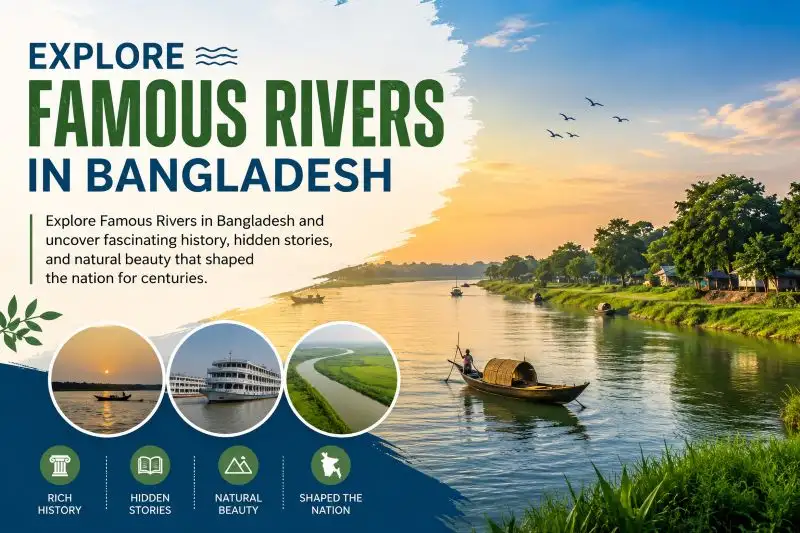
Explore Famous Rivers in Bangladesh and uncover fascinating history, hidden stories, and natural beauty that shaped the nation for centuries.
Introduction
Bangladesh is often called the “Land of Rivers,” and for good reason. Rivers are the lifeblood of the country, shaping its geography, culture, economy, and way of life for thousands of years.
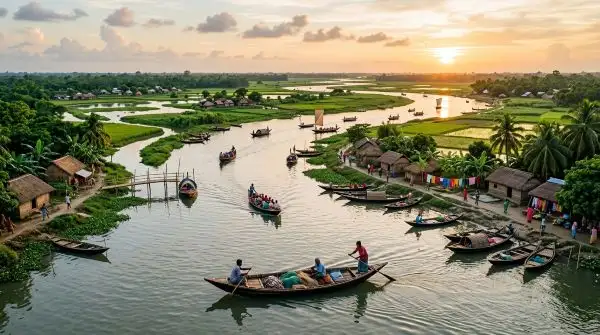
From the powerful Padma and Jamuna to the picturesque Karnaphuli and Surma, these rivers have shaped countless aspects of life in Bangladesh, including farming, trade, cultural heritage, and traditional customs.Today, Bangladesh is home to one of the world’s largest river networks.
Hundreds of rivers flow across the country, creating fertile plains, supporting millions of livelihoods, and providing breathtaking natural landscapes. Whether you are a traveler, geography enthusiast, student, or someone curious about Bangladesh‘s natural heritage, understanding these rivers offers a fascinating glimpse into the nation’s identity.
In this guide, we explore the most famous rivers in Bangladesh, their history, cultural significance, economic importance, and the unique beauty that makes each one special.
Why Rivers Are So Important in Bangladesh
Bangladesh sits at the heart of the world’s largest delta system, formed by the Ganges, Brahmaputra, and Meghna river networks. These rivers bring nutrient-rich sediment from the Himalayas, creating fertile land that supports one of the most densely populated countries on Earth.
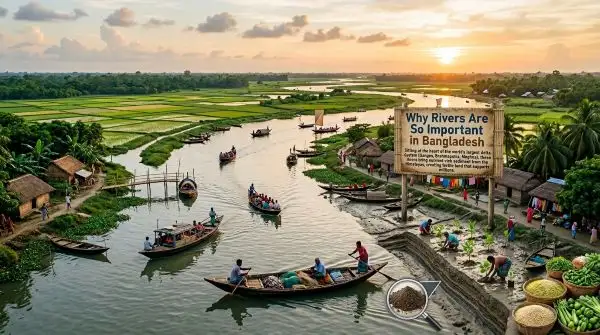
Rivers in Bangladesh provide:
- Fresh water for millions of people
- Irrigation for agriculture
- Transportation routes
- Fish and aquatic resources
- Tourism opportunities
- Natural habitats for wildlife
Without rivers, Bangladesh would be a completely different country.
1. Padma River – The Symbol of Bangladesh
The Padma River is one of the most famous rivers in Bangladesh and a key branch of the Ganges after it enters the country from India. Known for its powerful flow and vast water body, it plays a vital role in agriculture, transportation, fishing, and trade. The river also holds deep cultural and historical importance in Bangladesh.

History of the Padma River
The Padma River has been one of the most influential waterways in Bangladesh and the Bengal region for centuries. As the main branch of the Ganges River within Bangladesh, it has supported human settlements, agriculture, and trade since ancient times.
The fertile lands along its banks encouraged communities to establish villages and thriving marketplaces, helping shape the region’s economic development. Historically, the Padma served as a major transportation route, allowing merchants to move goods between different parts of Bengal.
Beyond its economic value, the river holds deep cultural significance, inspiring literature, folk songs, poetry, and artistic works that celebrate its beauty, strength, and enduring connection to Bangladeshi life.
Economic Importance
The river supports:
- Agriculture
- Fishing communities
- River transportation
- Local businesses
- Trade activities
The construction of the Padma Bridge further increased the river’s significance by connecting southwestern Bangladesh with the rest of the country.
Natural Beauty
During sunrise and sunset, the Padma River offers stunning views. Its vast waters, fishing boats, and surrounding rural landscapes create unforgettable scenery.
2. Jamuna River – The Mighty Giant
The Jamuna River is one of the largest and most powerful rivers in Bangladesh, carrying immense volumes of water throughout the year. As the main channel of the Brahmaputra River within Bangladesh, it plays a crucial role in agriculture, transportation, fishing, and trade while supporting millions of people living along its banks.
Historical Background
For centuries, the Jamuna River has served as a crucial transportation route in Bangladesh. Its banks attracted early settlements, where villages, bustling markets, and trade centers gradually developed. Easy water access made movement of goods and people simpler, helping regional commerce grow and shaping local economic and cultural development over time.
Unique Features
The river is known for:
- Massive width during monsoon seasons
- Strong currents
- Changing river channels
- Formation of river islands known as chars
Importance to Local Communities
Thousands of families depend on the Jamuna for:
- Fishing
- Farming
- Transportation
- Livestock grazing
Despite seasonal flooding, the river remains a vital source of livelihood.
3. Meghna River – Lifeline of Eastern Bangladesh
The Meghna River is a vital waterway in Bangladesh and a major part of the Ganges-Brahmaputra-Meghna river system. It flows through eastern regions, supporting agriculture, fishing, and transportation. Known for its wide estuary and strong currents, the river plays an essential role in the economy, ecology, and livelihoods of millions of people.
Historical Significance
For centuries, the Meghna River has played a vital role in connecting eastern Bangladesh with important commercial hubs. It served as a major trade route where merchants transported rice, textiles, spices, and other goods.
This historic waterway helped expand regional trade, strengthen local economies, and support the growth of settlements along its banks over time.
Economic Contributions
The Meghna supports:
- Commercial fishing
- Cargo transport
- Agriculture
- Regional trade
Wildlife and Ecology
The river estuary supports a diverse ecosystem. Numerous fish species, migratory birds, and aquatic creatures depend on the Meghna’s waters.
Its rich biodiversity makes it one of Bangladesh’s most environmentally important rivers.
4. Brahmaputra River – Ancient Lifeline of South Asia
The Brahmaputra River is one of the oldest and most powerful rivers in Asia. Originating from Tibet, it flows through India before entering Bangladesh, where it becomes the Jamuna River.
This massive waterway plays a key role in agriculture, transportation, and floodplain fertility, while supporting millions of people and shaping the region’s geography and economy for centuries.
Historical Importance
For thousands of years, the river has been a vital resource for human civilization, supporting early settlements, agriculture, and trade. Ancient communities depended on its waters for irrigation, fishing, and transportation, while its fertile floodplains encouraged population growth and economic development throughout the region, shaping local history and culture.
Cultural Impact
The Brahmaputra River holds deep cultural significance in Bangladesh and surrounding regions. Numerous local legends, folk tales, and traditional songs are inspired by its powerful flow. Communities living along its banks have developed unique customs, festivals, and lifestyles closely linked to the river’s seasonal changes.
These traditions reflect the strong cultural bond between people and the river over generations.
Economic Benefits
The river contributes significantly to:
- Agriculture
- Fisheries
- River transport
- Floodplain fertility
Its enormous water volume makes it one of the most influential rivers in Asia.
5. Karnaphuli River – Gateway to International Trade
The Karnaphuli River is a major waterway in southeastern Bangladesh and plays a vital role in the country’s maritime economy. Flowing through the Chattogram region, it supports the busiest seaport and international trade activities.
The river also contributes to shipping, industry, fishing, and transportation, making it a key driver of economic growth and regional development in Bangladesh.
History
The Karnaphuli River has played a vital role in shaping the growth of Chattogram, the largest seaport city of Bangladesh. For centuries, it served as a key waterway for international trade, allowing merchants to transport goods such as textiles, spices, and raw materials. Its strategic location helped establish Chattogram as a major commercial and shipping hub in the region.
Modern Importance
Today, the river supports:
- Shipping operations
- Industrial development
- Port activities
- International commerce
Scenic Attractions
The Karnaphuli River and nearby Kaptai Lake are among the most beautiful tourist attractions in Bangladesh, drawing thousands of visitors every year. Surrounded by lush green hills, calm waters, and winding waterways, the area offers breathtaking natural scenery.
This combination of river and lake landscapes makes it a popular destination for nature lovers, photographers, and travelers seeking peaceful beauty.
6. Teesta River – Lifeline of Northern Bangladesh
The Teesta River is a crucial water source in northern Bangladesh, supporting agriculture, irrigation, and rural livelihoods. Flowing through fertile plains, it helps farmers grow rice, vegetables, and other crops that sustain local communities.
The river also plays an important role in maintaining ecological balance, while its seasonal flow shapes farming patterns and life in the region.
Historical Evolution
Over time, the river has naturally changed its course multiple times due to erosion, sediment buildup, and seasonal flooding. These continuous shifts have significantly influenced surrounding agriculture, settlement patterns, and local economies.
Communities along its banks adapted to the changing river paths, which shaped land use, farming practices, and the development of nearby villages and trade areas over centuries.
Agricultural Importance
The Teesta provides water for:
- Rice cultivation
- Vegetable farming
- Irrigation projects
- Rural communities
Natural Beauty
During the rainy season, the river becomes even more stunning as its water levels rise and the surrounding landscape turns lush and green. Fresh vegetation, fertile fields, and vibrant natural scenery create a refreshing atmosphere along its banks.
This seasonal transformation highlights the river’s natural charm, making it a beautiful attraction for visitors and nature lovers in Bangladesh.
7. Surma River – Cultural Treasure of Sylhet
The Surma River is a vital waterway flowing through the Sylhet region in northeastern Bangladesh. It supports agriculture, fishing, and local transportation while enriching the livelihoods of nearby communities.
Known for its scenic beauty and calm flow, the river also holds cultural and historical importance, making it an essential part of Sylhet’s identity and natural heritage.
Historical Significance
The river has played an important role for centuries as a natural transportation route in Bangladesh. It connected rural villages with major urban centers, making trade, travel, and communication easier.
This waterway helped farmers, merchants, and local communities move goods efficiently, supporting economic growth and strengthening social and cultural connections across different regions of the country over time.
Role in Sylhet’s Economy
The Surma supports:
- Agriculture
- Fishing
- Tourism
- Local transportation
Scenic Charm
The river is widely admired for its calm, peaceful waters and breathtaking natural surroundings. Lush green tea gardens and rolling landscapes along its banks create a stunning visual experience, making it one of the most picturesque rivers in Bangladesh.
This natural beauty attracts visitors, photographers, and nature lovers who seek tranquility and scenic river views.
8. Buriganga River – The Historic River of Dhaka
The Buriganga River is deeply connected with the history and development of Dhaka, the capital of Bangladesh. It once served as a major trade and transportation route during the Mughal era, helping the city grow into a commercial hub.
Despite environmental challenges today, the riverremains an important part of Dhaka’s heritage, economy, and cultural identity.
Historical Importance
The Buriganga River played a crucial role in the historical development of Dhaka, helping it grow into a major commercial city due to its strategic riverside location. During the Mughal period, it served as a vital transportation route where merchants and traders moved goods across Bengal.
This river supported trade expansion, urban growth, and economic prosperity for centuries.
Economic Role
The river remains important for:
- Transportation
- Trade
- Commerce
- Industrial activities
Although environmental challenges exist today, the Buriganga continues to be part of Dhaka’s identity.
9. Shitalakshya River – A River of Trade and Industry
The Shitalakshya River flows through Narayanganj, one of Bangladesh’s major industrial and commercial hubs. For centuries, it has supported trade, shipping, and manufacturing activities, helping the region grow economically.
The river plays a key role in transporting goods, sustaining industries, and connecting business centers, making it an important part of Bangladesh’s economic development and river-based commerce.
Historical Role
The Shitalakshya River played a key role in transforming Narayanganj into one of Bangladesh’s most important business and industrial centers. For centuries, it supported trade, transportation, and manufacturing activities along its banks.
Its strategic location helped attract merchants and industries, driving economic growth and establishing Narayanganj as a major hub for commerce and river-based business development.
Economic Contributions
It supports:
- Manufacturing
- Shipping
- Trade
- Industrial development
Its strategic location continues to make it valuable to the national economy.
How Rivers Shaped Bangladesh’s Culture
Rivers have deeply influenced nearly every part of Bangladeshi culture and daily life. From traditional folk songs and poetry to paintings, stories, and seasonal festivals, waterways are a constant source of inspiration. Many renowned writers and poets have beautifully described the rivers of Bangladesh, highlighting their beauty, power, and emotional connection with people.
River life is not just history—it remains a living culture. Fishing communities continue their ancestral livelihoods, while boat races, known as “Nouka Baich,” attract huge crowds during monsoon seasons. Riverside markets also remain active social and economic hubs where people gather, trade, and connect.
These long-standing traditions reflect how rivers continue to shape identity, heritage, and community life across Bangladesh for generations.
The Role of Rivers in Agriculture
Bangladesh’s agricultural success depends heavily on its vast network of rivers. These rivers provide natural irrigation, especially during the dry season, helping farmers grow rice, jute, vegetables, and other essential crops. Each year, monsoon flooding deposits nutrient-rich silt across floodplains, making the soil highly fertile and productive.
This natural process supports one of the most intensive farming systems in South Asia. Rivers also supply fresh water for livestock and aquaculture, boosting rural livelihoods. Without these waterways, Bangladesh’s food production, rural economy, and overall agricultural growth would not be as strong or sustainable as it is today.
Benefits include:
- Fertile soil deposits
- Natural irrigation
- Water supply
- Support for fisheries
The annual flooding cycle enriches farmland and contributes to crop production across the country.
River Tourism in Bangladesh
River tourism is becoming increasingly popular. Visitors can enjoy:
- Boat cruises
- Riverside photography
- Fishing experiences
- Wildlife observation
- Cultural tours
Destinations such as the Padma, Meghna, Karnaphuli, and Surma rivers attract travelers seeking authentic Bangladeshi experiences.
Environmental Challenges Facing Rivers
Despite their importance, many rivers face significant challenges:
- Pollution
- Encroachment
- Climate change
- Sedimentation
- Loss of biodiversity
Protecting these rivers is essential for future generations.
Conservation Efforts
Government agencies, environmental organizations, and local communities are working to:
- Reduce pollution
- Improve water quality
- Restore habitats
- Promote sustainable river management
These efforts help preserve Bangladesh’s invaluable river ecosystems.
Conclusion
The famous rivers in Bangladesh are not just natural waterways; they are the backbone of the nation’s history, culture, economy, and environment. From the powerful Padma and Jamuna to the scenic Surma, Karnaphuli, and other major rivers, each one carries a unique story of human settlement, trade, and cultural development.
These rivers have shaped agriculture, supported livelihoods, and influenced traditions for centuries. As Bangladesh continues to develop, the protection and sustainable management of these rivers become more important than ever.
Preserving them ensures food security, biodiversity, and cultural heritage for future generations. With proper care and awareness, Bangladesh can continue to thrive as the true “Land of Rivers” for many years to come.
FAQ – Famous Rivers in Bangladesh
1. What makes the rivers of Bangladesh so famous?
The rivers of Bangladesh are famous for their vast network, natural beauty, and life-supporting role. They shape agriculture, transport, culture, and the economy, making them essential to everyday life.
2. How many major rivers are there in Bangladesh?
Bangladesh has hundreds of rivers and tributaries. Among them, major rivers like the Padma, Jamuna, Meghna, Brahmaputra, Karnaphuli, Teesta, and Surma are the most well-known and important.
3. Why are rivers important for Bangladesh?
Rivers provide water for farming, support fishing, enable transportation, and help trade and industry. They also maintain soil fertility through seasonal flooding.
4. Which river is considered the most important in Bangladesh?
The Padma River is often considered one of the most important rivers due to its size, economic value, and connection with agriculture and transportation networks.
5. How do rivers influence Bangladeshi culture?
Rivers strongly influence culture through folk songs, literature, boat races, festivals, and riverside traditions that have existed for generations.
6. Are Bangladesh rivers good for tourism?
Yes, many rivers are popular for tourism. Visitors enjoy boat trips, scenic views, fishing experiences, and natural landscapes, especially during the monsoon season.
7. What environmental issues affect rivers in Bangladesh?
Many rivers face pollution, illegal encroachment, and the effects of climate change, which impact water quality and biodiversity.
8. Why Bangladesh Is Known as the “Land of Rivers”?
Bangladesh is called the “Land of Rivers” because of its dense river network and its position in one of the largest delta systems in the world.