
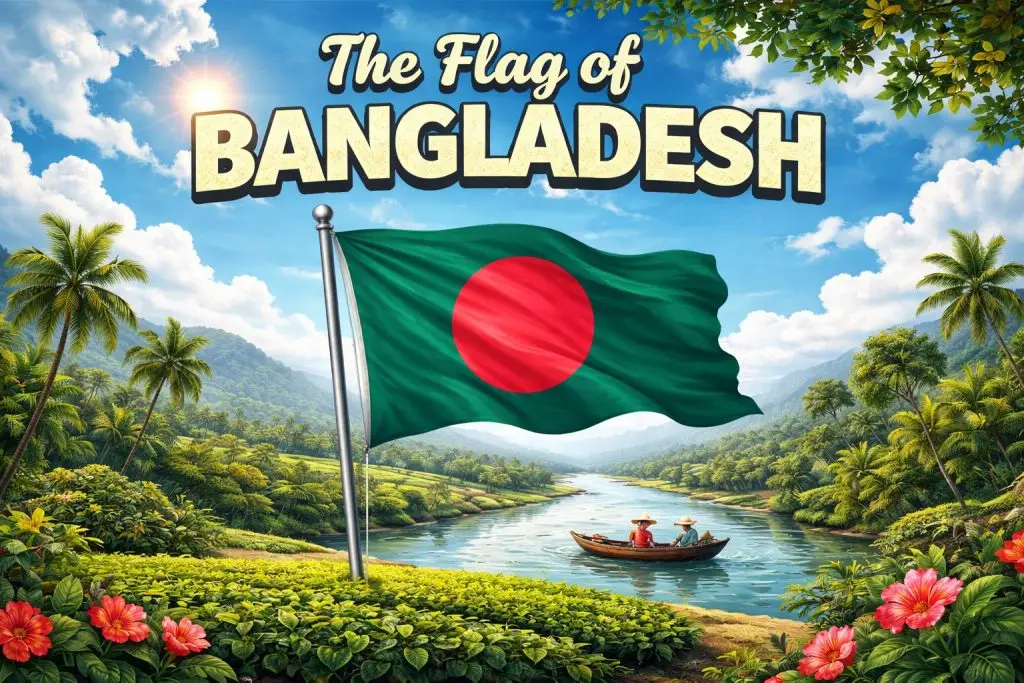
Discover the Flag of Bangladesh: explore 7 powerful facts, its deep meaning, and rich history behind this proud national symbol.
Introduction: The Flag of Bangladesh
The Flag of Bangladesh is one of the most meaningful national symbols, representing the country’s identity, rich history, and deep sense of pride. Though simple in its design, the flag carries a powerful message that reflects the journey of a nation built on sacrifice, courage, and hope. Its green field and red circle are more than just colors—they symbolize the natural beauty of the land and the blood of those who fought for independence. From its origins during the historic Liberation War of 1971 to its importance in present-day Bangladesh, the flag stands as a constant reminder of resilience and unity.
Over the years, the Flag of Bangladesh has become a source of inspiration for millions, uniting people across generations and backgrounds. It is proudly displayed during national celebrations, cultural events, and moments of remembrance, strengthening the bond among citizens.
In this SEO-optimized guide, we will explore 7 powerful facts about the Flag of Bangladesh. You will learn about its history, deep meaning, unique symbolism, and its vital role in shaping national identity and pride.
History of the Flag of Bangladesh in Detail
The journey of the Flag of Bangladesh is deeply connected to the nation’s struggle for independence and its desire for self-identity. Before 1971, Bangladesh was known as East Pakistan and did not have a separate national flag to represent its people, culture, or aspirations. As political tensions grew and the call for independence became stronger, the need for a distinct national symbol became increasingly important.
In response, a group of student leaders from Dhaka University took a bold step to create a flag that would reflect the hopes and dreams of the people. Their design quickly became a powerful emblem of resistance and unity. The first version of the flag was officially unveiled in March 1971, just before the Liberation War began. It was widely embraced by protesters and freedom fighters, who carried it as a symbol of their struggle for freedom.
After the victory in December 1971 and the birth of an independent Bangladesh, the government made slight modifications to the original design to simplify it. The updated version was officially adopted as the national flag.
This transformation marked a historic turning point, as the flag became a lasting symbol of sovereignty, sacrifice, and national pride.
Why the Flag of Bangladesh is Unique
The Flag of Bangladesh is truly unique, standing out among the flags of the world because of its simplicity, elegance, and profound symbolism. While many national flags feature intricate patterns, multiple colors, or complex emblems, the flag of Bangladesh uses just two colors—a rich green field and a red circle—combined with a minimalist design. This simplicity makes the flag instantly recognizable and memorable, yet its meaning is deeply powerful.
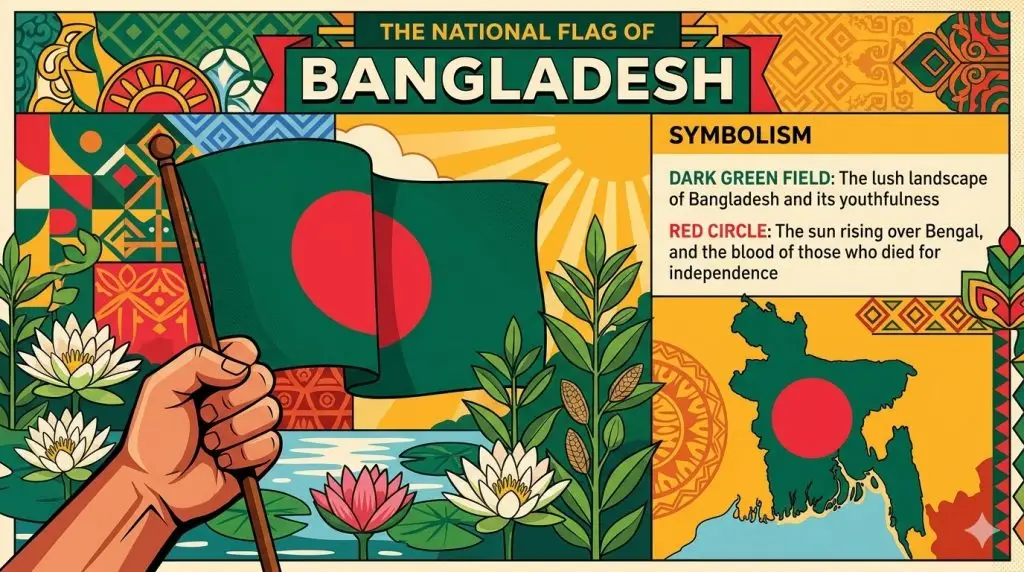
The green background represents the lush landscapes and fertile land of Bangladesh, symbolizing life, growth, and hope. The red circle in the center is not merely decorative; it commemorates the blood shed by martyrs during the Liberation War of 1971 and the sacrifices made for the country’s independence. Together, these elements create a design that is both visually striking and emotionally resonant.
The cultural and historical significance of the flag’s colors adds another layer of uniqueness. Unlike other national flags, every part of Bangladesh’s flag tells a story of resilience, patriotism, and pride. Its minimalist yet meaningful design has drawn admiration from designers, historians, and flag enthusiasts worldwide. The Flag of Bangladesh is more than just a symbol—it is a representation of the nation’s identity, struggles, and aspirations, making it one of the most iconic and respected flags globally.
1. The Origin of the Flag of Bangladesh
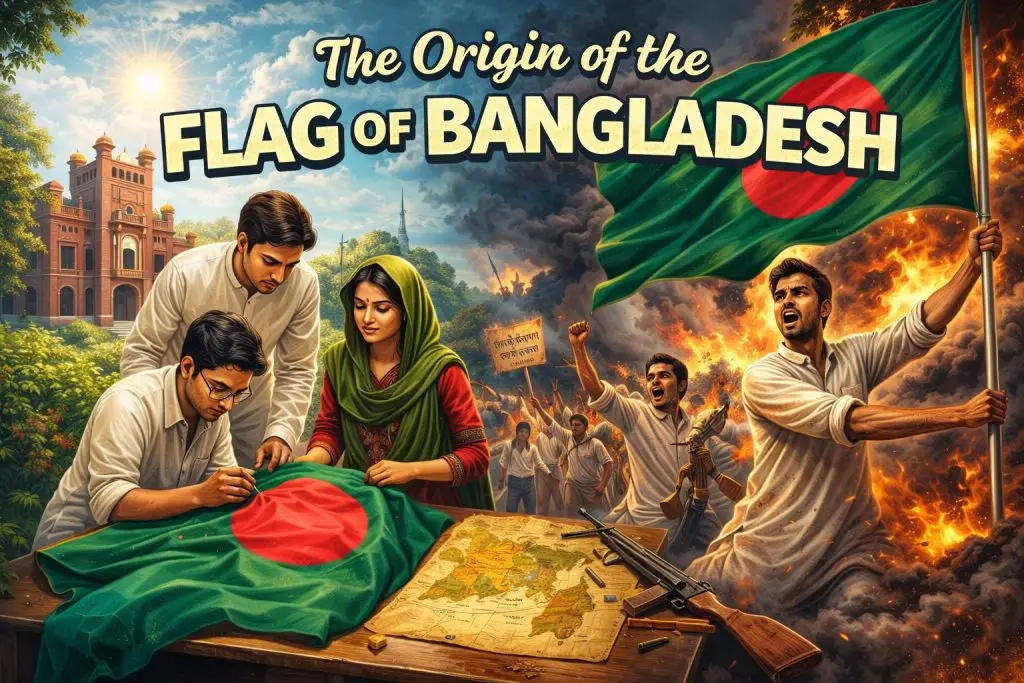
The origin of the Flag of Bangladesh is deeply rooted in the country’s historic struggle for independence in 1971. At that time, Bangladesh was known as East Pakistan, and the growing demand for freedom created a strong need for a unique national identity. A group of passionate student leaders and activists took the initiative to design a flag that could represent the hopes, dreams, and determination of the people. Their goal was to create a symbol that would unite the nation and inspire courage during a critical moment in history.
The first version of the flag featured a green background with a red circle in the center, inside which a map of Bangladesh was placed. This design highlighted both the geographical identity and the political aspirations of the emerging nation. The green symbolized the lush land of Bengal, while the red circle stood for the rising sun and the sacrifices made by those fighting for freedom.
On March 2, 1971, this flag was raised for the first time at Dhaka University, marking a powerful and emotional moment in the independence movement. It quickly became a symbol of resistance and unity among the people. After Bangladesh achieved independence in December 1971, the flag underwent a slight modification. The map was removed to simplify the design, making it easier to reproduce. The current version was officially adopted on January 17, 1972, and remains a proud national symbol today.
2. Meaning Behind the Colors of the Flag
The colors of the Flag of Bangladesh carry profound symbolic meaning, reflecting both the natural beauty of the country and the sacrifices made by its people. Despite its simple design, the flag communicates a powerful message through its carefully chosen colors. Each element represents a key aspect of the nation’s identity and history.
The green background is a representation of Bangladesh’s lush landscape, fertile land, and agricultural richness. It symbolizes life, growth, and the vibrant natural environment that defines the country. Beyond its physical meaning, green also reflects hope, youth, and the spirit of renewal. It embodies the optimism of a nation that emerged from hardship with a vision for a brighter future.
The red circle, placed slightly off-center, holds equally deep significance. It represents the rising sun, symbolizing a new dawn and the birth of an independent nation. At the same time, the red color stands as a tribute to the blood of the martyrs who sacrificed their lives during the Liberation War. It is a reminder of the courage and determination that led to freedom.
Together, the green and red create a strong visual identity that captures the essence of Bangladesh. The combination reflects both beauty and sacrifice, hope and struggle. This balance makes the flag not only visually striking but also emotionally powerful, connecting deeply with the people it represents.

3. The Symbolism of the Red Circle
The red circle on the Flag of Bangladesh is one of its most distinctive and meaningful features. Though simple in design, it carries deep symbolism connected to the nation’s history, culture, and future aspirations. Positioned slightly toward the hoist side, the circle appears perfectly centered when the flag is flying, creating a balanced and visually appealing look.
At its core, the red circle represents the rising sun over Bengal, symbolizing a new beginning and the birth of an independent Bangladesh. It reflects hope, renewal, and the promise of a brighter future after years of struggle.
The red color also honors the sacrifices made during the Liberation War, paying tribute to the martyrs who gave their lives for independence. This dual meaning adds strong emotional depth to the design.
Simple yet powerful, the red circle makes the flag easily recognizable while reminding people of unity, courage, and national pride.
4. Evolution of the Flag Design
The Flag of Bangladesh has undergone a small but significant evolution since its original creation in 1971. While the core concept of the flag has remained the same, certain changes were made to improve its practicality and ensure a cleaner, more effective design. This evolution reflects the balance between symbolism and functionality.
The original version of the flag included a golden map of Bangladesh placed inside the red circle. While this design carried strong symbolic value, it presented practical challenges. Reproducing the map accurately on both sides of the flag was difficult, especially during a time when resources and technology were limited. This issue made it less suitable for widespread use.
After independence, the government decided to simplify the design by removing the map. This change resulted in the current version of the flag, which features only the green background and the red circle. The removal of the map made the flag easier to produce, more visually balanced, and more recognizable from a distance.
Despite this modification, the flag did not lose its meaning. Instead, the simplified design enhanced its impact, allowing the core symbolism to stand out more clearly. Today, the Flag of Bangladesh is widely admired for its minimalism and elegance, proving that a simple design can carry deep and powerful meaning.
5. Importance During the Liberation War
During the Liberation War of 1971, the Flag of Bangladesh became a powerful symbol of resistance, unity, and hope. At a time when the people were fighting for their rights and independence, the flag served as a source of inspiration and courage. It represented the collective determination of a nation striving for freedom.
Freedom fighters carried the flag into battle, using it as a symbol of their cause and identity. Seeing the flag raised was a moment of pride and motivation, reminding them of what they were fighting for. It unified people from different backgrounds, bringing them together under a common goal—the creation of an independent Bangladesh.
For ordinary citizens, the flag was equally important. It was displayed during protests and gatherings, becoming a visible sign of defiance against oppression. Raising the flag was not just an act of patriotism; it was a bold statement of resistance and a declaration of the desire for freedom.
Even after the war ended, the flag continued to hold deep emotional significance. It became a lasting reminder of the bravery, sacrifices, and unity that defined the Liberation War. Today, it stands as a symbol of victory and the enduring spirit of the Bangladeshi people.
6. National Significance and Usage
The Flag of Bangladesh holds great importance in the country’s national life and serves as a powerful symbol of identity, pride, and unity. It is widely displayed on government buildings, schools, and public places, especially during national events like Independence Day and Victory Day. These celebrations highlight the flag’s role in bringing people together and honoring the nation’s achievements and history.
There are clear rules and etiquette to ensure the flag is treated with proper respect. It should always be clean, undamaged, and placed in a position of honor. The flag is usually raised at sunrise and lowered before sunset, unless it is properly illuminated at night. These practices reflect the deep respect people have for their national symbol.
Beyond the country, the flag represents Bangladesh on the global stage. It is proudly displayed at international events, diplomatic meetings, and sports competitions.
For Bangladeshis, the flag is more than just a national emblem—it is a lasting symbol of unity, pride, and inspiration for future generations.
7. The Flag as a Symbol of Unity and Identity
The Flag of Bangladesh stands as a powerful symbol of unity and identity for millions of people across the nation. In a country rich with diverse cultures, traditions, and communities, the flag brings everyone together under a shared sense of belonging. It represents the collective identity of Bangladesh, rising above differences and strengthening the bond among its people.
The flag reflects the hopes, dreams, and achievements of the nation. It tells the story of a country that has faced challenges, made sacrifices, and emerged stronger with determination and pride. Whether seen during national celebrations or international events, the flag inspires deep respect and patriotism among citizens.
For Bangladeshis living abroad, the flag holds special emotional value. It serves as a connection to their homeland, reminding them of their roots, culture, and heritage. Seeing the flag often brings a sense of comfort and pride.
Ultimately, the Flag of Bangladesh is more than just a symbol—it represents unity, resilience, and a shared national identity.
Cultural and Emotional Connection
The Flag of Bangladesh holds a deep cultural and emotional connection with the people, representing not only the nation but also the shared identity and collective memory of its citizens. It is far more than a national symbol—it reflects the country’s journey through struggle, sacrifice, and triumph. For many Bangladeshis, the flag carries a sense of pride that is rooted in history and strengthened by unity.
During national celebrations such as Independence Day and Victory Day, the flag becomes a powerful expression of patriotism. It is proudly displayed across the country in schools, government offices, marketplaces, and homes. Streets and public spaces are often filled with the vibrant green and red, creating a strong sense of belonging and togetherness among the people.
Beyond celebrations, the flag also carries deep emotional meaning on a personal level. It reminds citizens of the sacrifices made by previous generations during the Liberation War and the price paid for freedom. This connection inspires a sense of responsibility to honor that legacy by contributing positively to the nation’s future.
In this way, the Flag of Bangladesh continues to unite people, strengthen national pride, and inspire hope for generations to come.
Flag Etiquette in Bangladesh
Respecting the Flag of Bangladesh is an important part of the nation’s culture and values. The flag is not just a national emblem—it represents the country’s honor, history, and identity. Because of this, there are clear rules and guidelines that people are expected to follow when displaying and handling the flag.
One of the most important rules is that the flag must always be kept clean, neat, and in good condition. A damaged or faded flag should not be displayed, as it may be seen as a sign of disrespect. The flag is typically raised at sunrise and lowered before sunset. However, it may be displayed at night if it is properly illuminated to ensure visibility and respect.
There are also guidelines about how the flag should be positioned. It should always be placed in a position of prominence and should not touch the ground or be used for decorative purposes that could be considered disrespectful.
Improper use of the flag, such as using it as clothing or placing it in inappropriate settings, is discouraged and taken seriously. These rules help maintain the dignity of the flag and reflect the deep respect people have for their nation.
Interesting Facts About the Flag of Bangladesh
Here are some quick and interesting facts about the Flag of Bangladesh that highlight its uniqueness and importance. The flag was first raised in 1971 during the struggle for independence and later officially adopted in 1972. Its simple design carries deep meaning, with the green symbolizing the country’s natural beauty and the red circle representing sacrifice and the rising sun. The flag is slightly modified from its original version and remains a powerful symbol of unity, pride, and national identity for the people of Bangladesh.
- The flag was first raised on March 2, 1971, by student leaders as a symbol of resistance and independence.
- It was officially adopted on January 17, 1972, after Bangladesh gained independence.
- The red circle is slightly off-center to ensure visual balance when the flag flies.
- The original design included a map of Bangladesh, which was later removed for simplicity
- The green color represents the country’s lush landscape, fertility, and natural beauty.
- The red symbolizes the blood of martyrs and the rising sun of a new nation.
- It is one of the simplest yet most meaningful flags, admired for its deep symbolism.
Conclusion
The Flag of Bangladesh stands as a deeply meaningful symbol of the nation’s identity, reflecting its rich history, hard-fought independence, and hopeful future. Born during the Liberation War of 1971, the flag carries the memories of sacrifice and the courage of those who fought for freedom. Its simple yet powerful design continues to unite millions of people under a shared sense of pride and belonging.
Understanding the meaning behind the flag allows us to appreciate the values it represents—resilience, unity, and patriotism. Each element of the flag tells a story, reminding citizens of their roots and inspiring future generations to honor their country.
These seven powerful facts reveal that the flag is not just a piece of fabric but a living symbol of Bangladesh’s journey. It represents the dreams, struggles, and achievements of its people over time.
Whether you are exploring history, culture, or national identity, the Flag of Bangladesh offers a powerful and inspiring story. It deserves respect, recognition, and remembrance as a symbol of national pride.