
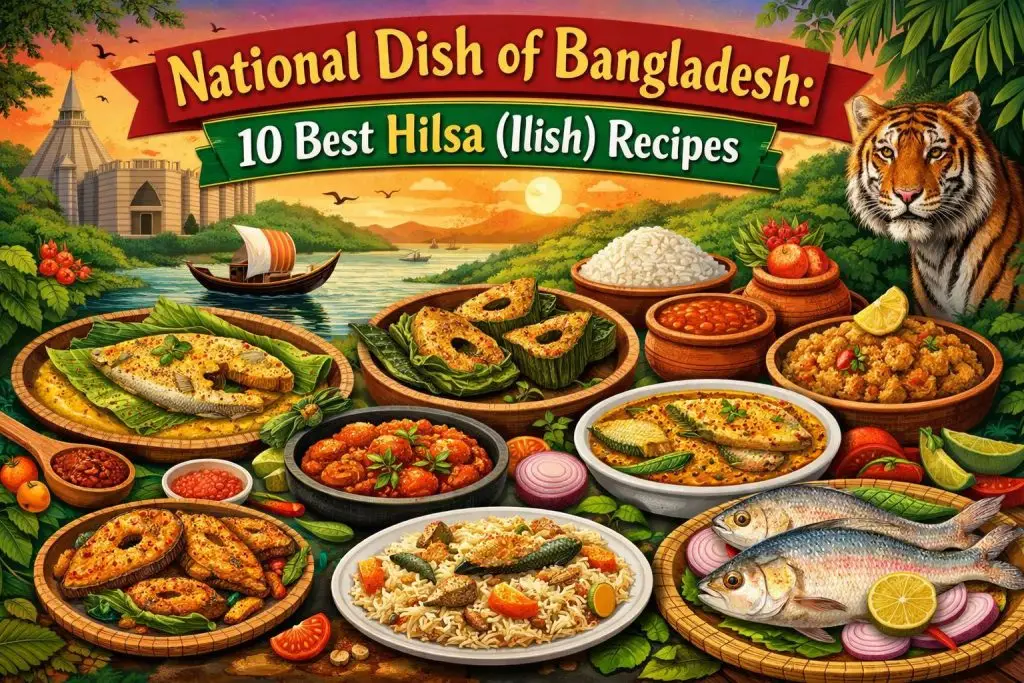
Discover the national dish of Bangladesh with 10 authentic Hilsa (Ilish) recipes. From Shorshe Ilish to Panta Bhat, learn to cook the king of fish for 2026.
Introduction: National Dish of Bangladesh
The culinary heritage of South Asia is a vivid mosaic of bold spices and distinct textures, yet few elements command as much patriotic fervor as the National Dish of Bangladesh. Although no official government decree has formally designated a single meal as the national icon, cultural tradition has reached a clear consensus: Hilsa (Ilish) and Rice stands as the unrivaled centerpiece of Bengali gastronomy.
In this definitive 2026 guide, we delve into why this “King of Fish”—prized for its shimmering silver scales and buttery richness—remains the dominant force on the Bangladeshi plate. Beyond its flavor, the Hilsa represents a deep-rooted connection to the nation’s vast riverine geography. We provide ten authentic recipes designed to transport the soulful essence of the Padma and Meghna rivers directly into your home kitchen.
Whether you are revisiting traditional roots or exploring these flavors for the first time, mastering this dish is an essential step in understanding the heart of Bangladesh. From the pungent aroma of mustard oil to the delicate flake of the fish, discover the techniques that turn a simple meal into a national treasure.
The Cultural Significance of Hilsa (Ilish)
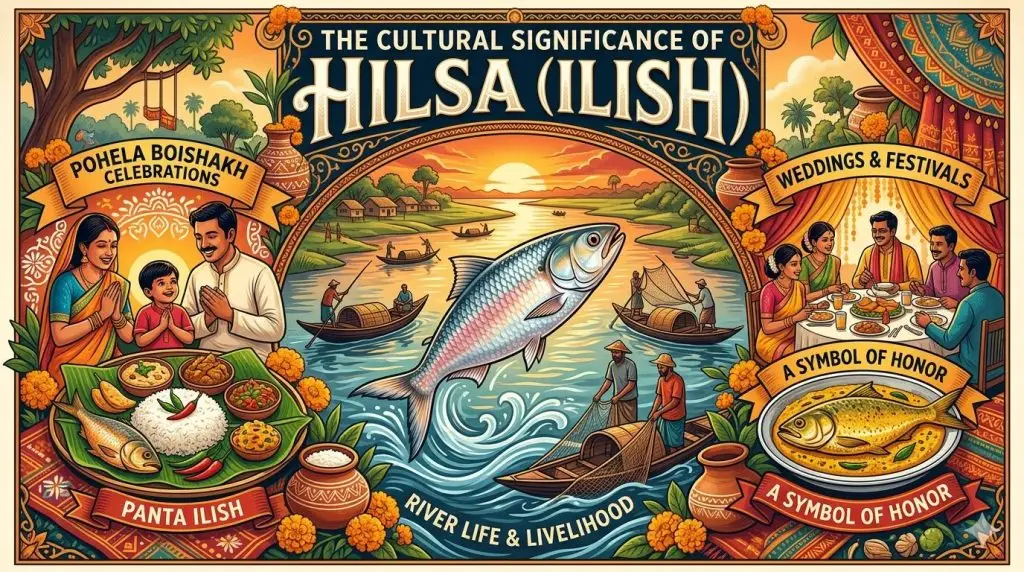
Beyond being a mere dietary staple, the Hilsa (Ilish) serves as a vital economic engine and a revered cultural symbol in Bangladesh. This “silver crop” accounts for approximately 12% of the nation’s total fish production, directly and indirectly sustaining the livelihoods of millions, from traditional riverine fishermen to urban exporters. Its presence is woven into the country’s socio-economic fabric, making its seasonal migration a matter of national importance.
The significance of Hilsa is most visible during Pohela Boishakh (the Bengali New Year). The consumption of Panta Ilish—a traditional dish of fermented rice paired with crispy fried Hilsa—serves as a bridge to Bangladesh’s ancestral agrarian and riverine history. This ritual is a communal celebration of identity, marking the start of the year with the flavors of the delta.
Renowned for its unique buttery texture and sophisticated flavor profile, Hilsa is the ultimate delicacy for high-stakes hospitality. Whether featured at weddings, religious festivals, or family gatherings, serving Ilish is an act of honor and prestige. It remains an irreplaceable icon that unites the Bangladeshi diaspora with their homeland through the shared memory of its distinct, oily aroma.
10 Best Hilsa (Ilish) Recipes for 2026
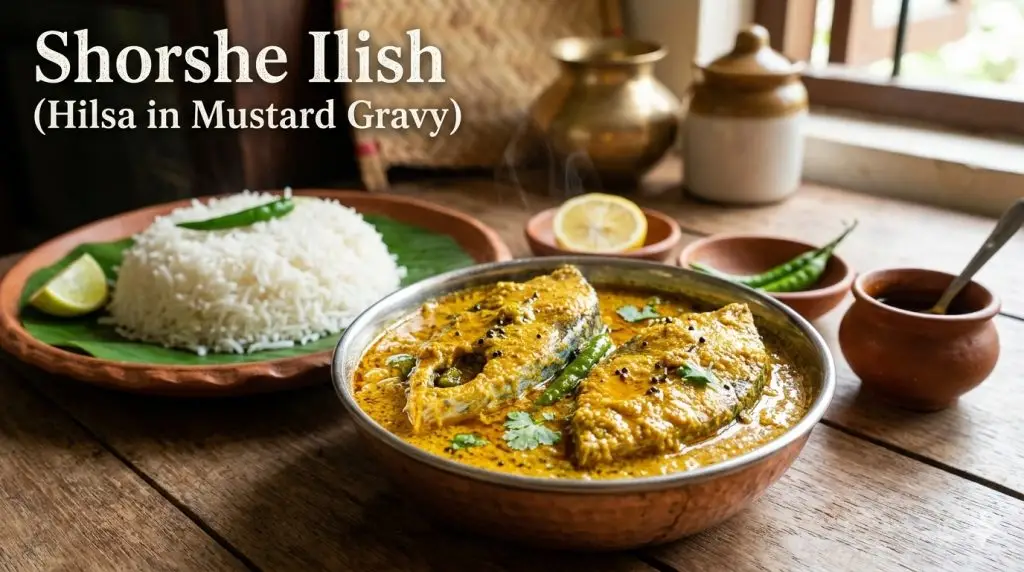
1. Shorshe Ilish (Hilsa in Mustard Gravy)
Widely regarded as the “Gold Standard” of Bengali cuisine, Shorshe Ilish is a sensory masterpiece. This iconic preparation marries the sharp, pungent heat of mustard with the opulent, buttery fat of the Hilsa fish, creating a flavor profile that is both intense and deeply comforting.
The 4 Pillars of Authentic Shorshe Ilish
- The Mustard Symphony: The soul of this dish lies in the blend of yellow and black mustard seeds. While yellow seeds provide a mellow base, the black seeds deliver the signature “ghran” (aroma) and nasal kick. Grinding them with a pinch of salt and green chilies is a traditional secret to neutralizing enzymes that can cause bitterness.
- The Mustard Oil Infusion: Cooking must be done exclusively in raw, cold-pressed mustard oil. This oil acts as a flavor bridge, enhancing the natural oils of the fish and providing a glossy, golden finish that is visually stunning and aromatically bold.
- The Gentle Simmer: Unlike other proteins, Hilsa is incredibly delicate. The steaks are typically simmered briefly in the mustard gravy to ensure they remain succulent. This process allows the fish to absorb the spicy infusion without losing its structural integrity.
- The Raw Oil Finish: To achieve an authentic Shorshe Ilish, a final pour of cold-pressed mustard oil and sliced green chilies is essential. This traditional “kacha tel” technique revitalizes the dish, adding a pungent aromatic layer. The raw oil provides a sharp, peppery contrast to the velvety, cooked gravy, perfectly balancing the Hilsa’s natural richness for a truly sensory dining experience.
2. Ilish Macher Jhol (Light Hilsa Curry)
A true cornerstone of the daily Bengali diet, Ilish Macher Jhol is the ultimate expression of culinary restraint. This light, broth-based curry is celebrated for its minimalist approach, using just a hint of turmeric and nigella seeds to allow the majestic, buttery flavor of the Hilsa to remain the undisputed star.
Often enriched with tender slices of eggplant (begun) or wedges of potato, the dish creates a soothing, aromatic experience that is both nourishing and sophisticated. By avoiding heavy masalas, this preparation preserves the delicate texture and heart-healthy oils of the fish, offering a clean, savory taste that defines the soulful comfort of a traditional Bangladeshi home-cooked meal.

3. Bhapa Ilish (Steamed Hilsa)
For the health-conscious gourmet, Bhapa Ilish offers a sophisticated, steamed alternative that sacrifices none of the fish’s legendary decadence. This preparation involves marinating thick Hilsa steaks in a luxurious, stone-ground mustard and yogurt paste, enriched with a touch of raw mustard oil and slit green chilies.
By steaming the fish—often inside a sealed tiffin box or wrapped in banana leaves—the process locks in every drop of the Hilsa’s natural, Omega-3 rich juices and essential nutrients. The result is an incredibly tender, melt-in-the-mouth texture that perfectly balances the sharp heat of the mustard with the cool tang of the yogurt, representing the pinnacle of refined Bengali home cooking.
4. Panta Ilish (Traditional New Year Platter)
As the ultimate symbol of Pohela Boishakh, the Bengali New Year, Panta Ilish is a soulful tribute to Bangladesh’s deep-rooted agrarian traditions. This iconic platter features Panta Bhat—aromatic rice soaked overnight in water until it develops a subtle, refreshing tang—perfect for the tropical April heat.
The dish is famously paired with a golden, crispy-fried Hilsa steak, whose savory richness cuts through the cool, fermented rice. Accompanied by various spicy Bhortas (mashed vegetables), raw onions, and fiery green chilies, it offers a rustic yet powerful explosion of flavors. For millions, this simple, traditional meal is the most profound expression of national identity and cultural heritage.
5. Ilish Biryani
Elevating the silver-scaled “King of Fish” to a royal status, Ilish Biryani offers a sophisticated, seafood-centered twist on the iconic South Asian rice dish. Unlike robust meat-based versions, this preparation demands extreme precision and a delicate touch to ensure the tender Hilsa steaks remain perfectly intact throughout the slow-cooking process.
As the fish gently steams within the layers of fragrant, ghee-laden Basmati or Gobindobhog rice, it releases its prized natural oils, infusing every grain with a deep, savory aroma. The result is a harmonious blend where the perfume of the rice meets the buttery essence of the Hilsa, creating a festive masterpiece that defines Bangladeshi luxury.
6. Doi Ilish (Hilsa in Yogurt)
For those who appreciate a more refined and velvety texture, Doi Ilish offers a sophisticated departure from the typical pungent mustard-based gravies. In this classic preparation, thick Hilsa steaks are poached in a base of whisked, seasoned yogurt.
The natural tang of the curd beautifully cuts through the fatty richness of the fish, while simultaneously mellowing the fiery heat of green chilies. This creates a balanced, creamy, and silky sauce that coats every grain of white rice perfectly. It remains a favorite choice for festive lunch menus across Bangladesh, representing a harmonious blend of cooling dairy and the intense, soulful flavor of the “King of Fish.”
7. Ilish Macher Matha diye Moong Dal
Embodying the zero-waste philosophy of traditional Bengali kitchens, Ilish Macher Matha diye Moong Dal transforms a humble bowl of lentils into a gourmet masterpiece. In this sophisticated preparation, the head of the Hilsa is first golden-roasted or lightly fried to unlock its concentrated, oily essence.
By breaking the roasted head into a thick, slow-cooked Moong dal seasoned with ginger and cumin, the dish gains an incredible depth of savory complexity. The marrow from the fish bones infuses the lentils with a unique, smoky richness that is unmatched by any other pairing. It stands as a testament to the ingenuity of Bangladeshi home cooks who cherish every part of their national treasure.
8. Smoked Hilsa (Ilish Bhape/Dhowa)
Drawing inspiration from the ancestral cooking techniques of Bangladesh’s riverine heartlands, Smoked Hilsa (Ilish Dhowa) is a masterclass in flavor infusion. This method involves the patient, slow-cooking of thick Hilsa steaks over a controlled low flame or within traditional clay ovens.
The process allows the fish to absorb a profound, earthy smokiness that perfectly complements its naturally rich and oily profile. This rustic approach creates a unique aromatic depth that differentiates it from typical curries, offering a sophisticated, wood-fired finish. It remains a cherished regional delicacy, capturing the soulful essence of rural kitchen traditions and the timeless allure of the delta’s most prized catch.
9. Kacha Ilish er Jhol (Raw Fish Curry)
For the ultimate connoisseur, Kacha Ilish er Jhol represents the height of culinary purity. Unlike most preparations where the fish is pre-fried, this method slides raw, marinated Hilsa steaks directly into a simmering aromatic gravy.
This technique is a deliberate choice to preserve the fish’s prized Omega-3 rich buttery fat, which would otherwise be lost in a frying pan. As the Hilsa poaches gently, its natural oils melt into the broth, transforming a simple liquid into a rich, glossy, and deeply flavorful sauce. The result is an incredibly succulent texture that offers an authentic, farm-to-table taste of Bangladesh’s majestic river systems.
10. Ilish Macher Tel Jhol
For those who appreciate the unadulterated essence of the “King of Fish,” Ilish Macher Tel Jhol is the ultimate minimalist masterpiece. This preparation is designed to let the Hilsa’s natural, buttery fat take center stage, acting as both the cooking medium and the primary flavor profile.
By seasoning the dish with only a handful of Nigella seeds (Kalonji) and sharp green chilies, the recipe avoids overwhelming the delicate, oily sweetness of the fish. The result is a light, golden broth that highlights the Hilsa’s unique aroma. It remains the purest, most elegant way to experience why this fish is so deeply revered in Bangladeshi culture.
Mastering the Art of Bangladeshi Cooking: Essential Tips
The Importance of Mustard Oil
In Bangladeshi cooking, especially with Hilsa, Mustard Oil is non-negotiable. Its high smoke point and sharp, peppery aroma are essential for achieving the “authentic” taste. Look for “Kachi Ghani” or cold-pressed varieties for the best results.
Selecting the Perfect Fish
- The “Silver” Look: Fresh Hilsa should have a bright, silvery sheen.
- Firmness: The flesh should be firm to the touch, not mushy.
- The Eyes: Look for clear, bulging eyes rather than cloudy, sunken ones.
Dealing with the Bones
Hilsa is notorious for its fine, needle-like bones. Experienced diners use their fingertips to navigate the “kata” (bones) with precision. If you are new to this, start with the “gada” (back) pieces, which have slightly fewer bones than the “peti” (belly).
Sustainability and the Future of Hilsa
As we navigate 2026, the long-term survival of the National Dish of Bangladesh depends entirely on robust sustainability efforts. The Bangladeshi government has taken a proactive stance by establishing specialized “Hilsa Sanctuaries” across major river systems like the Padma and Meghna. These protected zones are critical for preserving the delicate ecosystem required for the fish to thrive.
Central to this conservation strategy are strictly enforced seasonal fishing bans. These occur during two vital windows: the peak spawning season in October, when adult fish travel upstream to lay eggs, and the juvenile “Jatka” protection period, which allows young Hilsa to mature into adulthood. These measures have already led to a significant rebound in fish populations and overall size.
For consumers and culinary enthusiasts, supporting these initiatives is a moral and cultural imperative. By consciously purchasing Hilsa only during legal seasons and boycotting juvenile Jatka, we directly contribute to the “Hilsa Economy.” These collective actions ensure that the silver-scaled pride of Bengal remains a staple on our dinner tables for generations to come, safeguarding both a vital food source and a cherished national identity.
Frequently Asked Questions (FAQs) About the National Dish of Bangladesh
1. What is the official national dish of Bangladesh?
The official national dish is Hilsa fish and rice, popularly known as Ilish Macher Jhol or Panta Ilish. Beyond its status as the national fish, the Hilsa (Ilish) remains a powerful emblem of Bengali identity, woven into the very fabric of the country’s cultural and social traditions.
2. Why is Hilsa (Ilish) considered the national dish?
Hilsa is prized for its unique flavor and oily texture, which are distinct from any other fish. It is deeply integrated into the history, economy, and festivals of the country, particularly during Pohela Boishakh (the Bengali New Year), where it is traditionally served with fermented rice.
3. How is the national dish typically prepared?
While there are dozens of variations, the most iconic preparations include:
- Sorshe Ilish: Hilsa cooked in a pungent mustard gravy.
- Ilish Macher Jhol: A light, spicy curry often featuring eggplant or potatoes.
- Bhapa Ilish: Fish steamed with a paste of mustard and green chilies.
4. Is the national dish available year-round?
While Hilsa is available throughout much of the year, it is most abundant during the monsoon season (June to September). To protect the species, the Bangladeshi government occasionally implements seasonal fishing bans to allow the fish to spawn.
5. What does the national dish taste like?
Hilsa has a rich, buttery flavor due to its high fat content. It is known for its many fine bones, which require careful eating. The taste is often described as a blend of savory, sweet, and earthy, especially when enhanced by mustard oil.
6. Can vegetarians enjoy a version of the national dish?
While the national dish is fish-based, the “spirit” of the meal—centered around aromatic Siddha or Atap rice and locally grown spices—is often mirrored in vegetarian dishes like Shukto or Alu Bhorta, though they are not technically considered the national dish.
7. Where can I find the best Hilsa in Bangladesh?
The best quality Hilsa is famously sourced from the Padma, Meghna, and Jamuna rivers. Fish caught in these freshwater rivers are generally considered tastier than those caught in the sea (the Bay of Bengal).
Conclusion
Embracing the flavors of the National Dish of Bangladesh is more than just a culinary exercise; it is a journey into the heart of Bengali heritage. As we look toward 2026, these 10 best recipes highlight the incredible versatility of Hilsa (Ilish) and Rice, proving why this pairing remains the ultimate symbol of Bangladeshi identity. Whether you prefer the classic complexity of Sorshe Ilish or a contemporary fusion twist, these curated recipes offer a perfect balance of tradition and modern kitchen convenience.
The secret to mastering these dishes lies in the quality of the ingredients—specifically the pungent kick of mustard oil and the delicate texture of the silver fish. By following these expert-backed methods, you can recreate the authentic “Macher Jhol” experience that has defined dinner tables in Dhaka and beyond for generations.
As the global palate continues to evolve, the National Dish of Bangladesh stands as a testament to the country’s rich biodiversity and soulful cooking techniques. We hope this guide inspires you to fire up your stove and share the warmth of Bengal with your loved ones. Don’t forget to bookmark your favorite recipe and share your cooking results with our community!