
Scholarship in Europe for international students—discover proven tips, visa steps, and funding secrets to study abroad easily.
Introduction
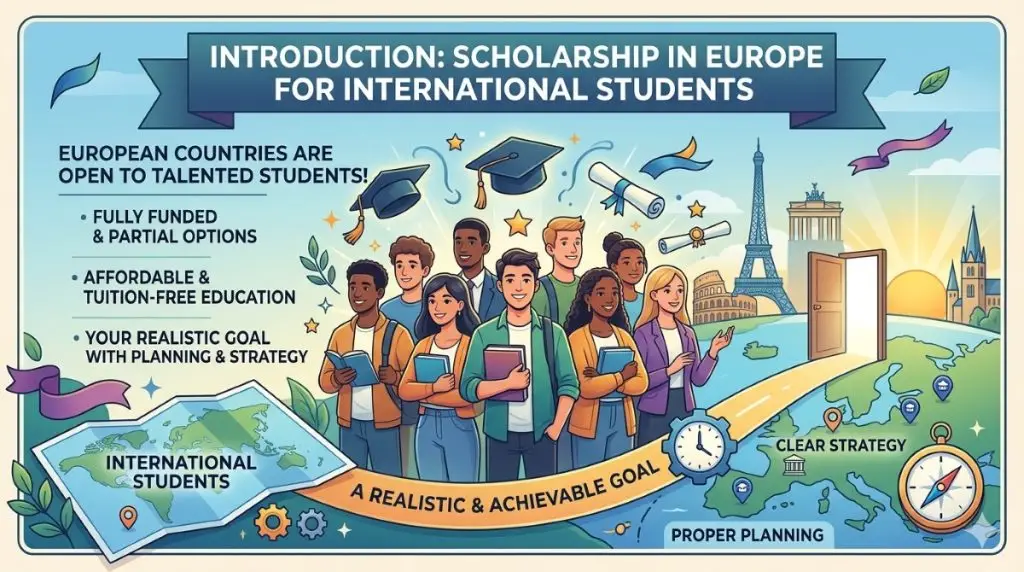
Studying in Europe is no longer just a distant dream—it has become a realistic and achievable goal for thousands of international students every year. With proper planning, accurate information, and a clear strategy, many students are now able to secure a scholarship in Europe for international students and take a major step toward a successful future.
European countries have opened their doors to talented students by offering a wide range of opportunities, including fully funded scholarships, partial funding options, and affordable or even tuition-free education in public universities.
One of the biggest advantages of studying in Europe is the balance between quality and cost. Students not only gain access to globally recognized degrees but also experience diverse cultures, advanced research facilities, and modern teaching methods.
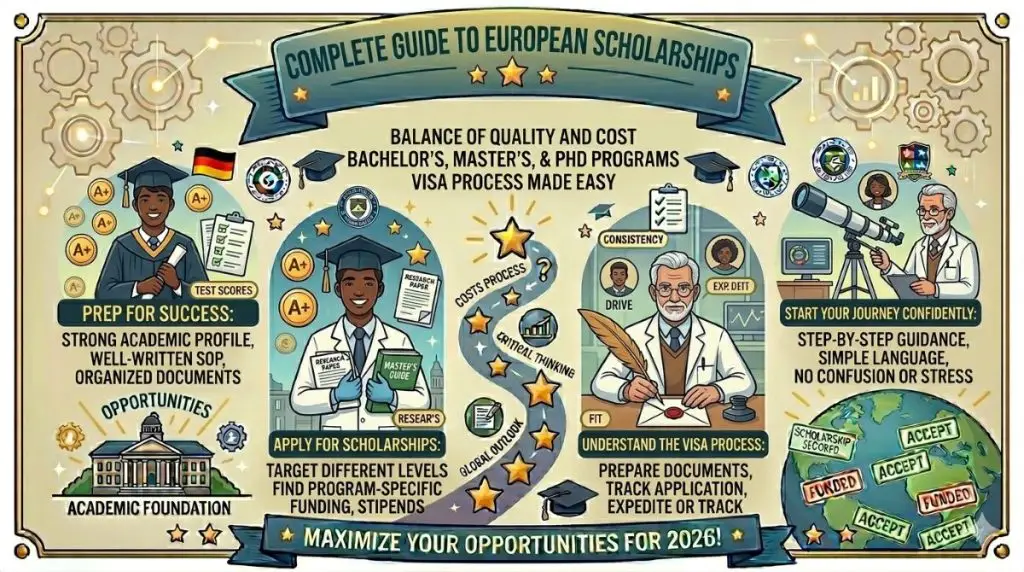
Whether you are aiming for a bachelor’s, master’s, or PhD program, there are numerous scholarship options available that can significantly reduce your financial burden. With the right preparation—such as a strong academic profile, a well-written statement of purpose, and properly organized documents—you can greatly increase your chances of success.
If you are looking for a complete and easy-to-understand guide on how to apply for scholarships in Europe along with the student visa process, this article is designed for you. It will guide you step by step, using simple language and practical tips, so you can confidently start your journey toward studying in Europe without confusion or stress.
🌍 Why Choose Europe for Scholarships?
Europe has become one of the most attractive study destinations for students around the world, especially for those looking for a scholarship in Europe for international students. The combination of high-quality education, affordable living, and wide scholarship opportunities makes Europe a smart and practical choice for higher studies in 2026.
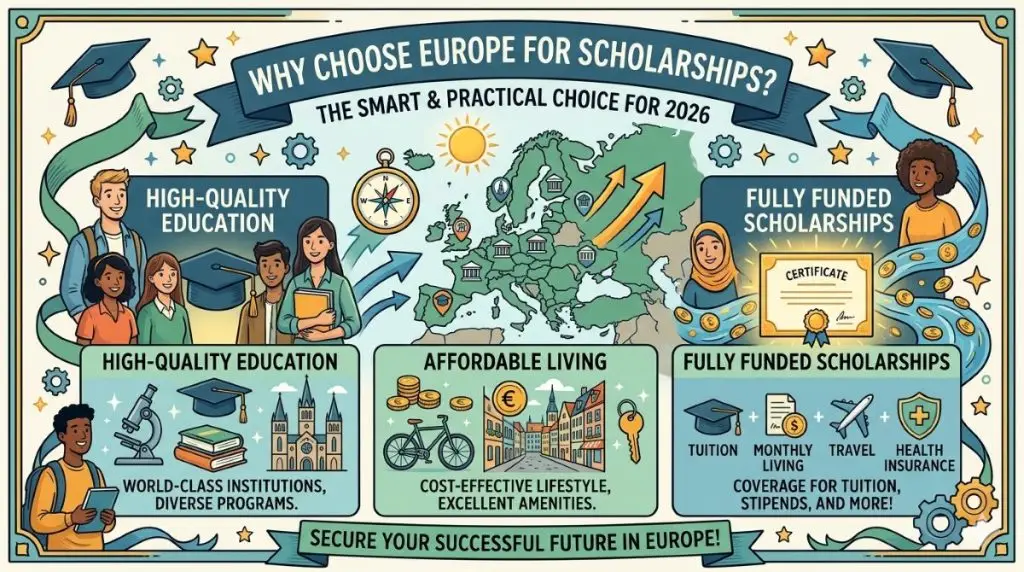
One of the biggest advantages is access to fully funded scholarships in Europe, which can cover tuition fees, monthly living expenses, travel costs, and even health insurance.
Programs like Erasmus+ allow students to study in multiple countries, giving them international exposure and a unique academic experience. This means you don’t just earn a degree—you gain global skills and connections.
Another key benefit is that European universities offer globally recognized degrees. Countries like Germany, Italy, and France are home to some of the world’s top-ranked institutions. Graduating from these universities can significantly boost your career opportunities both in your home country and internationally.
Europe also provides the freedom to travel across the Schengen Area, which includes multiple countries without needing separate visas. This allows students to explore different cultures, languages, and lifestyles while studying—something that is difficult to experience in many other regions.
In terms of affordability, many European countries offer low-cost or even free education at public universities. For example, Germany is well known for its tuition-free education system, while Italy offers scholarships that include both fee waivers and monthly stipends.

This makes studying in Europe much more budget-friendly compared to countries like the USA or UK. Finally, post-study work opportunities are another major reason to choose Europe. Many countries allow international students to stay after graduation to search for jobs and gain work experience.
This creates a clear pathway from education to employment and even long-term settlement.Overall, Europe offers the perfect balance of quality education, affordability, and career growth, making it an ideal destination for ambitious international students.
🎯 7 Proven Ways to Get Scholarship in Europe (Detailed Guide 2026)
Getting a scholarship in Europe for international students is not just about luck—it’s about strategy, preparation, and smart decision-making. Many students think scholarships are extremely difficult to achieve, but the truth is, if you follow the right steps and avoid common mistakes, your chances increase dramatically.
In this detailed guide, we will break down the 7 proven ways to win a fully funded scholarship in Europe, including practical tips, real strategies, and insider advice that successful students use.
✅ 1. Choose the Right Country and Program
One of the biggest mistakes students make is applying randomly without research. Not all European countries offer the same level of funding or acceptance rates. Choosing the right destination is the first and most important step.
🌍 Why Country Selection Matters
Each country has different:
- Tuition fee structures
- Scholarship availability
- Visa approval rates
- Language requirements
For example, Germany offers tuition-free education, while countries like Sweden provide competitive government-funded scholarships.
⭐ Best Countries for Scholarships
🇩🇪 Germany
Germany is one of the top choices because public universities charge little to no tuition fees. Scholarships like DAAD Scholarship make studying even more affordable.
🇮🇹 Italy
Italy offers fully funded scholarships with monthly stipends, and some universities even allow students to apply without IELTS.
🇸🇪 Sweden
The Swedish Institute Scholarship covers tuition and living costs, making it highly attractive.
🇳🇱 Netherlands
The Netherlands is known for English-taught programs and scholarships like the Holland Scholarship.
🎯 Pro Strategy:
- Choose countries with low competition and high acceptance rates
- Apply to at least 2–3 countries instead of one
- Match your academic background with the course
✅ 2. Apply for Fully Funded Scholarships
If you want to study without financial stress, always target fully funded scholarships in Europe. These scholarships cover almost everything, making your study journey smooth.
💰 What Fully Funded Scholarships Cover
- Tuition fees
- Monthly living expenses
- Travel costs (air tickets)
- Health insurance
- Sometimes visa fees
🌟 Popular Fully Funded Programs
🎓 Erasmus+
One of the most popular programs allowing students to study in multiple countries.
🎓 DAAD
Offers a wide range of scholarships for undergraduate, master’s, and PhD students.
🎓 Swedish Institute
Provides full funding along with leadership training opportunities.
🔥 Reality Check:
Yes, these scholarships are competitive—but thousands of students get selected every year. The key is:
- Strong application
- Proper documents
- Early submission
✅ 3. Build a Strong Academic Profile
Your academic profile is the foundation of your scholarship application. Universities want students who are serious, capable, and motivated.
📊 Minimum Requirements
- GPA: At least 3.0 (varies by program)
- Relevant academic background
- Basic extracurricular activities
💡 How to Improve Your Profile
Even if your GPA is average, you can still stand out by:
- Taking online courses (Coursera, edX)
- Gaining internship or work experience
- Participating in volunteer work
- Building technical or research skills
🎯 Important Tip:
Universities don’t just look at grades—they look at your overall potential.
✅ 4. Write a Powerful SOP (Statement of Purpose)
Your SOP is one of the most important parts of your application.This is your opportunity to communicate your story directly to the selection panel.
✍️ What Makes a Strong SOP?
- Clear career goals
- Logical story
- Personal motivation
- Connection between past studies and future plans
📌 Simple SOP Structure
- Introduction (your background)
- Academic journey
- Why this course
- Why this country
- Future goals
💡 Winning Tips:
- Avoid copying templates
- Use simple, natural language
- Be honest and specific
- Keep it personal, not robotic
🚀 Example Idea:
Instead of saying:
“I want to study in Europe because it is good”
Say:
“I chose Europe because of its research-focused education system and global exposure opportunities.”
✅ 5. Prepare All Required Documents Properly
Many students lose their chance simply because of small document mistakes. Even a minor error can lead to rejection.
📄 Important Documents Checklist
- Valid passport
- Academic certificates and transcripts
- Admission letter
- English test score (IELTS/TOEFL)
- CV/Resume
- Recommendation letters
- Motivation letter
⚠️ Common Mistakes:
- Uploading blurry or incorrect files
- Missing deadlines
- Submitting incomplete applications
💡 Pro Tip:
Create a document checklist and review it at least twice before submission.
✅ 6. Understand Europe Student Visa Process
After securing your scholarship, the next major step is getting your Europe student visa. Many students feel nervous at this stage, but it’s manageable if you prepare well.
🛂 Step-by-Step Visa Process
- Receive admission letter
- Prepare financial proof or scholarship letter
- Book visa appointment
- Submit documents
- Attend interview
- Wait for decision
📌 Required Visa Documents
- Passport
- Admission letter
- Financial proof / scholarship confirmation
- Health insurance
- Accommodation proof
🎤 Visa Interview Tips
- Stay calm and confident
- Answer honestly
- Be clear about your study goals
- Show strong intent to return or build a career
✅ 7. Apply Early and Smartly
When applying for scholarships, timing plays a crucial role. Late applications often get rejected, even if the candidate is strong.
📅 Application Timeline (Detailed Guide)
Understanding the right application timeline for scholarships in Europe is very important for success. Most universities and scholarship programs in Europe offer two main intakes each year, and applying within the correct time frame can significantly improve your chances.
🎓 Fall Intake (Main Intake)
The Fall intake is the most popular and competitive admission period. Most scholarships are available during this time.
- Application Period: December – March
- Classes usually start in September or October
🎓 Spring Intake
The Spring intake has fewer courses and scholarships but is still a good option for students who miss the Fall deadline.
- Application Period: September – November
- Classes typically begin in January or February
⏰ Why Early Application Matters
Applying early is one of the smartest strategies when aiming for a scholarship. Early applicants often get access to:
- More available scholarship seats
- Lower competition compared to last-minute applicants
- Better chances of acceptance and faster responses
Delaying your application can reduce your chances, even if your profile is strong.
🎯 Smart Application Strategy
To maximize your success, always follow a strategic approach:
- Apply to multiple universities and programs instead of relying on one option
- Carefully track all deadlines using a checklist or calendar
- Submit your application at least 2–3 weeks before the deadline to avoid technical errors or last-minute stress
👉 Planning ahead and staying organized can make a huge difference in securing a scholarship in Europe for international students.
💰 Cost of Studying in Europe
Studying in Europe can be surprisingly affordable, even if you don’t secure a scholarship. Many students choose Europe because it offers a perfect balance between quality education and reasonable costs. Compared to countries like the USA or UK, the overall expenses are much lower, making it a budget-friendly destination for international students.
📊 Average Costs:
- Tuition Fees: €0 – €10,000 per year
- Living Expenses: €700 – €1,500 per month
Tuition fees vary depending on the country and university. Public universities in countries like Germany often charge little to no tuition fees, even for international students. This makes Germany one of the most popular choices for those seeking free education in Europe. Other countries like Italy and France also offer affordable tuition along with scholarship opportunities.
Living costs depend on your lifestyle and city. Smaller cities are usually cheaper than major capitals. Expenses typically include accommodation, food, transport, and personal needs.
👉 With smart budgeting, part-time work, and possible scholarships, studying in Europe can be very manageable and cost-effective.
🎓 Scholarships by Education Level
When planning to study abroad, it’s important to understand that scholarship opportunities in Europe vary depending on your level of education. Whether you are applying for a bachelor’s, master’s, or PhD, each stage offers different types of funding and benefits for international students.
🎓 Bachelor’s Degree (Undergraduate)
Scholarships for bachelor’s programs are relatively limited compared to higher degrees. However, this doesn’t mean opportunities don’t exist. Many public universities in countries like Germany and Italy offer low-cost or tuition-free education, which can significantly reduce your expenses. Some universities also provide partial scholarships based on academic merit. For undergraduate students, having strong academic results and extracurricular achievements can improve your chances of receiving financial support.
🎓 Master’s Degree (Most Popular)
Master’s programs are the most popular level for scholarships in Europe for international students. There are a large number of fully funded and partially funded scholarships available, especially for English-taught programs. These programs usually last 1–2 years, making them both time-efficient and career-focused.
Popular scholarships like Erasmus+ provide full funding, including tuition, travel, and living expenses. Many universities also offer their own scholarships, which makes this level highly competitive but achievable with proper preparation.
🎓 PhD Programs
PhD opportunities in Europe are often the most financially rewarding. Most PhD programs are fully funded, and many even provide a monthly salary or stipend instead of just covering tuition fees. Countries like Sweden and Germany are well known for offering paid research positions.
PhD students usually work on research projects under a supervisor, which helps them gain professional experience while studying. This makes PhD programs an excellent choice for students who are interested in research and academic careers.
👉 Overall, master’s and PhD levels offer the best chances for funding, but with the right strategy, students at any level can find valuable scholarship opportunities in Europe.
💼 Work Opportunities for Students
International students studying in Europe have the opportunity to work part-time alongside their studies, which is a great advantage for managing daily expenses and gaining real-world experience.
Most countries in Europe allow students to work up to 20 hours per week during the academic semester, ensuring they can balance both study and work effectively. During university holidays or semester breaks, students are often allowed to work full-time hours, which helps them earn extra income.
This part-time work opportunity is especially helpful for covering living costs such as accommodation, food, transportation, and personal expenses.
It also reduces financial pressure on students and their families. In addition, working while studying improves communication skills, builds confidence, and provides international work experience that strengthens future career opportunities.
Many students also use these jobs to network and gain exposure to European work culture, making it easier to find full-time employment after graduation.
🏡 Post-Study Work Opportunities
One of the biggest advantages of studying in Europe is the strong post-study work opportunities available for international students. After completing their degree, many European countries allow graduates to stay and look for jobs or gain professional experience, which helps them build a strong international career.
For example, Germany offers an 18-month job search visa, allowing graduates to stay in the country and find employment related to their field of study. The Netherlands provides a 1-year orientation or work permit, giving students time to explore job opportunities and start their career journey. Similarly, France allows international graduates to stay for up to 2 years depending on their program and employment status.
These post-study options are highly valuable because they help students gain international work experience, improve their skills, and increase their chances of securing long-term employment or even permanent residency in Europe.
🚫 Common Mistakes to Avoid
When applying for a scholarship in Europe for international students, avoiding small mistakes can greatly increase your chances of success. Many students get rejected not because they are unqualified, but because of avoidable errors during the application process.
One of the most common mistakes is applying late, which reduces your chances as most scholarships close early. A weak SOP (Statement of Purpose) can also negatively impact your application because it fails to clearly express your goals and motivation. Submitting incomplete or incorrect documents is another major reason for rejection. Additionally, a low IELTS or English proficiency score may weaken your profile. Lastly, many students fail because they do not properly research the university, country, or scholarship requirements before applying.
📢 Final Thoughts (120+ Words)
Getting a scholarship in Europe for international students is not just a dream—it is a realistic goal if you follow the right strategy and stay consistent throughout the process. Thousands of students every year successfully secure admission and funding by preparing carefully, building a strong academic profile, and applying at the right time.
To increase your chances, always focus on improving your profile through good academic results, a well-written SOP, and proper documentation. Applying early is also very important because many scholarships have limited seats and close quickly. Choosing the right country and program that matches your goals can significantly improve your success rate.
Beyond education, Europe offers much more than a degree. It provides international exposure, cultural diversity, better career opportunities, and a chance to build a successful future. If you are serious, start preparing today and take the first step toward your dream of studying in Europe.