
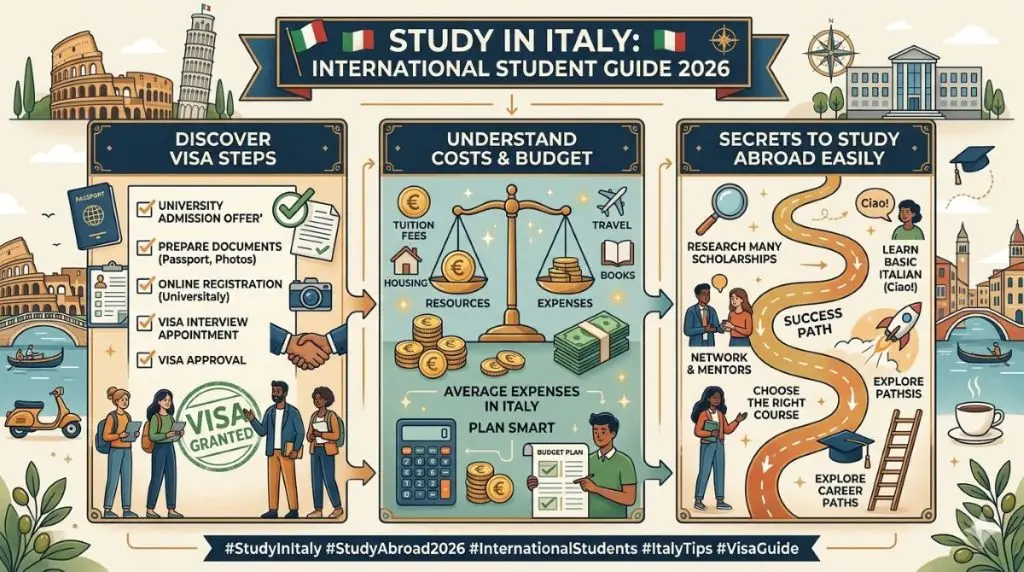
Study in Italy for international students—discover visa steps, costs & secrets to study abroad easily in 2026.
Introduction
Studying in Italy in 2026 is becoming a top choice for international students who want quality education without overwhelming costs. Italian universities offer a perfect balance of academic excellence, affordable tuition fees, and a culturally rich lifestyle that makes learning more enjoyable and meaningful. From historic campuses to modern research facilities, students gain both knowledge and global exposure.
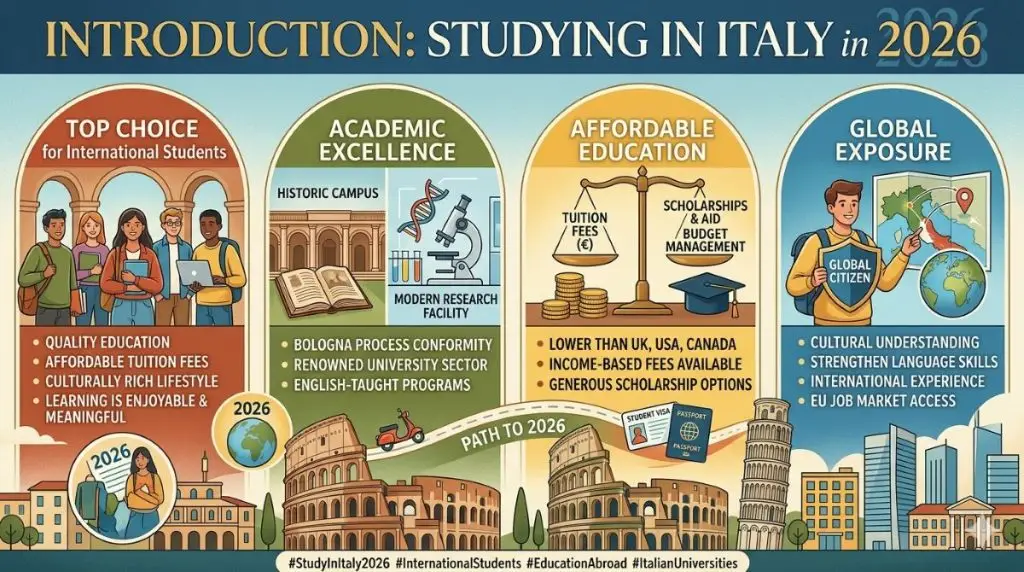
One of the biggest advantages is affordability. Compared to other European destinations, tuition fees and living expenses in Italy are relatively low. Many universities also provide scholarships and financial aid opportunities, making it easier for students from countries like Bangladesh to pursue their dreams.
The student visa process for Italy is straightforward if you prepare early. You’ll need an admission letter, proof of financial support, accommodation details, and health insurance. Submitting accurate documents on time significantly increases your approval chances.
Beyond academics, Italy offers a vibrant lifestyle filled with art, history, and travel opportunities. Cities like Rome, Milan, and Florence provide a unique environment where education meets culture.
To succeed, focus on strong applications, apply early, and explore scholarship options. With proper planning and determination, studying in Italy can open doors to a bright international career and unforgettable life experiences.
🇮🇹 Why Study in Italy in 2026?
Italy is quickly rising as one of Europe’s most attractive study destinations in 2026, offering a rare mix of academic excellence and affordability. Home to some of the world’s oldest and most respected institutions like University of Bologna and Sapienza University of Rome, Italy delivers globally recognized degrees that open doors to international careers.
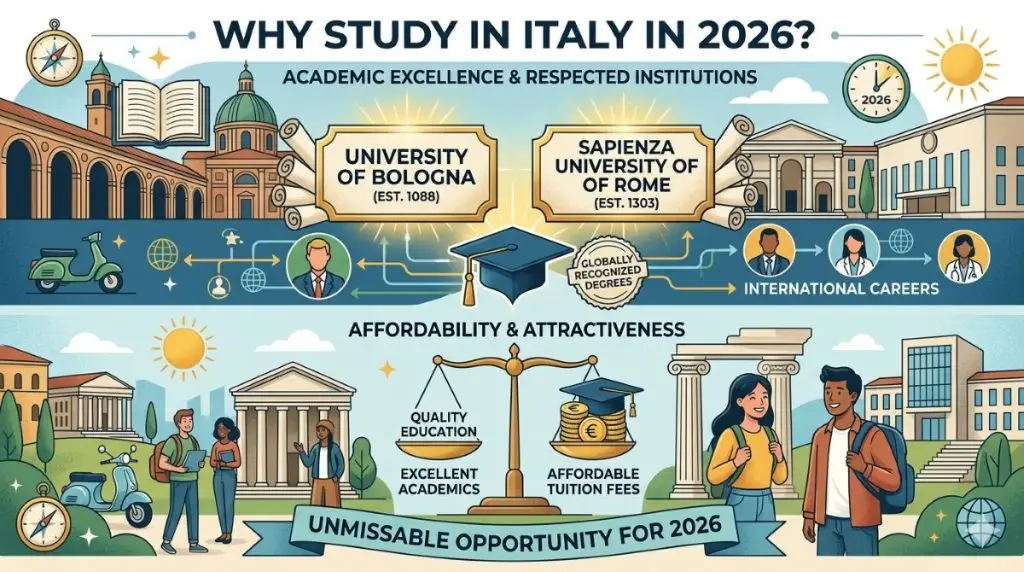
One of the biggest advantages is cost. Compared to countries like the United Kingdom, United States, or Canada, tuition fees in Italy are significantly lower, making it a smart financial choice for international students. On top of that, many universities offer English-taught programs, so language is no longer a barrier for global learners.
Studying in Italy also means access to the entire Schengen Area, allowing students to travel across Europe and gain broader cultural exposure. Beyond academics, the country offers a vibrant lifestyle filled with art, history, food, and diverse communities that make student life truly enriching.
Scholarship opportunities further ease the financial burden, especially for students from developing countries. With quality education, global exposure, and a unique living experience, Italy stands out as a practical and inspiring destination for higher studies in 2026
10 Proven Tips: Study in Italy for International Students 2026
A practical guide to navigating admissions, scholarships, and the student visa process in Italy with confidence.
Learn how to choose the right course, manage your budget, and unlock global career opportunities while studying in Italy.
🎯 Tip 1: Choose the Right Course and University
Choosing the right course and university in Italy is one of the most important steps for building a successful academic and professional future. Your program should match your previous education and career goals, as this not only strengthens your application but also improves your chances of visa approval.

Italian universities carefully evaluate whether your chosen field is relevant to your background, so making a smart and logical decision is essential.Italy offers a wide range of in-demand programs that attract international students every year. Some of the most popular study areas include Business & Management, Engineering & IT, Fashion & Design, Architecture, and Health Sciences.
These fields are globally recognized and provide strong career opportunities both in Europe and beyond. Whether you want to enter the corporate world, creative industries, or technical sectors, Italy has options tailored to your ambitions.
When selecting a university, focus on reputation, course structure, and career support. Institutions like Politecnico di Milano are highly respected, especially for engineering and technology programs, offering cutting-edge research and strong industry connections.
Take time to research course details, entry requirements, and future job prospects. A well-chosen program not only enhances your learning experience but also sets a solid foundation for long-term career success in the global market.
📄 Tip 2: Understand Admission Requirements Clearly
Before applying to universities in Italy, it’s essential to clearly understand the admission requirements. Many students face rejection not because they lack qualifications, but due to incomplete or incorrect documentation. Taking time to review each university’s criteria can save you from unnecessary delays and improve your chances of acceptance.
The basic requirements are quite straightforward but must be carefully prepared. You’ll need your academic certificates, including SSC, HSC, or Bachelor’s degree transcripts, depending on the level you’re applying for. A valid passport is also mandatory, as it confirms your identity for both university admission and visa processing.
Another crucial document is your Statement of Purpose (SOP). This is your chance to explain your academic background, career goals, and why you chose a specific course and university. A well-written SOP can make a strong impression on admission officers. In addition, most universities ask for recommendation letters from teachers or employers who can verify your skills and potential.
English proficiency is equally important, especially for international students. Tests like IELTS or TOEFL are widely accepted to prove your language ability.
Always double-check deadlines and document formats before submission. A well-prepared application not only boosts your admission chances but also makes your study journey in Italy smoother and stress-free.
💰 Tip 3: Plan Your Budget Smartly
Studying in Italyis relatively affordable compared to many Western countries, but smart financial planning is still essential for a smooth student life. Understanding your expenses in advance helps you avoid stress and manage your lifestyle comfortably throughout your academic journey.
Tuition fees at public universities usually range between €900 and €4,000 per year, depending on the course and institution. This makes Italy a budget-friendly option for international students. However, living costs can vary based on your location and lifestyle. On average, students spend around €700 to €1,200 per month, covering accommodation, food, transport, and daily expenses.
It’s important to note that major cities like Milan tend to be more expensive due to higher rent and living standards. In contrast, smaller cities offer a more affordable lifestyle while still providing quality education and a peaceful environment.
To manage your budget effectively, consider shared accommodation, student discounts, and part-time work opportunities if allowed. Planning ahead also helps when applying for visas, as proof of financial stability is required.
A well-structured budget not only ensures financial security but also allows you to fully enjoy your study experience in Italy without unnecessary worries.
🎓 Tip 4: Apply for Scholarships Early
Applying for scholarships early can make a huge difference when planning your studies in Italy. While tuition fees are already affordable, scholarships can significantly reduce or even eliminate your financial burden. Many students miss out simply because they apply late or don’t research enough options, so starting early gives you a strong advantage.
Italy offers several well-known scholarship programs for international students. The Italian Government Scholarship is one of the most popular, providing financial support for tuition and living costs.
Another excellent option is the DSU Regional Scholarships, which is based on financial need and often covers accommodation, meals, and additional expenses. Many universities also offer their own grants and merit-based scholarships, giving you multiple opportunities to secure funding.
These scholarships can cover a wide range of costs, including tuition fees, monthly stipends, and even housing support. This makes studying in Italy far more accessible, especially for students from developing countries.
To improve your chances, prepare your documents early, maintain strong academic results, and write a compelling application. Pay close attention to deadlines, as most scholarships have strict timelines.
With the right approach, scholarships can turn your dream of studying in Italy into an affordable and achievable reality while allowing you to focus more on your education and personal growth.
🛂 Tip 5: Follow the Italy Student Visa Process Step-by-Step
Securing your student visa is a crucial step toward studying in Italy. Even if you receive admission, your journey won’t move forward without a properly approved visa. The good news is that the process is straightforward if you follow each step carefully and prepare your documents in advance.
The first step is to obtain your official admission letter from an Italian university. This document confirms that you have been accepted and is required for your visa application. Once you have it, start preparing all necessary documents, including your academic certificates, passport, proof of financial support, accommodation details, and health insurance.
Next, you’ll need to submit your application through VFS Global, which handles visa processing for Italy in many countries, including Bangladesh. Make sure all your documents are complete and correctly formatted to avoid delays or rejection.
After submission, you may be called for a visa interview. This is your opportunity to explain your study plans, future goals, and financial readiness. Be honest, confident, and clear in your answers.
Once the interview is complete, all you need to do is wait for approval. Processing times can vary, so applying early is highly recommended.
By following each step carefully and staying organized, you can increase your chances of visa success and move one step closer to starting your academic journey in Italy with confidence.
📑 Tip 6: Prepare Strong Financial Proof
When applying for a student visa to study in Italy, one of the most important requirements is proving your financial stability. Immigration authorities need to ensure that you can comfortably support your education and living expenses without financial difficulty during your stay.
Generally, you are expected to show a minimum of €6,000 to €7,000 per year as proof of funds. This amount demonstrates that you can manage basic living costs such as accommodation, food, transport, and other daily expenses while studying. However, having slightly more savings can make your application even stronger.
You can provide financial proof through recent bank statements, fixed deposit records, or official sponsor documents if your expenses are being covered by a parent or guardian. In the case of a sponsor, you must also include a sponsorship letter clearly explaining the financial support arrangement.
It is very important that all financial documents are genuine, transparent, and properly organized. Sudden large deposits or unclear transactions can raise doubts and may negatively affect your visa decision. Consistency in your financial history builds trust and increases approval chances.
Always ensure your documents are updated and officially verified before submission. A well-prepared financial profile not only strengthens your visa application but also shows that you are responsible and ready for international study life in Italy.
🎤 Tip 7: Prepare Seriously for the Visa Interview
The visa interview is one of the most important stages in your journey to study in Italy. Even if your documents are strong, your performance during the interview can significantly influence the final decision. This is your chance to show that you are a genuine and well-prepared student.
During the interview, officers usually ask simple but meaningful questions. You may be asked why you chose Italy for your studies, why you selected a specific course, and what your future career plans are after graduation. These questions help them understand your intentions, academic direction, and seriousness about studying abroad.
To perform well, it’s important to stay confident and natural. Speak clearly and honestly instead of memorizing long scripted answers. Interviewers can easily notice rehearsed responses, which may create doubts about authenticity. Instead, focus on understanding your course, university, and future goals so you can explain them in your own words.
Also, make sure you know basic details about your chosen program and how it connects to your career plans. This shows clarity and strong motivation.
Practicing mock interviews with friends or mentors can also boost your confidence. With proper preparation and a calm attitude, you can turn the visa interview into a strong step toward achieving your dream of studying in Italy successfully.
🏠 Tip 8: Arrange Accommodation Before Arrival
Securing your accommodation in advance is an important step when planning to study in Italy, especially for visa approval and a smooth arrival experience. Immigration authorities usually require proof of where you will stay, so arranging housing early helps you avoid last-minute stress and complications.
International students can choose from a variety of housing options based on their needs and budget. University dormitories are a popular choice because they are affordable, safe, and located close to campus. They also provide a great opportunity to meet other students from different countries.
Shared apartments are another common option, offering a balance between cost and independence, where you can split rent and living expenses with other students. If you prefer more privacy, private housing is also available, though it may be slightly more expensive depending on the location.
Different cities in Italy offer different living costs. For example, cities like Bologna are known for more affordable housing options compared to larger metropolitan areas. Choosing a smaller or student-friendly city can significantly reduce your monthly expenses while still providing high-quality education.
Before finalizing, always check the location, rent agreement, safety, and distance from your university. Having confirmed accommodation not only strengthens your visa application but also gives you peace of mind when you arrive in Italy, allowing you to focus fully on your studies and new life abroad.
💼 Tip 9: Know Your Work Rights
While studying in Italy, international students are allowed to work part-time, which is a great opportunity to support living expenses and gain valuable real-world experience. Understanding your work rights clearly helps you balance study and work without breaking any visa rules.
As per student visa regulations, you are generally allowed to work up to 20 hours per week during the academic session. This flexible schedule allows you to focus on your studies while still earning extra income. During university holidays or semester breaks, students can often work full-time, which is a great chance to save more money and gain deeper professional experience.
Part-time jobs can be found in different sectors such as cafes, retail shops, university support roles, or even internships related to your field of study. These jobs not only help with daily expenses like rent, food, and transport but also improve your communication skills and build your international work profile.
It’s important to always follow the legal working limits set by the Italian government. Overworking or violating visa rules can lead to serious consequences, including visa issues.
Managing your time wisely is key. Many students in cities like Rome or Milan successfully balance part-time jobs with studies.
Overall, knowing your work rights in Italy gives you financial support, professional exposure, and a smoother student life experience.
🌍 Tip 10: Plan Your Career After Graduation
Planning your future after completing studies in Italy is just as important as choosing your course. Many international students focus only on admission and visa, but thinking ahead about career opportunities can give you a strong long-term advantage.
After graduation, Italy provides several pathways for students who want to stay and build their careers. One of the most valuable options is the 12-month job search visa, which allows graduates to remain in the country and look for employment related to their field of study. This period gives you enough time to attend interviews, build professional networks, and gain industry exposure.
Another important opportunity is converting your student visa into a work permit once you secure a job offer. This transition allows you to legally work and continue your professional journey in Italy without interruption. It is a practical route for students who want to establish their careers in Europe.
Graduating from Italian universities also opens doors across the wider European job market. Employers in different countries often value Italian degrees due to their strong academic reputation and practical learning approach.
To maximize your chances, start preparing early by building your CV, gaining internships, and improving language skills. Networking during your studies in cities like Milan or Rome can also be very helpful.
With proper planning and effort, studying in Italy can lead to a successful international career and long-term professional growth across Europe.
⚠️ Common Mistakes to Avoid
When applying to study in Italy, even small mistakes can lead to visa rejection or admission delays. Many students face problems not because they are unqualified, but because they overlook important details during the application process.
One of the biggest mistakes is submitting incomplete documents. Always double-check your academic certificates, passport, and required forms before submission. Another common issue is providing weak financial proof, which can raise doubts about your ability to support yourself abroad.
Students also make the error of choosing unrelated courses that do not match their previous education, which can negatively affect both admission and visa approval. Lastly, poor interview preparation often leads to unclear answers and reduced confidence during the visa interview.
Avoiding these mistakes will significantly improve your chances of success and make your journey to study in Italy much smoother and stress-free.
🇧🇩 Study in Italy from Bangladesh
For students from Bangladesh, studying in Italy has become an increasingly popular and practical choice. One of the biggest reasons is the affordable education system, where tuition fees are much lower compared to many other European countries.
The visa process is also relatively straightforward if all documents are properly prepared and submitted on time.Another major advantage is the availability of scholarships, including government and university-funded options, which help reduce financial pressure significantly.
In addition, the number of Bangladeshi and international students in Italy is growing every year, creating a supportive and diverse student community that helps newcomers feel more comfortable and connected.
✅ Conclusion
Studying in Italy in 2026 is a smart and achievable goal for international students who plan carefully and stay informed. From choosing the right university to preparing strong financial proof and performing well in the visainterview, every step plays a crucial role in your success.
Italy offers a unique combination of affordable education, global degree value, and rich cultural experience, making it an ideal destination for students worldwide. By following the proven tips in this guide and staying organized throughout the process, you can confidently begin your journey.
Take action early, avoid common mistakes, and turn your dream to study in Italy into a successful reality.
❓ FAQ: Study in Italy for International Students
1. What are the requirements to study in Italy for international students?
You need academic certificates, a valid passport, a Statement of Purpose (SOP), recommendation letters, and proof of English proficiency (IELTS/TOEFL). Some programs may require a portfolio or entrance test.
2. How much does it cost to study in Italy?
Tuition fees at public universities range from €900 to €4,000 per year, while living costs are around €700–€1,200 per month depending on the city.
3. Is IELTS required to study in Italy?
Yes, most English-taught programs require IELTS (5.5–6.5). However, some universities accept alternative proof like previous education in English.
4. How can I apply for an Italy student visa?
You must first get an admission letter, then apply through VFS Global with required documents, attend an interview, and wait for approval.
5. How much bank balance is required for Italy student visa?
You generally need to show around €6,000–€7,000 per year as financial proof for living expenses.
6. Can international students work in Italy while studying?
Yes, students can work up to 20 hours per week during study time and full-time during holidays.
7. Are scholarships available in Italy for international students?
Yes, Italy offers many scholarships such as government scholarships, DSU regional scholarships, and university-specific funding.
8. How long does it take to get an Italy student visa?
The processing time usually takes 2 to 6 weeks, depending on your application and embassy workload.
9. Can I stay in Italy after graduation?
Yes, you can apply for a 12-month job search visa and later convert it into a work permit.
10. Is Italy a good option for Bangladeshi students?
Yes, Italy is affordable, offers quality education, and has a relatively simple visa process, making it a popular choice for Bangladeshi students.