
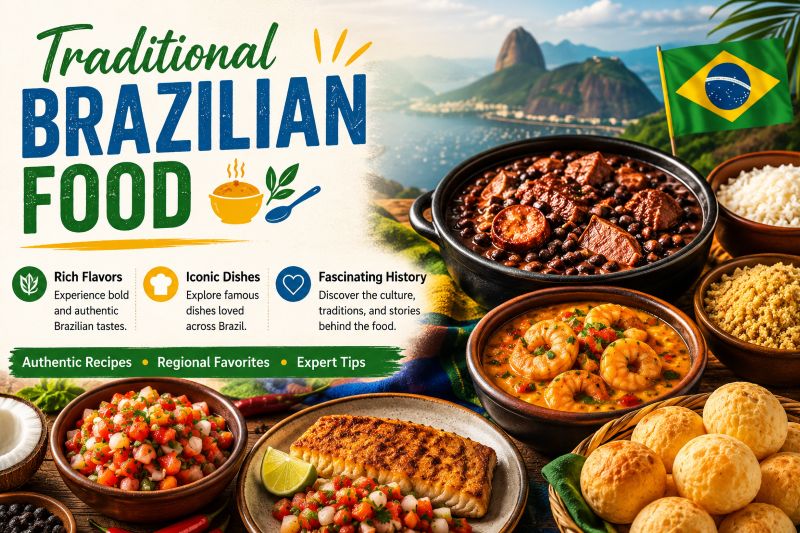
Traditional Brazilian Food features rich flavors, iconic dishes, and fascinating history. Discover authentic recipes, regional favorites, and expert tips.
Introduction
Brazil is famous for its vibrant culture, breathtaking landscapes, and lively festivals, but one of its greatest treasures is its cuisine. Traditional Brazilian Food reflects centuries of cultural exchange, blending Indigenous ingredients with Portuguese, African, European, and Asian culinary traditions. Every region of Brazil has its own specialties, creating an exciting variety of flavors that appeal to food lovers from around the world.

Whether you’re planning a trip to Brazil or simply looking to explore new cuisines at home, traditional Brazilian dishes offer an unforgettable culinary experience. From hearty bean stews and smoky barbecue to cheesy bread and tropical desserts, Brazilian cuisine combines fresh local ingredients with time-honored cooking techniques.
In this guide, you’ll discover the fascinating history of Traditional Brazilian Food, learn what makes it unique, and explore seven iconic dishes that every food enthusiast should try in 2026.
The Rich History of Traditional Brazilian Food
The story of Traditional Brazilian Food begins thousands of years before European explorers arrived in South America. Indigenous communities living throughout Brazil relied on the country’s rich natural resources, harvesting cassava, maize, sweet potatoes, tropical fruits, fish, and wild game. Cassava, also known as manioc, became one of the most important ingredients and remains a staple in Brazilian kitchens today.
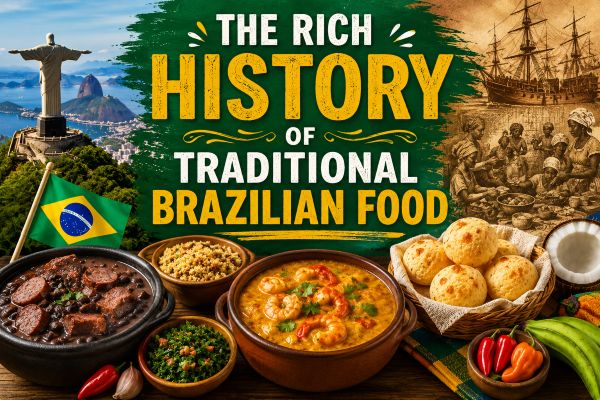
In 1500, Portuguese explorers reached Brazil and introduced entirely new ingredients and cooking traditions. Wheat, sugarcane, olive oil, cattle, pigs, chickens, citrus fruits, and wine quickly became part of local diets. Portuguese cooking techniques mixed naturally with Indigenous ingredients, creating the foundation of modern Brazilian cuisine.
During the colonial period, millions of Africans were brought to Brazil through the transatlantic slave trade. Although this history is deeply painful, African communities profoundly shaped Brazilian food culture. They introduced ingredients such as palm oil, okra, coconut milk, black-eyed peas, and flavorful spices that transformed regional dishes, particularly in Bahia.
Later waves of immigrants from Italy, Germany, Japan, Lebanon, Syria, and Spain further enriched Brazil’s culinary identity.In more recent centuries, immigration from Japan has further enriched Brazil’s food culture, especially in major cities like São Paulo, where Japanese culinary traditions have blended seamlessly with local flavors.
Modern Traditional Brazilian Food is a delicious reflection of this multicultural history, celebrating diversity through every meal.
Regional Flavors Across Brazil
Brazil’s enormous size and diverse landscapes have created a rich variety of regional cuisines, each shaped by local ingredients, climate, and cultural heritage.

From Amazonian seafood and tropical fruits in the north to the famous churrasco barbecue of the south, every region offers unique flavors that make Traditional Brazilian Food one of the world’s most diverse and exciting culinary experiences.
Northern Brazil
The Amazon rainforest provides unique ingredients such as açaí berries, tucupi sauce, freshwater fish, Brazil nuts, and exotic fruits. Local dishes often highlight the natural flavors of the rainforest.
Northeastern Brazil
African culinary traditions strongly influence this region. Palm oil, shrimp, coconut milk, peanuts, and spicy seasonings create bold, colorful dishes like Moqueca and Acarajé.
Central-West Brazil
Known for cattle ranching, this region serves grilled meats, freshwater fish, rice dishes, and hearty stews.
Southeastern Brazil
Home to Rio de Janeiro and São Paulo, the southeast offers an incredible mix of international and traditional cuisine. Feijoada, Pão de Queijo, and Coxinha remain local favorites.
Southern Brazil
European immigration greatly influenced southern Brazil. German and Italian traditions blend with Brazil’s famous churrasco barbecue culture.
1. Feijoada – Brazil’s National Dish
When discussing Traditional Brazilian Food, Feijoada is often the first dish that comes to mind. Regarded as Brazil’s national dish, this hearty black bean stew reflects the country’s rich cultural heritage and centuries of culinary tradition.
It is traditionally prepared with black beans, beef, smoked sausage, pork, garlic, onions, and flavorful seasonings, then slow-cooked for several hours to develop a deep, savory taste. Feijoada is commonly served with steamed white rice, farofa, sautéed collard greens, and fresh orange slices, creating a perfectly balanced meal that remains a beloved favorite across Brazil.
Traditionally, Feijoada is served with:
- White rice
- Farofa (toasted cassava flour)
- Sliced oranges
- Collard greens
- Hot sauce
The fresh oranges help balance the richness of the stew, while farofa adds a pleasant crunchy texture.
Families throughout Brazil often prepare Feijoada during weekends when everyone gathers around the table for a long, relaxing lunch.
Besides its incredible flavor, Feijoada provides protein, fiber, iron, and essential nutrients, making it both delicious and filling.
2. Pão de Queijo – Brazil’s Famous Cheese Bread
Among the most iconic examples of Traditional Brazilian Food, Pão de Queijo is a favorite snack enjoyed throughout Brazil and around the world. Originating in the state of Minas Gerais, these delicious cheese bread rolls are made with cassava (tapioca) flour instead of wheat flour, making them naturally gluten-free.
The dough is blended with eggs, milk, oil, and flavorful cheese before being baked to perfection. With a crispy golden crust and a soft, chewy, cheesy center, Pão de Queijo is commonly served for breakfast, afternoon coffee, or as a tasty snack, delighting both locals and visitors alike.
The dough typically includes:
- Cassava flour
- Eggs
- Milk
- Vegetable oil
- Parmesan cheese
- Minas cheese
Once baked, Pão de Queijo develops a crispy golden crust while remaining soft and cheesy inside.
People enjoy these tasty bread rolls for breakfast, afternoon coffee, or as a quick snack throughout the day.
Their light texture and rich cheese flavor have helped them become one of the most recognizable examples of Traditional Brazilian Food outside Brazil.
3. Moqueca – Brazil’s Flavorful Seafood Stew
Among the most celebrated examples of Traditional Brazilian Food, Moqueca stands out for its rich aroma and comforting taste. This traditional seafood stew is especially popular along Brazil’s northeastern and southeastern coasts, where fresh fish and shellfish are abundant.
Moqueca is typically prepared with white fish, shrimp, onions, tomatoes, garlic, bell peppers, fresh cilantro, coconut milk, and dendê (palm) oil. These ingredients are gently simmered together in a clay pot, allowing the flavors to blend into a creamy and fragrant broth.
There are two famous regional versions:
- Moqueca Baiana from Bahia features coconut milk and palm oil, creating a rich and colorful dish with African influences.
- Moqueca Capixaba from Espírito Santo uses olive oil, fresh herbs, and annatto instead of coconut milk, resulting in a lighter flavor.
Moqueca is usually served with steamed white rice, farofa, and a spicy pepper sauce. The combination of fresh seafood, aromatic herbs, and creamy coconut milk makes this dish a favorite among both locals and international travelers.
Besides being delicious, Moqueca is rich in lean protein, healthy fats, vitamins, and minerals from fresh vegetables and seafood.
4. Acarajé – A Famous Brazilian Street Food
No guide to Traditional Brazilian Food would be complete without mentioning Acarajé, one of Brazil’s most famous street foods.
Originally brought to Brazil by African communities, Acarajé has become an iconic specialty of Bahia. It reflects the deep cultural connection between Brazil and West Africa while showcasing the country’s remarkable culinary diversity.
The crispy fritters are made from mashed black-eyed peas mixed with onions and seasonings before being deep-fried in palm oil until golden brown.
After frying, each fritter is sliced open and generously filled with:
- Spicy shrimp paste
- Vatapá (a creamy mixture of bread, peanuts, shrimp, coconut milk, and palm oil)
- Fresh salad
- Dried shrimp
- Hot pepper sauce
Every bite delivers a delightful contrast of textures, featuring a crisp golden shell, a tender center, and a perfectly balanced combination of savory spices and rich, satisfying flavors.
In Salvador, the capital of Bahia, Acarajé is more than just food. It is an important symbol of Afro-Brazilian culture and is often sold by women dressed in traditional white clothing.
Visitors looking for an authentic taste of Brazil should not miss this unforgettable street food experience.
5. Churrasco – Brazil’s Legendary Barbecue
When people think about Brazilian cuisine, Churrasco often comes to mind. This world-famous barbecue tradition is one of the finest examples of Traditional Brazilian Food and has gained international popularity.
Originating in southern Brazil, Churrasco began with the gauchos, or Brazilian cowboys, who slowly grilled beef over open wood fires while working on the vast grasslands.
Today, Churrasco includes a wide variety of meats, such as:
- Beef
- Pork
- Chicken
- Lamb
- Sausages
The meat is seasoned simply with coarse salt, allowing its natural flavor to shine. Large cuts are grilled over charcoal or open flames and sliced directly onto diners’ plates.
Traditional side dishes include:
- Farofa
- Potato salad
- Rice
- Black beans
- Fresh salads
- Grilled vegetables
Many Brazilian steakhouses, known as churrascarias, serve meat continuously in the traditional rodízio style, where servers bring freshly grilled cuts directly to each table.
High-quality Brazilian beef and expert grilling techniques have helped Churrasco earn worldwide recognition among barbecue enthusiasts.
6. Coxinha – Brazil’s Favorite Savory Snack
Another beloved example of Traditional Brazilian Food is Coxinha, a delicious snack enjoyed by people of all ages.
Coxinha features a soft dough made from wheat flour and chicken broth. The dough is filled with seasoned shredded chicken, often mixed with cream cheese or catupiry cheese, then shaped to resemble a chicken drumstick.
Each piece is coated in breadcrumbs before being deep-fried until perfectly golden and crispy.
The result is a crunchy exterior with a warm, creamy filling that makes Coxinha incredibly satisfying.
Today, bakeries, cafés, and street vendors throughout Brazil sell fresh Coxinhas daily. They are commonly served at birthday parties, family gatherings, and afternoon coffee breaks.
Modern versions also include fillings such as:
- Beef
- Shrimp
- Cheese
- Vegetables
- Mushrooms
Although recipes continue to evolve, the classic chicken version remains Brazil’s most popular.
7. Brigadeiro – Brazil’s Sweet Celebration Treat
After enjoying Brazil’s savory dishes, it’s time for dessert.
Brigadeiro is one of Brazil’s most famous sweets and an essential part of birthdays, weddings, and celebrations.
This simple yet irresistible dessert is made using only a few ingredients:
- Sweetened condensed milk
- Cocoa powder
- Butter
- Chocolate sprinkles
The mixture is slowly cooked until thick, rolled into bite-sized balls, and coated with chocolate sprinkles.
Despite its simplicity, Brigadeiro delivers a rich chocolate flavor and smooth texture that appeals to children and adults alike.
Today, creative variations include:
- Pistachio Brigadeiro
- Coconut Brigadeiro
- White chocolate Brigadeiro
- Coffee Brigadeiro
- Salted caramel Brigadeiro
Many gourmet dessert shops now offer premium versions using Belgian chocolate and artisanal ingredients.
For anyone exploring Traditional Brazilian Food, Brigadeiro is the perfect sweet ending to a memorable meal.
Essential Ingredients Used in Traditional Brazilian Food
One reason Traditional Brazilian Food tastes so unique is its use of fresh, locally sourced ingredients. These ingredients have shaped Brazilian cooking for centuries and continue to define the country’s culinary identity.
Some of the most common ingredients include:
- Cassava (manioc)
- Black beans
- White rice
- Coconut milk
- Palm oil (dendê)
- Fresh seafood
- Beef and pork
- Tropical fruits such as mango, papaya, guava, passion fruit, and açaí
- Cilantro and parsley
- Garlic and onions
- Bell peppers
- Lime
- Cheese
- Corn
These ingredients are combined in countless ways, creating meals that are colorful, nutritious, and full of flavor.
Traditional Cooking Methods
Brazilian families often rely on cooking techniques that have been passed down through generations. These methods help preserve the authentic taste of Traditional Brazilian Food.
Popular cooking techniques include:
- Slow simmering for hearty stews like Feijoada
- Charcoal grilling for Churrasco
- Clay-pot cooking for Moqueca
- Deep frying for Acarajé and Coxinha
- Baking for Pão de Queijo
- Roasting meats and vegetables
- Fresh fruit preparation for desserts and juices
These traditional methods enhance natural flavors without relying on overly processed ingredients.
Traditional Brazilian Drinks
Brazilian cuisine is complemented by refreshing beverages made from tropical fruits and local ingredients.
Popular drinks include:
- Caipirinha – Brazil’s iconic lime cocktail made with cachaça, sugar, and fresh lime.
- Guaraná Soft Drink – A popular fizzy beverage made from Amazonian guaraná berries.
- Fresh Sugarcane Juice – Sweet and refreshing, especially on hot days.
- Açaí Smoothies – Packed with antioxidants and tropical flavor.
- Passion Fruit Juice – A tangy and refreshing favorite served across Brazil.
- Coconut Water – Naturally hydrating and widely available along Brazil’s beaches.
These drinks pair perfectly with traditional meals and highlight Brazil’s abundant tropical produce.
Traditional Brazilian Desserts You Should Try
Brazil’s desserts are every bit as memorable as its savory dishes. Influenced by Portuguese baking traditions and enriched with tropical fruits and local ingredients, Brazilian sweets offer the perfect ending to any meal.
Quindim
Quindim is one of Brazil’s most recognizable desserts. Made with egg yolks, sugar, butter, and shredded coconut, it has a glossy golden top and a smooth, custard-like texture. Its rich flavor and vibrant appearance make it a favorite at celebrations and family gatherings.
Beijinho
Often called the coconut cousin of Brigadeiro, Beijinho is prepared with sweetened condensed milk, butter, and grated coconut. Rolled into small balls and decorated with a clove, it is a popular treat at birthdays and festive occasions.
Romeu e Julieta
This classic dessert pairs slices of mild white cheese with sweet guava paste. The combination of creamy and fruity flavors is simple yet unforgettable and perfectly represents Brazil’s love of balancing sweet and savory ingredients.
Açaí Bowl
Originally from the Amazon region, açaí bowls have become popular worldwide. The frozen açaí berry is blended into a thick smoothie and topped with fresh fruit, granola, coconut, or honey. It is both refreshing and nutritious, making it an excellent breakfast or snack.
Pudim de Leite
Brazilian caramel flan, known as Pudim de Leite, is silky smooth and topped with a rich caramel sauce. This beloved dessert appears on dinner tables throughout Brazil and is often prepared for family celebrations.
Why Traditional Brazilian Food Is Becoming More Popular Worldwide
Interest in Traditional Brazilian Food has grown rapidly over the past decade. Travelers, chefs, and food enthusiasts are discovering the incredible variety and authenticity of Brazil’s culinary traditions.
Several factors contribute to its global popularity:
- Diverse regional flavors that appeal to different tastes.
- Fresh, locally sourced ingredients.
- Unique dishes that cannot easily be found elsewhere.
- A balance of hearty comfort food and healthy meals.
- Growing international awareness through tourism and social media.
- Brazilian steakhouses and specialty restaurants opening in many countries.
- Increased interest in South American cuisine.
From upscale restaurants to neighborhood cafés, Brazilian food continues to win the hearts of diners around the world.
Conclusion
Traditional Brazilian Food is a remarkable celebration of history, culture, and flavor. From Indigenous roots and Portuguese influences to African traditions and immigrant contributions, Brazilian cuisine tells the story of a nation shaped by diversity. Iconic dishes such as Feijoada, Pão de Queijo, Moqueca, Acarajé, Churrasco, Coxinha, and Brigadeiro showcase the creativity and richness of Brazil’s culinary heritage.
Whether you’re planning a trip to Brazil, searching for new recipes, or simply expanding your knowledge of world cuisines, exploring traditional Brazilian food is a rewarding experience. Every region offers unique specialties, every meal carries a piece of history, and every bite reflects Brazil’s passion for fresh ingredients and warm hospitality.
If you’re looking for unforgettable flavors in 2026, Traditional Brazilian Food deserves a place at the top of your culinary bucket list.
Frequently Asked Questions (FAQs)
1. What is Traditional Brazilian Food?
Traditional Brazilian Food refers to the authentic dishes that have developed over centuries through the influence of Indigenous peoples, Portuguese settlers, African communities, and immigrants from Europe, Asia, and the Middle East. These dishes highlight fresh local ingredients, regional diversity, and Brazil’s rich cultural heritage.
2. What is Brazil’s national dish?
Brazil’s national dish is Feijoada, a slow-cooked black bean stew made with beef, pork, and sausage. It is traditionally served with rice, farofa, collard greens, and orange slices.
3. What are the most popular Traditional Brazilian Food dishes?
Some of the most famous dishes include Feijoada, Pão de Queijo, Moqueca, Churrasco, Coxinha, Acarajé, Brigadeiro, Vatapá, Farofa, and Tapioca.
4. Is Traditional Brazilian Food spicy?
Most Brazilian dishes are mildly seasoned rather than extremely spicy. However, some regional recipes from Bahia include hot peppers and flavorful spices that add extra heat.
5. What ingredients are commonly used in Brazilian cuisine?
Common ingredients include cassava, black beans, rice, coconut milk, palm oil, fresh seafood, beef, pork, tropical fruits, cheese, garlic, onions, herbs, and peppers.
6. Is Brazilian food healthy?
Many traditional Brazilian meals are nutritious because they feature lean proteins, beans, vegetables, seafood, and fresh fruits. Eating balanced portions and limiting fried foods can make Brazilian cuisine part of a healthy diet.
7. What is the most famous Brazilian dessert?
Brigadeiro is one of Brazil’s best-known desserts. These chocolate truffles made with condensed milk, butter, cocoa powder, and chocolate sprinkles are enjoyed at celebrations across the country.
8. What is Brazil famous for besides Churrasco?
In addition to Churrasco, Brazil is known for Feijoada, Moqueca, Pão de Queijo, Acarajé, tropical fruits, fresh coffee, and vibrant street food culture.
9. Can vegetarians enjoy Traditional Brazilian Food?
Yes. Vegetarian options include cheese bread, tapioca pancakes, rice and beans, grilled vegetables, fresh salads, tropical fruits, and several cassava-based dishes. Many restaurants also offer plant-based versions of traditional recipes.
10. Why is Traditional Brazilian Food popular around the world?
Traditional Brazilian Food is loved worldwide because it combines diverse cultural influences, fresh ingredients, bold yet balanced flavors, and a wide variety of dishes that suit different tastes. Its authenticity and regional diversity continue to attract food lovers and travelers alike.