
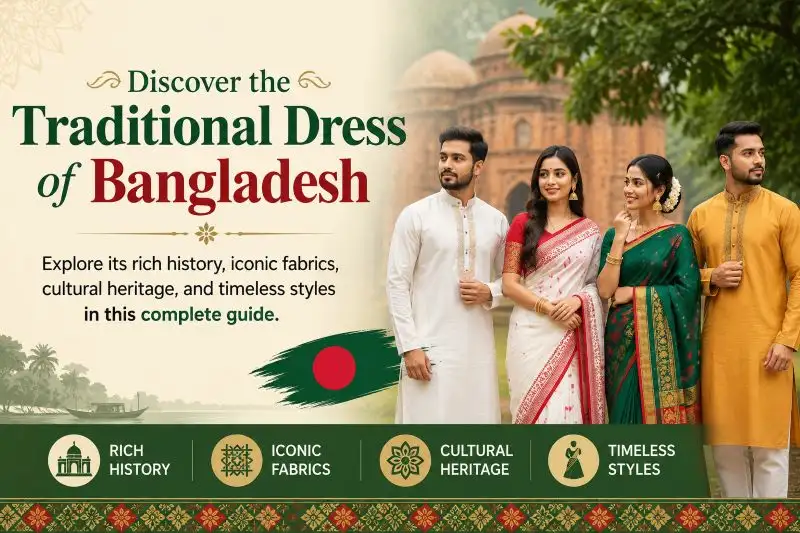
Discover the Traditional Dress of Bangladesh, explore its rich history, iconic fabrics, cultural heritage, and timeless styles in this complete guide.
Traditional Dress of Bangladesh: A Complete Guide to History, Culture, and Timeless Fashion
The Traditional Dress of Bangladesh is more than just clothing—it is a living symbol of the nation’s history, cultural identity, and artistic heritage. Every saree, Panjabi, lungi, and handcrafted fabric tells a story that has been passed down through generations. From colorful village festivals to elegant wedding ceremonies and national celebrations, traditional clothing continues to play a meaningful role in the daily lives of millions of Bangladeshis.
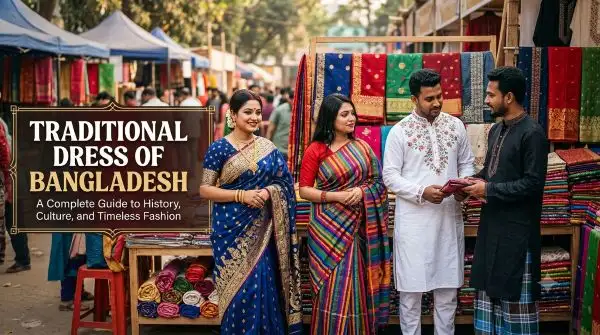
Bangladesh is widely admired for its rich textile traditions. Skilled artisans have spent centuries weaving some of the world’s finest fabrics, including the legendary Jamdani, delicate Muslin, vibrant Tangail sarees, luxurious silk, and comfortable Khadi. These handmade textiles not only reflect exceptional craftsmanship but also represent the country’s enduring cultural legacy.
Today, the Traditional Dress of Bangladesh continues to evolve while preserving its authentic roots. Modern designers blend traditional patterns with contemporary fashion, making classic attire popular among younger generations and international fashion enthusiasts alike. Whether worn during Pohela Boishakh, weddings, Eid celebrations, or cultural events, traditional clothing remains a proud expression of Bangladeshi heritage.
In this comprehensive guide, you’ll discover the fascinating history, cultural significance, iconic fabrics, and traditional clothing styles that make Bangladesh one of South Asia’s most vibrant centers of textile and fashion culture.
History of Traditional Dress of Bangladesh
The Traditional Dress of Bangladesh has a rich and fascinating history that dates back thousands of years to the ancient Bengal civilization. Early communities created clothing from locally grown cotton and natural fibers, producing lightweight garments suited to the country’s warm and humid climate.
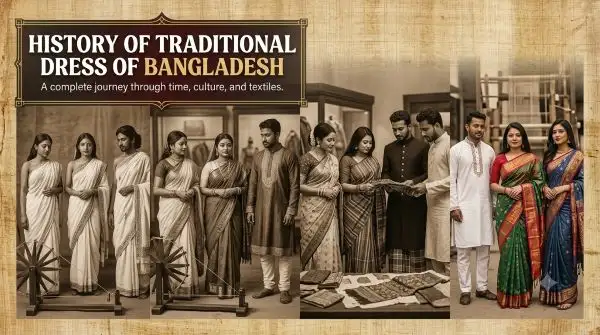
Over time, the region’s fashion evolved through the influence of Hindu, Buddhist, and Muslim cultures, as well as the powerful Mughal Empire, which introduced luxurious textiles and refined weaving techniques. Bangladesh became world-famous for its delicate Muslin and beautifully handcrafted Jamdani fabrics, admired by royalty and traders across Asia and Europe.
Although colonial rule and industrialization brought significant changes to local clothing traditions, skilled artisans continued preserving centuries-old handloom techniques. Today, the Traditional Dress of Bangladesh remains a proud symbol of the nation’s cultural heritage, artistic craftsmanship, and historical identity, blending timeless traditions with modern fashion while honoring the country’s remarkable textile legacy.
Ancient Roots
Long before Bangladesh became an independent nation, people living in the Bengal region created clothing from locally available cotton and natural fibers. The warm tropical climate encouraged the use of lightweight, breathable fabrics that were comfortable throughout the year.
Simple wrapped garments gradually developed into the elegant saree, one of the oldest surviving forms of clothing in the world. Men traditionally wore garments similar to the dhoti, while women draped beautifully woven cotton fabrics that reflected simplicity and elegance.
Village weavers became highly respected for producing fine handwoven textiles. Their techniques were carefully passed from one generation to another, creating a strong foundation for Bangladesh’s famous textile industry.
The Mughal Era and the Rise of Muslin
The Mughal period marked one of the greatest chapters in Bangladesh’s textile history. During this time, Bengal gained worldwide recognition for producing extraordinary Muslin, an incredibly soft and lightweight cotton fabric admired across Asia, Europe, and the Middle East.

Muslin became known as the “woven air” because of its exceptional fineness. Royal families and wealthy merchants eagerly collected these luxurious fabrics, making Bengal one of the world’s leading textile centers.
Another masterpiece that flourished during this era was the exquisite Jamdani saree. Handwoven with intricate floral and geometric motifs, Jamdani remains one of Bangladesh’s most treasured cultural symbols and continues to be admired around the world today.
Colonial Influence and Cultural Preservation
During British colonial rule, machine-made textiles began replacing many traditional handwoven fabrics. Local weaving communities faced significant challenges as imported clothing became increasingly common.
Despite these hardships, rural artisans continued preserving traditional weaving techniques. Families maintained their craft by producing sarees, lungis, gamchas, and household textiles using handlooms. Their dedication ensured that Bangladesh’s textile heritage survived for future generations.
Following independence in 1971, renewed national pride encouraged greater appreciation for traditional clothing. Today, both government initiatives and private organizations actively support handloom industries, helping preserve centuries-old craftsmanship.
Cultural Significance of Traditional Dress of Bangladesh
The Traditional Dress of Bangladesh represents much more than fashion. It reflects identity, history, family traditions, artistic creativity, and national pride.
Traditional clothing is closely connected with important celebrations throughout the year. During Pohela Boishakh, people often wear white outfits decorated with vibrant red accents, symbolizing joy, prosperity, and new beginnings. Weddings feature magnificent sarees with intricate embroidery, while Eid celebrations inspire families to wear beautifully crafted traditional attire.
Each region of Bangladesh contributes its own distinctive weaving styles, colors, and patterns. These regional differences enrich the country’s cultural diversity while strengthening local identities.
Traditional garments also support thousands of skilled artisans. Handloom weaving, embroidery, dyeing, and textile production continue providing employment for communities across Bangladesh, helping preserve valuable cultural knowledge while contributing to the national economy.
As interest in sustainable fashion grows worldwide, handcrafted Bangladeshi textiles have gained even greater appreciation. Choosing traditional clothing supports local artisans and promotes environmentally friendly production methods rooted in centuries-old craftsmanship.
Traditional Dress of Bangladesh for Women
When discussing the Traditional Dress of Bangladesh, women’s clothing stands out for its remarkable beauty, elegance, and cultural significance.
The Timeless Saree
The saree is widely recognized as the most iconic traditional attire for Bangladeshi women. It is worn during weddings, religious celebrations, festivals, family gatherings, and cultural programs.
Bangladesh produces several famous varieties of sarees, each with unique characteristics:
- Jamdani Saree – Renowned for delicate handwoven floral patterns and UNESCO-recognized craftsmanship.
- Tangail Saree – Lightweight, colorful, and ideal for both festive occasions and everyday elegance.
- Muslin Saree – Inspired by the legendary fabric that once captivated royal courts around the world.
- Rajshahi Silk Saree – Luxurious, smooth, and especially popular during weddings and formal celebrations.
- Khadi Saree – Comfortable, breathable, and increasingly favored for sustainable fashion.
Women often pair sarees with beautifully designed blouses, elegant jewelry, bangles, and handcrafted accessories that complete the traditional look.
Salwar Kameez
Alongside the saree, the Salwar Kameez has become one of the most popular traditional outfits in Bangladesh. It offers comfort while maintaining cultural elegance, making it suitable for work, education, festivals, and daily wear.
Modern Bangladeshi designers continue introducing creative patterns, embroidery, and fabric combinations that blend traditional aesthetics with contemporary fashion trends. As a result, women of all ages enjoy clothing that respects cultural heritage while reflecting personal style.
Traditional Dress of Bangladesh for Men
The Traditional Dress of Bangladesh is equally meaningful for men, combining comfort, elegance, and cultural identity. For centuries, Bangladeshi men have worn traditional garments that suit the country’s tropical climate while reflecting its rich heritage. Today, these classic outfits remain popular during festivals, religious celebrations, weddings, and official events.
Panjabi – A Symbol of Elegance
The Panjabi is one of the most iconic pieces of the Traditional Dress of Bangladesh for men, representing elegance, tradition, and cultural pride. This long tunic is commonly paired with pajamas or trousers and is crafted from premium fabrics such as cotton, silk, linen, Khadi, and Jamdani.
Worn during Eid, Pohela Boishakh, weddings, and cultural events, the Panjabi combines timeless style with comfort. Modern designers have introduced contemporary cuts and embroidery while preserving its traditional charm, making it a favorite choice for men of all ages.
Men commonly wear Panjabis during:
- Eid celebrations
- Pohela Boishakh (Bengali New Year)
- Weddings
- Cultural festivals
- Family gatherings
- National celebrations
Modern fashion designers have introduced embroidered collars, handcrafted patterns, and premium fabrics while preserving the Panjabi’s traditional appearance. This blend of heritage and modern style has made it a favorite among younger generations.
Lungi – Everyday Traditional Comfort
The lungi has been a practical part of Bangladeshi life for hundreds of years. Made from lightweight cotton, it is especially popular in rural communities because it provides comfort during the country’s warm and humid weather.
Although the lungi is mostly worn at home or during casual activities today, it remains an important symbol of Bangladesh’s rural traditions and simple lifestyle.
Fatua and Dhoti
The Fatua is a short traditional cotton shirt often worn during summer because of its breathable fabric. It pairs well with trousers or lungis for a relaxed yet traditional look.
The Dhoti, though less common today, holds historical importance. It was once widely worn across Bengal and is still seen during certain religious ceremonies and cultural performances.
Famous Traditional Fabrics of Bangladesh
One of the greatest strengths of the Traditional Dress of Bangladesh is its world-renowned textile heritage. For centuries, skilled Bangladeshi artisans have handcrafted beautiful fabrics using techniques passed down through generations.
Among the most celebrated are Jamdani, famous for its intricate woven patterns, Muslin, once prized by royal families for its softness, Tangail cotton, known for its lightweight elegance, Rajshahi silk, admired for its luxurious texture, and Khadi, valued for its eco-friendly, handwoven quality.
These traditional fabrics are used to create stunning sarees, Panjabis, scarves, and other garments that reflect Bangladesh’s rich cultural identity. Today, these timeless textiles continue to attract fashion lovers from around the world, supporting local handloom industries while preserving centuries-old craftsmanship.
Their exceptional quality, artistic designs, and historical significance make them an essential part of Bangladesh’s cultural heritage and traditional fashion.
Jamdani
Jamdani is considered Bangladesh’s national treasure. Handwoven using centuries-old techniques, it features elegant floral and geometric motifs created directly on the loom.
Each Jamdani saree may take weeks or even months to complete, making every piece unique. Its intricate craftsmanship has earned worldwide recognition and remains one of Bangladesh’s greatest cultural achievements.
Muslin
Muslin is one of the most famous fabrics in textile history. Originating in Bengal, it became highly valued by kings, queens, and merchants because of its extraordinary softness and lightweight texture.
Although the original weaving techniques nearly disappeared, dedicated artisans have helped revive this historic fabric, preserving an important part of Bangladesh’s heritage.
Tangail Cotton
Tangail sarees are loved for their lightweight feel, colorful borders, and elegant designs. They are suitable for both everyday wear and special occasions, making them one of Bangladesh’s most popular traditional textiles.
Rajshahi Silk
Produced mainly in northern Bangladesh, Rajshahi silk offers a luxurious finish that is perfect for weddings and formal celebrations. Its smooth texture and rich colors make it highly desirable.
Khadi
Khadi is entirely hand-spun and handwoven, making it an environmentally friendly choice. As sustainable fashion gains popularity, Khadi clothing continues attracting people who value both tradition and responsible craftsmanship.
Regional Variations of Traditional Dress
The Traditional Dressof Bangladesh reflects the country’s rich cultural diversity, with each region contributing its own unique styles, weaving techniques, and textile traditions. These regional variations showcase the creativity and heritage of local artisans while preserving centuries-old craftsmanship.
Dhaka is internationally renowned for its exquisite Jamdani sarees, featuring delicate handwoven floral and geometric patterns that symbolize elegance and luxury. The Tangail region is famous for producing lightweight cotton sarees with colorful borders and intricate designs, making them a favorite for both everyday wear and festive occasions.
Rajshahi is widely recognized as the heart of Bangladesh’s silk industry, producing premium silk fabrics and sarees admired for their smooth texture and vibrant colors.
Meanwhile, Cumilla has earned a strong reputation for its high-quality Khadi textiles, which are handcrafted using traditional weaving methods and appreciated for their comfort and sustainability.
In the Chittagong Hill Tracts, Indigenous communities such as the Chakma, Marma, Tripura, Tanchangya, and Mro create colorful handwoven garments decorated with striking geometric patterns. These distinctive regional clothing traditions highlight the cultural richness of Bangladesh and make the Traditional Dress of Bangladesh a remarkable symbol of national identity, artistic excellence, and timeless heritage.
How Contemporary Fashion Is Reshaping the Traditional Dress of Bangladesh
The Traditional Dress of Bangladesh has evolved beautifully with changing fashion trends while preserving its cultural roots and timeless appeal. Today, leading fashion designers blend traditional craftsmanship with modern cuts, elegant embroidery, vibrant colors, and contemporary silhouettes to create outfits that suit both everyday wear and special occasions.
As a result, classic garments such as Panjabis, Khadi kurtas, Jamdani sarees, and Tangail cotton sarees have become increasingly popular among younger generations. These traditional outfits are now commonly worn at universities, offices, cultural events, weddings, and social gatherings, reflecting a perfect balance between heritage and modern style.
The rise of e-commerce and social media has also transformed the popularity of the Traditional Dress of Bangladesh. Local fashion brands and independent artisans can now showcase handcrafted clothing to customers around the world, helping preserve Bangladesh’s rich textile heritage while expanding international recognition.
At the same time, growing awareness of sustainable fashion has encouraged consumers to choose eco-friendly, handwoven fabrics such as Khadi and Jamdani. By supporting traditional weaving communities, buyers not only enjoy high-quality garments but also help protect centuries-old craftsmanship, empower local artisans, and ensure that Bangladesh’s remarkable cultural legacy continues to thrive for future generations.
Frequently Asked Questions (FAQs)
1. Exploring the Traditional Clothing of Bangladesh?
The Traditional Dress of Bangladesh includes the saree for women and the Panjabi with pajama or the lungi for men. These garments represent the country’s rich cultural heritage and continue to be widely worn during festivals, weddings, and religious celebrations.
2. Which fabric is most famous in Bangladesh?
Jamdani is considered the most famous traditional fabric. Bangladesh is also internationally recognized for Muslin, Tangail cotton, Rajshahi silk, and Khadi.
3. Why is Jamdani so special?
Jamdani is entirely handwoven using traditional techniques and features intricate floral and geometric motifs. Its exceptional craftsmanship makes it one of the world’s finest woven textiles.
4. Do people still wear traditional clothes in Bangladesh?
Yes. Traditional clothing remains popular during Eid, Pohela Boishakh, weddings, cultural festivals, family celebrations, and many formal occasions. Many people also incorporate traditional garments into everyday fashion.
5. Why is traditional clothing important?
Traditional clothing preserves cultural identity, supports local artisans, promotes handcrafted textiles, and connects younger generations with Bangladesh’s rich history and heritage.
Conclusion
The Traditional Dress of Bangladesh is a remarkable reflection of the country’s rich history, cultural heritage, and exceptional textile craftsmanship. From the elegant Jamdani and Tangail sarees worn by women to the classic Panjabi, lungi, and Khadi garments favored by men, every traditional outfit carries a story that has been preserved through generations.
These timeless garments are more than fashion—they symbolize national identity, artistic creativity, and the enduring traditions of the Bangladeshi people.Today, the Traditional Dress of Bangladesh continues to inspire both local and international fashion enthusiasts. Modern designers skillfully combine traditional weaving techniques with contemporary styles, ensuring that these cultural treasures remain relevant in today’s fashion world.
At the same time, choosing authentic handmade clothing supports local artisans, strengthens the handloom industry, and helps preserve centuries-old craftsmanship for future generations.Whether you are celebrating Pohela Boishakh, Eid, attending a wedding, or simply exploring Bangladesh’s vibrant culture, traditional clothing offers the perfect blend of elegance, comfort, and authenticity.
By embracing the Traditional Dress of Bangladesh, you celebrate a proud cultural legacy while contributing to the preservation of one of South Asia’s most treasured textile traditions. It is a timeless symbol of beauty, heritage, and national pride that will continue to inspire generations to come.