
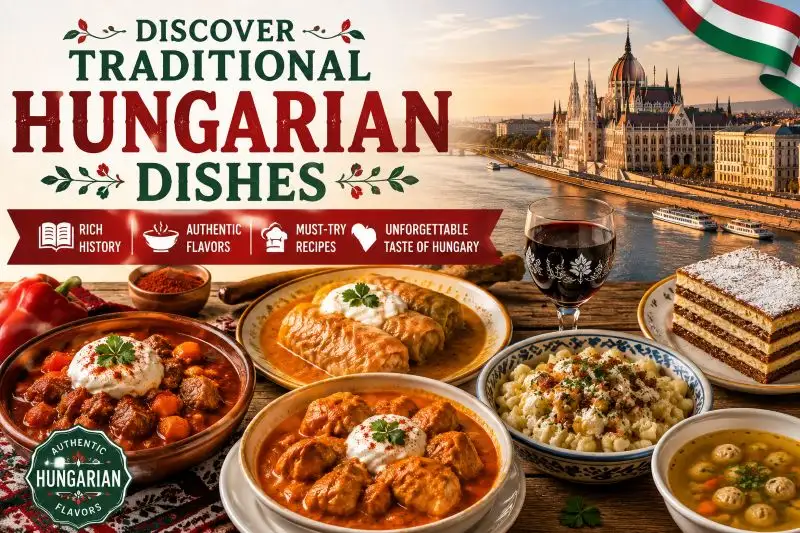
Discover Traditional Hungarian Dishes, explore their rich history, authentic flavors, and must-try recipes for an unforgettable taste of Hungary.
Traditional Hungarian Dishes: Discover Hungary’s Rich Culinary Heritage
Hungary is a country where food is much more than a daily necessity—it’s a celebration of culture, history, and family traditions. Traditional Hungarian Dishes are famous across Europe for their bold flavors, rich aromas, and comforting recipes passed down through generations. Whether you’re planning a trip to Budapest, searching for authentic European cuisine, or simply love exploring international food, Hungarian cooking offers an unforgettable culinary experience.
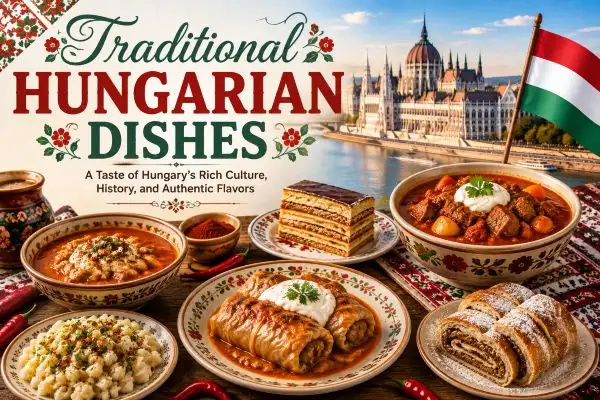
What makes Hungarian cuisine unique is its perfect balance of spices, slow-cooked meats, fresh vegetables, homemade bread, and world-famous paprika. Every region of Hungary has its own specialties, yet they all share a common passion for hearty meals prepared with care. From the iconic Hungarian Goulash to crispy Lángos and creamy Chicken Paprikash, each dish tells a story of the country’s agricultural roots, royal influences, and centuries-old traditions.
Today, Traditional Hungarian Dishes continue to attract millions of travelers and food lovers looking to experience authentic local flavors. Whether enjoyed in a family kitchen, a countryside inn, or a Michelin-starred restaurant, these timeless recipes remain an essential part of Hungary’s cultural identity.
The Rich History of Traditional Hungarian Dishes
The history of Traditional Hungarian Dishes stretches back more than a thousand years, beginning with the arrival of the Magyar tribes in the Carpathian Basin during the 9th century. Early Hungarians lived as nomadic horsemen, relying on livestock, wild game, dairy products, and grains. Their meals were simple yet nourishing, often cooked over open fires in large iron kettles that allowed ingredients to simmer slowly for hours.
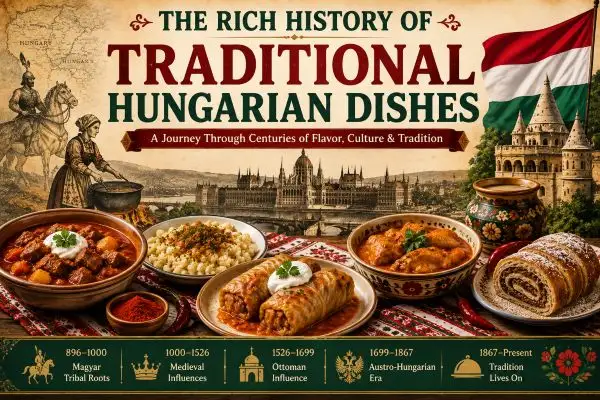
As Hungary developed into a powerful medieval kingdom, its cuisine evolved alongside its society. Trade routes introduced new ingredients such as onions, garlic, herbs, and various grains, while neighboring countries influenced cooking techniques and recipes. However, one ingredient eventually became the symbol of Hungarian cooking—paprika.
Paprika arrived in Hungary during the 16th and 17th centuries after peppers were introduced from the Americas. Hungarian farmers gradually cultivated sweeter varieties, transforming paprika into the nation’s signature spice. Today, high-quality Hungarian paprika is recognized worldwide for its vibrant color and rich flavor, giving many traditional recipes their distinctive appearance and taste.
Throughout history, Hungary experienced Ottoman occupation, Habsburg rule, and changing political landscapes. Each era left its mark on local cuisine, introducing new ingredients while preserving traditional family recipes. Noble households enjoyed elaborate feasts featuring roasted meats and pastries, while rural communities perfected hearty stews, soups, and baked dishes made from locally available ingredients.
Even today, many Traditional Hungarian Dishes are prepared using recipes that have been handed down for generations. Festivals, holidays, weddings, and family gatherings continue to revolve around homemade meals, making food an important symbol of hospitality, togetherness, and national pride.
Why Hungarian Cuisine Is Famous Worldwide
Hungarian cuisine has earned international recognition because it combines bold flavors with comforting home-style cooking. Unlike many European cuisines that rely heavily on subtle seasoning, Hungarian recipes embrace rich spices, slow cooking, and fresh ingredients to create meals full of depth and character.

One of the biggest reasons visitors fall in love with Traditional Hungarian Dishes is their remarkable use of paprika. This versatile spice appears in soups, stews, meat dishes, sauces, and even some sausages, creating the warm, slightly sweet flavor that defines Hungarian food.
Hungarian meals are also known for their generous portions and satisfying textures. Slow-cooked beef, tender chicken, smoked sausages, fresh vegetables, sour cream, homemade dumplings, and rustic bread come together to create meals that are both comforting and flavorful.
The country’s diverse geography also contributes to its rich culinary traditions. Fertile farmland provides excellent vegetables, wheat, fruits, and livestock, while nearby rivers supply fresh fish for regional specialties. Seasonal ingredients play an important role, ensuring recipes remain fresh and authentic throughout the year.
In recent years, Budapest has become one of Europe’s leading culinary destinations. Visitors from around the world now travel to Hungary specifically to experience authentic local cuisine, traditional markets, historic cafés, and modern restaurants that celebrate classic Hungarian recipes with contemporary presentation.
Traditional Cooking Methods in Hungary
The authentic taste of Traditional Hungarian Dishes comes not only from quality ingredients but also from cooking methods that have remained largely unchanged for centuries.
Slow Simmering
Many Hungarian recipes are slowly cooked for several hours, allowing meats to become tender while spices fully develop their flavor. This technique is especially important for famous stews like Goulash and Pörkölt.
Kettle Cooking
Historically, shepherds prepared meals outdoors using large cast-iron kettles known as bogrács. Even today, many festivals and family gatherings continue this tradition, producing rich, smoky flavors that cannot easily be replicated indoors.
Baking
Hungarians have a long tradition of baking fresh bread, pastries, stuffed vegetables, and desserts. Family bakeries continue producing recipes that have remained popular for generations.
Smoking and Curing
Smoked sausages, bacon, and cured meats are essential parts of Hungarian cuisine. Traditional smoking techniques preserve food naturally while adding deep, savory flavors to many recipes.
Homemade Ingredients
Many households still prepare homemade noodles, dumplings, pickles, fruit preserves, and sour cream, ensuring meals maintain their authentic character.
1. Hungarian Goulash (Gulyás)
No list of TraditionalHungarian Dishes would be complete without Gulyás, better known internationally as Hungarian Goulash.
Originally created by Hungarian cattle herders centuries ago, Goulash began as a simple soup cooked over open fires during long journeys across the countryside. Today, Goulash proudly represents Hungary’s culinary identity and is celebrated as one of the nation’s most iconic traditional foods.
Authentic Hungarian Goulash combines tender beef, onions, potatoes, carrots, tomatoes, peppers, garlic, caraway seeds, and generous amounts of sweet Hungarian paprika. Unlike many international versions that resemble thick stew, traditional Hungarian Goulash is served as a rich, flavorful soup with plenty of broth.
Its deep flavor develops through slow cooking, allowing every ingredient to blend perfectly. Fresh bread often accompanies the meal, making it both hearty and satisfying.
2. Chicken Paprikash (Paprikás Csirke)
Chicken Paprikash is one of Hungary’s most comforting family meals and a favorite among both locals and international visitors.
The dish features tender chicken slowly cooked with onions, garlic, and Hungary’s famous sweet paprika. Near the end of cooking, sour cream is added to create a smooth, creamy sauce that perfectly balances the spice.
Chicken Paprikash is traditionally served with Nokedli, soft homemade dumplings similar to German spaetzle. Together, they create a rich and satisfying meal that’s ideal for family dinners or special occasions.
Although simple ingredients are used, the careful cooking process produces an incredibly flavorful dish that highlights the importance of paprika in Hungarian cuisine.
3. Fisherman’s Soup (Halászlé)
Hungary’s rivers have inspired one of its most iconic seafood dishes—Halászlé, or Fisherman’s Soup.
Prepared mainly along the Danube and Tisza Rivers, this vibrant red soup combines fresh river fish with onions and generous amounts of Hungarian paprika.
Each region has its own variation, but the soup is always known for its bold color, rich aroma, and slightly spicy taste. Fresh bread is usually served alongside the soup, making it a popular choice during holidays and family celebrations.
For seafood lovers, Halászlé offers an authentic taste of Hungary’s fishing traditions and regional culinary heritage.
4. Stuffed Cabbage (Töltött Káposzta)
Stuffed Cabbage has remained one of the most beloved Traditional Hungarian Dishes for generations.
Tender cabbage leaves are carefully filled with seasoned minced pork, rice, onions, garlic, and paprika before being slowly cooked with sauerkraut and smoked meat.
The long cooking process allows every ingredient to absorb the rich flavors, creating a comforting meal that’s especially popular during Christmas and winter celebrations.
Served with sour cream and fresh bread, Stuffed Cabbage perfectly represents Hungary’s tradition of hearty, home-cooked comfort food.
5. Lángos
Among Hungary’s most famous street foods, Lángos is loved for its crispy exterior and soft, fluffy center.
The dough is deep-fried until golden brown, then topped with garlic butter, sour cream, grated cheese, or even ham and sausage. Modern variations include sweet toppings such as chocolate, jam, and powdered sugar, but the classic savory version remains the favorite.
You’ll find freshly made Lángos in markets, festivals, lakeside resorts, and street food stalls throughout Hungary. It’s affordable, filling, and offers visitors an authentic taste of everyday Hungarian life.
Beyond its delicious flavor, Lángos reflects Hungary’s love for simple ingredients transformed into unforgettable comfort food, making it an essential dish for anyone exploring the country’s rich culinary traditions.
6. Pörkölt – Hungary’s Famous Meat Stew
Among the most beloved Traditional Hungarian Dishes, Pörkölt is a rich and flavorful meat stew that showcases the heart of Hungarian home cooking. Although it’s often mistaken for Goulash, Pörkölt is a richer, thicker meat stew with very little liquid, making it a satisfying main dish instead of a soup.
This classic dish is usually prepared with beef, pork, chicken, lamb, or even wild game. The meat is slowly simmered with onions, tomatoes, peppers, garlic, and generous amounts of authentic Hungarian paprika. Slow cooking allows the flavors to deepen while keeping the meat tender and juicy.
Pörkölt is traditionally served with Nokedli (Hungarian dumplings), boiled potatoes, or fresh country bread. It is a favorite family meal throughout Hungary and is often prepared for Sunday lunches, holidays, and festive gatherings.
For travelers wanting to experience authentic Hungarian cuisine, Pörkölt is a must-try comfort food that perfectly represents the country’s rich culinary traditions.
7. Hortobágyi Palacsinta – Savory Hungarian Pancakes
Unlike sweet breakfast pancakes, Hortobágyi Palacsinta is a delicious savory dish filled with seasoned meat and covered in a creamy paprika sauce.
Thin homemade pancakes are stuffed with finely chopped chicken, beef, or veal that has been cooked with onions and paprika. After rolling the pancakes, they are baked and topped with a smooth sour cream and paprika sauce before serving.
Although inspired by the famous Hortobágy region, this dish became popular across Hungary because of its rich flavor and elegant presentation.
Today, it is commonly served in traditional Hungarian restaurants and is considered one of the country’s classic comfort foods. The creamy filling and delicate pancakes create a perfect balance of textures that both locals and visitors love.
8. Rakott Krumpli – Hungarian Layered Potato Casserole
Rakott Krumpli is one of Hungary’s favorite homemade dishes, especially during colder months. This baked casserole combines simple ingredients to create a filling and satisfying family meal.
Layers of sliced potatoes, boiled eggs, smoked sausage, sour cream, and cheese are carefully arranged before being baked until golden brown. Every layer absorbs the smoky flavor of the sausage while the sour cream keeps the casserole rich and creamy.
Many Hungarian families have their own treasured recipe that has been passed down through generations. Some versions also include bacon or extra paprika for added flavor.
This dish demonstrates how Traditional Hungarian Dishes transform everyday ingredients into comforting meals that bring families together around the dinner table.
9. Dobos Torte – Hungary’s Iconic Cake
Hungarian cuisine is not only famous for savory meals but also for its exceptional desserts. Dobos Torte is perhaps the country’s most celebrated cake.
Created in the late 19th century by renowned Hungarian pastry chef József Dobos, the cake quickly gained popularity throughout Europe. It features multiple thin sponge cake layers separated by smooth chocolate buttercream and finished with a glossy caramel topping.
The caramel layer not only adds sweetness but also helps preserve the cake, making it practical before modern refrigeration became common.
Today, Dobos Torte is available in bakeries and cafés across Hungary and remains one of the finest examples of Hungarian pastry craftsmanship. Visitors exploring Budapest often include this famous dessert on their culinary bucket list.
10. Kürtőskalács – Hungarian Chimney Cake
No visit to Hungary feels complete without tasting Kürtőskalács, widely known as Chimney Cake.
This sweet pastry is made by wrapping yeast dough around a wooden cylinder before roasting it over charcoal or in a special oven. As the dough cooks, sugar caramelizes on the outside, creating a crispy golden crust while the inside stays soft and fluffy.
Freshly baked Chimney Cakes are rolled in a variety of toppings, including cinnamon, walnuts, coconut, cocoa, vanilla sugar, or crushed almonds.
Although its origins date back centuries in Transylvania, Kürtőskalács has become one of Hungary’s most popular street foods. Visitors can easily find it at Christmas markets, food festivals, and tourist attractions throughout the country.
Its irresistible aroma and warm, freshly baked texture make it one of the most memorable Traditional Hungarian Dishes for anyone with a sweet tooth.
Regional Food Culture in Hungary
One of the most fascinating aspects of Traditional Hungarian Dishes is the country’s rich regional diversity. Every part of Hungary has developed its own culinary identity based on local ingredients, farming traditions, and historical influences.
Budapest
As Hungary’s vibrant capital, Budapest offers an exciting mix of traditional and modern cuisine. Visitors can enjoy everything from classic Goulash and Chicken Paprikash to contemporary interpretations created by award-winning chefs. Historic cafés, bustling food halls, and elegant restaurants make Budapest a paradise for food lovers.
The Great Hungarian Plain (Alföld)
Known for its vast grasslands and livestock farming, this region is famous for hearty meat dishes such as Goulash, Pörkölt, and shepherd-style stews cooked in traditional bogrács kettles. Paprika grown here is considered among the finest in the country.
Lake Balaton
Hungary’s largest lake is celebrated for fresh freshwater fish, including carp, perch, and pike. Fisherman’s Soup is especially popular in lakeside towns, where visitors can enjoy locally caught seafood paired with regional wines.
Southern Hungary
Southern regions, particularly around Szeged and Kalocsa, are famous for producing premium-quality paprika. Many of Hungary’s most flavorful recipes originate here, thanks to the area’s fertile farmland and long-standing spice-growing traditions.
Tokaj Wine Region
Beyond food, the Tokaj region is world-famous for its sweet dessert wines. Many visitors combine wine tasting with traditional Hungarian meals, creating a complete culinary experience that highlights the country’s rich gastronomic heritage.
Tips for Trying Traditional Hungarian Food
If you’re planning to explore authentic Traditional Hungarian Dishes, these practical tips will help you enjoy the experience even more.
- Visit family-owned restaurants. Smaller local eateries often prepare recipes using traditional methods and locally sourced ingredients.
- Try authentic Hungarian paprika. Its flavor is smoother, richer, and more aromatic than many imported varieties.
- Don’t skip the soups. Hungarian cuisine is renowned for its hearty soups, which are often served as the first course.
- Sample regional specialties. Every area of Hungary offers unique dishes that reflect local history and ingredients.
- Pair meals with Hungarian wines. Regions such as Tokaj, Eger, and Villány produce excellent wines that complement traditional cuisine.
- Save room for dessert. Cakes like Dobos Torte and pastries such as Chimney Cake are an essential part of Hungary’s culinary heritage.
- Visit local markets. Food markets are great places to discover fresh produce, handmade sausages, cheeses, spices, and baked goods while experiencing everyday Hungarian life.
Frequently Asked Questions (FAQs)
What is the most famous traditional Hungarian dish?
Hungarian Goulash (Gulyás) is considered the country’s national dish. Its rich broth, tender beef, vegetables, and authentic paprika make it one of the most recognized meals in Central Europe.
What Makes Paprika an Essential Ingredient in Hungarian Cuisine?
Paprika is Hungary’s signature spice. It adds color, aroma, and a distinctive sweet or mildly spicy flavor to many Traditional Hungarian Dishes, including Goulash, Chicken Paprikash, and Pörkölt.
Is Hungarian food spicy?
Most Hungarian dishes are flavorful rather than extremely spicy. Sweet paprika is used more often than hot paprika, creating rich, balanced flavors instead of intense heat.
What dessert should I try in Hungary?
Two of the most popular desserts are Dobos Torte, a layered chocolate cake with caramel topping, and Kürtőskalács (Chimney Cake), a warm pastry coated with cinnamon, sugar, or nuts.
What is the best time to enjoy Hungarian food?
Traditional Hungarian dishes can be enjoyed throughout the year, but autumn and winter are especially popular seasons for hearty stews, soups, and festive specialties served during Christmas markets and local celebrations.
Conclusion
Traditional Hungarian Dishes offer far more than delicious meals—they tell the story of Hungary’s history, culture, and enduring traditions. From the comforting warmth of Goulash and Chicken Paprikash to the satisfying flavors of Pörkölt, Stuffed Cabbage, and Rakott Krumpli, every recipe reflects generations of culinary expertise and family heritage. Sweet treats like Dobos Torte and Kürtőskalács add the perfect finishing touch, showcasing Hungary’s world-class baking traditions.
Whether you’re planning a trip to Hungary, exploring European cuisine, or looking to recreate authentic recipes at home, these iconic dishes provide a memorable introduction to one of Central Europe’s richest food cultures. By tasting regional specialties, visiting local markets, and enjoying meals in family-run restaurants, you’ll experience the warmth, hospitality, and authentic flavors that make Hungarian cuisine truly unforgettable.