
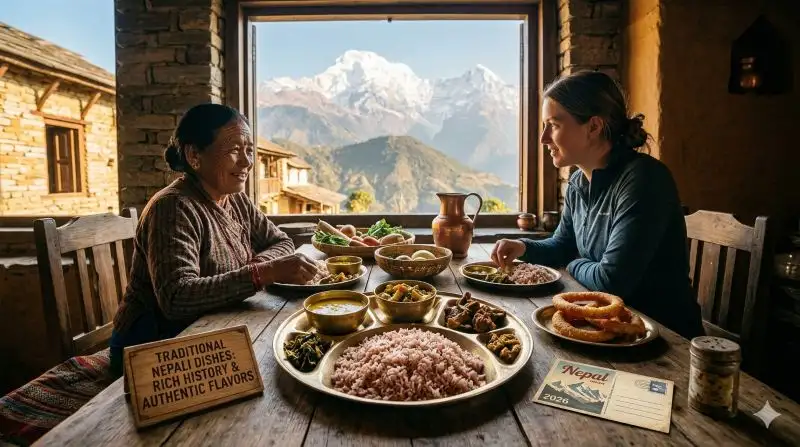
Discover Traditional Nepali Dishes with rich history, authentic flavors, and must-try foods that every traveler will love in 2026.
Introduction
The history of Nepali cuisine dates back thousands of years. Nepal’s geographical location between India and Tibet allowed traders, monks, and travelers to exchange food traditions, spices, and cooking methods.
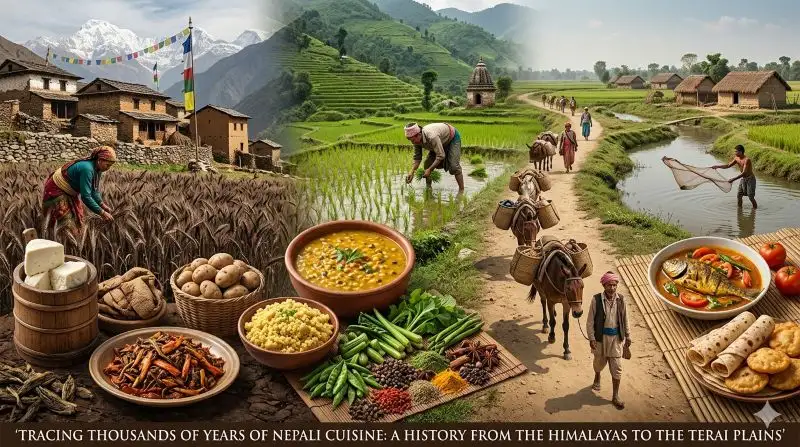
In the Himalayan regions, people relied on barley, yak milk, potatoes, and fermented foods because of the harsh climate. In the hilly areas, lentils, rice, millet, and vegetables became staple ingredients. Meanwhile, the fertile Terai plains introduced wheat-based dishes, fish curries, and tropical vegetables into Nepali cooking.
Religion also shaped traditional Nepali food culture. Hindu and Buddhist traditions encouraged vegetarian meals, seasonal eating, and respect for natural ingredients. Over time, each ethnic group in Nepal developed its own distinct recipes and culinary customs.
Today, traditional Nepali dishes continue to preserve ancient traditions while adapting to modern tastes around the world.
Why Traditional Nepali Dishes Are Special
Traditional Nepali dishes are admired for their perfect balance of flavor, nutrition, and cultural authenticity. Made with fresh vegetables, lentils, rice, herbs, and homemade spices, Nepali food offers healthy and satisfying meals without excessive processing.
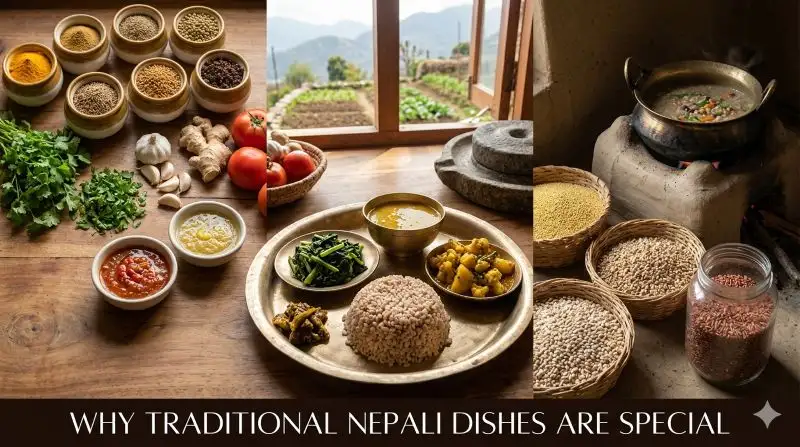
Many traditional Nepalese recipes include fermented ingredients and natural cooking methods that support digestion and overall wellness.
From Himalayan mountain foods to flavorful street snacks, traditional Nepali dishes reflect centuries of culinary heritage, family traditions, and regional diversity, making Nepalese cuisine unique, wholesome, and increasingly popular among global food lovers in 2026.
What Makes Nepali Food Unique?
- Balanced nutrition with rice, lentils, and vegetables
- Healthy fermented foods
- Mild yet flavorful spices
- Strong cultural traditions
- Seasonal cooking methods
- Handmade recipes passed through generations
Nepali cuisine is comforting, healthy, and deeply connected to family and hospitality.
1. Dal Bhat – Nepal’s National Dish
Dal Bhat is the most famous traditional Nepali dish and a daily staple in households across Nepal. This balanced and nutritious meal typically includes steamed rice, lentil soup, vegetable curry, green leafy vegetables, spicy pickles, and sometimes meat curry.

Known for its rich flavor and high nutritional value, Dal Bhat provides essential protein, carbohydrates, vitamins, and minerals needed for Nepal’s active mountain lifestyle. Farmers, trekkers, and local families rely on this comforting meal for long-lasting energy throughout the day.
The phrase “Dal Bhat power, 24 hour” is popular among travelers in Nepal because of its filling nature. Deeply connected to Nepali culture and hospitality, Dal Bhat represents the heart of traditional Nepalese cuisine and remains one of the country’s most loved authentic foods in 2026.
Cultural Importance
Dal Bhat is a symbol of Nepali hospitality, tradition, and family bonding. In Nepal, guests are warmly welcomed with this comforting meal as a sign of respect and generosity.
Trekkers exploring the Himalayas also prefer Dal Bhat because it is nutritious, energy-rich, and ideal for long mountain journeys and daily nourishment.
2. Momo – Nepal’s Famous Dumplings
Momo is one of the most popular traditional Nepali dishes and a beloved street food enjoyed across Nepal and beyond.
These soft dumplings are typically filled with chicken, buffalo meat, vegetables, or cheese and served with spicy tomato chutney. Influenced by Tibetan cuisine, Nepali momo has developed its own unique flavor and cooking style over generations.
Available steamed, fried, or in spicy soup varieties, momo is now a global favorite among food lovers. Its delicious taste, affordable price, and cultural popularity make momo an iconic part of authentic Nepali cuisine in 2026.
The Origin of Momo
Momo originated from Tibetan dumplings and gradually evolved in Nepal into a unique street food. Over time, Nepali cooks added local spices, herbs, and sauces, creating a distinct flavor that represents authentic Nepali culinary culture.
Popular Types of Momo
- Chicken momo
- Vegetable momo
- Buff momo
- Fried momo
- Steam momo
- Jhol momo with spicy soup
Served with spicy tomato chutney, momo has become a favorite snack among locals and tourists alike.
3. Sel Roti – Traditional Nepali Rice Bread
Sel Roti is a traditional Nepali rice bread known for its sweet taste and ring-shaped design. Crispy on the outside and soft inside, it is mainly prepared during major festivals like Dashain and Tihar.
This homemade delicacy represents Nepali culture, family bonding, and festive celebrations across the country.
Ingredients Used
Sel Roti is made using simple traditional ingredients like rice flour, sugar, ghee, and cardamom. This combination creates a unique sweet flavor and rich aroma.
The cooking process gives Sel Roti a crispy golden outer layer while keeping the inside soft, fluffy, and delicious, making it a festive favorite in Nepal.
Festival Significance
Sel Roti holds great cultural importance in Nepal and is especially prepared during major festivals like Dashain, Tihar, family celebrations, and religious ceremonies. It symbolizes happiness, togetherness, and tradition.
Making Sel Roti at home is a cherished family activity that strengthens bonding and preserves Nepal’s rich cultural heritage.
4. Gundruk – Nepal’s Ancient Fermented Food
Gundruk is one of the oldest and most traditional Nepali foods, made by fermenting leafy green vegetables.
This unique dish is widely used in rural Nepal and valued for its tangy flavor, long shelf life, and high nutritional benefits. It represents Nepal’s ancient food preservation techniques and Himalayan culinary heritage.
What Is Gundruk?
Gundruk is a traditional Nepali fermented food made from leafy greens like mustard, radish, and cauliflower leaves. After fermentation, the vegetables are sun-dried and stored for long periods, creating a tangy, nutritious ingredient widely used in soups and authentic Nepalese cuisine.
Why Gundruk Is Important
Gundruk is important in Nepali cuisine because it was traditionally used by Himalayan communities to preserve leafy vegetables during long winters before refrigeration existed.
This fermentation method ensured food security and nutrition year-round. Today, Gundruk soup remains a popular comfort food in Nepal, valued for its tangy taste and health benefits.
5. Dhido – Traditional Himalayan Staple
Dhido is a traditional Nepali dish widely eaten in Himalayan and hilly regions. It is a thick, porridge-like meal made from millet, corn, or buckwheat flour.
Known for its rich nutrition and natural ingredients, Dhido has been a staple food for mountain communities for centuries, offering strength, energy, and health benefits.
Historical Background
Dhido has deep historical roots in Nepal’s Himalayan communities, where rice farming was difficult due to cold, mountainous terrain.
Locals relied on millet and buckwheat, which grow easily in harsh climates. This made Dhido a staple food, providing strength, warmth, and essential nutrition for daily survival in high-altitude regions.
Health Benefits
Dhido is highly nutritious and packed with essential nutrients like fiber, iron, and complex carbohydrates. It supports healthy digestion, boosts energy, and helps maintain overall wellness.
Because of its natural ingredients and low processing, many health-conscious people now choose Dhido as a healthier alternative to white rice in their diet.
6. Thukpa – Warm Himalayan Noodle Soup
Thukpa is a traditional Nepali noodle soup widely enjoyed in the Himalayan and colder regions of Nepal. This warm and comforting dish is made with noodles, vegetables, meat, and flavorful broth.
Known for its rich taste and energy-boosting qualities, Thukpa is a perfect meal during cold weather and mountain travel.
Main Ingredients
Thukpa is made using handmade noodles, fresh vegetables, meat, garlic, ginger, and flavorful broth. These ingredients create a rich, warming soup that is both nutritious and satisfying.
Influenced by Tibetan cuisine, Thukpa became popular in Nepal and is especially enjoyed during winter for its warmth and energy-boosting properties.
7. Chatamari – The Nepali Rice Pancake
Chatamari is a traditional Nepali rice pancake often referred to as the “Nepali pizza” due to its flat shape and toppings.
Originating from Newari cuisine, it is made with rice flour and topped with eggs, minced meat, onions, and spices. This flavorful dish is popular in festivals and street food culture.
Traditional Preparation
Chatamari is prepared using rice flour batter spread into a thin pancake and cooked until crisp. It is then topped with meat, eggs, onions, and aromatic spices.
This traditional Nepali dish delivers a rich, savory flavor and is a popular part of Newari cuisine and festival celebrations.
Newari Culinary Heritage
Chatamari is a classic Newari specialty from Nepal’s Kathmandu Valley, known for its vibrant and varied food traditions.
This iconic rice-based dish showcases the ancient culinary legacy of Nepal, reflecting centuries-old cooking styles, cultural richness, and the deep-rooted heritage of the Newar community.
8. Yomari – Traditional Nepali Sweet Dumpling
Yomari is a unique and traditional Nepali sweet dumpling enjoyed during special festivals. This delicacy is made from rice flour dough filled with sweet ingredients like molasses, sesame seeds, and coconut.
Popular in Newari culture, Yomari represents celebration, tradition, and Nepal’s rich culinary heritage passed down through generations.
Ingredients
Yomari is made using soft rice flour dough filled with sweet molasses, sesame seeds, and coconut. These traditional ingredients create a rich flavor and represent authentic Nepali dessert culture.
Cultural Importance
Yomari holds great cultural significance in Nepal and is traditionally prepared during the Yomari Punhi festival.
This celebration marks the harvest season and symbolizes prosperity, gratitude, and community bonding. It reflects the rich heritage of Newari culture and Nepal’s deep-rooted festive traditions.
9. Choila – Spicy Grilled Meat Dish
Choila is a popular traditional Nepali dish from Newari cuisine, made with spicy grilled meat. It is marinated with mustard oil, garlic, chili, and aromatic spices, giving it a bold flavor.
Often served during festivals and gatherings, Choila is loved for its smoky taste and rich cultural heritage.
Ingredients and Flavor
Choila is a spicy traditional Nepali dish made with grilled meat, mustard oil, garlic, chili, and authentic Himalayan spices. This combination creates a smoky, bold, and flavorful taste loved across Nepal.
Choila is commonly served during festivals, cultural events, and family gatherings, representing authentic Newari culinary tradition.
10. Bara – Savory Lentil Pancake
Bara is a traditional Nepali dish from Newari cuisine made with lentil batter. This savory pancake is crispy on the outside and soft inside, offering rich flavor and nutrition.
Often served with eggs or meat toppings, Bara is popular during festivals, celebrations, and as a tasty street food snack in Nepal.
Popular Variations
Bara comes in many delicious variations, making it a versatile traditional Nepali dish. It can be topped with eggs, meat, vegetables, and aromatic spices for extra flavor and nutrition.
This protein-rich lentil pancake is commonly enjoyed as a healthy snack or breakfast, especially in Newari cuisine and festivals.
Traditional Nepali Street Food Culture
Nepal’s street food culture is vibrant, colorful, and full of bold flavors that attract both locals and tourists. From spicy momos to chatpate and sekuwa, every street corner offers delicious traditional Nepali dishes.
This lively food scene reflects Nepal’s rich culture, diversity, and love for quick, tasty, and affordable meals.
Popular Nepali Street Foods
- Momo
- Chowmein
- Chatpate
- Panipuri
- Sekuwa
- Samosa
Kathmandu’s busy markets are especially famous for delicious street food stalls.
Traditional Nepali Festival Foods
Food plays a vital role in Nepali festivals and cultural celebrations, bringing families and communities together. Traditional Nepali dishes are specially prepared during events like Dashain, Tihar, and other festivals. These festive meals symbolize joy, gratitude, and tradition, reflecting Nepal’s rich cultural heritage and strong social bonding through food.
Dashain Festival Foods
Families prepare:
- Goat curry
- Sel Roti
- Rice dishes
Tihar Festival Foods
Special sweets and homemade snacks are shared among relatives and neighbors.
Festival meals strengthen family bonds and preserve cultural traditions.
Health Benefits of Traditional Nepali Dishes
Traditional Nepali dishes are naturally nutritious and well-balanced, combining rice, lentils, vegetables, and fermented foods.
These meals provide essential proteins, fiber, vitamins, and minerals that support overall health. With minimal processing and fresh ingredients, Nepali cuisine promotes good digestion, sustained energy, and a healthy lifestyle rooted in natural Himalayan eating traditions.
Key Health Benefits
High Nutrition
Dal, vegetables, and grains provide essential nutrients.
Fermented Foods
Gundruk improves digestion and gut health.
Natural Ingredients
Most meals use fresh homemade ingredients instead of processed foods.
Balanced Diet
Rice, lentils, vegetables, and proteins create complete meals.
Regional Diversity in Nepali Cuisine
Nepal’s diverse geography creates unique regional food traditions across the Himalayas, hills, and Terai plains. Each region offers distinct flavors, ingredients, and cooking styles influenced by climate and culture.
From spicy Terai curries to Himalayan barley dishes, Nepali cuisine reflects rich cultural diversity and authentic traditional food variations nationwide.
Himalayan Region
Popular foods:
- Thukpa
- Butter tea
- Yak cheese
Hilly Region
Popular foods:
- Dal Bhat
- Gundruk
- Dhido
Terai Region
Popular foods:
- Fish curry
- Wheat bread
- Rice dishes
Each region contributes distinct flavors to Nepali cuisine.
Why Traditional Nepali Dishes Are Becoming Popular Worldwide
Traditional Nepali dishes are rapidly gaining global attention in 2026 due to their natural ingredients, balanced nutrition, and unique Himalayan flavors.
Unlike heavily processed fast foods, Nepalese cuisine focuses on fresh vegetables, lentils, grains, and homemade spices, making it both healthy and satisfying. Another major reason for its popularity is the rise in international tourism to Nepal, where visitors experience authentic local meals and share them worldwide.
Traditional recipes passed down through generations also attract food lovers who value genuine, home-style cooking. Moreover, Nepali eateries are expanding across various countries, bringing the true taste of Nepal’s traditional cuisine to international food lovers and showcasing its authentic Himalayan flavors to a global audience.
Among all dishes, momo has become especially popular, emerging as one of the fastest-growing Asian street foods globally due to its taste, variety, and cultural appeal.
Tips for Experiencing Genuine Nepali Cuisine
To enjoy real traditional Nepali dishes, begin by eating at small, locally owned family restaurants where food is cooked using age-old recipes and fresh, natural ingredients. These humble eateries often provide the most authentic taste of Nepalese culinary culture.
Make sure to try homemade Dal Bhat, which is considered the core meal of Nepal and reflects everyday life and tradition. Discover regional specialties from the Himalayan mountains, hill areas, and Terai plains to truly understand Nepal’s diverse food heritage.
Include fermented foods such as Gundruk, known for its traditionalpreservation methods and distinctive tangy flavor. During local festivals, taste special Nepali dishes prepared for celebrations, as they carry cultural and emotional significance.
Authentic Nepali cuisine goes beyond flavor—it represents Nepal’s history, hospitality, cultural values, and the warm spirit of its people, creating a memorable food experience.
FAQ – Traditional Nepali Dishes
1. What are traditional Nepali dishes?
Traditional Nepali dishes are authentic foods from Nepal made using rice, lentils, vegetables, spices, and local ingredients influenced by Himalayan and cultural traditions.
2. What is the most popular traditional Nepali dish?
Dal Bhat is the most popular traditional Nepali dish, eaten daily across Nepal as a complete and nutritious meal.
3. Is Nepali food spicy?
Nepali food is usually mildly spicy, using aromatic spices that enhance flavor without being overly hot.
4. What is Nepal’s national dish?
Dal Bhat is considered Nepal’s national dish due to its daily consumption and cultural importance.
5. What is momo in Nepali cuisine?
Momo is a famous Nepali dumpling filled with meat or vegetables, often served with spicy chutney.
6. Are Nepali dishes healthy?
Yes, traditional Nepali dishes are healthy because they include fresh ingredients, lentils, vegetables, and fermented foods.
7. What is Sel Roti?
Sel Roti is a traditional sweet rice bread made during festivals like Dashain and Tihar.
8. What is Gundruk?
Gundruk is a fermented leafy vegetable dish used in soups and traditional Nepali meals.
9. What is Dhido food in Nepal?
Dhido is a thick porridge-like food made from millet, corn, or buckwheat flour, common in Himalayan regions.
10. Why is Nepali food famous?
Nepali food is famous for its unique blend of flavors, cultural heritage, healthy ingredients, and traditional cooking methods.