
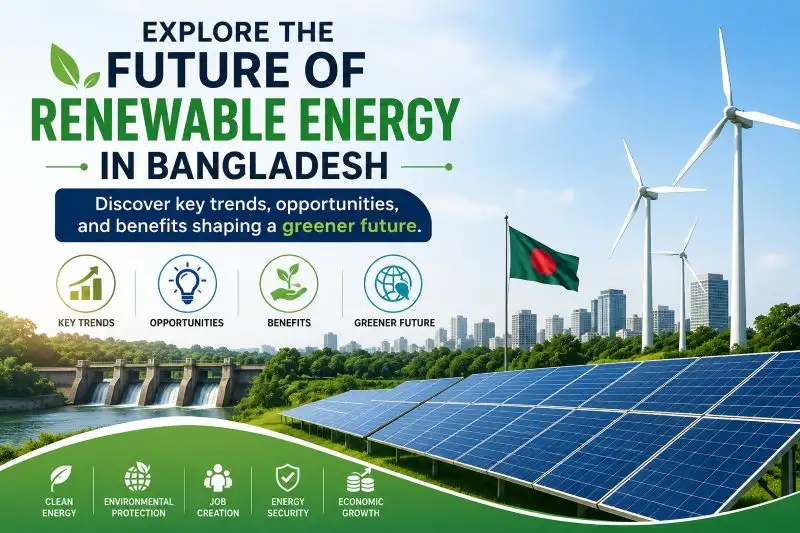
Explore the Future of Renewable Energy in Bangladesh and discover key trends, opportunities, and benefits shaping a greener future.
Introduction
The future of renewable energy in Bangladesh is becoming one of the most important topics in the country’s economic and environmental development. As Bangladesh continues to grow rapidly, the demand for electricity is increasing across industries, businesses, and households.
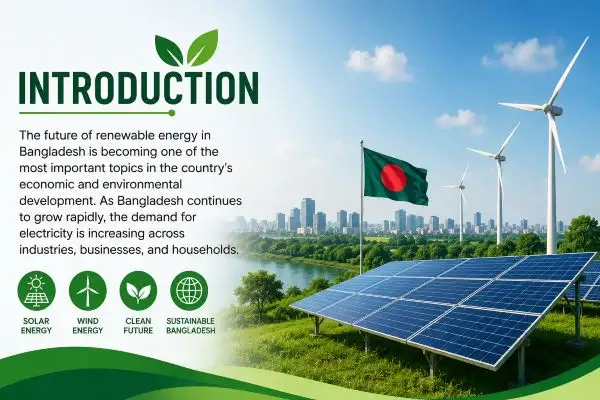
Traditional energy sources such as natural gas, coal, and imported fuel have supported this growth for decades, but concerns about energy security, rising fuel costs, and climate change are encouraging a transition toward cleaner energy solutions.
Renewable energy offers Bangladesh a unique opportunity to create a more sustainable future. With abundant sunlight, growing technological capabilities, and increasing government support, the country is gradually expanding its renewable energy sector.
Solar power projects, wind energy developments, biomass initiatives, and innovative technologies are changing how Bangladesh generates and consumes electricity.
The shift toward renewable energy is not only about protecting the environment. It is also about reducing dependence on imported fuels, creating new jobs, attracting investment, and ensuring long-term energy security. As global energy markets continue to evolve, Bangladesh is positioning itself to benefit from the clean energy revolution.
This article explores the most powerful trends shaping the future of renewable energy in Bangladesh and explains why these developments are critical for sustainable economic growth.
Understanding Renewable Energy in Bangladesh
Renewable energy refers to energy generated from naturally replenishing resources such as sunlight, wind, water, biomass, and organic waste. Unlike fossil fuels, renewable energy sources can be used continuously without depletion and produce significantly lower greenhouse gas emissions.
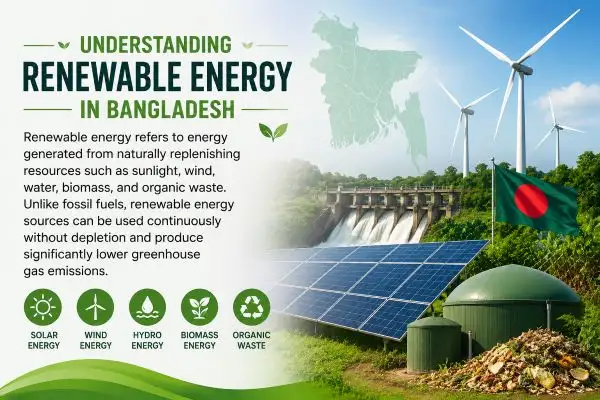
Bangladesh has already made remarkable progress in renewable energy adoption, particularly through solar home systems that have provided electricity access to millions of rural households. Today, the country is moving beyond small-scale solutions and investing in larger renewable energy projects that can contribute significantly to national electricity production.
The growing focus on renewable energy reflects Bangladesh’s commitment to building a cleaner, more resilient, and economically sustainable future.
Trend 1: Rapid Expansion of Solar Energy Projects
Solar energy is expected to remain the driving force behind the future of renewable energy in Bangladesh. The country’s geographical location provides favorable solar radiation throughout most of the year, making solar power one of the most practical renewable energy options available.

Large-scale solar parks are being developed in different regions to increase electricity generation capacity. These utility-scale projects can produce substantial amounts of clean electricity while reducing dependence on imported fossil fuels.
The growth of solar energy offers several advantages:
- Lower carbon emissions
- Reduced electricity generation costs over time
- Greater energy independence
- Improved rural electrification
- Enhanced environmental sustainability
As solar panel technology becomes more affordable and efficient, experts expect solar power to play an increasingly important role in Bangladesh’s energy mix.
Trend 2: Growth of Rooftop Solar Systems
One of the most promising developments in Bangladesh is the rapid adoption of rooftop solar systems. Businesses, factories, schools, hospitals, and residential buildings are increasingly installing solar panels on rooftops to generate their own electricity.
Rooftop solar systems provide several benefits:
Reduced Electricity Bills
Property owners can significantly reduce energy expenses by generating electricity on-site.
Better Energy Security
Rooftop systems help users maintain electricity availability during periods of high demand.
Efficient Use of Space
Unlike large solar farms, rooftop installations utilize existing building infrastructure without requiring additional land.
Environmental Benefits
Every rooftop solar installation contributes to reducing greenhouse gas emissions and promoting clean energy use.
As electricity demand continues to grow, rooftop solar adoption is expected to accelerate across urban and industrial areas.
Trend 3: Increased Investment in Renewable Energy Infrastructure
Investment is one of the key factors shaping the future of renewable energy in Bangladesh. Both local and international investors are recognizing the country’s potential as a growing renewable energy market.
Several factors are attracting investment:
- Expanding energy demand
- Government incentives
- Renewable energy targets
- Climate finance opportunities
- Technological advancements
Private-sector participation is becoming increasingly important in financing solar plants, wind farms, energy storage systems, and smart grid projects.
Investment in renewable energy not only increases electricity generation but also stimulates economic growth through job creation and technological innovation.
As confidence in the sector grows, Bangladesh is expected to attract even greater levels of clean energy investment over the coming years.
Trend 4: Development of Wind Energy Along Coastal Regions
Although solar energy currently dominates the renewable energy sector, wind energy is emerging as another promising opportunity.
Bangladesh’s coastal regions offer favorable conditions for wind power development. Areas along the Bay of Bengal experience consistent wind patterns that can support electricity generation through modern wind turbines.
Potential benefits of wind energy include:
Diversified Energy Sources
Wind power reduces reliance on a single renewable resource and strengthens overall energy security.
Clean Electricity Production
Wind turbines generate electricity without producing greenhouse gas emissions.
Economic Opportunities
Wind energy projects create employment opportunities in construction, operations, maintenance, and engineering.
Long-Term Sustainability
Wind is an abundant and renewable resource that can contribute to Bangladesh’s energy needs for decades.
As technology improves and feasibility studies continue, wind power could become a major component of the country’s renewable energy portfolio.
Trend 5: Expansion of Floating Solar Projects
Land availability is one of the biggest challenges facing renewable energy development in Bangladesh. With a large population and limited land resources, finding suitable locations for large solar farms can be difficult.
Floating solar technology offers an innovative solution.
Floating solar systems are installed on water bodies such as reservoirs, lakes, and ponds. These systems generate electricity while minimizing land-use conflicts.
Advantages of Floating Solar Power
Efficient Land Use
Floating systems utilize water surfaces that would otherwise remain unused.
Improved Solar Panel Performance
Water helps cool solar panels, improving efficiency and electricity production.
Reduced Water Evaporation
Solar panels covering water surfaces can help reduce evaporation losses.
Environmental Sustainability
Floating solar projects contribute to clean energy generation without competing for valuable agricultural land.
As Bangladesh explores innovative approaches to renewable energy deployment, floating solar technology is expected to gain significant attention.
Trend 6: Growth of Biomass and Biogas Energy Solutions
Biomass and biogas are expected to play an increasingly important role in the future of renewable energy in Bangladesh. As an agricultural country, Bangladesh generates large amounts of organic waste every year, including rice husks, crop residues, livestock waste, and food-processing byproducts.
Instead of allowing these materials to go unused, they can be converted into valuable energy resources.
Benefits of Biomass Energy
Biomass energy offers several advantages:
- Utilizes agricultural waste efficiently
- Reduces environmental pollution
- Supports rural development
- Creates additional income opportunities for farmers
- Provides reliable energy generation
Biogas plants are becoming particularly popular in rural communities. These systems convert organic waste into clean-burning gas that can be used for cooking, heating, and electricity generation.
As technology improves and awareness grows, biomass and biogas projects are expected to contribute significantly to Bangladesh’s renewable energy capacity.
Trend 7: Smart Grid Technology and Energy Management
A modern renewable energy sector requires a modern electricity grid. This is where smart grid technology becomes essential.
Traditional power grids were designed for centralized electricity generation. Renewable energy sources such as solar and wind, however, often produce electricity from multiple decentralized locations.
Smart grids help manage this complexity by using advanced communication and monitoring systems.
Key Advantages of Smart Grids
Better Energy Distribution
Smart grids improve the efficiency of electricity transmission and distribution.
Reduced Power Losses
Advanced monitoring systems help identify and reduce energy losses.
Faster Problem Detection
Utility providers can detect and respond to system issues more quickly.
Improved Renewable Energy Integration
Smart grids make it easier to incorporate solar, wind, and other renewable energy sources into the national electricity network.
The adoption of smart grid technology will be a major factor in supporting Bangladesh’s clean energy transition.
Trend 8: Rising Demand for Energy Storage Systems
One challenge associated with renewable energy is that sunlight and wind are not always available when electricity demand is highest.
Energy storage systems provide a solution.
Battery storage technologies allow excess electricity generated during sunny or windy periods to be stored and used later.
Why Energy Storage Matters
Reliable Power Supply
Stored energy can be used during power shortages or peak demand periods.
Enhanced Grid Stability
Storage systems help balance electricity supply and demand.
Increased Renewable Energy Utilization
Excess renewable electricity is stored rather than wasted.
Greater Energy Security
Communities become less vulnerable to disruptions in fuel supply chains.
As battery costs continue to decline globally, energy storage is expected to become an essential component of Bangladesh’s renewable energy future.
Trend 9: Stronger Government Policies and Renewable Energy Targets
Government support remains one of the most important drivers of renewable energy development.
Bangladesh has introduced various policies and initiatives to encourage clean energy investment and adoption.
Key Areas of Government Support
- Renewable energy development programs
- Private-sector participation incentives
- Energy efficiency initiatives
- Research and innovation support
- Sustainable infrastructure planning
Clear renewable energy targets help create confidence among investors and project developers.
By maintaining consistent policies and long-term planning, Bangladesh can accelerate renewable energy growth while attracting both domestic and international investment.
Trend 10: Increasing International Cooperation and Climate Financing
International cooperation and climate financing are helping accelerate the future of renewable energy in Bangladesh. Global partnerships provide funding, advanced technology, and technical expertise for clean energy projects.
These collaborations support solar, wind, and green infrastructure development while strengthening energy security, reducing carbon emissions, and promoting sustainable economic growth.
International partnerships can help Bangladesh access:
- Climate finance
- Technical assistance
- Advanced technologies
- Research collaborations
- Capacity-building programs
Many global organizations support renewable energy projects in developing countries to promote sustainable development and reduce carbon emissions.
These partnerships provide Bangladesh with valuable opportunities to expand its renewable energy sector while strengthening resilience against climate change.
International cooperation is expected to remain a major catalyst for future renewable energy growth.
Trend 11: Green Jobs and Economic Opportunities
The future of renewable energy in Bangladesh is creating new green jobs across solar, wind, biomass, and energy technology sectors.
Growing investments in clean energy projects support economic growth, skill development, entrepreneurship, and employment opportunities, helping build a sustainable and resilient economy for future generations.
The renewable energy industry requires professionals across various sectors, including:
- Engineering
- Manufacturing
- Construction
- Installation
- Maintenance
- Research
- Project management
Benefits of Green Employment
Job Creation
Renewable energy projects generate employment opportunities at both local and national levels.
Skills Development
Workers gain expertise in emerging technologies and modern energy systems.
Economic Diversification
New industries reduce dependence on traditional economic sectors.
Rural Economic Growth
Renewable energy projects often create opportunities in underserved communities.
As the clean energy sector expands, thousands of new green jobs could emerge across Bangladesh.
Opportunities for Renewable Energy in Bangladesh
The future of renewable energy in Bangladesh offers opportunities for clean electricity generation, foreign investment, green job creation, energy security, rural development, and sustainable economic growth through solar, wind, biomass, and innovative energy technologies.
Growing Electricity Demand
Bangladesh’s rapidly expanding economy requires increasing amounts of electricity. Renewable energy can help meet this demand sustainably.
Technological Advancements
Modern technologies continue to improve renewable energy efficiency while reducing costs.
Urban Sustainability
Renewable energy can support the development of greener cities and environmentally responsible infrastructure.
Energy Independence
Expanding domestic renewable energy generation reduces dependence on imported fossil fuels.
Climate Leadership
Renewable energy investments strengthen Bangladesh’s position as a leader in climate adaptation and sustainable development.
Challenges Facing Renewable Energy Development
Despite significant progress, renewable energy in Bangladesh faces challenges like limited land availability, high initial investment costs, weak grid infrastructure, technical skill gaps, and regulatory barriers slowing large-scale clean energy adoption.
Limited Land Availability
Finding suitable land for large renewable energy projects remains difficult due to population density and competing land uses.
High Initial Investment Costs
Although renewable energy systems offer long-term savings, upfront costs can be substantial.
Grid Infrastructure Limitations
The electricity grid requires modernization to effectively integrate larger amounts of renewable energy.
Technical Expertise Gaps
The sector needs more trained professionals with specialized knowledge in renewable energy technologies.
Regulatory Complexities
Simplified regulations and streamlined approval processes can encourage faster project implementation.
Addressing these challenges will be essential for maximizing the country’s renewable energy potential.
The Future Outlook for Renewable Energy in Bangladesh
The long-term future of renewable energy in Bangladesh is highly promising, driven by solar expansion, wind potential, policy support, investment growth, and rising demand for sustainable clean energy solutions.
Several factors support this optimistic future:
- Continued government commitment
- Increasing investor confidence
- Declining technology costs
- Growing public awareness
- International climate support
- Expanding renewable energy infrastructure
Solar energy is expected to remain the dominant renewable energy source, while wind power, biomass, biogas, and energy storage technologies continue to expand.
Emerging innovations such as floating solar systems, smart grids, and advanced battery storage will further strengthen the renewable energy ecosystem.
As Bangladesh progresses toward its development goals, renewable energy will become increasingly important for economic growth, environmental protection, and energy security.
Why Renewable Energy Matters for Bangladesh’s Future
Renewable energy in Bangladesh ensures sustainable growth, energy security, job creation, pollution reduction, and climate resilience, making it essential for long-term economic stability and a cleaner, greener national future.
A strong renewable energy sector can help Bangladesh:
- Reduce greenhouse gas emissions
- Improve air quality
- Enhance energy security
- Create employment opportunities
- Support rural development
- Reduce fuel import dependence
- Strengthen climate resilience
These benefits make renewable energy one of the most strategic investments for the country’s future.
Conclusion
The future of renewable energy in Bangladesh is filled with exciting possibilities. From the rapid expansion of solar power and rooftop installations to the emergence of wind farms, floating solar systems, smart grids, and energy storage technologies, the country is entering a new era of clean energy development.
Renewable energy is no longer a niche sector. It is becoming a critical component of Bangladesh‘s economic growth strategy, environmental protection efforts, and long-term energy security plans.
While challenges such as land constraints, financing requirements, and infrastructure modernization remain, the opportunities far outweigh the obstacles. Strong government support, increasing private investment, technological innovation, and international cooperation are creating a solid foundation for future growth.
As Bangladesh continues its transition toward sustainable development, renewable energy will play a central role in building a cleaner, greener, and more prosperous future for generations to come.
Frequently Asked Questions (FAQs)
What is the future of renewable energy in Bangladesh?
The future of renewable energy in Bangladesh is highly promising due to growing solar investments, wind energy development, government support, and increasing demand for clean electricity.
Which renewable energy source has the most potential in Bangladesh?
Solar energy has the greatest potential because Bangladesh receives abundant sunlight throughout the year and has already achieved success through solar home systems and solar power projects.
Why is renewable energy important for Bangladesh?
Renewable energy improves energy security, reduces carbon emissions, creates jobs, lowers dependence on imported fuels, and supports sustainable economic growth.
What are the main renewable energy sources in Bangladesh?
The primary renewable energy sources include solar energy, wind energy, biomass, biogas, and hydropower.
What challenges does renewable energy face in Bangladesh?
Major challenges include limited land availability, financing constraints, grid infrastructure limitations, technical skill shortages, and regulatory barriers.
How can renewable energy benefit rural communities?
Renewable energy improves electricity access, supports small businesses, enhances education and healthcare services, and creates employment opportunities in rural areas.
Will renewable energy replace fossil fuels in Bangladesh?
Renewable energy is expected to become a larger part of the energy mix over time, although fossil fuels may continue to play a role during the transition period.