
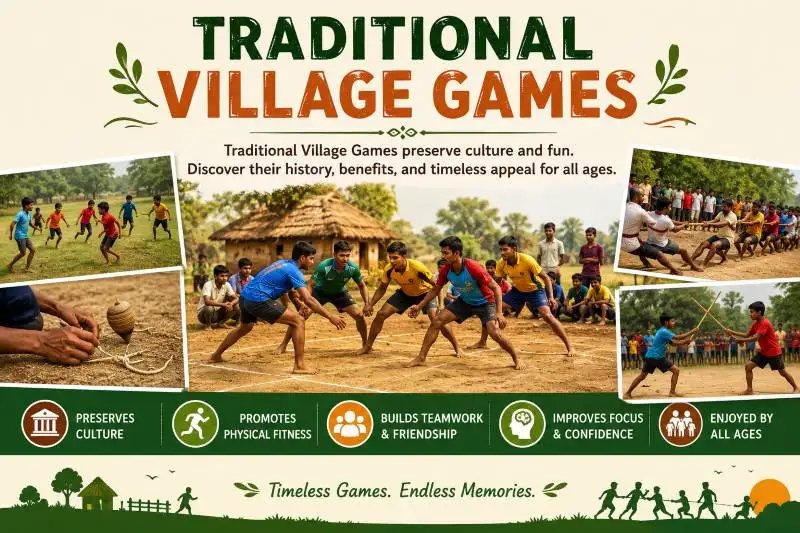
Traditional Village Games preserve culture and fun. Discover their history, benefits, and timeless appeal for all ages.
Introduction
Traditional Village Games have been a cherished part of human civilization for centuries. Long before the arrival of smartphones, television, and digital entertainment, people gathered in village fields, open courtyards, and community spaces to enjoy simple yet exciting games.
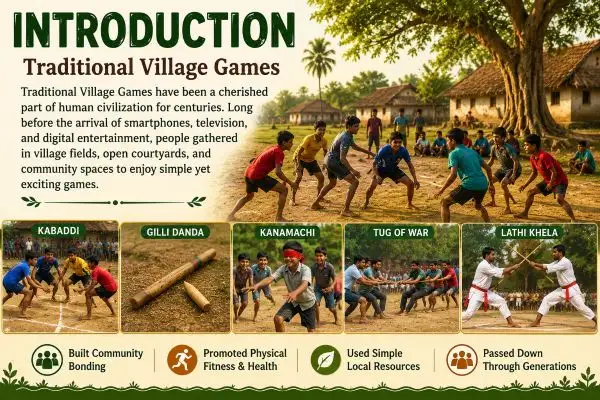
These activities brought communities together, strengthened friendships, promoted physical fitness, and preserved cultural traditions. Today, Traditional Village Games are remembered with affection because they capture the spirit of rural life, community unity, outdoor fun, and the cultural traditions that connected generations.
While modern technology has transformed how people spend their free time, Traditional Village Games continue to hold an important place in cultural heritage. They remind us of the values of teamwork, creativity, discipline, and community spirit.
In many countries, including Bangladesh, India, Nepal, Pakistan, and various parts of Africa and Europe, traditional games remain symbols of local identity. Some have even evolved into recognized sports played at national and international levels.
This article explores the fascinating history of Traditional Village Games, their cultural significance, their benefits, and nine powerful games that have entertained generations while preserving valuable traditions.
What Are Traditional Village Games?
Traditional Village Games are recreational activities passed down from one generation to another within rural communities. Unlike modern sports that often require expensive equipment and specialized facilities, these games usually rely on simple tools and open spaces.
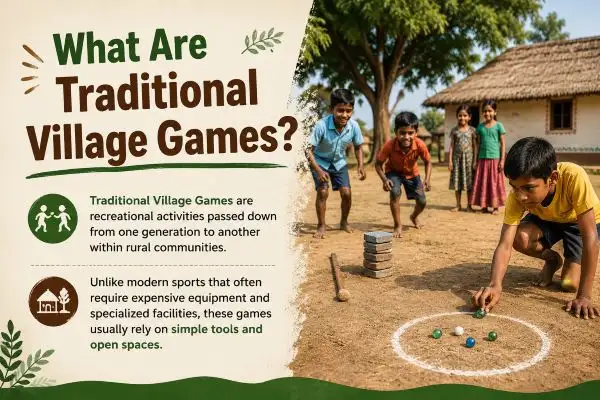
Most traditional games developed naturally within communities and reflected local customs, occupations, and lifestyles. Children learned them from parents, grandparents, and friends, ensuring their survival through oral tradition.
Common features of Traditional Village Games include:
- Simple rules
- Low-cost participation
- Outdoor play
- Community involvement
- Physical activity
- Cultural significance
- Educational value
Because of these characteristics, traditional games remained popular for centuries and became an important part of village life.
The Rich History of Traditional Village Games
The origins of Traditional Village Games can be traced back thousands of years. Historians believe early humans created games not only for entertainment but also to develop survival skills and strengthen social relationships.

Ancient communities often organized competitions involving running, wrestling, throwing objects, and strategic thinking. These activities helped prepare young people for hunting, farming, and self-defense while encouraging cooperation within the group.
As civilizations expanded, games became closely connected with cultural festivals, religious celebrations, and seasonal events. Rural communities often held competitions after harvest seasons when people had more free time to gather and celebrate.
Over generations, each region developed unique games influenced by geography, climate, and cultural traditions. Some games remained local, while others spread across countries and became widely recognized.
Today, many Traditional Village Games continue to survive because communities understand their importance in preserving cultural heritage.
Why Traditional Village Games Matter Today
Although modern entertainment options are abundant, Traditional Village Games continue to play an important role in society. These timeless activities preserve cultural heritage, strengthen community bonds, and encourage healthy outdoor lifestyles.
They also teach valuable life skills such as teamwork, leadership, discipline, and problem-solving. By keeping traditional games alive, communities can connect younger generations with their history while promoting physical fitness, social interaction, and cultural pride.
Preserving Cultural Heritage
Every traditional game tells a story about the people who created it. The rules, equipment, and style of play reflect local traditions and historical experiences.
By continuing to play these games, communities keep their cultural heritage alive and pass it on to future generations.
Building Strong Communities
Traditional games encourage interaction among people of different ages and backgrounds. They create opportunities for social bonding, cooperation, and friendship.
Village gatherings centered around games often strengthen community relationships and foster a sense of belonging.
Promoting Healthy Lifestyles
Most Traditional Village Games involve running, jumping, chasing, or strategic movement. These activities improve physical fitness and reduce sedentary behavior.
Teaching Life Skills
Children learn valuable lessons through play, including:
- Teamwork
- Leadership
- Communication
- Problem-solving
- Discipline
- Sportsmanship
These skills remain useful throughout life.
1. Kabaddi – The Pride of Rural Sports
Kabaddi is one of the most popular Traditional Village Games in South Asia and proudly holds the status of the national sport of Bangladesh. With a history that stretches back centuries, Kabaddi originated in rural communities where players tested their strength, speed, and strategy through friendly competition.
The game involves two teams, with players attempting to tag opponents and return safely to their side without being tackled. Kabaddi promotes physical fitness, teamwork, discipline, and quick decision-making.
Today, it has evolved from a village pastime into an internationally recognized sport while still preserving its traditional roots and cultural significance.
History of Kabaddi
The roots of Kabaddi extend back thousands of years. Historical records suggest that forms of the game were played in ancient India and neighboring regions. Villagers used the game to develop strength, endurance, and strategic thinking.
How Kabaddi Is Played
The game involves two teams. A player, known as a raider, enters the opposing team’s area while continuously chanting “Kabaddi.” The objective is to touch opponents and return safely without being tackled.
Benefits of Kabaddi
- Improves stamina
- Builds strength
- Enhances agility
- Encourages teamwork
- Develops quick decision-making
Today, Kabaddi is played internationally and remains one of the most respected Traditional Village Games.
2. Ha-Du-Du – The Ancient Predecessor of Kabaddi
Ha-Du-Du is one of the oldest and most respected Traditional Village Games in Bengal and is widely regarded as the foundation of modern Kabaddi. For generations, this exciting outdoor game has been played in rural Bangladesh and neighboring regions, bringing communities together through friendly competition.
The game requires players to enter the opponent’s territory, tag defenders, and return safely while continuously chanting “Ha-Du-Du.” Beyond entertainment, Ha-Du-Du helps develop physical strength, agility, endurance, and teamwork.
As an important part of Bengali cultural heritage, it continues to symbolize the rich traditions and sporting spirit of village life.
Historical Background
For generations, rural communities in Bangladesh played Ha-Du-Du in open fields after completing daily agricultural work. The game required no expensive equipment, making it accessible to everyone.
Rules and Gameplay
Players attempt to enter the opposing team’s territory, tag opponents, and return safely while continuously repeating “Ha-Du-Du.”
Cultural Importance
Ha-Du-Du reflects strong rural identity and stands as an important symbol of Bangladesh’s sporting heritage, preserving traditional village culture, unity, and historical community-based outdoor gameplay.
3. Gollachut – A Game of Speed and Teamwork
Gollachut is one of the most energetic Traditional Village Games that has entertained village children and teenagers for generations. Popular in rural Bangladesh and neighboring regions, this game is all about speed, teamwork, and quick decision-making.
Players are divided into teams where one group tries to cross designated areas while the other team attempts to stop them. The game encourages running, strategic thinking, coordination, and cooperation among players.
Gollachut is not only a fun outdoor activity but also an important part of cultural heritage, helping children stay physically active while building strong social bonds within the community.
Origin of Gollachut
The game emerged as a community activity requiring cooperation and strategy. It became especially popular because it could be played almost anywhere.
How the Game Works
Players are divided into teams, where one group tries to reach marked areas while the opposing team blocks them, creating a fun, active, and strategic Traditional Village Game.
Key Benefits
- Develops teamwork
- Improves physical fitness
- Enhances coordination
- Encourages leadership
Gollachut remains one of the most beloved Traditional Village Games in Bangladesh.
4. Dariabandha – The Strategic Village Challenge
Dariabandha is a highly engaging Traditional Village Game that blends physical agility with sharp tactical thinking. Popular in rural Bangladesh and surrounding regions, this game has been played for generations in open fields and village courtyards.
Players must carefully plan their movements while defenders try to block their path, making it a perfect mix of speed, strategy, and coordination. Dariabandha improves concentration, reflexes, teamwork, and decision-making skills.
Beyond entertainment, it reflects the creative spirit of rural communities and continues to preserve cultural traditions while offering children an active and mentally stimulating outdoor experience.
Historical Significance
This game has been played in Bengali villages for generations, gaining popularity due to its unique blend of skill, speed, and strategy, reflecting rich traditional rural sporting heritage.This game has been played across Bengali villages for generations. Its popularity comes from the balance between skill, speed, and strategy.
Gameplay
Lines are drawn on the ground to create paths and barriers, where attackers try to cross safely while defenders block them, making it a strategic Traditional Village Game.
Advantages
- Builds concentration
- Encourages planning
- Improves reflexes
- Strengthens teamwork
5. Kanamachi – The Classic Blindfold Game
Kanamachi is a popular Traditional Village Game that continues to delight children with its simplicity, excitement, and laughter. Widely played in rural Bangladesh and other South Asian villages, this game involves one blindfolded player trying to catch others using only sound and movement clues.
It is often played during gatherings, festivals, and free leisure time. Kanamachi helps improve listening skills, concentration, balance, and spatial awareness while encouraging active social interaction. Beyond fun, it strengthens friendships and community bonding, making it an important part of traditional rural childhood experiences that have been passed down for generations.
Origins
The game exists in many cultures worldwide and became especially popular in Bengali villages, where it was enjoyed during gatherings, festivals, and social celebrations as a traditional pastime.
How It Is Played
One player is blindfolded and tries to catch others using sound clues and movement detection, making Kanamachi a fun, interactive Traditional Village Game that builds focus, awareness, and social enjoyment.One participant is blindfolded and attempts to catch other players based on sound and movement.
Educational Benefits
- Enhances listening skills
- Improves spatial awareness
- Builds confidence
- Encourages social interaction
6. Lathi Khela – The Traditional Martial Art
Lathi Khela is a powerful Traditional Village Game and martial art that carries deep historical and cultural significance in rural Bangladesh and South Asia. More than just a game, it is a skilled stick-fighting tradition that was once used for self-defense, protection, and physical training in village communities.
Over time, it evolved into a cultural performance showcasing strength, discipline, and agility. Practicing Lathi Khela improves coordination, focus, balance, and body control.
Today, it is often performed during festivals and cultural events, preserving the heritage and bravery of rural traditions while keeping this ancient martial art alive.
Historical Background
Villagers historically used sticks for self-defense and protection. Over time, these techniques evolved into organized demonstrations and competitions.
Cultural Value
Lathi Khela holds strong cultural value as it showcases courage, discipline, strength, and physical skill, reflecting traditional rural heritage and preserving the historical martial art of village communities.Lathi Khela showcases courage, discipline, and physical skill.
Modern Importance
Today, Lathi Khela is performed at cultural festivals and heritage events, preserving traditional martial arts, showcasing rural skills, and keeping historical cultural traditions alive for future generations.
7. Kho Kho – Speed, Strategy, and Endurance
Kho Kho is one of the oldest and most thrilling Traditional Village Games in South Asia, known for its fast pace, agility, and strategic gameplay. Played for generations in villages and schools, this game requires players to chase and tag opponents using quick movements and sharp decision-making.
It improves speed, stamina, coordination, and teamwork while keeping players physically active. Kho Kho also builds discipline and focus, making it both fun and educational.
Today, it remains a popular rural sport that preserves cultural heritage while promoting healthy competition and active lifestyles among children and youth.
Ancient Roots
Kho Kho has ancient roots, with historical evidence showing early forms of the game were played in ancient times to improve physical fitness, speed, agility, and teamwork in traditional rural communities.
Benefits
- Enhances speed
- Improves agility
- Develops teamwork
- Increases stamina
Its energetic pace and thrilling style continue to draw interest from players of all ages.
8. Gilli Danda – The Traditional Rural Stick-and-Ball Game
Gilli Danda is one of the oldest Traditional Village Games, often compared to modern cricket due to its similar stick-and-ball style gameplay. Played for centuries in rural Bangladesh, India, and neighboring regions, it involves striking a small wooden stick (gilli) with a larger stick (danda) to score points through distance and accuracy.
The game enhances hand-eye coordination, reflexes, focus, and physical agility. It requires minimal equipment, making it accessible to everyone in villages. Gilli Danda remains a symbol of rural creativity and continues to preserve the rich heritage of traditional outdoor sports enjoyed across generations.
History
The game originated long before modern cricket and is considered one of the oldest stick-and-ball Traditional Village Games in the world, symbolizing ancient rural recreation, skill development, and cultural heritage passed down through generations.
Gameplay
Players hit a small wooden gilli using a larger stick called danda, aiming for distance and accuracy, making it a skill-based Traditional Village Game improving focus, reflexes, and coordination.
Benefits
- Improves hand-eye coordination
- Encourages focus
- Develops reflexes
9. Tug of War – A Universal Village Favorite
Tug of War is a widely played Traditional Village Game enjoyed across different countries and cultures. Known for its simplicity and excitement, it involves two teams pulling opposite ends of a rope, testing strength, teamwork, and coordination.
This classic game has been a favorite in rural villages for generations and is often featured in festivals, school events, and community gatherings. Tug of War promotes physical strength, unity, and cooperation among players.
Its universal appeal makes it one of the most recognizable and enduring traditional outdoor games in the world.
Historical Origins
Ancient civilizations practiced rope-pulling contests as early forms of strength and teamwork competitions, symbolizing unity, cooperation, and physical power in community gatherings, festivals, and traditional cultural celebrations worldwide.
Community Significance
Tug of War holds strong community significance, often becoming a highlight in village fairs, cultural festivals, and celebrations, bringing people together, encouraging teamwork, unity, and joyful social participation.
Benefits
- Builds teamwork
- Improves strength
- Encourages cooperation
- Creates community excitement
The Future of Traditional Village Games
The future of Traditional Village Games depends on preservation efforts by communities, schools, governments, and cultural organizations. By promoting these games through festivals, educational programs, and media platforms, societies can ensure that future generations continue to enjoy and appreciate their value.
In an increasingly digital world, Traditional Village Games offer something unique: genuine human interaction, physical activity, cultural connection, and timeless enjoyment.
Conclusion
Traditional Village Games are much more than simple recreational activities. They represent history, culture, community spirit, and the shared experiences of generations. From Kabaddi and Ha-Du-Du to Gollachut and Tug of War, these games have shaped rural life for centuries while teaching valuable lessons about teamwork, perseverance, and friendship.
As modern lifestyles continue to evolve, preserving Traditional Village Games becomes increasingly important. They connect us to our roots, strengthen communities, and provide healthy, meaningful entertainment that remains relevant even today.
By celebrating and protecting these traditions, we ensure that their rich history and cultural significance continue to inspire future generations.
FAQ – Traditional Village Games
1. What do we mean by Traditional Village Games?
Traditional Village Games are simple, community-based outdoor activities that originated in rural areas and have been passed down through generations.
2. Why are these traditional games still important today?
They help preserve cultural identity, encourage physical activity, and strengthen social bonds within communities.
3. Which Traditional Village Games are most popular?
Common examples include Kabaddi, Ha-Du-Du, Kho Kho, Gilli Danda, Gollachut, Kanamachi, Dariabandha, and Tug of War.
4. Are Traditional Village Games still played in modern times?
Yes, they are still enjoyed in many villages, schools, and cultural festivals, especially during special events and holidays.
5. What benefits do Traditional Village Games provide?
They improve fitness, coordination, teamwork, discipline, and mental focus while promoting healthy outdoor lifestyles.
6. How are Traditional Village Games different from modern sports?
They usually require little or no equipment, have simple rules, and are deeply connected to local culture and traditions.
7. Why are Traditional Village Games becoming less common?
Urban lifestyles, digital entertainment, limited open spaces, and changing interests among youth have reduced their popularity.
8. Can children easily learn Traditional Village Games?
Yes, children can learn them quickly through school programs, community activities, and guidance from elders.
9. Do Traditional Village Games have cultural significance?
Yes, they represent rural heritage, community values, and historical traditions that reflect the lifestyle of earlier generations.