
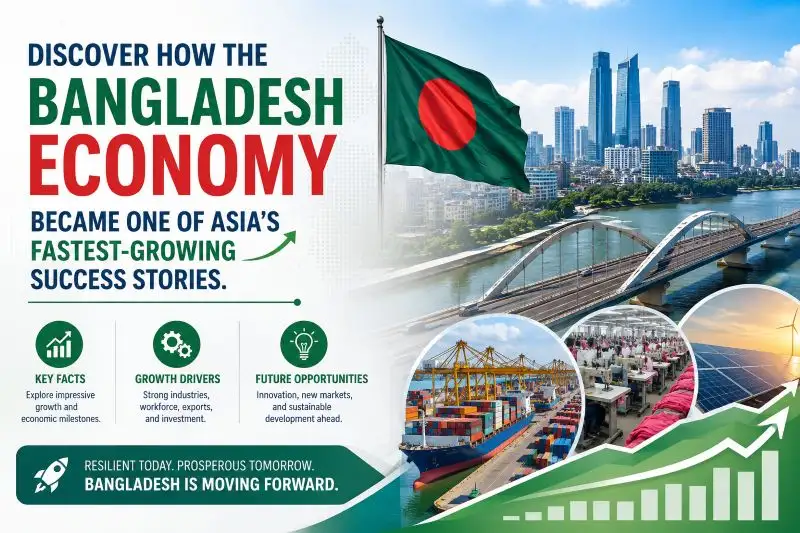
Discover how the Bangladesh Economy became one of Asia’s fastest-growing success stories. Explore key facts, growth drivers, and future opportunities.
Introduction
The Bangladesh Economy has undergone one of the most remarkable transformations in modern history. Just a few decades ago, Bangladesh was widely viewed as a struggling nation facing poverty, food shortages, and limited industrial development. Today, it stands as one of Asia’s fastest-growing economies and a rising force in the global marketplace.
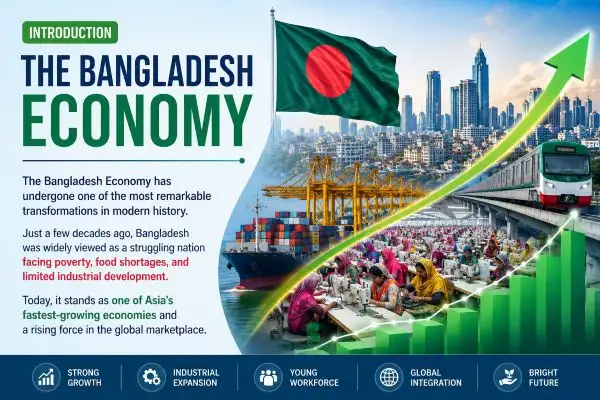
From thriving garment exports and increasing foreign investment to rapid infrastructure development and digital innovation, Bangladesh has demonstrated extraordinary resilience and determination. Economic growth has improved millions of lives, reduced poverty, expanded educational opportunities, and strengthened the country’s position in international trade.
In 2026, the Bangladesh Economy continues to attract attention from economists, investors, development experts, and policymakers worldwide. The country’s progress serves as an inspiring example of how strategic planning, entrepreneurship, and human capital development can transform a nation.
This article explores nine powerful facts about the Bangladesh Economy, highlighting its history, achievements, key industries, challenges, and future prospects.
Understanding the Bangladesh Economy
Before examining the facts, it is important to understand what drives the Bangladesh Economy. The country’s economic growth is supported by a combination of agriculture, manufacturing, services, exports, and remittance income.
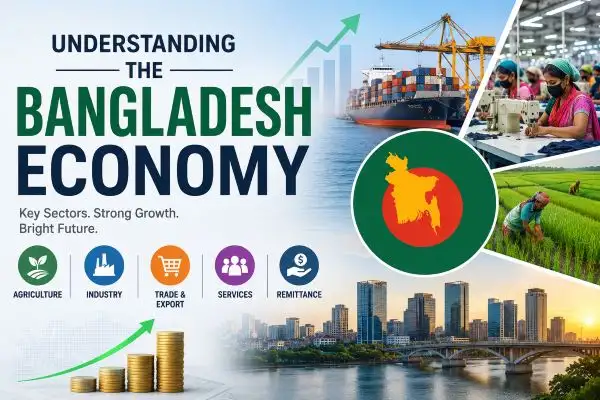
Agriculture provides food security and employment for millions, while the garment industry serves as the largest export earner. The service sector, including banking, telecommunications, healthcare, and information technology, continues to expand rapidly. Additionally, remittances from overseas workers contribute significantly to foreign exchange earnings.
Together, these sectors create a diverse economic foundation that supports development, reduces poverty, attracts investment, and positions Bangladesh as one of South Asia’s most promising emerging economies.
The economy consists of three major sectors:
Agriculture
Agriculture remains an essential foundation of the economy. Millions of Bangladeshis depend on farming, fisheries, and livestock production for their livelihoods. Rice, vegetables, fish, tea, and jute remain important contributors to national income and food security.
Industry
The industrial sector has expanded rapidly over the last several decades. Manufacturing, construction, pharmaceuticals, shipbuilding, and particularly the ready-made garment industry play significant roles in economic growth.
Services
Banking, telecommunications, healthcare, education, transportation, tourism, and information technology have become increasingly important contributors to GDP.
Together, these sectors have helped Bangladesh achieve steady economic growth despite various domestic and global challenges.
Fact 1: Bangladesh Has One of Asia’s Most Inspiring Economic Growth Stories
When Bangladesh gained independence in 1971, the country faced enormous economic challenges. Infrastructure had been severely damaged during the Liberation War, industries were underdeveloped, and poverty affected a large portion of the population.

Food shortages, limited foreign reserves, and weak transportation networks further complicated the nation’s recovery efforts.
Many international observers doubted whether Bangladesh could overcome these obstacles and build a stable economy. However, through decades of strategic planning, investment in agriculture, export-led industrialization, and human capital development, the Bangladesh Economy achieved a remarkable transformation.
The rapid growth of the garment industry, rising remittance inflows, and improvements in education and healthcare played key roles in this success. Today, Bangladesh is recognized as one of Asia’s fastest-growing economies and an inspiring example of economic resilience and sustainable development.
However, the country gradually built a strong economic foundation through:
- Agricultural modernization
- Export-oriented manufacturing
- Human resource development
- Infrastructure investment
- International trade expansion
Over the decades, Bangladesh consistently achieved economic growth rates that outperformed many developing countries.
The transformation is particularly remarkable because it occurred despite frequent natural disasters, global economic disruptions, and resource limitations.
Today, the Bangladesh Economy is recognized as one of the most successful development stories in South Asia.
Fact 2: The Garment Industry Powers Economic Growth
The ready-made garment (RMG) sector is widely considered the backbone of the BangladeshEconomy and one of the country’s greatest economic success stories. Over the past few decades, Bangladesh has become one of the world’s largest exporters of clothing, supplying products to major international brands and retailers across Europe, North America, and Asia.
The industry employs millions of workers, with women making up a significant portion of the workforce, helping to improve household incomes and reduce poverty.
The garment sector contributes substantially to export earnings, foreign exchange reserves, and overall GDP growth. Its success has encouraged industrialization, attracted foreign investment, and created opportunities for supporting industries such as textiles, transportation, packaging, and logistics.
As global demand for affordable and quality apparel continues to grow, the garment industry remains a powerful driver of Bangladesh’s economic development.
The sector contributes significantly to:
- Export earnings
- Employment generation
- Foreign exchange reserves
- Industrial growth
- Women’s workforce participation
International brands source garments from Bangladesh due to competitive production capabilities and a skilled workforce.
The industry’s success has helped create economic opportunities for millions of families across the country.
Furthermore, investments in workplace safety, sustainability, and compliance have strengthened Bangladesh’s reputation in global markets.
Fact 3: Remittances Strengthen the Economy
Another powerful pillar of the Bangladesh Economy is remittance income. Millions of Bangladeshi workers are employed overseas in countries across the Middle East, Southeast Asia, Europe, and other regions.
The money they send back home each year plays a crucial role in supporting economic growth and improving living standards for countless families. Remittances help households cover essential expenses such as education, healthcare, housing, and daily necessities while also reducing poverty in rural communities.
In addition to supporting families, remittance inflows contribute significantly to Bangladesh’s foreign exchange reserves and financial stability. These funds increase consumer spending, encourage small business investments, and strengthen the country’s overall economic resilience.
As overseas employment opportunities continue to expand, remittances remain a key driver of sustainable growth and an important source of national economic strength.
Millions of Bangladeshi workers live and work abroad, particularly in:
- Saudi Arabia
- United Arab Emirates
- Qatar
- Kuwait
- Oman
- Malaysia
- Singapore
The money sent home by these workers supports household consumption, education, healthcare, housing, and business investments.
Remittances also provide valuable foreign currency that helps stabilize the economy.
Many rural communities have experienced significant improvements in living standards due to income generated by overseas workers.
As labor migration continues, remittances remain one of the strongest contributors to economic resilience.
Fact 4: Agriculture Continues to Feed and Support the Nation
Although manufacturing has expanded rapidly, agriculture remains a vital pillar of the Bangladesh Economy. The sector supports millions of farmers and rural households while ensuring food security for a population of over 170 million people.
Despite limited arable land and increasing population pressure, Bangladesh has achieved remarkable progress in agricultural production through modern farming techniques, improved irrigation systems, high-yield crop varieties, and government support programs.
Rice remains the country’s most important crop, while fisheries, vegetables, fruits, tea, and livestock also contribute significantly to economic activity. Agricultural growth not only provides food for the nation but also creates employment opportunities and supplies raw materials for various industries.
As climate-smart farming and technological innovations continue to expand, agriculture will remain a key driver of sustainable development and long-term economic stability in Bangladesh.
Key agricultural products include:
- Rice
- Potatoes
- Vegetables
- Tea
- Fish
- Fruits
- Jute
Modern farming techniques, improved irrigation systems, and better crop varieties have increased productivity.
Agricultural growth has helped reduce poverty, improve food security, and support rural development.
The sector also supplies raw materials for various industries, making it an essential component of overall economic growth.
Fact 5: Digital Transformation Is Creating New Opportunities
Technology is becoming an increasingly important part of the Bangladesh Economy, driving innovation, productivity, and business growth across multiple sectors. The country’s digital transformation has accelerated through expanded internet access, smartphone adoption, mobile financial services, and the growth of e-commerce platforms.
Government initiatives promoting digital services have made it easier for citizens and businesses to access information, conduct transactions, and improve efficiency.
The Information and Communication Technology (ICT) sector is also creating new employment opportunities, particularly for young professionals, freelancers, and entrepreneurs. Bangladesh has emerged as a growing hub for software development, digital marketing, and IT outsourcing services.
Additionally, mobile banking and fintech solutions have improved financial inclusion for millions of people. As digital infrastructure continues to expand, technology will play a crucial role in shaping the future of Bangladesh’s economic development.
The government’s digital development initiatives have accelerated:
- Internet access
- Mobile banking
- E-commerce
- Online education
- Digital government services
Young entrepreneurs are launching startups in areas such as fintech, logistics, software development, and digital marketing.
Mobile financial services have improved financial inclusion by allowing people to access banking services through smartphones.
As internet penetration continues to grow, the digital economy is expected to create thousands of new jobs and business opportunities.
Fact 6: Infrastructure Development Is Driving Progress
Modern infrastructure is essential for economic growth, and it has become one of the strongest foundations of the Bangladesh Economy. Over the past decade, Bangladesh has invested heavily in roads, bridges, railways, seaports, airports, and power generation projects to improve connectivity and support business activities.
These developments have reduced transportation costs, shortened travel times, and increased the efficiency of domestic and international trade.Improved infrastructure also attracts foreign direct investment by creating a more business-friendly environment for industries and entrepreneurs.
Large-scale projects have enhanced regional connectivity, opened new economic opportunities, and supported industrial expansion across the country. Reliable electricity, modern transportation networks, and improved logistics systems help businesses operate more efficiently and compete globally.
As infrastructure development continues, it will remain a key driver of productivity, investment, and long-term economic growth in Bangladesh.
Bangladesh has invested heavily in:
- Highways
- Bridges
- Railways
- Ports
- Airports
- Power generation facilities
Improved transportation networks reduce business costs and increase efficiency.
Better infrastructure also attracts foreign investment by making it easier for companies to operate and distribute products.
Large-scale development projects are helping connect regions, support trade, and encourage industrial expansion.
These investments will continue to play a critical role in the future growth of the Bangladesh Economy.
Fact 7: Poverty Reduction Has Been a Major Success
One of the most impressive achievements of the Bangladesh Economy is its significant progress in reducing poverty over the past several decades. Strong economic growth, expanding employment opportunities, increased access to education, and targeted social development programs have helped millions of people improve their living standards.
The growth of the garment industry, remittance inflows from overseas workers, and advancements in agriculture have played important roles in creating income opportunities for families across the country.
Government initiatives and microfinance programs have also supported low-income households by providing access to financial services and small business opportunities. As a result, many communities have experienced better housing, healthcare, and educational outcomes.
Although challenges remain, Bangladesh’s success in poverty reduction is widely recognized internationally and serves as a powerful example of how economic development can improve the quality of life for millions of people.
Over the years, millions of people have improved their living standards through:
- Employment opportunities
- Economic growth
- Education access
- Social development programs
- Small business development
Economic expansion has created opportunities for families to increase incomes and access better services.
While challenges remain, Bangladesh’s progress in poverty reduction is widely recognized by development experts around the world.
Fact 8: Women Are Helping Transform the Economy
Women’s participation in the workforce has become a major driving force behind the Bangladesh Economy. Over the years, women have made significant contributions in the garment industry, entrepreneurship, education, healthcare, agriculture, and various service sectors.
Their growing involvement has increased household incomes, reduced poverty, and strengthened economic productivity across the country. Many women are also launching small businesses and becoming successful entrepreneurs, creating jobs and supporting local communities.
Increased access to education and skills training has further expanded opportunities for women. As female workforce participation continues to rise, women will remain essential to Bangladesh’s economic growth, social progress, and long-term development goals.
Increased female participation has helped:
- Reduce poverty
- Improve education outcomes
- Strengthen families
- Expand economic productivity
Bangladesh is often cited internationally as an example of how women’s economic empowerment can drive national development.
Fact 9: The Future of the Bangladesh Economy Looks Promising
Looking ahead, the Bangladesh Economy has strong potential for continued growth and development. The country has set ambitious long-term goals, including becoming a developed nation by 2041 through increased industrialization, innovation, and investment.
Emerging sectors such as information technology, renewable energy, pharmaceuticals, digital services, and advanced manufacturing are expected to create new economic opportunities. Ongoing improvements in infrastructure, education, and workforce skills will further strengthen competitiveness in global markets.
Although challenges such as inflation, climate change, and economic uncertainty remain, Bangladesh’s proven resilience and growth momentum position it well for future success. The outlook for the Bangladesh Economy remains highly encouraging in the years ahead.
Future growth opportunities include:
- Information technology
- Pharmaceuticals
- Renewable energy
- Advanced manufacturing
- Logistics services
- Digital innovation
The country’s strategic location, growing workforce, expanding consumer market, and improving infrastructure provide strong foundations for future success.
While challenges such as inflation, climate change, and global economic uncertainty remain, Bangladesh has demonstrated remarkable resilience throughout its history.
If current growth trends continue, the Bangladesh Economy could become one of Asia’s most influential emerging economies in the coming decades.
Challenges Facing the Bangladesh Economy
Despite remarkable progress, the Bangladesh Economy faces several challenges, including inflation, unemployment, climate change, and export dependency. Rapid urbanization places pressure on infrastructure and public services, while global economic uncertainties can affect trade and investment.
Addressing these issues through innovation, diversification, and sustainable policies will be essential for maintaining long-term economic growth and stability.
Despite impressive progress, several issues require attention:
- Inflation and rising living costs
- Climate change risks
- Urban congestion
- Export diversification
- Employment generation
- Financial sector reforms
Addressing these challenges will help ensure sustainable and inclusive growth for future generations.
Conclusion
The Bangladesh Economy is one of the most compelling economic success stories of the modern era. From its difficult beginnings after independence to becoming a rapidly growing economy, Bangladesh has achieved remarkable progress through hard work, innovation, industrial development, and human capital investment.
The nine powerful facts discussed in this article highlight the key drivers behind the country’s transformation. Strong exports, remittances, agriculture, infrastructure development, digital innovation, and workforce participation continue to shape economic growth.
As Bangladesh moves toward its long-term development goals, the future remains full of opportunity. With strategic investments and continued reforms, the Bangladesh Economy is well-positioned to achieve even greater success in the years ahead.
Frequently Asked Questions (FAQ) About the Bangladesh Economy
1. What is the Bangladesh Economy?
The Bangladesh Economy refers to all economic activities within the country, including agriculture, manufacturing, services, trade, exports, and financial sectors. It is one of the fastest-growing economies in South Asia and continues to expand through industrialization and digital transformation.
2. Why is the Bangladesh Economy growing so fast?
The Bangladesh Economy has grown rapidly due to strong garment exports, increasing remittances, infrastructure development, agricultural productivity, foreign investment, and a growing workforce. These factors have helped boost GDP and improve living standards.
3. What is the largest industry in Bangladesh?
The ready-made garment (RMG) industry is the largest sector in Bangladesh. It generates the majority of export earnings and provides employment to millions of workers, making it a key driver of economic growth.
4. How important are remittances to the Bangladesh Economy?
Remittances are extremely important because they bring foreign currency into the country, support household incomes, reduce poverty, and strengthen economic stability. Millions of overseas Bangladeshi workers contribute to this vital source of income.
5. What role does agriculture play in the Bangladesh Economy?
Agriculture remains a major contributor to employment and food security. It supports millions of rural families and provides essential products such as rice, vegetables, fish, tea, and livestock for both domestic consumption and export.
6. What are the biggest challenges facing the Bangladesh Economy?
Some major challenges include inflation, climate change, unemployment, export dependency, urban congestion, and the need for greater economic diversification. Addressing these issues is important for sustainable growth.
7. How does technology contribute to the Bangladesh Economy?
Technology supports economic development through e-commerce, mobile banking, digital services, IT outsourcing, and innovation. The growing digital economy is creating new jobs and business opportunities across the country.
8. Is Bangladesh a developing or developed country?
Bangladesh is currently classified as a developing lower-middle-income country. However, it has set ambitious goals to become a developed nation by 2041 through continued economic growth and modernization.
9. What are the future prospects of the Bangladesh Economy?
The future of the Bangladesh Economy looks promising, with opportunities in information technology, renewable energy, pharmaceuticals, advanced manufacturing, and digital services. Continued investment and innovation are expected to drive long-term growth.
10. Why is the Bangladesh Economy considered a success story?
The Bangladesh Economy is considered a success story because of its impressive GDP growth, poverty reduction, export expansion, women’s workforce participation, and resilience in overcoming economic and environmental challenges over the past several decades.