
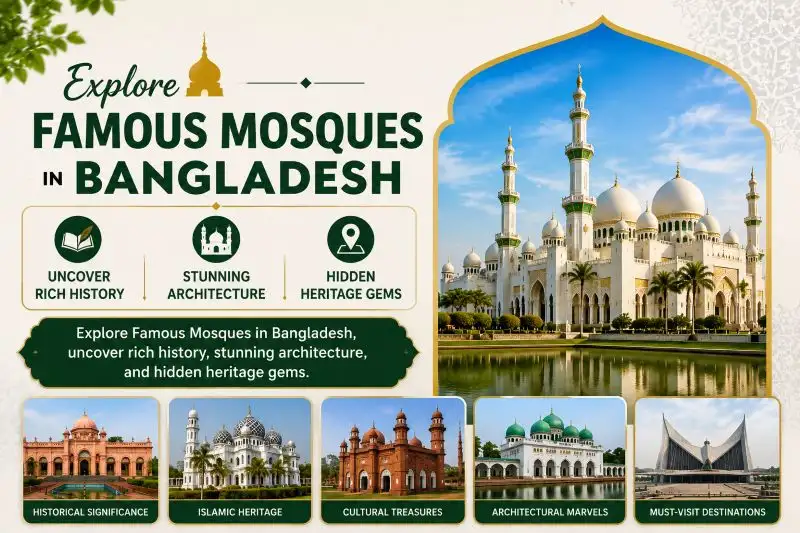
Explore Famous Mosques in Bangladesh, uncover rich history, stunning architecture, and hidden heritage gems.
Introduction
Bangladeshis a land of rivers, rich cultural traditions, and remarkable historical landmarks. Among its most treasured attractions are the famous mosques in Bangladesh, which reflect centuries of Islamic heritage, artistic excellence, and architectural innovation. These sacred structures are not only places of worship but also important symbols of the country’s history and identity.
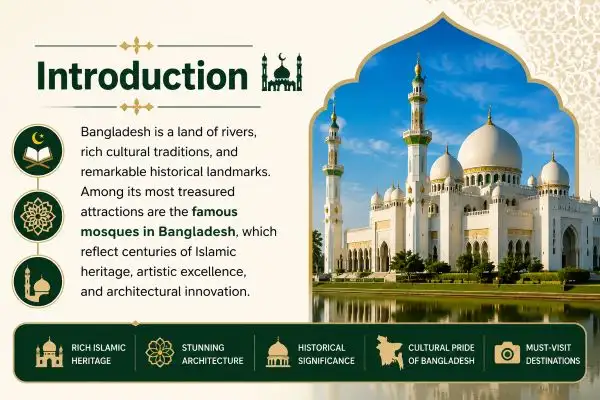
From the magnificent Sixty Dome Mosque in Bagerhat to the stunning Star Mosque in Dhaka, Bangladesh is home to some of South Asia’s most fascinating Islamic monuments. Many of these mosques were built during the Bengal Sultanate and Mughal periods, showcasing unique architectural styles that combine local craftsmanship with Islamic design principles.
Whether you are a history enthusiast, architecture lover, traveler, or researcher, exploring the famous mosques in Bangladesh offers a journey through centuries of faith, culture, and heritage.
Why Famous Mosques in Bangladesh Attract Visitors
Famous mosques in Bangladesh attract visitors due to their deep Islamic history, exceptional architectural styles, and strong cultural importance.
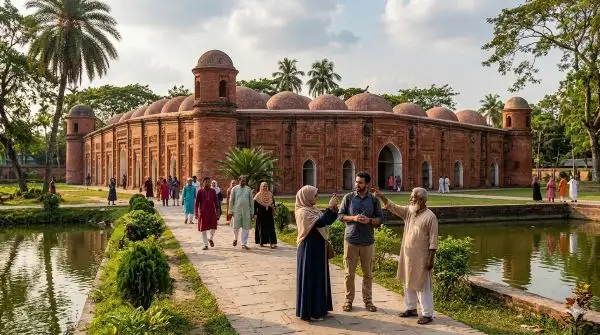
These historic heritage sites embody centuries of Mughal and Sultanate artistry, featuring detailed ornamental designs, terracotta embellishments, domed structures, and distinctive architectural patterns that highlight traditional craftsmanship.
Iconic mosques such as Baitul Mukarram National Mosque and other historic landmarks serve as key destinations for tourists, researchers, and history enthusiasts. They offer valuable insights into Bangladesh’s spiritual and cultural evolution. Visitors are drawn to their peaceful atmosphere, historical significance, and artistic beauty.
These mosques not only represent religious devotion but also preserve the rich architectural legacy of Bengal, making them essential sites for cultural exploration and heritage tourism.
The historic mosques of Bangladesh continue to attract local and international visitors because of their unique features:
- Rich Islamic history
- Stunning architectural beauty
- UNESCO-recognized heritage sites
- Intricate terracotta artwork
- Historical significance spanning over 600 years
- Cultural and religious importance
Many historic mosques in Bangladesh have survived natural disasters, political changes, and centuries of decay. Despite their age, they remain active places of worship, preserving Islamic traditions, architectural heritage, and cultural identity while continuing to serve local Muslim communities.
1. Sixty Dome Mosque (Shat Gombuj Mosque)
History
The Sixty Dome Mosque, also known as Shat Gombuj Mosque, is one of the most famous mosques in Bangladesh and a remarkable symbol of the country’s Islamic heritage. Located in Bagerhat, this historic mosque was built during the 15th century by the renowned Muslim saint and ruler Khan Jahan Ali.

Despite its popular name, the mosque features 77 low domes supported by 60 stone pillars. It was a key part of the historic Mosque City of Bagerhat, which served as an important center for administration, trade, education, and Islamic learning. Today, it is recognized as a UNESCO World Heritage Site and draws tourists from across the globe.
Architecture
The mosque showcases remarkable engineering skills. Its design includes:
- Massive brick walls
- Multiple arches
- Numerous domes
- Four corner towers
- Spacious prayer halls
The building’s symmetrical design continues to impress architects and historians.
UNESCO Heritage Status
The Historic Mosque City of Bagerhat, recognized as a UNESCO World Heritage Site, is one of Bangladesh’s most significant historical destinations. It showcases exceptional Islamic architecture, cultural heritage, and medieval urban planning, attracting global tourists and highlighting Bangladesh’s rich historical legacy.
2. Star Mosque (Tara Masjid)
Historical Background
The Star Mosque, popularly known as Tara Masjid, is one of the most beautiful and famous mosques in Bangladesh. Located in the historic area of Old Dhaka, the mosque was originally built in the early 19th century by Mirza Golam Pir.
Over the years, several renovations enhanced its appearance, transforming it into a stunning architectural landmark. The mosque became renowned for its exquisite star-shaped mosaics, intricate floral patterns, and decorative porcelain artwork.
Today, the Star Mosque stands as a symbol of Bangladesh’s rich Islamic heritage, attracting worshippers, tourists, historians, and architecture enthusiasts from around the world.
Unique Features
Unlike many traditional mosques, the Star Mosque is known for:
- Blue star-shaped mosaics
- White marble decorations
- Chinese porcelain embellishments
- Elegant floral designs
- Beautiful interior artwork
The decorative stars covering the walls and domes inspired its popular name, Tara Masjid.
Cultural Importance
Star Mosque is a symbol of rich cultural importance in Bangladesh. It reflects the artistic brilliance of Bengali Muslim craftsmen and showcases intricate mosaic and star-pattern designs. As one of Dhaka’s most visited religious landmarks, it attracts tourists, historians, and worshippers alike.
The mosque highlights the fusion of Mughal and local architectural styles, preserving Bangladesh’s Islamic heritage and cultural identity. Today, it stands as a major attraction that represents the creativity, devotion, and historical significance of Islamic art in Bengal.
3. Baitul Mukarram National Mosque
The National Mosque of Bangladesh
Baitul Mukarram is the national mosque of Bangladesh and one of the country’s most important religious landmarks. Situated in the center of Dhaka, the mosque was established in the early 1960s to accommodate the growing number of worshippers in the capital.
Its modern architectural design was inspired by the Holy Kaaba in Makkah, giving it a distinctive appearance unlike traditional Mughal or Sultanate mosques. With its vast prayer halls and impressive capacity, Baitul Mukarram serves as a major center for Islamic worship, religious education, and national religious events throughout the year.
Architectural Style
The mosque’s cube-shaped structure closely resembles the Holy Kaaba in Makkah, creating a strong spiritual and symbolic connection for worshippers while reflecting sacred Islamic architectural inspiration and tradition.
Key features include:
- Modern design
- Large prayer facilities
- Spacious courtyards
- Multi-level structure
- Capacity for thousands of worshippers
Religious Significance
Baitul Mukarram National Mosque holds great religious significance as the national mosque of Bangladesh. Every year, it organizes major Islamic gatherings, weekly Friday congregational prayers, and large-scale Eid celebrations attended by thousands of devotees, reflecting its central religious importance and vibrant spiritual atmosphere.
It serves as a central hub for Islamic activities, spiritual gatherings, and national religious celebrations, reflecting the unity of the Muslim community and the importance of Islamic traditions in Bangladesh’s cultural and spiritual life.
4. Choto Sona Mosque
A Jewel of Sultanate Architecture
The Choto Sona Mosque, located in Chapai Nawabganj, is one of the most remarkable and famous mosques in Bangladesh, representing the golden era of Bengal Sultanate architecture. Built during the reign of Sultan Alauddin Husain Shah in the late 15th century, this historic mosque reflects the cultural prosperity and artistic excellence of medieval Bengal.
Renowned for its detailed stone artistry, graceful domes, and refined decorative work, the mosque reflects the superior craftsmanship of its era. Today, it stands as a valuable heritage site, attracting historians, tourists, and architecture lovers from around the world.
Architectural Highlights
Visitors admire the mosque for:
- Exquisite stone carvings
- Ornamental arches
- Elegant domes
- Detailed decorative motifs
- Exceptional craftsmanship
Its name, meaning “Small Golden Mosque,” likely originates from the golden appearance of its domes under sunlight.
5. Nine Dome Mosque
Historical Importance
The Nine Dome Mosque is one of the notable and famous mosques in Bangladesh, located near the historic city of Bagerhat. This remarkable structure dates back to the 15th century and is widely believed to have been built during the reign of the great saint and ruler Khan Jahan Ali.
His influence played a major role in shaping the Islamic architecture of the region. The mosque reflects early Bengal Sultanate design, featuring multiple domes, thick brick walls, and traditional construction styles. Today, it remains an important historical site and a symbol of Bangladesh’s rich Islamic heritage.
Design Features
The mosque contains:
- Nine symmetrical domes
- Three arched entrances
- Thick brick walls
- Historic prayer chambers
- Traditional Bengal architectural elements
Despite its smaller size, the mosque remains a significant historical monument.
6. Kusumba Mosque
A Stone Masterpiece
Kusumba Mosque, located in Naogaon District, is a remarkable example of 16th-century Islamic architecture in Bengal. Often known as the “Black Gem of Bengal,” this historic mosque stands out for its rare and impressive stone-built structure, unlike the common brick constructions of its time.
Built in 1558 during the Sultanate period, it reflects strong craftsmanship, intricate detailing, and cultural heritage significance.
Today, it attracts historians and tourists alike, showcasing Bangladesh’s rich architectural legacy and medieval Islamic artistry, making it an important heritage site and a must-visit destination for cultural exploration.
Built in 1558, it differs from many other medieval mosques that primarily used brick.
Architectural Beauty
The mosque features:
- Stone carvings
- Decorative mihrabs
- Elegant façade
- Strong structural design
- Detailed artistic patterns
Its preservation allows modern visitors to appreciate the advanced engineering techniques of the period.
7. Binat Bibi Mosque
Oldest Surviving Mosque in Dhaka
Binat Bibi Mosque, built in 1454, is widely regarded as the oldest surviving mosque in Dhaka. Though modest in size, it stands as an important reminder of early Islamic architecture and cultural influence in Bengal. Constructed during the mid-15th century, it continues to attract historians and visitors interested in Bangladesh’s rich heritage.
Its historical value makes it a key heritage site in Dhaka’s Islamic history. Today it remains a popular destination for cultural tourism and research, highlighting the early development of mosque architecture in the region and continues to inspire visitors every year.
Historical Value
The mosque holds strong historical value as it reflects the early development of Islamic communities in Bengal. It provides important evidence of religious growth and cultural evolution long before Dhaka emerged as a major Mughal urban center.
8. Sat Gambuj Mosque
A Landmark of Dhaka
Sat Gambuj Mosque, located in Mohammadpur, Dhaka, is a remarkable Mughal-era landmark and one of the finest examples of historic mosque architecture in Bangladesh. It reflects the elegance and simplicity of Mughal architecture, showcasing symmetrical design, clean lines, and timeless artistic craftsmanship.
Built during the Mughal period, it remains an important cultural heritage site attracting tourists, historians, and architecture enthusiasts today. It is a must-visit destination in Dhaka for exploring Bangladesh’s rich Mughal architectural legacy and historical significance.
Today it stands preserved as a symbol of heritage, faith, and cultural identity in Bangladesh.
Key Features
- Seven domes
- Beautiful arches
- Elevated structure
- Historic significance
- Traditional Mughal design
It continues to function as a living place of worship while also standing as a significant cultural heritage landmark.
9. Goaldi Mosque
A Hidden Historical Treasure
Goaldi Mosque, located in Sonargaon, is a hidden historical treasure of Bangladesh. Constructed during the Sultanate period, it represents early Islamic architecture and craftsmanship. As one of the few surviving monuments from that era, the mosque reflects the rich cultural and religious heritage of medieval Bengal.
Its simple yet elegant design attracts historians, researchers, and tourists interested in ancient history. Today it stands as archaeological site preserving the legacy of Bengal’s glorious past and offering insight into early mosque architecture in the region for future generations to explore and appreciate.
Architectural Characteristics
Visitors appreciate:
- Decorative terracotta work
- Elegant proportions
- Historic inscriptions
- Traditional Islamic motifs
The mosque provides a glimpse into Bengal’s rich medieval history.
10. Baba Adam Mosque
Historical Legacy
Baba Adam Mosque, located in Munshiganj, is a significant Mughal-era historical site in Bangladesh. The mosque reflects rich architectural heritage and stands as a symbol of Islamic culture in the region. It is closely associated with local legends, especially the story of Saint Baba Adam, which enhances its cultural and spiritual importance.
Built with elegant design and historical craftsmanship, it attracts visitors, historians, and researchers alike. Today, it remains a protected heritage site, preserving Bengal’s glorious past and offering valuable insight into Mughal-era religious architecture and local traditions for visitors and history learners.
Architecture
Notable features include:
- Six domes
- Brick construction
- Decorative elements
- Historic atmosphere
Its peaceful surroundings attract both worshippers and tourists.
11. Shah Muhammad Mosque
Mughal-Era Heritage
Shah Muhammad Mosque is one of the oldest surviving Mughal-era mosques in Dhaka, showcasing the rich architectural heritage of the 17th century. Built during the Mughal Empire, it reflects classic Islamic design traditions with balanced structure, elegant arches, and historical craftsmanship.
This mosque stands as an important reminder of Dhaka’s Mughal past and cultural evolution. Despite its age, it continues to attract historians, researchers, and visitors interested in Islamic architecture.
Today it is considered a valuable heritage site, preserving the artistic excellence and historical identity of Mughal Bengal for future generations to explore and appreciate deeply.
Why It Matters
The mosque is an important symbol of Bangladesh’s Islamic heritage, reflecting centuries of cultural and religious history. It preserves historical architecture and remains a significant heritage site today.
Architectural Features of Famous Mosques in Bangladesh
Terracotta Decoration
Terracotta decoration is a key feature of many historic mosques in Bengal, created due to limited stone availability. These intricate designs showcase artistic craftsmanship and cultural heritage beautifully.
Multiple Domes
Multiple domes enhance both strength and beauty in Bangladeshi mosques. They provide structural balance while creating a unique, iconic architectural style that reflects Islamic design traditions.
Curved Cornices
Curved cornices are a signature feature of traditional Bengali architecture, adding elegance and uniqueness to mosque designs. They reflect local craftsmanship and cultural heritage in historic Islamic structures.
Ornate Mihrabs
Ornate mihrabs are beautifully decorated prayer niches found in historic mosques. They showcase exceptional craftsmanship, detailed artistic work, and highlight the rich cultural and religious heritage of Islamic architecture.
Brick Construction
Brick construction is a defining feature of Islamic architecture in Bangladesh. It reflects local material use, durability, and traditional craftsmanship, shaping the unique historical identity of mosque design.
Importance of Mosque Tourism in Bangladesh
Mosque tourism in Bangladesh plays a vital role in promoting Islamic heritage, historical architecture, and cultural identity. It attracts global visitors, supports local tourism growth, and preserves ancient monuments.
Famous mosques highlight Mughal and Sultanate history, making Bangladesh a key destination for religious and cultural exploration.
Mosque tourism contributes significantly to cultural preservation and public awareness. Visitors gain opportunities to:
- Learn about Islamic history
- Explore heritage architecture
- Support local tourism
- Preserve historical monuments
- Promote cultural understanding
As interest in heritage tourism grows, the famous mosques in Bangladesh continue to attract travelers seeking meaningful cultural experiences.
Conclusion
The famous mosques in Bangladesh stand as remarkable symbols of faith, history, and architectural brilliance. From the UNESCO-recognized Sixty Dome Mosque to the artistic beauty of the Star Mosque, each structure tells a unique story about the nation’s Islamic heritage.
These historic landmarks connect modern Bangladesh with centuries of cultural development and religious tradition. Whether you are exploring ancient Sultanate architecture, Mughal masterpieces, or modern Islamic landmarks, the mosques of Bangladesh offer unforgettable insights into the country’s rich past and vibrant present.
By preserving and promoting these architectural treasures, Bangladesh continues to celebrate a heritage that inspires both citizens and visitors from around the world.
FAQ – Famous Mosques in Bangladesh
1. What are the most famous mosques in Bangladesh?
Some famous mosques include Binat Bibi Mosque, Sat Gambuj Mosque, Kusumba Mosque, and Goaldi Mosque.
2. Why are mosques in Bangladesh famous?
They are famous for their Mughal and Sultanate architecture, terracotta designs, and rich Islamic heritage.
3. Which is the oldest mosque in Bangladesh?
Binat Bibi Mosque is widely considered the oldest surviving mosque in Dhaka.
4. What makes Bangladeshi mosques unique?
Their use of brick, terracotta decoration, curved cornices, and multiple domes makes them architecturally unique.
5. Why do tourists visit mosques in Bangladesh?
Tourists visit to explore history, architecture, and cultural heritage linked to Islamic civilization.