
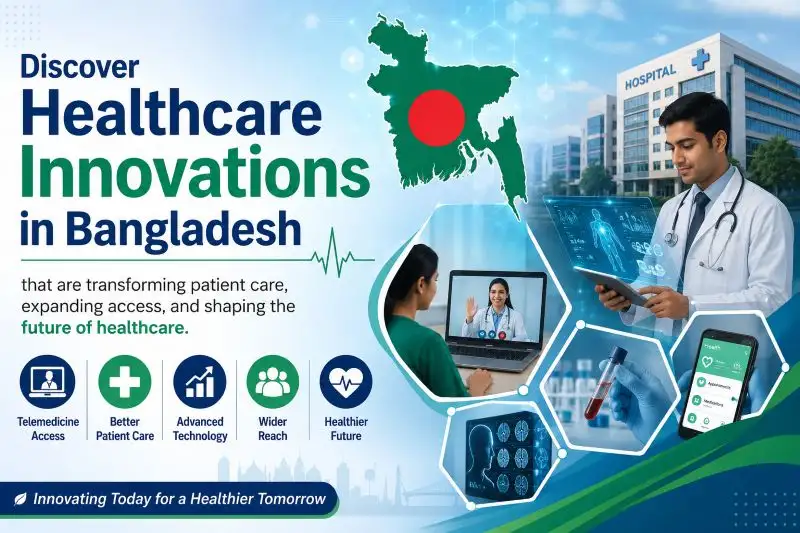
Discover Healthcare Innovations in Bangladesh that are transforming patient care, expanding access, and shaping the future of healthcare.
Introduction
The healthcare sector in Bangladesh has undergone a remarkable transformation over the past few decades. Once challenged by limited infrastructure, shortages of healthcare professionals, and restricted access to medical services, the country is now embracing a new era of innovation.
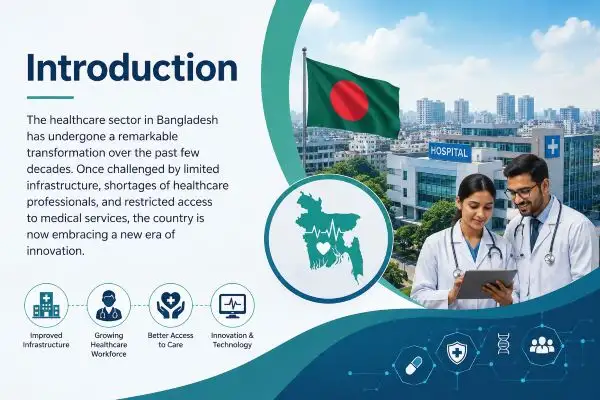
Today, healthcare innovations in Bangladesh are improving patient care, increasing accessibility, and helping millions of people receive better medical treatment than ever before.
Technology has become one of the driving forces behind this progress. From telemedicine platforms connecting rural patients with doctors to artificial intelligence helping medical professionals make faster diagnoses, Bangladesh is witnessing a healthcare revolution.
Government initiatives, private-sector investments, and the rapid growth of digital technology have all contributed to this transformation.
The importance of healthcare innovation extends beyond hospitals and clinics. It affects everyday lives by making healthcare more affordable, efficient, and accessible. Patients can now book appointments online, consult doctors remotely, receive digital prescriptions, and monitor their health using mobile applications.
These developments are helping bridge the gap between urban healthcare facilities and remote communities.As Bangladesh continues its journey toward becoming a digitally advanced nation, healthcare remains one of the sectors experiencing the most exciting changes.
In this article, we explore nine amazing healthcare innovations in Bangladesh that are reshaping the medical landscape and improving health outcomes across the country.
The Evolution of Healthcare in Bangladesh
To understand the significance of modern healthcare innovations, it is important to look at the country’s healthcare journey.

Following independence in 1971, Bangladesh faced significant healthcare challenges. The nation struggled with infectious diseases, inadequate medical facilities, limited healthcare funding, and a shortage of trained professionals. Rural populations often had little access to quality healthcare services.
Over the years, Bangladesh made substantial progress in reducing child mortality, improving maternal health, increasing vaccination coverage, and expanding healthcare infrastructure. These achievements laid the foundation for the next phase of development: innovation-driven healthcare.
The rise of internet connectivity, mobile technology, and digital services created new opportunities to modernize healthcare delivery. Today, healthcare innovations in Bangladesh are helping solve long-standing problems while creating a more efficient and patient-centered healthcare system.
1. Telemedicine Services Expanding Healthcare Access
One of the most important healthcare innovations in Bangladesh is the rapid expansion of telemedicine services. Telemedicine enables patients to consult qualified doctors remotely through video calls, mobile apps, and telephone services without visiting a hospital or clinic in person.

This advancement has become especially valuable for people living in rural and remote areas where access to specialist healthcare is often limited.
With the growth of internet connectivity and smartphone usage, telemedicine is helping bridge the healthcare gap between urban and rural communities. Patients can receive medical advice, follow-up consultations, prescriptions, and health guidance from the comfort of their homes.
This not only saves time and travel costs but also allows faster access to healthcare services during emergencies.The popularity of telemedicine increased significantly during the COVID-19 pandemic, demonstrating its effectiveness and convenience.
Today, telemedicine continues to improve healthcare accessibility, reduce pressure on overcrowded hospitals, and support better health outcomes, making it one of the most transformative healthcare technology advancements in Bangladesh.
Why Telemedicine Matters
Many Bangladeshis live far from major hospitals. Traveling to urban medical centers can be expensive and time-consuming. Telemedicine helps eliminate these barriers by bringing healthcare directly to patients.
Key Benefits
- Faster access to doctors
- Reduced travel expenses
- Improved rural healthcare access
- Convenience for elderly patients
- Faster follow-up consultations
The COVID-19 pandemic accelerated the adoption of telemedicine, making remote healthcare a trusted and widely used solution throughout the country.
2. Digital Health Platforms Transforming Patient Experience
Digital health platforms are among the most impactful healthcare innovations in Bangladesh, transforming how patients access and manage medical services. These technology-driven solutions connect patients, doctors, hospitals, diagnostic centers, and pharmacies through a single digital ecosystem.
Instead of waiting in long queues or making multiple visits, patients can now book appointments online, access medical records, receive electronic prescriptions, and communicate directly with healthcare professionals from anywhere.
The growing adoption of digital healthcare platforms has significantly improved convenience, efficiency, and patient satisfaction. Individuals can easily track their medical history, receive appointment reminders, and access healthcare information through user-friendly mobile apps and websites.
For healthcare providers, these systems help streamline administrative tasks, reduce paperwork, and improve patient management.
As internet access and smartphone usage continue to expand across the country, digital health platforms are playing a crucial role in modernizing healthcare delivery. They are making healthcare services more accessible, organized, and patient-centered, contributing to a smarter and more efficient healthcare system in Bangladesh.
Features of Digital Health Platforms
- Online doctor appointments
- Electronic prescriptions
- Health record management
- Digital payment systems
- Patient communication tools
The increasing popularity of digital healthcare solutions demonstrates how technology is improving convenience and accessibility within Bangladesh’s healthcare sector.
3. Mobile Health Applications Improving Preventive Care
The rapid growth of smartphone usage has fueled the expansion of mobile health applications, commonly known as mHealth, making them one of the most valuable healthcare innovations in Bangladesh. These applications provide users with instant access to healthcare information, wellness tracking features, medication reminders, fitness monitoring tools, and disease prevention guidance.
By putting essential health resources directly into people’s hands, mHealth is helping individuals take a more proactive approach to their well-being.
Mobile health apps are especially beneficial for preventive healthcare, as they encourage healthy habits and early detection of potential health issues. Many applications help users monitor blood pressure, blood sugar levels, physical activity, sleep patterns, and nutritional intake. Others offer maternal health support, vaccination reminders, and chronic disease management tools.
As digital healthcare continues to evolve, mobile health applications are playing a crucial role in improving public health awareness and reducing preventable illnesses. Their convenience, affordability, and accessibility make them an important part of the future of healthcare technology in Bangladesh.
Popular Uses of mHealth
- Pregnancy monitoring
- Child healthcare support
- Medication reminders
- Fitness tracking
- Chronic disease management
These applications empower individuals to take a more active role in managing their health while reducing preventable health risks.
4. Electronic Health Records (EHR) Enhancing Medical Efficiency
Electronic Health Records (EHR) have become one of the most important healthcare innovations in Bangladesh, helping healthcare facilities move away from traditional paper-based record systems. Managing patient information on paper can be time-consuming, inefficient, and prone to errors.
EHR systems solve these challenges by allowing hospitals, clinics, and healthcare professionals to store, update, and access patient records digitally in a secure and organized manner.
With Electronic Health Records, doctors can quickly review a patient’s medical history, laboratory results, prescriptions, allergies, and previous treatments. This improves diagnostic accuracy, enhances treatment planning, and reduces the risk of medical errors. EHR systems also enable better coordination among healthcare providers, ensuring that patients receive consistent and informed care.
As healthcare technology in Bangladesh continues to advance, EHR adoption is helping improve operational efficiency, reduce paperwork, and save valuable time for both patients and medical staff. These digital record systems are playing a crucial role in creating a smarter, faster, and more patient-centered healthcare environment across the country.
Advantages of Electronic Health Records
- Improved record accuracy
- Faster access to medical history
- Better treatment coordination
- Reduced paperwork
- Enhanced patient safety
Digital records also support healthcare research and data analysis, helping medical institutions make more informed decisions.
5. Artificial Intelligence Supporting Medical Diagnosis
Artificial Intelligence (AI) is rapidly emerging as one of the most promising healthcare innovations in Bangladesh, transforming the way diseases are detected and diagnosed. By analyzing large volumes of medical data, AI-powered systems can identify patterns, detect abnormalities, and assist healthcare professionals in making faster and more accurate clinical decisions.
This technology is helping improve diagnostic accuracy while reducing the risk of human error.In modern healthcare settings, AI is increasingly being used for medical imaging analysis, disease prediction, patient monitoring, and clinical decision support.
For example, AI can help analyze X-rays, CT scans, and other diagnostic images to identify potential health issues at an early stage. Early detection often leads to more effective treatment and better patient outcomes.
As healthcare technology in Bangladesh continues to advance, AI is expected to play an even greater role in improving efficiency and accessibility. By supporting doctors with data-driven insights, Artificial Intelligence is helping create a smarter, more innovative healthcare system that benefits both medical professionals and patients across the country.
Applications of AI in Healthcare
- Medical imaging analysis
- Disease prediction
- Clinical decision support
- Risk assessment
- Patient monitoring
AI is particularly valuable in areas where specialist healthcare professionals are limited, helping improve diagnostic accuracy and treatment outcomes.
6. Smart Diagnostic Technologies Improving Accuracy
Smart diagnostic technologies are revolutionizing healthcare in Bangladesh by making disease detection faster, more accurate, and more efficient. Accurate diagnosis is essential for successful treatment, and modern diagnostic innovations are helping healthcare professionals identify medical conditions at earlier stages than ever before.
These advanced technologies use digital systems, automated laboratory equipment, and high-resolution imaging tools to improve diagnostic precision and reduce delays in treatment.
Modern healthcare facilities increasingly rely on digital X-rays, ultrasound systems, CT scans, MRI technology, and automated diagnostic platforms to evaluate patients quickly and effectively.
These tools help doctors detect a wide range of conditions, including heart disease, diabetes complications, infections, and certain types of cancer. Early diagnosis often leads to better treatment outcomes and improved patient recovery rates.
As healthcare innovations in Bangladesh continue to advance, smart diagnostic technologies are enhancing the quality of medical care across the country. By reducing diagnostic errors and providing faster results, these technologies support better decision-making, improve patient safety, and contribute to a more modern and efficient healthcare system.
Benefits
- Earlier disease detection
- Improved treatment success rates
- Faster laboratory results
- Better patient outcomes
- Reduced diagnostic errors
These innovations are especially important in managing non-communicable diseases such as diabetes, heart disease, and cancer.
7. Innovations in Maternal and Child Healthcare
Bangladesh has gained international recognition for its remarkable progress in maternal and child healthcare, thanks in part to innovative healthcare technologies and digital health initiatives. Technology-driven healthcare programs now provide expectant mothers with essential health information, prenatal care guidance, appointment reminders, and remote consultations with healthcare professionals.
These services help ensure timely medical support throughout pregnancy and after childbirth.Mobile health applications, vaccination tracking systems, and digital awareness campaigns are also improving child healthcare across the country.
Parents can receive reminders for immunizations, growth monitoring, and routine health checkups, helping protect children from preventable diseases. In rural areas, digital healthcare solutions are bridging gaps in access to quality maternal and pediatric care.
These healthcare innovations in Bangladesh are contributing to healthier pregnancies, safer deliveries, lower infant mortality rates, and improved child development, making maternal and child health services more accessible and effective than ever before.
Key Innovations
- Mobile pregnancy tracking
- Digital health education
- Remote maternal consultations
- Vaccination monitoring systems
- Child growth tracking tools
These initiatives contribute to healthier pregnancies and better outcomes for both mothers and children.
8. Digital Pharmacy and E-Prescription Systems
Digital pharmacy services and e-prescription systems are transforming how patients access medications in Bangladesh. These healthcare innovations make the process of obtaining medicines faster, safer, and more convenient.
Instead of relying solely on paper prescriptions, doctors can now send prescriptions electronically, allowing patients to order medications through trusted online pharmacy platforms and receive them at their doorstep.
E-prescription systems help reduce prescription errors caused by unclear handwriting and improve communication between healthcare providers and pharmacists.
Patients can also maintain digital records of their prescriptions, making it easier to manage ongoing treatments and medication schedules. For individuals with chronic conditions, digital pharmacy services provide a convenient way to refill medicines without frequent pharmacy visits.
As healthcare technology in Bangladesh continues to advance, digital pharmacies are improving medication accessibility, enhancing patient safety, and supporting a more efficient healthcare system that benefits both healthcare providers and patients.
Advantages
- Reduced prescription errors
- Improved medication adherence
- Increased convenience
- Better pharmacy management
- Faster service delivery
E-prescriptions also improve communication between doctors and pharmacists, enhancing patient safety.
9. Healthcare Data Analytics and Smart Decision-Making
Healthcare data analytics is becoming a vital part of modern healthcare in Bangladesh, helping hospitals, clinics, and public health organizations make smarter and more informed decisions.
By collecting and analyzing large amounts of healthcare data, medical professionals can identify disease patterns, monitor health trends, and predict future healthcare needs more accurately. This data-driven approach supports better planning and improves the overall quality of patient care.
Healthcare providers use analytics to track outbreaks, evaluate treatment effectiveness, and allocate medical resources where they are needed most. It also helps reduce operational inefficiencies and supports evidence-based decision-making. In public health, data analytics plays an important role in developing strategies to combat diseases and improve community health outcomes.
As healthcare innovations in Bangladesh continue to evolve, healthcare data analytics is helping create a more efficient, responsive, and patient-focused healthcare system. Its growing role will be essential in shaping the future of healthcare technology and medical services across the country.
Uses of Healthcare Analytics
- Disease surveillance
- Healthcare planning
- Resource optimization
- Treatment effectiveness analysis
- Public health monitoring
Data-driven healthcare enables more informed decision-making and helps healthcare systems respond effectively to emerging challenges.
Challenges Facing Healthcare Innovation in Bangladesh
Despite significant progress in healthcare technology, Bangladesh still faces several challenges in fully implementing healthcare innovations. Limited digital infrastructure in some rural areas, inconsistent internet connectivity, and gaps in digital literacy can restrict access to modern healthcare services.
Many healthcare facilities also face budget constraints that make it difficult to adopt advanced technologies and maintain digital systems. Additionally, concerns about data privacy, cybersecurity, and the protection of patient information remain important issues.
There is also a growing need for skilled healthcare professionals who can effectively use new technologies. Addressing these challenges will be essential for ensuring that healthcare innovations in Bangladesh continue to improve healthcare accessibility, quality, and efficiency for all citizens.
These include:
- Digital literacy gaps
- Limited rural internet access
- Cybersecurity concerns
- Funding limitations
- Healthcare workforce training needs
Addressing these challenges will be essential to maximizing the benefits of healthcare innovation.
The Future of Healthcare Innovations in Bangladesh
The future of healthcare innovations in Bangladesh is exceptionally bright as digital transformation continues to reshape the medical sector. Emerging technologies such as Artificial Intelligence (AI), telemedicine, smart diagnostic systems, remote patient monitoring, and electronic health records are expected to become even more advanced and widely accessible.
Increased investment in healthcare technology and digital infrastructure will help improve healthcare services in both urban and rural communities. These innovations will support faster diagnoses, personalized treatments, and more efficient patient care.
As Bangladesh embraces modern healthcare solutions, the country is well-positioned to build a smarter, more accessible, and patient-centered healthcare system that improves health outcomes and enhances the quality of life for millions of people.
Emerging technologies expected to shape the coming years include:
- Advanced Artificial Intelligence
- Internet of Medical Things (IoMT)
- Precision medicine
- Remote patient monitoring
- Smart hospital systems
- Blockchain healthcare records
As digital transformation accelerates, healthcare services will become increasingly personalized, efficient, and accessible.
Conclusion
Healthcare innovations in Bangladesh are transforming the way medical services are delivered across the country. From telemedicine and mobile health applications to artificial intelligence and digital healthcare platforms, technology is helping overcome traditional barriers to healthcare access and quality.
These innovations are improving patient outcomes, supporting healthcare professionals, and creating a more connected healthcare system. While challenges remain, continued investment, innovation, and collaboration will ensure that Bangladesh remains on a path toward a healthier and more technologically advanced future.
As the nation continues embracing digital transformation, healthcare innovations in Bangladesh will play a crucial role in improving lives, strengthening communities, and shaping the future of medicine for generations to come.
Frequently Asked Questions (FAQ) About Healthcare Innovations in Bangladesh
1. What are healthcare innovations in Bangladesh?
Healthcare innovations in Bangladesh refer to new technologies, digital solutions, medical advancements, and modern healthcare practices that improve patient care, healthcare accessibility, and treatment efficiency. Examples include telemedicine, artificial intelligence, electronic health records, mobile health applications, and digital pharmacy services.
2. Why are healthcare innovations important in Bangladesh?
Healthcare innovations help address challenges such as limited healthcare access, shortages of medical professionals, and growing healthcare demands. They improve service quality, reduce costs, enhance patient experiences, and make healthcare more accessible for people living in rural and remote areas.
3. How is telemedicine changing healthcare in Bangladesh?
Telemedicine allows patients to consult doctors remotely through video calls, mobile apps, and phone services. This reduces travel time, lowers healthcare costs, and improves access to medical specialists, especially for people in underserved regions.
4. What role does Artificial Intelligence play in Bangladesh’s healthcare sector?
Artificial Intelligence assists healthcare professionals by analyzing medical data, detecting disease patterns, supporting diagnoses, and improving treatment planning. AI helps increase diagnostic accuracy and contributes to better patient outcomes.
5. What are Electronic Health Records (EHR)?
Electronic Health Records are digital versions of patient medical records. They allow healthcare providers to store, access, and manage patient information efficiently, reducing paperwork and improving care coordination.
6. How do mobile health applications benefit patients?
Mobile health applications provide medication reminders, wellness tracking, disease prevention tips, fitness monitoring, and healthcare information. They encourage preventive care and help individuals manage their health more effectively.
7. What challenges do healthcare innovations face in Bangladesh?
Some challenges include limited digital infrastructure in rural areas, internet connectivity issues, cybersecurity concerns, funding limitations, and the need for more healthcare professionals trained in digital technologies.
8. What is the future of healthcare innovations in Bangladesh?
The future looks promising, with advancements in AI, telemedicine, smart diagnostics, remote patient monitoring, and digital healthcare platforms expected to further improve healthcare accessibility, efficiency, and patient outcomes across the country.