
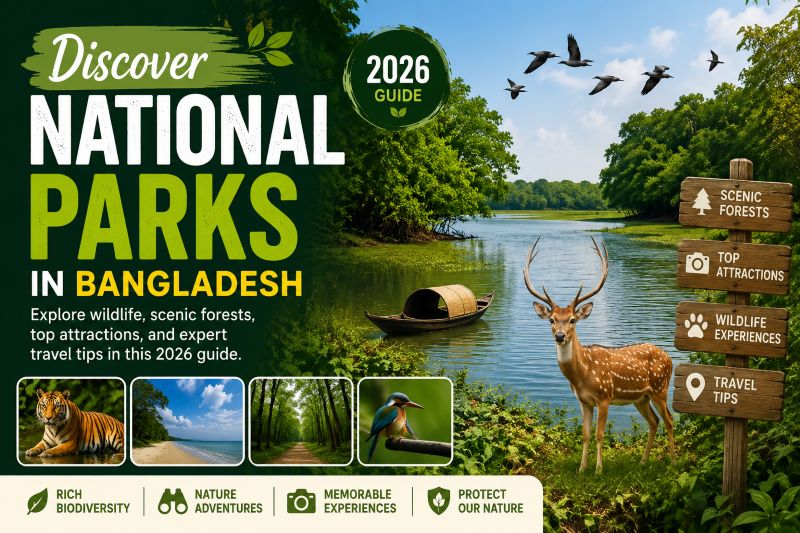
Discover National Parks in Bangladesh, explore wildlife, scenic forests, top attractions, and expert travel tips in this 2026 guide.
Introduction: 10 Amazing National Parks in Bangladesh
Bangladesh is often celebrated for its winding rivers, fertile plains, and the world’s largest mangrove forest. Beyond its bustling cities and cultural landmarks lies another treasure that nature lovers should not overlook—National Parks in Bangladesh. These protected landscapes preserve the country’s rich biodiversity, safeguard endangered wildlife, and offer unforgettable experiences for travelers seeking peace, adventure, and natural beauty.
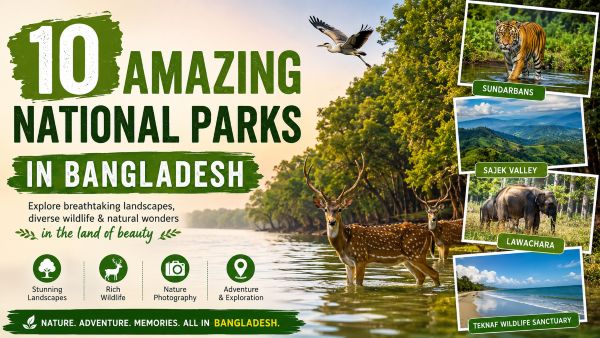
From tropical evergreen forests to coastal mangroves, Bangladesh is home to a remarkable variety of ecosystems. Each national park tells its own story through ancient trees, colorful birds, rare mammals, and breathtaking scenery. Whether you’re planning a family vacation, a wildlife photography tour, or simply want to learn more about Bangladesh’s natural heritage, these parks deserve a place on your travel list.
In this comprehensive guide, you’ll discover the history of national parks in Bangladesh, why they are important, and the first five must-visit destinations that showcase the country’s incredible natural diversity.
The History of National Parks in Bangladesh
The idea of protecting forests and wildlife in Bangladesh gained momentum after the country’s independence in 1971. Rapid population growth, agricultural expansion, and illegal logging placed increasing pressure on natural habitats. Recognizing the need to preserve its unique ecosystems, the government introduced stronger conservation measures through forest protection laws and wildlife management programs.
One of the earliest milestones came with the declaration of several protected forests as national parks under the Bangladesh Wildlife (Preservation) Order. Over the years, additional legislation strengthened conservation efforts, encouraging sustainable forest management and biodiversity protection.
Today, the Forest Department manages a network of national parks that protect tropical rainforests, mangrove ecosystems, wetlands, and wildlife habitats across the country. These parks not only conserve nature but also support environmental research, eco-tourism, climate resilience, and local livelihoods.
As awareness of environmental conservation continues to grow, national parks have become valuable destinations where visitors can experience Bangladesh’s natural beauty while contributing to responsible tourism.
Why National Parks in Bangladesh Are Important
National Parks in Bangladesh play a crucial role in protecting the country’s forests, wildlife, and natural ecosystems. They provide safe habitats for endangered species, preserve rich biodiversity, and help maintain ecological balance.
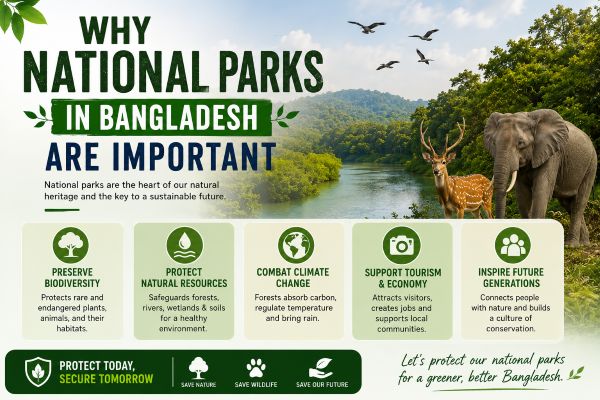
These protected areas also support eco-tourism, environmental education, and scientific research while creating sustainable livelihood opportunities for local communities. In addition, national parks help reduce the impacts of climate change by absorbing carbon dioxide, protecting watersheds, and conserving natural resources for future generations to enjoy.
Conserving Wildlife
Many endangered animals, including the Royal Bengal Tiger, Asian Elephant, Hoolock Gibbon, Fishing Cat, and numerous bird species, depend on these protected forests for survival. National parks provide safe habitats where wildlife can breed and thrive with minimal human disturbance.
Preserving Biodiversity
Bangladesh may be relatively small in size, but it supports thousands of plant and animal species. National parks protect evergreen forests, mangroves, freshwater ecosystems, medicinal plants, orchids, butterflies, reptiles, and insects that contribute to the country’s rich biodiversity.
Supporting Eco-Tourism
Nature-based tourism has become increasingly popular in Bangladesh. Visitors enjoy hiking through forest trails, birdwatching, wildlife photography, camping opportunities in designated areas, and educational tours that promote environmental awareness.
Fighting Climate Change
Healthy forests absorb carbon dioxide, regulate rainfall, reduce soil erosion, improve air quality, and protect communities from floods and cyclones. Conserving national parks is therefore essential for building climate resilience.
Creating Educational Opportunities
Researchers, students, and conservationists use national parks as living laboratories to study ecosystems, wildlife behavior, forest restoration, and sustainable resource management.
1. Sundarbans National Park
The Sundarbans is undoubtedly the most famous protected forest in Bangladesh. As the world’s largest mangrove ecosystem, it covers an extensive network of tidal rivers, creeks, mudflats, and dense forests along the Bay of Bengal.

The park is internationally recognized for its extraordinary biodiversity and is home to the iconic Royal Bengal Tiger. Visitors may also encounter spotted deer, estuarine crocodiles, wild boars, monitor lizards, playful otters, dolphins, and hundreds of bird species.
Boat safaris remain the best way to explore the Sundarbans, allowing travelers to navigate peaceful waterways surrounded by lush mangroves. Watching the sunrise over the forest or spotting wildlife from a quiet boat creates memories that last a lifetime.
Highlights
- World’s largest mangrove forest
- Royal Bengal Tiger habitat
- Scenic river cruises
- Rich birdlife and aquatic wildlife
- UNESCO-recognized natural heritage
2. Lawachara National Park
Located in Moulvibazar District in northeastern Bangladesh, Lawachara National Park is one of the most popular and biologically diverse National Parks in Bangladesh. This protected tropical evergreen rainforest is internationally recognized for conserving the endangered Western Hoolock Gibbon, the country’s only ape species.
The forest also provides a safe habitat for capped langurs, barking deer, civets, squirrels, reptiles, butterflies, and more than 250 species of resident and migratory birds. Visitors can explore well-marked nature trails that wind through towering trees, bamboo groves, and lush vegetation while enjoying the sounds of birds and wildlife.
Surrounded by picturesque tea gardens, Lawachara National Park offers an unforgettable experience for hikers, birdwatchers, wildlife photographers, and eco-tourists looking to discover Bangladesh’s rich natural heritage.
Highlights
- Home to the endangered Hoolock Gibbon
- Beautiful rainforest hiking trails
- Excellent destination for birdwatching
- Surrounded by picturesque tea estates
- Ideal for eco-tourism and photography
3. Bhawal National Park
Located in Gazipur District, just a short drive from Dhaka, Bhawal National Park is one of the most accessible and family-friendly National Parks in Bangladesh. Covering a large area of scenic sal forest, the park offers a refreshing escape from the busy pace of city life.
Visitors can stroll along shaded walking trails, cycle through peaceful woodland paths, enjoy open picnic areas, or relax beside small lakes surrounded by greenery. The forest is home to a variety of native birds, butterflies, monkeys, and small mammals, making it an enjoyable destination for wildlife enthusiasts and photographers.
Thanks to its natural beauty, clean environment, and convenient location, Bhawal National Park remains a favorite spot for day trips, outdoor recreation, and eco-tourism throughout the year.
Highlights
- Close to Dhaka
- Beautiful sal forest ecosystem
- Family-friendly picnic facilities
- Walking and cycling opportunities
- Peaceful natural environment
4. Madhupur National Park
Situated across the Tangail and Mymensingh districts, Madhupur National Park protects one of the largest remaining sal forest ecosystems in the country. As one of the most ecologically significant National Parks in Bangladesh, it provides a safe habitat for diverse wildlife, including monkeys, spotted deer, wild boars, foxes, reptiles, butterflies, and numerous native bird species.
The park is also home to Indigenous Garo and Koch communities, whose traditions and sustainable way of life add cultural richness to the area. Visitors can explore peaceful forest trails, breathe in the fresh woodland air, observe local wildlife, and enjoy the tranquil surroundings.
With its blend of natural beauty, biodiversity, and cultural heritage, Madhupur National Park is an excellent destination for eco-tourism, hiking, wildlife photography, and nature education.
Highlights
- Extensive sal forest
- Rich wildlife diversity
- Indigenous cultural heritage
- Nature photography opportunities
- Peaceful hiking environment
5. Himchari National Park
Located a few kilometers south of Cox’s Bazar, Himchari National Park is one of the most picturesque National Parks in Bangladesh, where forest-covered hills meet the sparkling coastline of the Bay of Bengal. The park is well known for its scenic viewpoints, winding nature trails, seasonal waterfall, and rich tropical vegetation that creates a peaceful environment for visitors.
Wildlife enthusiasts may spot monkeys, colorful butterflies, reptiles, and a variety of native and migratory birds while exploring the forest. The elevated observation points offer breathtaking views of the coastline, making Himchari a favorite destination for photographers and nature lovers.
Its close proximity to the world’s longest natural sea beach allows travelers to enjoy both coastal relaxation and forest adventures in a single trip, making it a must-visit destination in Bangladesh.
Highlights
- Stunning sea views
- Forest-covered hills
- Seasonal waterfall
- Wildlife observation
- Easy access from Cox’s Bazar
6. Nijhum Dwip National Park
Located in Noakhali District along the southern coast of Bangladesh, Nijhum Dwip National Park is one of the most serene National Parks in Bangladesh, celebrated for its unspoiled island landscapes and rich coastal biodiversity.
Established to protect the island’s unique ecosystem, the park features mangrove forests, grassy meadows, tidal creeks, and quiet sandy beaches that attract nature enthusiasts throughout the year. It is especially famous for its thriving population of spotted deer, while migratory birds, kingfishers, egrets, herons, and other coastal species make it a paradise for birdwatchers.
Visitors can enjoy peaceful boat rides, breathtaking sunrise and sunset views, and relaxing walks along the shoreline. With its tranquil atmosphere and remarkable wildlife, Nijhum Dwip National Park is an ideal destination for eco-tourism, wildlife photography, and nature lovers seeking an authentic coastal experience.
Top Attractions
- Large population of spotted deer
- Beautiful mangrove forests
- Peaceful beaches
- Excellent birdwatching
- Stunning sunrise and sunset views
7. Kaptai National Park
Nestled among the green hills of Rangamati, Kaptai National Park is one of the most picturesque National Parks in Bangladesh, offering a perfect blend of forest landscapes and the scenic beauty of Kaptai Lake. The park is covered with lush tropical vegetation that provides a safe habitat for monkeys, barking deer, wild boars, squirrels, reptiles, butterflies, and a wide variety of native birds.
Well-maintained hiking trails allow visitors to explore the peaceful forest while enjoying breathtaking views of the surrounding hills. Many travelers also take a boat ride on the nearby Kaptai Lake to experience the region from the water.
With its stunning natural scenery, rich biodiversity, and exciting outdoor activities, Kaptai National Park is a must-visit destination for eco-tourists, hikers, photographers, and adventure seekers.
Top Attractions
- Forest hiking trails
- Views of Kaptai Lake
- Rich bird diversity
- Tropical vegetation
- Adventure tourism opportunities
8. Ramsagar National Park
Located in Dinajpur District, Ramsagar National Park is one of the most scenic National Parks in Bangladesh, centered around the country’s largest historic man-made lake. Originally excavated in the 18th century to help address water shortages, Ramsagar has become a popular destination for nature lovers, history enthusiasts, and families.
The park features lush greenery, mature trees, walking paths, and peaceful picnic areas that create a relaxing atmosphere throughout the year. During the winter season, migratory birds from different regions visit the lake, making it an excellent spot for birdwatching and wildlife photography.
Visitors can enjoy leisurely lakeside walks, admire the beautiful landscape, explore nearby boating facilities, and experience the perfect combination of natural beauty, history, and outdoor recreation in a tranquil setting.
Top Attractions
- Historic Ramsagar Lake
- Winter migratory birds
- Scenic picnic areas
- Family-friendly atmosphere
- Nature photography
9. Altadighi National Park
Situated in Naogaon District near the Bangladesh–India border, Altadighi National Park is one of the most peaceful and ecologically valuable National Parks in Bangladesh. The park protects a rich forest ecosystem filled with towering native trees, bamboo groves, medicinal plants, and diverse vegetation that supports a wide range of wildlife.
Nature lovers may encounter monkeys, jackals, civets, foxes, reptiles, butterflies, and numerous resident and migratory bird species while exploring its quiet forest trails. Unlike some of the country’s more popular parks, Altadighi receives fewer visitors, allowing travelers to enjoy a calm and uncrowded atmosphere.
Its unspoiled natural beauty, healthy biodiversity, and serene surroundings make Altadighi National Park an excellent destination for eco-tourism, wildlife observation, hiking, and nature photography.
Top Attractions
- Dense natural forest
- Rich biodiversity
- Quiet hiking trails
- Birdwatching opportunities
- Excellent wildlife photography
10. Singra National Park
Located in the Sylhet region of northeastern Bangladesh, Singra National Park is a peaceful protected forest that offers visitors a chance to experience nature away from busy tourist destinations. Although it is smaller than some other National Parks in Bangladesh, its ecological importance is significant because it helps conserve native forests, wildlife, and plant diversity.
The park provides a natural habitat for a variety of birds, butterflies, reptiles, small mammals, and indigenous tree species, making it an attractive destination for birdwatchers and wildlife enthusiasts. Visitors can enjoy quiet forest walks, breathe in the fresh air, and appreciate the area’s serene landscapes.
With its tranquil atmosphere, rich biodiversity, and growing eco-tourism potential, Singra National Park is an excellent choice for travelers seeking an authentic and relaxing nature experience in Bangladesh.
Top Attractions
- Quiet forest environment
- Native wildlife
- Birdwatching
- Natural walking trails
- Eco-tourism potential
Best Time to Visit National Parks in Bangladesh
The ideal time to explore National Parks in Bangladesh is between November and March. During these cooler months, the weather is pleasant, humidity is lower, and wildlife is often more active.
Winter is also the best season for birdwatching because thousands of migratory birds arrive in Bangladesh’s wetlands and forests.
The rainy season, from June to September, transforms many parks into lush green landscapes. However, heavy rainfall can make some trails slippery and difficult to access.
Tips for Visiting National Parks in Bangladesh
A well-planned visit helps protect nature while ensuring a safe and enjoyable experience.
- Wear comfortable walking shoes and lightweight clothing.
- Carry drinking water, sunscreen, and insect repellent.
- Follow marked trails and park regulations.
- Avoid feeding or disturbing wild animals.
- Dispose of waste responsibly and keep the parks clean.
- Hire local guides when available to learn more about wildlife and conservation.
- Bring binoculars and a camera for birdwatching and photography.
Wildlife Found in National Parks in Bangladesh
The National Parks in Bangladesh are home to an incredible variety of wildlife, making them essential for biodiversity conservation. Visitors can discover endangered mammals such as the Royal Bengal Tiger, Asian Elephant, Western Hoolock Gibbon, Fishing Cat, and Spotted Deer, along with hundreds of bird species, reptiles, butterflies, and amphibians.
These protected habitats provide food, shelter, and breeding grounds for native wildlife while offering excellent opportunities for birdwatching, wildlife photography, and nature-based tourism throughout the year.
Common mammals include:
- Royal Bengal Tiger
- Asian Elephant
- Western Hoolock Gibbon
- Spotted Deer
- Barking Deer
- Wild Boar
- Fishing Cat
- Rhesus Macaque
- Capped Langur
- Jackal
Bird lovers can observe:
- Kingfishers
- Hornbills
- Eagles
- Owls
- Herons
- Egrets
- Woodpeckers
- Parakeets
- Migratory waterbirds
Reptiles include crocodiles, turtles, monitor lizards, snakes, and numerous amphibians living in forests and wetlands.
Conservation Efforts
Protecting National Parks in Bangladesh requires the combined efforts of government agencies, conservation organizations, local communities, researchers, and responsible travelers. Ongoing initiatives focus on restoring forests, preventing illegal logging, reducing wildlife poaching, protecting endangered species, and promoting sustainable eco-tourism.
Environmental education programs also encourage public awareness about biodiversity conservation. By supporting these efforts and following responsible travel practices, visitors help preserve Bangladesh’s unique natural heritage and ensure its forests and wildlife remain protected for future generations.
Current conservation initiatives focus on:
- Restoring degraded forests
- Preventing illegal logging
- Combating wildlife poaching
- Protecting endangered species
- Promoting eco-tourism
- Educating local communities
- Supporting scientific research
- Reducing human-wildlife conflict
Responsible tourism also contributes by creating economic opportunities while encouraging long-term environmental protection.
Conclusion
Exploring the National Parks in Bangladesh is one of the best ways to discover the country’s incredible natural beauty and ecological richness. From peaceful mangrove waterways and evergreen rainforests to scenic hills, freshwater lakes, and coastal landscapes,
these protected areas reveal a side of Bangladesh that many travelers have yet to experience. Each park offers its own distinctive environment, making every visit a unique opportunity to connect with nature and observe wildlife in its natural surroundings.
Beyond their beauty, national parks play a vital role in protecting endangered animals, conserving native forests, and preserving biodiversity for future generations. They also encourage sustainable tourism, create environmental awareness, and support local communities through responsible travel initiatives. Every visitor has a part to play by respecting park rules, avoiding litter, and helping protect these valuable ecosystems.
Whether you’re an adventure seeker, a birdwatcher, a wildlife photographer, or someone simply looking for a peaceful escape, the National Parks in Bangladesh offer memorable experiences throughout the year. Adding these remarkable destinations to your travel plans will not only introduce you to some of the country’s most spectacular landscapes but also deepen your appreciation for Bangladesh’s natural heritage.
A visit to these parks is more than a holiday—it’s an opportunity to celebrate, protect, and experience the wild beauty that makes Bangladesh truly special.
Frequently Asked Questions
How many national parks are there in Bangladesh?
Bangladesh has several officially declared national parks spread across different regions, protecting forests, mangroves, wetlands, and wildlife habitats.
Which is the largest national park in Bangladesh?
The Sundarbans is the largest protected mangrove forest and one of the country’s most significant national park areas.
Which national park is closest to Dhaka?
Bhawal National Park, located in Gazipur, is the nearest major national park to Dhaka.
Which National Park in Bangladesh Offers the Best Wildlife Photography Opportunities?
Lawachara National Park, the Sundarbans, and Nijhum Dwip National Park are among the top choices for wildlife and nature photography.
What is the best season to visit?
November through March offers the most comfortable weather and the best opportunities for wildlife viewing and outdoor activities.